




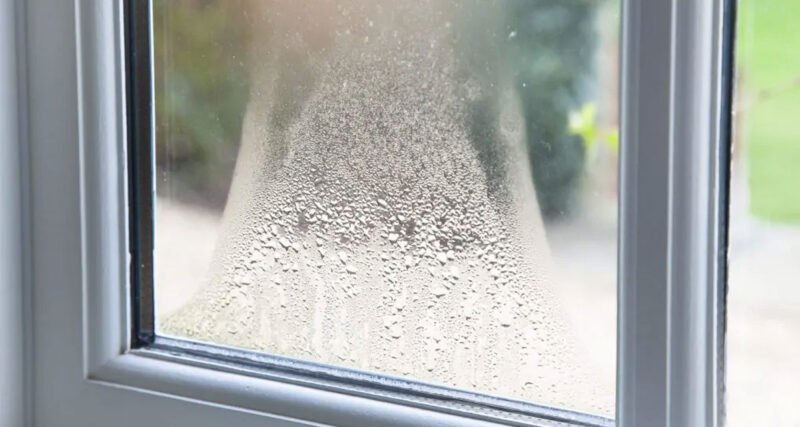
According to https://www.dawsonpropertymanagement.com/, condensation between window panes usually means the sealed glass unit has failed. Moist air has reached the space between the panes, so the fog is inside the insulated glass unit, not on a surface you can clean.
The practical answer is blunt: lower indoor humidity will not remove moisture trapped between panes. If you are asking why is there condensation between window panes after both glass surfaces are clean, the usual fix is replacing the insulated glass unit, often called the IGU or glass pack, rather than replacing the entire window.
Why condensation forms between panes
Condensation between panes forms when the edge seal around an insulated glass unit no longer keeps the air space dry. Once humid air enters that sealed cavity, moisture can condense on the interior glass surfaces when temperatures shift.
A double-pane or triple-pane unit is built as a closed assembly: glass, spacer, sealant, and a dry air or gas-filled cavity. The Port of Seattle describes this as an insulated glass unit with two panes sealed to a spacer; when that adhesive seal breaks, air and moisture can enter and create fogging, moisture, and streaking between the panes.
That last location matters. If the wet film is between the two pieces of glass, a towel, squeegee, dehumidifier, or vinegar spray cannot touch it.
On a cold morning it may look like a smoky patch. By afternoon it might fade, then return after rain or a temperature swing. That disappearing act is why people wait too long; the seal is still compromised even when the glass briefly clears.
The fingertip test for window fog
The fastest test is to touch both accessible glass surfaces. If the moisture wipes away from the room side or the outdoor side, it is surface condensation; if it stays visible after both sides are dry, it is trapped between panes.
| Where the moisture appears | Likely cause | What usually helps |
|---|---|---|
| Room-side glass | Indoor humidity hitting cold glass | Ventilation, lower humidity, warmer glass surface |
| Outdoor glass | Outdoor dew point and glass temperature | Usually nothing; it often dries naturally |
| Between panes | Failed IGU edge seal or saturated spacer desiccant | Glass pack, sash, or window replacement |
| Water at sill or frame | Leak, blocked drainage, failed caulk, or flashing issue | Inspect frame, exterior sealant, drainage, and wall staining |
Indoor condensation is a different problem. The U.S. Environmental Protection Agency explains that warm indoor air can condense on cold window glass because cooler air holds less moisture, and it recommends exhaust fans, dehumidifiers, air circulation, and warmer glass surfaces to reduce that kind of moisture.
Those steps are still good for the house. They just do not repair a failed seal between glass panes.
What failed inside the window
The failed part is usually the perimeter seal system around the insulated glass unit, not the visible caulk around the interior trim. That seal holds the panes to the spacer, keeps the cavity dry, and protects any insulating gas fill.
Inside many IGUs, the spacer also contains desiccant, a drying material meant to absorb small amounts of moisture. When the seal leaks long enough, the desiccant can become saturated, and the glass may develop a cloudy stain or mineral-looking haze.
Age is the common reason. Thermal cycling, sun exposure, poor drainage around the sash, installation stress, manufacturing defects, and impact damage can also shorten the life of a unit.
Gas fill is easy to overstate. Argon or krypton can improve thermal performance, but the visible problem is moisture entering a cavity that was supposed to stay dry.
The National Fenestration Rating Council notes that lower U-factor windows keep interior glass warmer and reduce the potential for surface condensation; it also rates condensation resistance on a 1 to 100 scale for comparing products. That rating helps when buying windows, but it does not make a failed sealed unit dry again.
Can you fix condensation without replacing the window?

You can sometimes improve the look of a fogged unit, but you usually cannot restore the original sealed performance without replacing the glass unit. Defogging services may vent or dry the cavity, yet they do not rebuild the factory seal or refill the unit as new.
This is where homeowners get offered a few very different things under the same word, repair. One is cosmetic defogging. Another is replacing the glass pack while keeping the existing frame. Those are not equal outcomes.
| Option | What it does | Best use | Main limitation |
|---|---|---|---|
| Wiping or cleaning | Cleans accessible glass surfaces only | Room-side or outdoor condensation | Cannot reach trapped moisture |
| Lowering indoor humidity | Reduces room-side window sweat | Winter condensation on interior glass | Does not fix between-pane fog |
| Defogging service | May reduce visible moisture or haze | Cosmetic improvement when replacement is not urgent | Usually does not restore original insulation |
| IGU replacement | Replaces the sealed glass pack | Good frame, bad glass seal | Needs correct measurement and professional installation |
| Full window replacement | Replaces glass, sash, frame, and installation interface | Rot, poor operation, leaking frame, old inefficient window | Costs more and disturbs more trim or exterior finish |
Reddit repair threads are unusually consistent on this point. One r/DIY commenter put it plainly:
“There is no fix you’d be able to do. Argon gas is put between the panes at the factory to create an insulating layer. The seal on your window has broken somewhere, and the gas has leaked out between the panes and water can get in. You’re essentially working with single pane glass now and moisture will always be in there. It’s not a must fix if the window isn’t leaking, but replacement is the way to go here.”
– r/DIY, June 2025 (57 upvotes)
I would soften one part of that: a failed unit is not always literally the same as single-pane glass. But the practical warning is right. The sealed cavity is no longer doing the job it was sold to do.
When to replace the glass, sash, or whole window
If the frame is square, dry, and operating well, replacing only the insulated glass unit is often the cleanest fix. If the frame is rotten, leaking, warped, or hard to lock, a new glass pack may only hide a bigger window problem.
Start with the least disruptive repair that actually solves the failure. That usually means asking a local glass shop or the window manufacturer whether the IGU or sash can be replaced.
- Replace the IGU when the sash and frame are in good shape, the window operates normally, and the problem is limited to fog between panes.
- Replace the sash when the manufacturer sells sash kits and the glass is integrated into a movable sash assembly.
- Replace the full window when the frame leaks, wood is soft, hardware is failing, the unit is very old, or multiple windows have the same performance problem.
- Wait briefly when the fog is cosmetic, the window is not leaking, and you are gathering warranty records or quotes.
Do not ignore water staining around the wall, sill, or trim. Between-pane fog points to a glass-unit seal problem, but damp drywall or swollen wood points to a building-water problem that deserves faster attention.
By week three, the annoying part is not usually the fog itself. It is the way the same cloudy crescent keeps returning after you thought the window had cleared.
What to check before calling a contractor
Before paying for replacement, document the problem, identify the window brand if possible, and check whether the seal failure is covered. Many window warranties treat failed insulated glass seals differently from cracked glass, frame damage, or labor.
- Photograph the fog from both sides. Take pictures in morning and afternoon light because the moisture may appear stronger at certain temperatures.
- Find labels or etched markings. Look along the spacer, sash edge, or frame for a manufacturer name, series, date code, or glass certification mark.
- Check your closing documents. Newer homes sometimes include window warranty packets, installation invoices, or builder selections.
- Look for frame damage. Soft wood, cracked vinyl, failed exterior caulk, blocked weep holes, or staining changes the repair conversation.
- Ask for the exact scope. A quote should say whether it replaces the IGU, the sash, or the entire window.
- Compare labor and warranty terms. A cheaper glass-only quote may be fine, but only if the installer stands behind the seal and fit.
For a single fogged unit in an otherwise good window, a glass shop can often measure and order a replacement IGU. For a branded window still under warranty, the manufacturer may prefer a sash replacement or a specific authorized service path.
Preventing the next fog problem
You cannot fully prevent every seal failure, but you can reduce stress around windows and avoid confusing indoor humidity with glass failure. Keep frames draining, control interior moisture, and choose windows with good thermal ratings when replacement is already planned.
For indoor surface condensation, run bath and kitchen exhaust fans, vent dryers outdoors, avoid overusing humidifiers, and leave air paths open around cold rooms. EPA guidance also points to air circulation, dehumidifiers, and warmer interior glass surfaces as useful controls for moisture on windows.
For the window unit itself, keep exterior weep holes clear, avoid trapping the bottom edge of the sash in standing water, and inspect cracked exterior sealant. A window does not need babying, but it should not sit wet at the edges month after month.
When buying replacement windows, compare U-factor, air leakage, and condensation resistance ratings rather than relying only on pane count. Triple-pane glass can be excellent in the right climate, but installation quality and frame performance still matter.
FAQ
Is condensation between window panes dangerous?
Condensation between panes is usually not dangerous by itself, but it signals a failed sealed glass unit. Check nearby trim, drywall, and sill areas for separate water damage.
Will a dehumidifier remove condensation between panes?
A dehumidifier will not remove moisture trapped inside a sealed glass unit. It can reduce condensation on the room-side glass if indoor humidity is too high.
Can I drill a hole to clear fogged double-pane glass?
Drilling may vent moisture and improve appearance temporarily, but it does not restore the original factory seal. It can also damage glass, coatings, and warranty coverage.
Does fog between panes mean the window is leaking?
Fog between panes means the IGU seal has leaked, not necessarily that rainwater is entering your wall. Water stains, soft trim, or sill puddles point to a separate leak issue.
Why is there condensation between window panes after cleaning?
Why is there condensation between window panes after cleaning? Because the moisture is inside the sealed glass unit, so cleaning the room-side and outdoor glass cannot reach it.
Should I replace one fogged window or all windows?
Replace one fogged glass unit if the rest of the windows are performing well. Consider wider replacement only when many units fail, frames are damaged, or energy performance is poor across the house.
Final takeaway
Condensation between window panes is a glass-unit failure, not a cleaning problem. Treat it like a practical repair decision: confirm the moisture location, check the frame, look for warranty coverage, then choose glass-pack, sash, or full-window replacement based on what actually failed.