



According to KRS Lynchburg Management, a battery backup sump pump is worth it for many homes with basement flood risk, but it is not a perfect substitute for drainage fixes, a generator, or a properly sized primary pump.
The honest answer depends on what problem you are trying to solve. A battery backup handles power outages and some pump failures. It does not create unlimited pumping time, and it will not save a basement if water is entering faster than the backup pump can move it out.
Quick Verdict: Battery Backup Sump Pump Pros and Cons
The main pros are protection during outages, automatic operation, lower cost than many generator setups, and extra defense if the main pump fails. The main cons are limited runtime, battery maintenance, lower pumping capacity than many AC pumps, and replacement costs every few years.
For a finished basement, flood-prone lot, or house that loses power during storms, a backup system is usually a sensible layer of protection. For a dry basement with rare pump activity, it may be a nice-to-have rather than an urgent upgrade.
| Pros | Cons | What it means in real life |
|---|---|---|
| Runs when utility power fails | Runtime is limited by battery size and pump cycles | Good for typical outages, weaker for multi-day storms without recharging |
| Starts automatically when the water rises | Needs testing, charging, and periodic battery replacement | It is protection, not a device you can forget for ten years |
| Adds a second pump and float in many systems | Backup pumps often move less water than primary AC pumps | Helpful for failure protection, but not always enough for extreme inflow |
| Usually cheaper and simpler than a standby generator | Can be underpowered if someone tries to use a regular computer UPS | Dedicated sump backup kits are safer than improvising with office gear |
What a Battery Backup Sump Pump Actually Does
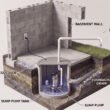
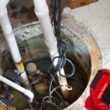
A battery backup sump pump is a secondary pumping system that runs from stored battery power when the main sump pump cannot protect the pit. Most systems use a DC backup pump, a float switch, a charger, alarms, and a deep-cycle battery.
A sump pump is a basement water-removal system. A battery backup sump pump is a redundancy system for power failure, switch failure, mechanical breakdown, or water levels that rise above the primary pump’s control range. In many kits, the backup pump sits slightly higher in the pit so it turns on only when the main pump is not keeping up.
Canada.ca says battery- or generator-powered backup sump pumps help keep a sump pump functioning when power goes out or when other issues cause the primary pump to fail. That is the right mental model: backup power and backup pumping, not magic flood insurance.
There is a small but important distinction. Some products are battery-operated backup pumps with their own motor. Other products are inverter or power-converter systems that let an existing AC pump run from batteries. The first gives you a second pump. The second keeps the main pump alive during an outage. Those are different forms of protection.
The Biggest Pros of a Battery Backup Sump Pump
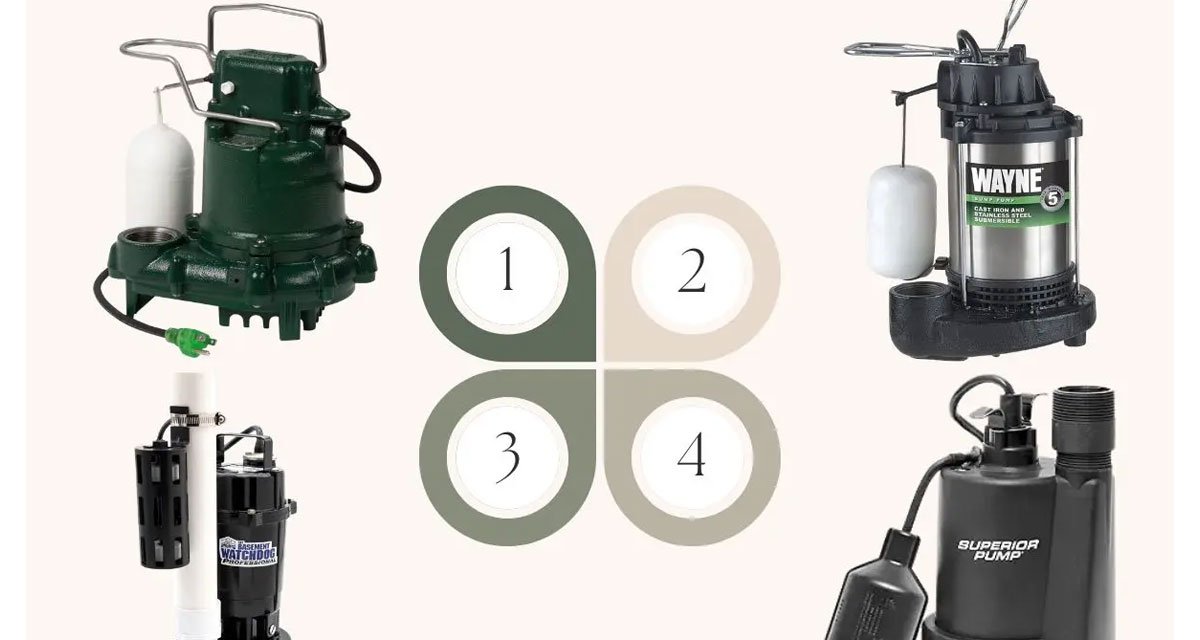
The strongest advantages are automatic outage protection, a second line of defense, and relatively simple installation compared with whole-house backup power. A good system buys time during the exact weather that often knocks out electricity.
It protects the basement during power outages
A battery backup pump can keep moving water when a storm knocks out the power feeding the primary pump. That matters because heavy rain and power loss often arrive together, which is a nasty pairing for a basement.
Climate Central reported that the United States had about twice as many weather-related outages from 2014 to 2023 as from 2000 to 2009. The point is not that every house needs the same equipment. The point is that a sump pump tied only to grid power has a known weakness.
It works without anyone standing near the pit
A dedicated backup system uses a float switch, charger, and alarm logic to start automatically. You do not have to wake up, find a flashlight, connect clamps, or bail water while the storm is still moving through.
That automatic behavior is easy to undervalue until the first outage at night. A quiet basement can turn into a timed problem: how fast the pit fills, how long the power stays off, and whether anyone notices before water reaches the floor.
It can protect against more than power failure
Many battery backup sump pump pros and cons lists focus only on blackouts, but a second pump can also help if the main float sticks, the primary pump burns out, or the pit rises faster than usual.
That does not mean the backup should carry normal daily pumping. It means the system gives you another float and another pump path when the main system misses the moment. A backup is most useful when it stays idle most of the time and wakes up only when something has gone wrong.
It is often cheaper than a standby generator
A battery backup system usually costs less than a permanently installed standby generator, and it is aimed at one job: keeping the sump pit from overflowing. That narrow focus is a strength if the basement is the main concern.
A generator may be better for long outages, refrigerators, heat, medical equipment, and multiple circuits. A sump battery backup is better when the question is narrower: what keeps the pit under control if the power fails during rain?
The Biggest Cons of a Battery Backup Sump Pump
The weaknesses are just as real as the benefits. Batteries lose capacity, backup pumps may move less water, runtime is finite, and the system needs periodic testing instead of trust-by-hope.
The practical way to read battery backup sump pump pros and cons is to ask what happens during the first 24 hours of a storm outage. If the answer depends on one plugged-in pump and one breaker, the weak point is obvious.
Runtime is limited
A battery can run a pump only as long as it has stored energy. Runtime depends on battery amp-hours, pump draw, lift height, discharge distance, and how often the pump cycles.
Consumer Reports’ sump pump backup buying guide describes common backup systems using 12-volt deep-cycle batteries, with larger amp-hour batteries generally providing longer runtime. The same guide notes that backup systems may provide hours of active pumping, which can stretch longer when the pump cycles intermittently rather than running nonstop.
That is useful, but not unlimited. If the power is out for two days and the pump is cycling hard, a battery backup can become a bridge to a generator, not a full answer by itself.
Batteries need maintenance and replacement
A backup battery is a wear item. It needs charging, testing, clean terminals, and eventual replacement. Some systems also need water-level checks if they use flooded lead-acid batteries.
Absorbed glass mat batteries are usually lower maintenance than flooded batteries, but they still age. Charger lights and alarms are useful only if someone looks at them. The small box beside the sump pit is easy to ignore until it starts beeping at the worst possible time.
A backup pump may not move as much water as the primary pump
Backup DC pumps often have lower flow rates than larger AC primary pumps. That is acceptable for many homes, but it becomes a problem when the pit receives heavy inflow from a high water table, poor grading, or intense rainfall.
If the primary pump barely keeps up during storms, a small backup pump may not be enough. The smarter fix may be a larger basin, a stronger primary pump, improved discharge routing, exterior drainage work, or a second full-size AC pump with generator support.
It can create false confidence
A battery backup can hide weak drainage planning. If the discharge line is frozen, the check valve fails, the outlet dumps water beside the foundation, or the pit fills too fast, adding a battery does not fix the underlying water path.
FEMA’s sump pump maintenance guidance tells homeowners to keep sump pumps clean, inspect them regularly, and test them before storms. A battery backup works best when the pump, pit, float, check valve, and discharge line are already in good shape.
Battery Backup vs. Water-Powered Backup vs. Generator
Battery backups, water-powered backups, and generators solve overlapping but different problems. The best choice depends on power outage length, municipal water availability, pump capacity needs, budget, and whether you want to protect only the sump pump or the whole house.
| Backup option | Best for | Weak spot | Good fit |
|---|---|---|---|
| Battery backup sump pump | Short to moderate outages and main-pump failure protection | Finite battery runtime and battery replacement | Finished basements, frequent storms, homes without whole-house backup power |
| Water-powered backup pump | Long outages where municipal water pressure remains available | Uses municipal water and may not be allowed or practical everywhere | Homes on city water, not wells, where local plumbing rules permit it |
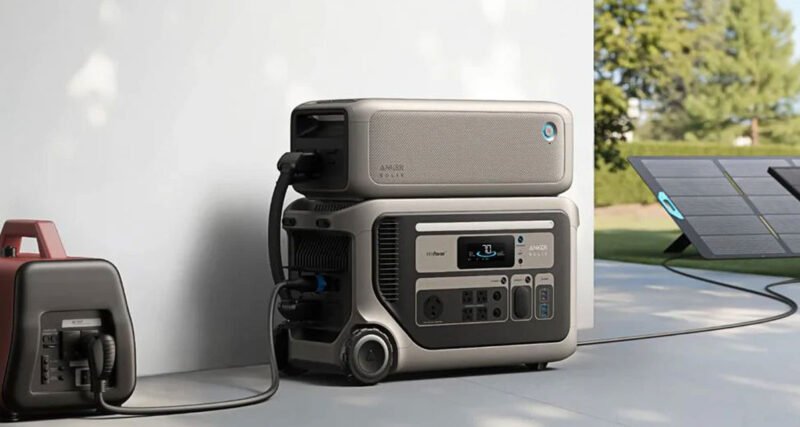
| Portable generator | Longer outages and multiple appliances | Requires fuel, safe outdoor placement, manual setup unless transfer equipment is installed | Homes needing heat, refrigeration, sump power, and other circuits during outages |
| Standby generator | Automatic whole-home or partial-home power | Higher installation cost and maintenance | High-risk homes where long outages are common and budget allows |
| Second AC sump pump | Extra pumping capacity when power stays on or generator power is available | Still depends on AC power unless backed up separately | Large pits, heavy inflow, generator-equipped homes |
This is where many homeowners get tripped up. A second AC pump and a battery backup are not always substitutes. One adds pumping capacity. The other adds power resilience. In a wet basement with a generator, both can make sense.
“This isnt an either or and both solve different problems.”
– r/homeowners, May 2026
Can You Use a Regular UPS Instead?
A regular computer UPS is usually a poor match for a sump pump. Sump pumps can draw a high startup surge, and many office UPS units are designed for electronics rather than motor loads in a damp utility area.
The tempting idea is simple: plug the existing pump into a big battery box and call it done. The problem is pump startup. Motors can demand far more power for a brief moment when they kick on, and a UPS that handles a desktop computer may not handle that surge well.
A dedicated sump pump backup system is built around pump behavior: float activation, charging, alarms, battery condition, and motor load. It is not just a generic battery with outlets. That difference matters when the pit is filling.
“honestly I tried the UPS route first because seemed cheaper but learned the hard way that most sump pumps draw way more power than regular UPS can handle.”
– r/homeowners, February 2026
Who Should Buy a Battery Backup Sump Pump?
A battery backup makes the most sense when basement water risk is real and power reliability is not guaranteed. The stronger the financial or practical cost of flooding, the easier the decision becomes.
- Buy one sooner if the basement is finished, used for storage, or has flooded before.
- Buy one sooner if storms commonly cause outages in your area.
- Buy one sooner if the sump pump runs often during rain or snowmelt.
- Consider other fixes first if the sump pump runs constantly because discharge water returns to the foundation.
- Consider a generator or water-powered backup if outages in your area often last several days.
- Consider a second AC pump if the real issue is flow capacity, not power failure.
There is also a practical middle ground: install a dedicated battery backup pump, add water alarms near the pit and floor drain, and keep a generator plan for long outages. That setup is not glamorous, but it covers more failure points than a single shiny device.
What to Check Before Buying
Before buying, check the pump’s capacity, battery type, alarm features, charger quality, installation requirements, discharge layout, and whether the backup can handle your basement’s actual water volume.
- Measure the pit and pump layout. The backup pump and float need room to operate without tangling with the primary pump.
- Check pumping capacity at your lift height. Gallons per hour at zero lift is less useful than performance at the vertical rise your discharge pipe actually uses.
- Choose a battery designed for deep cycling. Deep-cycle batteries are built for repeated discharge and recharge patterns.
- Look for useful alarms. High-water, power-failure, charger-failure, and battery-condition alerts are worth having.
- Inspect the discharge path. A backup pump cannot help much if both pumps push into a blocked, frozen, or poorly routed line.
- Decide who will maintain it. If no one will test the system, replace the battery, or respond to alarms, the protection fades quietly.
Do not size the backup by price alone. The cheapest system may be fine for a lightly used pit. It may be too small for a house where water roars into the basin every time the rain gets serious.
Installation and Maintenance Reality
Installation is usually straightforward for a plumber, but the details matter: float placement, check valve arrangement, discharge tie-in, battery ventilation requirements, charger access, and keeping the battery off a damp floor.
Some homeowners can install a backup kit themselves if they are comfortable with plumbing, check valves, clamps, and safe electrical practices. Many should hire a plumber, especially when the pit is crowded or the discharge piping needs changes.
Maintenance is simple but non-negotiable. Test the backup by lifting the float or following the manufacturer’s test process. Confirm the charger shows normal status. Clean the pit. Listen for alarms. Replace the battery on schedule rather than waiting for the first weak start during a storm.
One practical detail: do not plug the primary pump and backup charging system into a messy chain of adapters. Keep the setup clean, labeled, and easy to inspect. The best basement equipment is boring because boring equipment gets checked.
FAQ
Are battery backup sump pumps worth it?
Battery backup sump pumps are worth it when a basement has meaningful flood risk, especially in homes with finished space, frequent outages, or a sump pump that runs during storms.
How long will a battery backup sump pump run?
Runtime can range from hours of active pumping to longer intermittent protection, depending on battery capacity, pump draw, water volume, and how often the pump cycles.
What is the main disadvantage of a battery backup sump pump?
The main disadvantage is limited runtime. A battery backup can protect through many outages, but it cannot pump forever without recharging or generator support.
Is a battery backup better than a water-powered sump pump?
A battery backup is better for many homes, but water-powered backups can suit city-water homes during long outages if local rules allow them and water pressure remains available.
Can I use a UPS for a sump pump?
A regular UPS is usually not the right choice for a sump pump because motor startup loads can exceed what many office UPS units are designed to handle.
Do I need a generator if I have a battery backup?
You may still need a generator for long outages. A battery backup is excellent for automatic short-term protection, while a generator can recharge batteries and run other equipment.
How often should I replace the battery?
Many sump backup batteries need replacement every few years, depending on battery type, charger quality, temperature, and use. Follow the system manufacturer’s schedule and test regularly.
Final Verdict
The best reason to buy a battery backup sump pump is not panic. It is redundancy. A basement protected by one pump and one power source has a single point of failure exactly when storms are most likely to stress the system.
The pros outweigh the cons for homes with real water risk, but only if the backup is sized correctly and maintained. Treat battery backup sump pump pros and cons as a risk calculation: good drainage first, reliable primary pump second, battery backup third, and generator support if long outages are common. That is how the system earns its keep.