



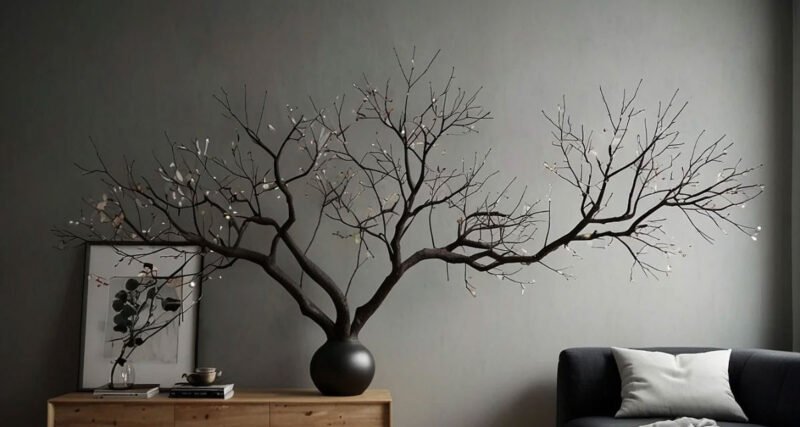
Pyntekvister are decorative branches from Norwegian tradition, used to bring natural texture and minimalist elegance into indoor spaces. The practice has spread far beyond Scandinavia, becoming one of the most accessible ways to refresh a room without a full redesign.
The concept is straightforward. Collect or buy natural branches, arrange them in vases, mount them on walls, or weave them into wreaths. The result sits somewhere between sculpture and flower arrangement, with none of the upkeep that fresh flowers demand.
What sets pyntekvister apart from generic branch decor is the intentionality behind it. Each arrangement draws on centuries of Nordic seasonal traditions, where branches marked the shift from winter to spring and carried symbolic meaning tied to renewal and growth.
What Is Pyntekvister and Where Did It Come From?
Pyntekvister is a Norwegian compound word: “pynte” means decorative, and “kvister” means twigs or branches. The tradition dates back centuries in Norway and Sweden, where families decorated their homes with budding branches to mark seasonal transitions and holidays.
The most recognizable expression of this tradition is påskris, or Easter branches. In Sweden and parts of Norway, birch twigs are cut in early spring, placed in water to force budding, and decorated with colored feathers. The practice symbolizes the end of winter and the arrival of new growth. It remains a household ritual across Scandinavia today.
Beyond holidays, branch arrangements have always been part of Nordic interior philosophy. The Scandinavian design principles of lagom (just enough) and hygge (cozy comfort) both favor natural materials placed with restraint. A single birch branch in a ceramic vase fits that ethos perfectly.
Modern designers have connected pyntekvister to biophilic design, a framework supported by research from Terrapin Bright Green (2014) showing that incorporating natural elements indoors reduces stress and improves cognitive function. A tradition that Nordic grandmothers practiced without a label now appears on mood boards in architecture firms and design studios worldwide.
Types of Branches for Pyntekvister Arrangements
Birch, willow, eucalyptus, cherry blossom, and dried grasses each bring distinct textures suited to different rooms and seasons. The right branch depends on the visual effect you want and how much maintenance you can handle.
| Branch | Texture | Flexibility | Best Room | Peak Season | Cost Range |
|---|---|---|---|---|---|
| Birch | Smooth, pale bark | Low | Living room, entryway | Spring | $5-15 per bundle |
| Willow | Thin, whip-like | High | Any room (wreaths, wall art) | Year-round | $8-20 per bundle |
| Eucalyptus | Soft green leaves | Medium | Bedroom, bathroom | Summer | $10-25 per bundle |
| Cherry blossom | Delicate flowers | Low | Entryway, dining room | Spring | $12-30 per bundle |
| Dried grasses / lunaria | Feathery, muted tones | Low | Living room, bedroom | Autumn-Winter | $5-15 per bundle |
Birch is the default choice for most Scandinavian-inspired arrangements. Its pale bark catches light in a way that makes even a dim corner feel brighter. The thin, papery layers curl naturally over time, adding a lived-in texture that polished decor pieces simply cannot replicate.
Willow branches bend without snapping, making them ideal for wreaths, arched wall pieces, and curved arrangements. Eucalyptus brings a muted green tone and a subtle herbal scent that lasts for weeks after cutting.
Cherry blossom branches are seasonal but dramatic. A few stems in a tall vase can transform an entire entryway during spring. Dried grasses and lunaria (the silver dollar plant) extend the pyntekvister palette beyond wood, working especially well in autumn and winter when muted tones and raw texture matter more than color.
How to Style Pyntekvister in Every Room
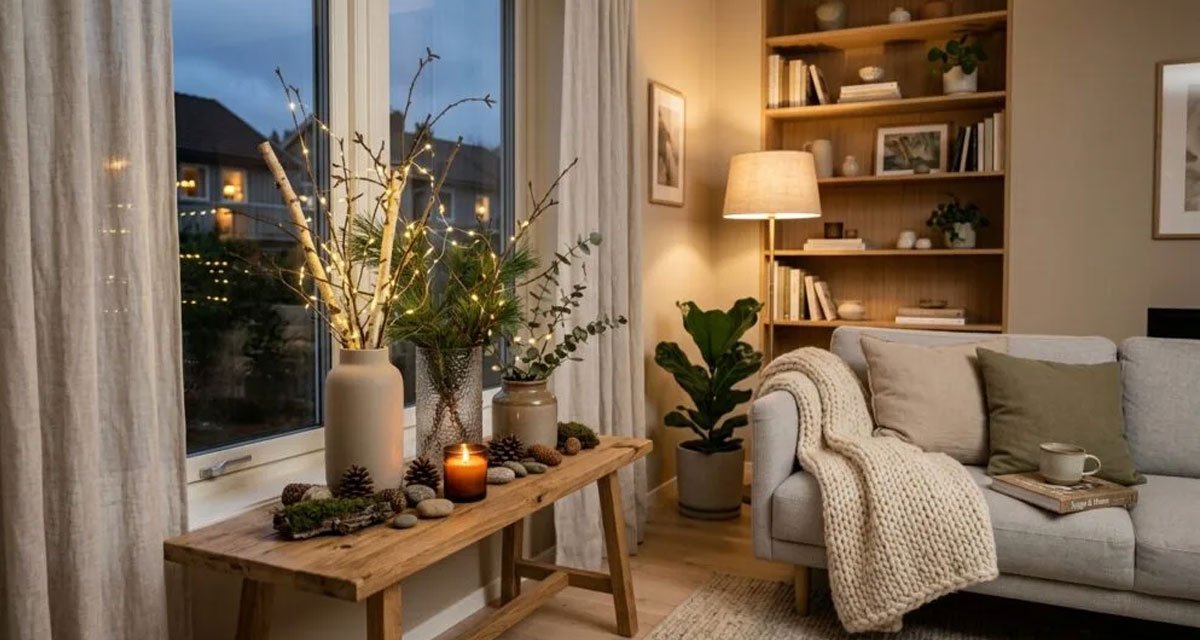
Place tall branches in narrow floor vases for entryways, cluster shorter stems as dining centerpieces, or mount dried arrangements directly on walls. The key rule is restraint: one strong arrangement per room beats three scattered ones.
Living Room
A tall floor vase with three to five birch or willow branches near a window creates an instant focal point. The branches add vertical height without taking up floor space, which makes them especially useful in apartments with limited square footage.
Dining Table
Low, horizontal arrangements work best here. Choose shorter stems and place them in a wide ceramic bowl or a low glass vase. Keep the arrangement below eye level so it does not block conversation across the table.
Bedroom and Entryway
A single eucalyptus branch in a slim vase on a nightstand adds calm without clutter. For entryways, a tall arrangement signals intention the moment someone walks through the door. Wrapping warm-white fairy lights around branches adds soft ambient light for evenings.
Wall Art
Mount dried branches directly on walls using small hooks or picture-hanging strips. Arrange them horizontally for a modern gallery feel, or create a small cluster of different textures for a more organic look. Some designers hang lightweight ornaments or photographs from mounted branches to double as a display shelf.
A single branch in an otherwise empty vase often looks more intentional than a full bouquet. That restraint, the willingness to leave space, is what separates pyntekvister from ordinary flower arrangements.
Seasonal Pyntekvister Ideas
Swap branches with the seasons to keep displays fresh year-round. Spring calls for blossoms and forced buds, summer favors greenery, autumn works with dried textures, and winter invites frosted or evergreen elements.
| Season | Recommended Branches | Mood | Styling Tip |
|---|---|---|---|
| Spring | Cherry blossom, birch with forced buds | Renewal, freshness | Add colored feathers for a traditional påskris display |
| Summer | Eucalyptus, olive branches | Relaxed, airy | Pair with linen textiles and light ceramics |
| Autumn | Dried grasses, lunaria, hazel | Warm, textured | Use amber glass vases and warm-toned candles alongside |
| Winter | Frosted birch, pine, evergreen | Cozy, festive | Wrap with warm-white fairy lights for evening ambience |
The spring påskris tradition deserves special attention. In Sweden, families cut birch twigs weeks before Easter and place them in water indoors. The warmth forces the buds to open, and children decorate the branches with brightly colored feathers. It is one of the oldest living examples of pyntekvister in practice, connecting modern decor trends to traditions that stretch back generations.
Caring for Your Pyntekvister
Dried pyntekvister branches last anywhere from several months to multiple years with minimal care. Keep them dust-free, away from direct sunlight, and sealed with a clear matte spray to preserve color and prevent flaking.
Fresh branches need water and occasional trimming to stay vibrant. Change the water every few days and trim the base at an angle to help the stems absorb moisture. Once fresh branches dry out naturally, they transition into the dried category and require no further watering.
For storage between seasonal swaps, wrap branches loosely in tissue paper and keep them in a dry, cool area. Avoid plastic bags, which trap moisture and can cause mold. Artificial pyntekvister require only occasional dusting with a soft cloth.
Frequently Asked Questions
What does pyntekvister mean?
Pyntekvister translates directly from Norwegian as “decorative twigs” or “ornamental branches.” The word combines “pynte” (to decorate) with “kvister” (twigs or small branches), reflecting the Scandinavian tradition of using natural branch arrangements for home styling.
How long do pyntekvister branches last?
Dried branches typically last six months to two years depending on the wood type and indoor conditions. Birch and willow hold up longest. Fresh branches last one to three weeks in water before drying out, at which point they still work as dried arrangements.
Is pyntekvister expensive to try at home?
No. A basic pyntekvister setup costs between $10 and $30 for a bundle of branches and a simple vase. Many people forage branches for free from gardens, parks (with permission), or pruning waste. The low cost is one of the main reasons pyntekvister has gained popularity as an alternative to expensive floral arrangements.
Can pyntekvister work in small apartments?
Absolutely. Tall, slender branches in a narrow vase take up almost no floor space while adding vertical interest that makes small rooms feel larger. Wall-mounted arrangements use zero floor space. Choose thin branches like willow or single birch stems to avoid visual bulk.
Are there special tools needed for pyntekvister projects?
Basic garden pruners or sharp scissors handle most cutting needs. For wall-mounted pieces, small adhesive hooks or picture-hanging strips work well. No specialized tools are required, which keeps the barrier to entry low for beginners.
Final Thoughts
Pyntekvister prove that striking home decor does not require a large budget or complicated installation. A few well-chosen branches, a decent vase, and the willingness to leave some empty space can shift the entire feel of a room.
Start small. Pick up a bundle of birch branches, place them in the tallest vase you own, and set it near a window where natural light hits the bark. That one arrangement will likely outlast any bouquet of fresh flowers, cost a fraction of the price, and look just as good six months from now as it does today.
As architect and biophilic design advocate Stephen Kellert once observed, “Nature in the built environment is not a luxury. It is a requirement for human health and productivity.” Pyntekvister are one of the simplest ways to meet that requirement.