



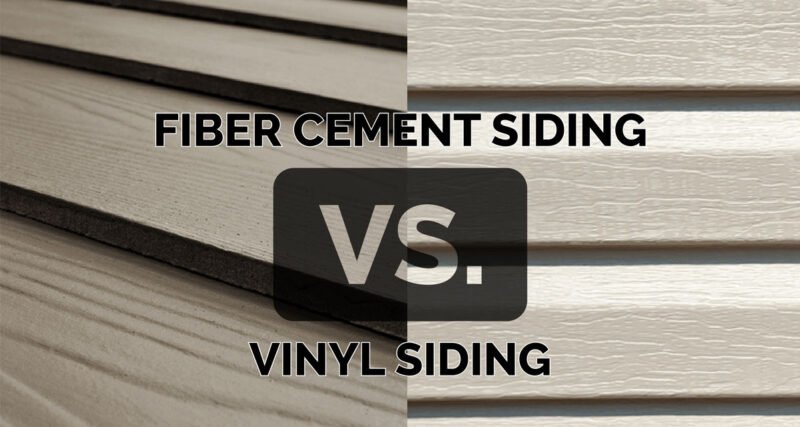
Vinyl siding vs fiber cement siding usually comes down to budget, appearance, and how long you plan to own the house, notes Buying Investment Property Rancho Cucamonga. Vinyl is the easier low-cost choice. Fiber cement is the stronger, heavier, more premium choice, but only when it is installed well.
If the quote difference is small, fiber cement deserves a serious look. If the quote difference is huge and the house is a starter home, rental, or short-horizon project, vinyl can be the smarter buy. The mistake is treating either material like it wins everywhere.
Quick Verdict: Fiber Cement Wins on Strength, Vinyl Wins on Budget
Fiber cement is usually the better long-term siding if you can afford the higher installation cost and hire a careful crew. Vinyl is better when upfront price, fast installation, and low routine upkeep matter more than a premium look.
That is the honest split. Fiber cement feels more substantial on the wall, resists more kinds of abuse, and can carry a house visually in a way thin vinyl often cannot. Vinyl is lighter, cheaper, widely available, and does not need repainting on a schedule.
The catch: fiber cement’s advantage is fragile when the installation is sloppy. Boards that are nailed wrong, held too tight, or placed too close to wet surfaces can crack, move, or let water create problems behind the siding. Vinyl has its own installation rules too, especially because it expands and contracts with temperature.
So the real question is not just which product is better. It is whether your budget, climate, contractor quality, and ownership timeline match the material.
Vinyl Siding vs Fiber Cement Siding: Side-by-Side Comparison
The simplest comparison is this: vinyl is cheaper and easier to live with, while fiber cement looks and performs more like a permanent exterior cladding. The right choice depends on what kind of failure you are most trying to avoid.
| Factor | Vinyl Siding | Fiber Cement Siding |
|---|---|---|
| Typical installed cost | Often lower, commonly around $4 to $12 per sq. ft. in current cost guides | Often higher, commonly around $7 to $18 per sq. ft. depending on product, trim, and labor |
| Best for | Budget replacements, rentals, quick curb appeal, low-maintenance projects | Long-term ownership, premium curb appeal, tougher exteriors, higher-end neighborhoods |
| Durability | Good, but can crack, warp, fade, or dent depending on grade and exposure | Very good, but brittle edges, water clearance, and fastening details matter |
| Maintenance | Wash as needed, replace damaged panels, no routine repainting | Wash, inspect caulk and paint, repaint or touch up over time |
| Installation sensitivity | Needs room to move with temperature changes | Needs correct clearances, flashing, cutting, fastening, and joint treatment |
| Appearance | Better than it used to be, but still reads as vinyl up close | Thicker shadow lines, more wood-like profiles, stronger high-end impression |
| Fire behavior | Plastic-based product, not the stronger choice near heat exposure | Noncombustible cement-based product lines are often preferred in higher fire-risk design |
That table is useful, but it also hides the messy part. A cheap fiber cement job can become more annoying than a good vinyl job. A premium insulated vinyl job can cost enough that the old “vinyl is always the budget choice” rule starts to wobble.
Cost: Vinyl Is Cheaper, but Bad Quotes Change the Math
Vinyl normally has the lower installed price, but siding quotes vary enough that the cheapest material is not always the best value. The quote should be judged by scope, trim, removal, house shape, and crew quality, not material name alone.
Current cost ranges vary by region and house complexity. Hover’s 2026 siding cost guide places vinyl around $4 to $12 per square foot installed and fiber cement around $6 to $15 per square foot installed. Angi’s 2026 fiber cement cost guide puts fiber cement installation at roughly $7 to $18 per square foot, with an average near $12.50.
Those numbers are not a bid. They are a sanity check. Real siding quotes can jump because of two-story walls, tear-off, damaged sheathing, soffit and fascia work, trim upgrades, house corners, window count, local labor, permits, and whether the crew is wrapping the job correctly.
One Reddit user summed up the current pricing frustration in plain language:
“Seams high to me, I did a 1900 sqft for 6 grand, mid-grade vinyl. But that was about 6 years ago. Prices are crazy in some areas.”
– r/HomeImprovement, April 2026
That is exactly why vinyl siding vs fiber cement siding should be decided from actual local quotes, not a national average alone. If vinyl is half the price, it may win. If vinyl is only 15% to 25% cheaper than fiber cement, the longer-term value of fiber cement becomes much harder to ignore.
A Fast Quote Check
Ask each contractor to separate removal, disposal, house wrap or weather barrier, trim, siding material, labor, painting or factory finish, repairs, and warranty terms. If one quote is just a single number, it is not comparable yet.
Also ask what happens if hidden sheathing damage appears. That line item is boring until the wall is open and everyone suddenly starts speaking in allowances.
Durability: Fiber Cement Is Tougher, Vinyl Is More Forgiving
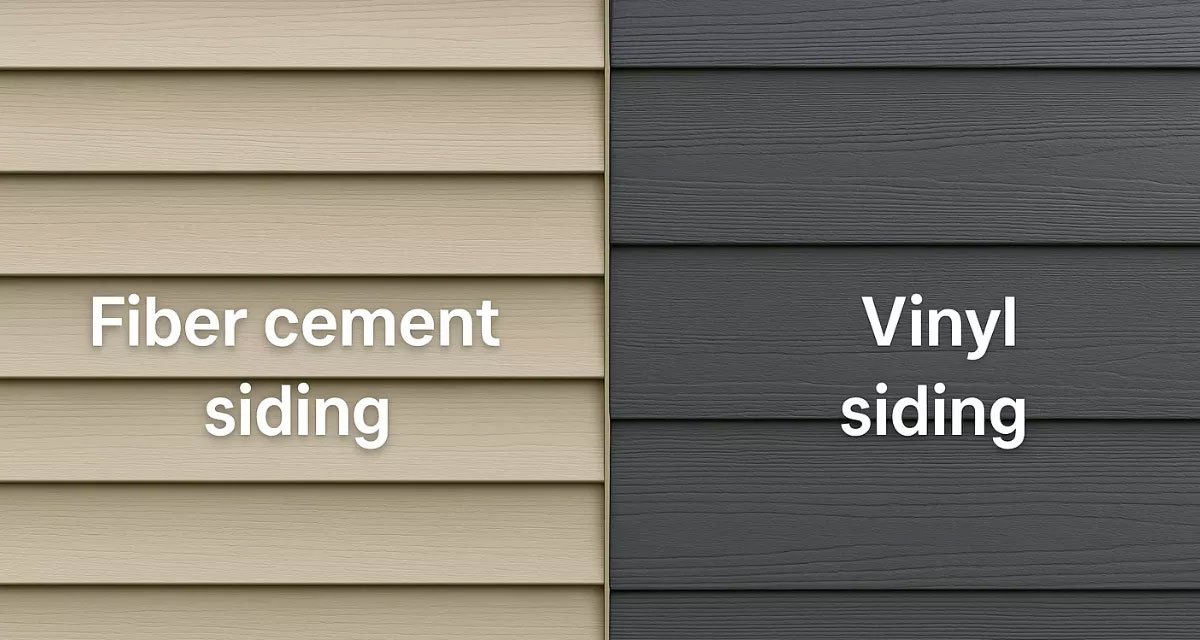
Fiber cement generally beats vinyl on long-term toughness, fire resistance, and premium feel. Vinyl is less brittle, easier to replace in small sections, and less demanding about paint, but it is more vulnerable to heat distortion and visible aging.
Fiber cement is made from cementitious material and fibers, so it does not soften like vinyl in heat and does not attract insects like wood. It also gives the wall a heavier profile. On a large front elevation, that thickness matters. The shadow line looks more convincing.
Vinyl’s durability depends heavily on grade and exposure. Better vinyl can last a long time, especially on shaded or mild-climate walls, but cheaper panels can become wavy, chalky, faded, or brittle. In cold weather, impact damage can be more dramatic. A ladder bump or flying object does not always leave a polite little dent.
Fiber cement has a different weakness. It is tough once installed, but the boards can chip or crack if mishandled, fastened poorly, or left exposed to repeated moisture at edges and clearances. It can also be harder to patch invisibly.
Small sentence, big consequence: durability is not the same thing as forgiveness.
Maintenance: Vinyl Is Lower Effort, Fiber Cement Needs Periodic Attention
Vinyl usually needs less routine maintenance because the color is part of the product and repainting is not normally part of ownership. Fiber cement needs washing, paint or finish monitoring, caulk checks, and attention to clearance details.
With vinyl, the usual maintenance rhythm is simple: wash dirt and algae, inspect panels after storms, and replace cracked pieces when needed. The annoying part is matching older color. A replacement panel may technically fit and still look like it came from a slightly different decade.
Fiber cement maintenance is quieter but more serious. You are watching paint, caulk, cut edges, joints, flashing transitions, and places where the siding gets too close to decks, steps, roofs, soil, or splash zones. Water does not need a dramatic opening. A small recurring wet edge is enough to make a long-life material age badly.
The surface tells on itself. Vinyl can get a chalky film under your fingers. Fiber cement can show hairline cracks, failed caulk, paint wear, or swollen-looking edges if moisture has been winning for a while.
Simple Maintenance Calendar
- Every spring: walk the house, looking for loose panels, cracked boards, open joints, and damaged trim.
- After major storms: check impact areas, corners, and walls near trees or wind-driven debris.
- Every year or two: wash algae, dirt, and pollen, especially on shaded walls.
- For fiber cement: inspect caulk and paint condition more carefully around penetrations and trim.
- Before repainting: confirm the surface is dry and the product-specific instructions allow the coating plan.
Installation Risk: The Best Material Can Still Fail on the Wall
Installation quality matters more with fiber cement than many homeowners expect. Vinyl also needs correct fastening and expansion space, but fiber cement problems can become expensive because the material is heavy, rigid, and less tolerant of sloppy details.
The Vinyl Siding Institute installation manual repeatedly emphasizes room for expansion and contraction. That is not a minor technicality. Vinyl that is nailed too tight can buckle or ripple when temperatures change.
Fiber cement has its own strict details. James Hardie publishes installation resources for clearances, flashing, fastening, and product-zone requirements. Those details exist because cement-based siding is not magic. It still has to shed water correctly and move through seasons without being forced into bad contact points.
Community feedback around fiber cement often turns on workmanship rather than the board itself:
“Not best install. If the boards are loose, even with proper install they will still move a tiny bit, but excessive movement will cause rattling and loosen over time…”
– r/Homebuilding, September 2025
That is the part glossy comparisons skip. Fiber cement can be the better siding and still be the worse project if the crew treats it like ordinary lap siding with heavier boards.
Installer Red Flags to Catch Before Signing
- The contractor cannot explain clearance rules around roofs, decks, steps, and horizontal flashing.
- The vinyl installer talks about tight fastening as if movement does not matter.
- The bid does not mention weather barrier, flashing, trim details, or damaged sheathing.
- The warranty sounds broad, but excludes the exact problems most likely to happen.
- The contractor pushes one material for every house, every budget, and every climate.
Climate and Exposure: Sun, Cold, Moisture, and Fire Change the Answer
Climate can flip the siding decision. Hot sun, cold impact, coastal moisture, shaded algae, wildfire exposure, and wind-driven rain all affect how vinyl and fiber cement age on the wall.
In hot, sunny climates, lower-grade vinyl can fade or warp faster, especially on walls with intense reflected heat. Dark colors, nearby windows, grills, and reflective surfaces can make the problem worse. Fiber cement is generally more stable in heat, which is one reason it often feels like the safer premium choice in harsh sun.
In cold climates, vinyl can become more brittle, so impact risk matters. If kids play along a side yard or a snowblower throws chunks toward the wall, the weaker spots reveal themselves. Fiber cement handles many impacts better, but it is not indestructible. Hard hits can chip or crack boards.
In wet climates, neither material solves water management by itself. Vinyl sheds water but is not a waterproof wall system. Fiber cement resists rot better than wood, but it still needs proper clearances, paint or finish integrity, and flashing. The wall behind the siding still matters.
Fire-prone areas deserve separate attention. Fiber cement is generally favored where noncombustible exterior materials matter. Vinyl should be treated more cautiously around high heat exposure, grills, and wildfire-risk detailing.
Appearance and Resale: Fiber Cement Usually Looks More Expensive
Fiber cement usually creates stronger curb appeal because the boards look thicker, flatter, and more wood-like. Vinyl can still look good, especially in better grades, but it is less likely to raise the perceived quality of the whole exterior.
Resale value is not automatic. A buyer in a budget neighborhood may care more about a clean, low-maintenance exterior than whether the siding is fiber cement. In a higher-end neighborhood, thin vinyl on a prominent elevation can feel like a shortcut. Appraisers and buyers do not all calculate that the same way, but curb appeal is not imaginary.
Here is a practical way to think about it: vinyl improves a tired house. Fiber cement can change how substantial the house feels.
Color also matters. Vinyl color choices are built into the product, so repainting is not the normal path. Fiber cement gives more repainting flexibility later, but that flexibility is also a future maintenance bill.
When Vinyl Siding Is the Better Choice
Vinyl is the better choice when the project needs a controlled budget, quick installation, low routine maintenance, and acceptable curb appeal. It is also sensible when the house will not justify a premium siding upgrade at resale.
Choose vinyl when the quote gap is large and the home is modest. Choose it when you own a rental and want repair simplicity. Choose it when you need to stop exterior deterioration without turning the siding project into a whole-house luxury upgrade.
Vinyl also makes sense if your local fiber cement installer options are weak. A good vinyl crew is better than a bad fiber cement crew. Not glamorous. True.
When Fiber Cement Siding Is Worth the Extra Cost
Fiber cement is worth the extra cost when you plan to keep the house, care about curb appeal, face harsher exposure, or want a heavier exterior material. It works best when the installer is proven and the budget includes proper trim and finishing.
Choose fiber cement if the house has strong architectural lines, large visible wall planes, or a neighborhood standard where exterior finish quality matters. It is also the better candidate if you want a material that feels closer to painted wood without wood’s rot and insect problems.
The extra cost is easiest to justify over a longer ownership horizon. If you expect to move in two years, the buyer may not pay you back for every dollar. If you plan to stay for fifteen years, the stronger appearance and longer service life can matter every time you pull into the driveway.
Decision Matrix: Pick by House, Not by Hype
The right siding choice becomes clearer when you match the material to the actual house. Budget, neighborhood, climate, exposure, and contractor quality should lead the decision before brand preference does.
| Your Situation | Better Lean | Why |
|---|---|---|
| Strict budget replacement | Vinyl | Lower installed cost usually matters more than premium appearance |
| Long-term home, higher curb appeal target | Fiber cement | Stronger visual weight and durability can justify the premium |
| Rental property | Vinyl | Lower cost, easier panel replacement, simpler maintenance expectations |
| High sun exposure | Fiber cement | Better resistance to heat distortion and premium finish aging |
| Weak local fiber cement installers | Vinyl | Installation quality can outweigh theoretical material superiority |
| Wildfire-conscious exterior planning | Fiber cement | Cement-based exterior products are generally the stronger fire-conscious choice |
| Short ownership horizon | Vinyl or cheapest acceptable bid | There may not be enough time to recover the premium through resale |
For many homeowners, the final answer is quote-driven. Get at least three bids, and make sure at least one contractor prices both materials on the same scope. That one comparison can reveal whether fiber cement is a reasonable upgrade or a budget-breaker.
FAQ
These are the questions that usually decide vinyl siding vs fiber cement siding after the big comparison points are already clear.
Is fiber cement siding better than vinyl siding?
Fiber cement is usually better for durability, curb appeal, heat stability, and premium exterior quality. Vinyl is better for lower upfront cost, simpler maintenance, faster installation, and easier small repairs.
Is vinyl siding always cheaper than fiber cement?
Vinyl is usually cheaper, but not always by enough to make it the better value. If a premium vinyl quote approaches a basic fiber cement quote, compare warranties, trim, labor, and expected lifespan carefully.
Does fiber cement siding need painting?
Fiber cement may come prefinished, but it still needs finish monitoring and may need repainting or touch-ups over time. The exact schedule depends on product, climate, exposure, and coating quality.
Does vinyl siding look cheap?
Some vinyl looks cheap, especially thin panels on large visible walls. Better vinyl profiles can look clean and attractive, but fiber cement usually has deeper shadow lines and a more substantial appearance.
Which siding lasts longer?
Fiber cement generally has the longer service-life potential, especially when installed and maintained correctly. Vinyl can also last for decades, but sun, impact, product grade, and installation details affect how well it ages.
Which siding is better for resale?
Fiber cement often has stronger resale appeal because it looks more premium, but the payback depends on the neighborhood, buyer expectations, project cost, and how the finished exterior looks.
Final Recommendation
Choose vinyl if the budget is tight, the house is modest, or you need a clean exterior upgrade without future paint planning. Choose fiber cement if the house deserves the visual weight, you plan to stay, and you can hire a crew that knows the product.
The winner is not the material with the best brochure. It is the material that fits the house, the climate, the bid, and the installer. Get that match right and the siding will quietly do its job for years. Get it wrong and you will notice every loose board, wavy panel, and cracked joint every time you walk up the driveway.