



The clearest signs of poor attic ventilation are a hot attic, damp roof sheathing, rusty nails, musty odors, ice dams, curling shingles, and upstairs rooms that never feel comfortable, notes Keyrenter Houston team of experts.
One sign by itself does not prove the whole ventilation system has failed. The pattern matters more than the single clue, especially when roof leaks, blocked soffits, weak insulation, and bathroom fans can create similar damage.
Signs of Poor Attic Ventilation You Should Take Seriously
Poor attic ventilation usually shows up as heat, moisture, roof stress, or uneven indoor comfort. The strongest warning signs are the ones that repeat across seasons or appear in more than one place.
A brutally hot attic in July is common, but an attic that feels like an oven while the rooms below also stay warm is more suspicious. If the roof deck radiates heat long after sunset and the upstairs bedrooms lag behind the thermostat, the attic may not be exhausting heat well.
Moisture is the bigger red flag. Look for darkened roof sheathing, frost on nail tips in winter, rust on metal fasteners, damp insulation near the eaves, or a musty smell that gets stronger after humid weather.
| Sign | What It Usually Means | How Serious It Is |
|---|---|---|
| Very hot attic in summer | Heat is not leaving through high vents, or intake air is blocked at the soffits. | Moderate unless paired with shingle damage or high cooling bills. |
| Frost, damp sheathing, or rusty nails | Warm, moist indoor air is reaching cold roof surfaces and condensing. | High, especially in cold climates. |
| Musty odor or visible mold-like staining | Moisture is lingering long enough for biological growth or wood staining. | High; moisture source needs to be found. |
| Ice dams along the eaves | Roof edge is freezing while upper roof areas are warmed by attic heat loss. | High if recurring. |
| Curled, brittle, or prematurely aged shingles | Roof deck heat may be stressing the underside of the roofing system. | Moderate to high, depending on roof age. |
| Uneven upstairs temperatures | Attic heat and weak insulation may be loading the ceiling below. | Moderate; ventilation is only one possible cause. |
Here is the plain version: moisture beats heat as a diagnostic clue. A hot attic can be normal on a hot day, but wet wood in the attic is never something to shrug off.
What Poor Ventilation Actually Does Inside an Attic
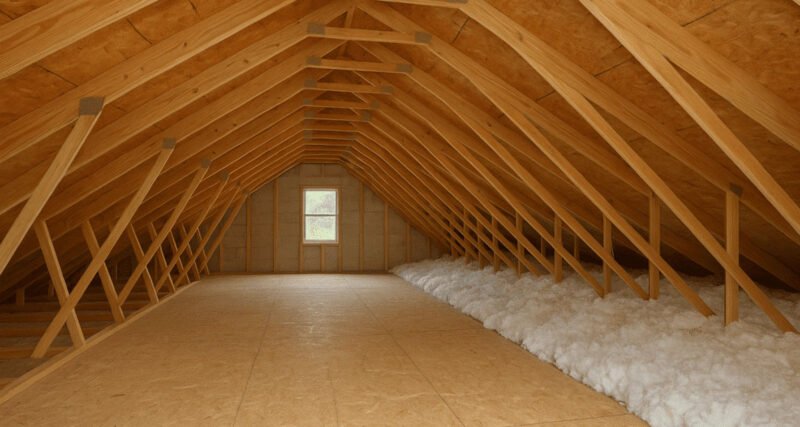
Attic ventilation is supposed to move outdoor air in low and out high, keeping the roof deck drier in winter and less heat-loaded in summer. It works only when intake, exhaust, insulation, and air sealing are cooperating.
ENERGY STAR explains the basic seasonal logic: winter ventilation helps keep the attic cold enough to reduce ice-dam risk, while summer airflow helps remove super-heated attic air and moisture. That does not mean the attic should be air-conditioned.
The odd part is that a durable attic often needs two opposite ideas at the same time. You want outdoor air moving through the attic, but you do not want indoor air leaking up through ceiling gaps.
That distinction is where many repairs go wrong. Adding a bigger exhaust vent without fixing blocked soffits can pull air from the easiest available source, sometimes the living space below.
Intake and Exhaust Balance
Most vented attics need low intake at the soffits or eaves and high exhaust near the ridge or upper roof. If the intake side is blocked, the ridge vent may exist on paper while the attic still breathes badly.
The International Residential Code uses net free ventilating area rather than a simple count of vents. IRC Section R806.2 sets a baseline of 1 square foot of net free ventilation area per 150 square feet of vented attic space, with a 1/300 exception when conditions such as balanced high and low vent placement are met.
That number is not a DIY design shortcut. Product net-free-area ratings, local amendments, roof shape, climate, and whether the attic is vented or unvented all matter.
Blocked Soffit Vents
Blocked soffit vents are one of the easiest problems to miss because the attic can look insulated and upgraded from the hatch. At the eaves, though, loose insulation may be pressed tight against the roof deck.
When that happens, the airflow path is pinched shut. Rafter vents, also called baffles, keep a channel open from the soffit to the upper roof area, which is why ENERGY STAR warns not to cover soffit vents with insulation.
The physical clue is simple: insulation packed into the eave bay looks like a soft dam. The surface may be dusty, gray at the edges, or slightly flattened where air used to try to push through.
The Signs Most Homeowners Misread
Several attic problems look like ventilation failure at first glance. Before paying for new vents, separate ventilation symptoms from leaks, fan discharge, insulation gaps, pest contamination, and normal roof aging.
That confusion shows up in homeowner discussions all the time. One r/HomeMaintenance user described being told the issue was attic heat and soffit ventilation, then asked the group what they were really looking at.
“The inspector said this was heat issues in the attic and needs soffit vent put in… Thoughts?”
– r/HomeMaintenance, February 2026
That is a fair question. A photo of stained sheathing can point toward poor ventilation, but it can also point toward a leak, bath fan dumping moist air into the attic, old condensation, or a previous issue that has already been fixed.
| Problem It Might Be | Clues That Point That Way | First Check |
|---|---|---|
| Poor attic ventilation | Wide-area moisture, rusty nails, blocked soffits, recurring ice dams, hot attic. | Check intake paths, ridge or gable vents, and roof deck moisture pattern. |
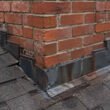
| Roof leak | Localized staining near a valley, chimney, vent boot, skylight, or nail penetration. | Inspect roof penetrations and look for a trail from the top down. |
| Bathroom fan discharge | Moisture concentrated near a duct, fan outlet, or a cold section of flexible duct. | Confirm each bath fan vents outdoors, not into the attic. |
| Weak air sealing | Dirty insulation, drafts around ceiling penetrations, frost near wiring or plumbing holes. | Look for air leaks before adding insulation or ventilation hardware. |
| Old or normal roof aging | Shingle wear matches roof age and sun exposure, without attic moisture evidence. | Compare attic symptoms with roof age, slope, and sun-facing roof planes. |
Mold and Moisture Caution
Mold-like staining deserves care, but guessing is messy. The U.S. Environmental Protection Agency frames mold control around moisture control: clean up mold and eliminate the moisture source.
That source may be ventilation, but it may also be a roof leak or indoor air leakage. If the wood is soft, the staining is spreading, or anyone in the home has respiratory sensitivity, bring in a qualified professional rather than arguing with the stain.
The Safe Attic Check Before You Pay for New Vents
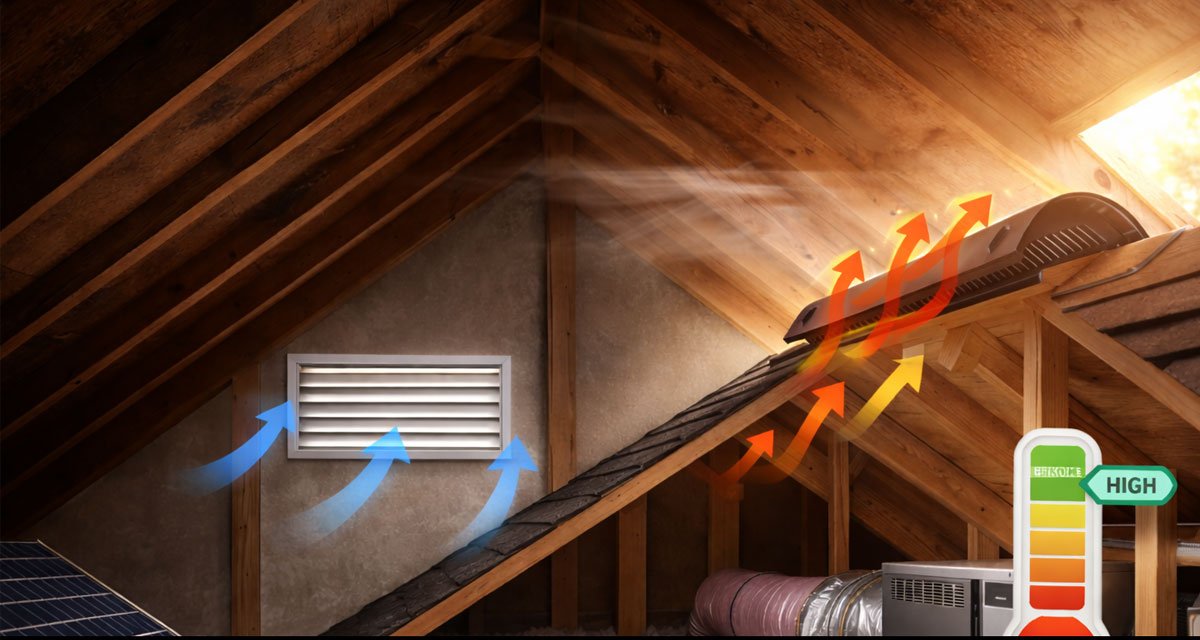
A safe ventilation check starts outside, then moves to the attic only if access is stable and conditions are safe. The goal is to identify airflow blockages and moisture patterns, not to redesign the roof from the hatch.
Start on the ground. Look for continuous soffit vents, individual eave vents, ridge vent lines, gable vents, roof vents, and any obvious obstruction such as paint, debris, insulation spillover, or nests at the vent openings.
Then look inside if you can do so safely. Wear a mask, use a headlamp, stay on framing, avoid exposed wiring, and leave immediately if you see vermiculite insulation, heavy mold, active water, damaged decking, or signs of unsafe structure.
- Check whether soffit or eave vents exist and are open.
- Look for baffles where insulation reaches the eaves.
- Scan the underside of the roof deck for frost, staining, or damp spots.
- Look at nail tips and metal plates for rust.
- Trace bathroom, kitchen, and dryer ducts to confirm they terminate outdoors.
- Note whether moisture is widespread or concentrated near one roof penetration.
- Compare attic findings with indoor symptoms such as uneven rooms or high cooling bills.
This is also where a lot of people rush. They see one ridge vent and assume exhaust is handled, but the intake side may be buried under insulation at every eave bay.
Quietly annoying. Very common.
Fixes That Usually Work, and Fixes That Backfire
The best fix depends on whether the attic lacks intake, lacks exhaust, leaks indoor air, or has moisture dumped into it by ducts. Adding vents without solving the real bottleneck can waste money.
The most reliable repair sequence is boring: seal major air leaks, protect the soffit channels with baffles, confirm intake area, confirm high exhaust, then insulate correctly. Skipping the early steps can leave the attic wet even after new roof vents go in.
Fix Blocked Intake First
If soffit vents are covered by insulation, start there. Install baffles, pull insulation back from the intake path, and keep the air channel open from the eave toward the upper roof area.
Do not crush insulation into the eaves because the last few inches look thin. That small packed area can choke the whole intake side.
Do Not Rely on Attic Fans Alone
Powered attic fans can help in some designs, but they are not a cure for blocked intake or poor air sealing. ENERGY STAR warns that an attic fan in a poorly sealed attic can pull conditioned air from the house and make cooling bills worse.
If a fan is added before the intake side is fixed, it may simply pull from gable vents, ridge vents, or ceiling leaks instead of washing air across the underside of the roof deck. That looks active and still performs badly.
Air Sealing Before More Insulation
Adding insulation over ceiling leaks can hide the problem, not solve it. Seal gaps around plumbing stacks, wiring holes, top plates, attic hatches, recessed lights, and duct chases before burying everything deeper.
In winter, warm indoor air leaking into a cold attic carries moisture with it. Once that air hits cold sheathing or nail tips, the attic can grow frost even when the roof has visible vents.
When the Problem Needs a Pro
Call a roofer, insulation contractor, energy auditor, or mold professional when the attic shows active water, widespread moisture, unsafe access, structural damage, heavy staining, or uncertain ventilation design. Some attic work is not worth improvising.
A roofer is usually the right first call for active leaks, failed flashing, damaged shingles, missing ridge vent details, or roof-deck rot. An insulation or home-performance contractor is often better for air sealing, baffles, soffit blockage, and attic-floor insulation defects.
Bring in mold or remediation help when growth is extensive, the material is contaminated, or people in the home are sensitive. If fuel-burning equipment is in the attic, any major air-sealing work should be followed by combustion safety testing from a qualified HVAC professional.
On paper, attic ventilation is a roof detail. In practice, it is a house-detail problem: roofers, insulation crews, HVAC installers, and bathroom remodelers can all leave clues up there.
FAQ
What are the first signs of poor attic ventilation?
The first signs are usually a very hot attic, musty odor, rusty nails, damp sheathing, curling shingles, ice dams, or upstairs rooms that stay uncomfortable.
Can poor attic ventilation cause mold?
Yes, poor attic ventilation can contribute to mold when moisture stays trapped long enough for growth. Still, the moisture source should be confirmed before assuming ventilation is the only cause.
Is a hot attic always a ventilation problem?
No, a hot attic is not always a ventilation problem. Roof color, sun exposure, outdoor temperature, insulation quality, and air sealing can all affect attic heat.
Do ridge vents work without soffit vents?
Ridge vents perform poorly without enough low intake air. A ridge vent needs open soffit, eave, or other low intake paths to create useful airflow.
Should I add an attic fan?
Add an attic fan only after confirming intake vents and air sealing are adequate. Otherwise, the fan may pull conditioned air from the house and increase cooling costs.
How often should attic ventilation be checked?
Check attic ventilation after roof work, insulation upgrades, pest cleanup, bath fan replacement, or recurring ice dams. A quick seasonal look is reasonable if access is safe.
The Practical Takeaway
The best clue is not one dramatic symptom. It is a cluster: blocked soffits, damp roof sheathing, rusty nails, musty air, winter ice dams, and rooms that never quite settle down.
Fix the airflow path, but do not stop there. The attic also needs air sealing, correct insulation, outdoor-terminated exhaust ducts, and enough professional judgment to know when a stain is more than a ventilation complaint.