



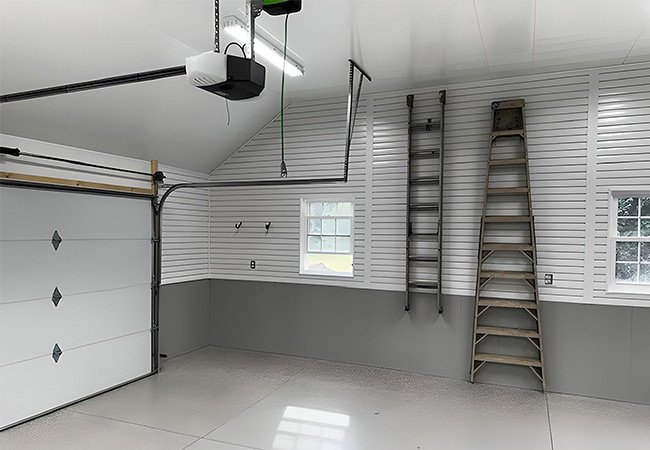
A 20-foot by 20-foot garage with 8-foot ceilings has approximately 640 square feet of wall surface and 400 square feet of ceiling surface, for a total of 1,040 square feet of drywall. Drywalling the entire garage costs $500 to $900 in materials if you do the work yourself, or $1,800 to $3,200 for professional installation including materials and labor, shares Astoria Charm Property Management. The cost per square foot for a professionally drywalled garage is $1.75 to $3.00, which is less than the cost for living spaces because the finish level is lower and the garage does not require the same degree of perfection that a living room demands.
The price difference between DIY and professional installation is almost entirely labor. Hanging drywall in a garage takes two people two days. Taping and mudding takes one person two to three days with drying time between coats. The materials are the same whether you or a contractor installs them. Here is the cost breakdown by material, by labor option, and by the variables that change the price.
Material Costs for a 20×20 Garage
| Material | Quantity | Cost |
| ½” standard drywall (4×8 sheets) | 33–35 sheets | $400–$630 |
| ⅝” Type X fire-rated drywall (if required) | 33–35 sheets | $600–$875 |
| Drywall screws (5 lb box) | 1 box | $30–$40 |
| Joint compound (all-purpose, 5-gallon bucket) | 1 bucket | $25–$40 |
| Paper drywall tape (250 ft roll) | 1 roll | $5–$8 |
| Corner bead (vinyl or metal) | 4–6 sticks | $15–$30 |
| Total DIY materials (standard) | $475–$748 | |
| Total DIY materials (Type X) | $675–$993 |
The sheet count is calculated from the total square footage divided by 32 square feet per sheet, plus 10 percent for waste from cuts around doors, windows, and the overhead door opening. A 20-by-20 garage with standard 8-foot ceilings requires 33 sheets without waste. Adding 10 percent brings the total to 35 sheets. The actual sheet count depends on the layout: a garage with a walk-in door, windows, and an attic access hatch generates more waste than a garage with four blank walls and an overhead door.
Half-inch standard drywall is adequate for detached garages and attached garages with no living space above. Five-eighth-inch Type X fire-rated drywall is required by the International Residential Code on the ceiling and the shared wall between an attached garage and the house. The Type X premium for a 20-by-20 garage is approximately $200 in materials. The weight of each sheet increases from 55 pounds for 1/2-inch to 75 pounds for 5/8-inch, which makes the hanging physically harder but does not change the material quantity.
Joint compound, drywall tape, and corner bead costs are approximately the same for any garage layout. A 5-gallon bucket of all-purpose joint compound covers approximately 500 square feet of drywall with three coats on the joints and fasteners. A garage of 1,040 square feet requires one bucket. A 250-foot roll of paper tape covers approximately 250 linear feet of joints, which is sufficient for a garage of this size. Vinyl corner bead covers the outside corners where the drywall wraps around the overhead door opening and any window or walk-in door openings.
Labor Costs: Professional Installation
| Scope | Cost |
| Hang drywall only (no finishing) | $800–$1,200 |
| Hang, tape, and finish to level 3 | $1,500–$2,500 |
| Hang, tape, and finish to level 4 | $1,800–$3,200 |
Professional drywall contractors charge $1.75 to $3.00 per square foot for a complete hang-and-finish job, including materials. The lower end of the range is for a garage with standard drywall, a level 3 finish, and no complexity from multiple openings or vaulted ceilings. The higher end is for Type X drywall, a level 4 finish, and a garage with windows, doors, and attic access hatches that require additional cutting and finishing.
Hiring a contractor to hang only, and then finishing the taping and mudding yourself, saves $700 to $1,300. The hanging is the physically demanding part that requires a lift and a helper. The finishing is the skill part that takes practice. This split approach is the most common compromise for homeowners who want to reduce cost but do not have the equipment or the help to hang ceiling drywall themselves.
The drywall joint compound and paint used during installation emit volatile organic compounds. The EPA recommends increasing ventilation when using products that emit VOCs and allowing the space to air out afterward. Opening the overhead door during and after drywall work provides adequate ventilation for a garage.
DIY Cost: Materials Plus Equipment Rental
A DIY drywall job on a 20-by-20 garage requires renting a drywall lift for the ceiling. The lift rental costs $40 to $60 per day. A drywall screw gun rents for $20 to $30 per day or can be purchased for $40 to $80 and kept for future projects. The rental costs add $60 to $90 to the project total for a two-day rental, or $30 to $45 for a single day if you can hang the entire garage ceiling and walls in one long day with a helper.
The total DIY cost, including materials and equipment rental, is $535 to $840 for standard 1/2-inch drywall or $735 to $1,085 for 5/8-inch Type X drywall. The DIY savings compared to professional installation is $900 to $2,300. The trade-off is two weekends of physical labor and one skill that you will learn through trial and error on your own garage ceiling.
What Changes the Price
The ceiling height above 8 feet adds square footage directly. A 20-by-20 garage with 10-foot ceilings has 800 square feet of wall surface instead of 640, requiring approximately 40 sheets instead of 33. The material cost increases by $100 to $200. A ceiling height above 10 feet may require scaffolding instead of a standard drywall lift, which increases the equipment rental to $100 to $150 per day.
An attached garage with living space above requires 5/8-inch Type X on the ceiling and on the wall shared with the house. The Type X requirement adds approximately $200 in materials. The material and labor increase is not optional. It is a code requirement that the building inspector will verify.
Multiple openings including windows, a walk-in door, and an attic access hatch increase waste and increase the labor for cutting and finishing around each opening. Each opening adds approximately $50 to $100 in labor cost for a professional installation and adds time but not significant material cost for a DIY installation.
The finish level changes the labor cost but not the material cost. A level 3 finish is standard for garages. A level 4 finish with a third coat of compound and more extensive sanding costs an additional $300 to $700 in labor. A level 5 skim coat, which is almost never done in a garage, costs an additional $800 to $1,200.
Frequently Asked Questions
Is it cheaper to hang drywall myself and hire a finisher?
Yes, and this is the most common split for garage drywall projects. You save $800 to $1,200 on the hanging labor. A drywall finisher charges $700 to $1,300 to tape and mud a 20-by-20 garage to a level 3 finish. The combined cost is $1,200 to $2,100 in materials and finishing labor, compared to $1,800 to $3,200 for a full-service contractor. The savings are $600 to $1,100. The finishing is the part where a professional’s skill produces a visibly better result than a first-time DIY job. If you are going to hire out any part of the project, hire the finishing.
What is the cost per square foot for garage drywall?
Materials cost $0.45 to $0.70 per square foot for standard 1/2-inch drywall, or $0.65 to $0.95 per square foot for 5/8-inch Type X. Professional installation including materials and labor costs $1.75 to $3.00 per square foot. A garage is less expensive per square foot than a living space because the finish level is lower, there are fewer inside corners and openings, and the expectations for surface quality are lower. A living room costs $2.50 to $4.00 per square foot for the same scope of work.
How long does it take to drywall a 20×20 garage as a DIY project?
Two weekends for two people working full days. The first weekend is hanging: one day for the ceiling, one day for the walls. The second weekend is taping and mudding: half a day for the first coat, half a day for the second coat after 24 hours of drying, and a few hours for sanding and cleanup. A professional crew of two finishers and one hanger completes the entire job in two to three days, including drying time, because they can tape and mud while the compound on previous sections is drying.