


A roof leaking around the chimney almost always traces back to one of three things: failed flashing, a cracked chimney crown, or deteriorating masonry. Most of these are repairable without replacing the entire roof, and a few you can even fix yourself with basic tools and the right sealant says San Juan Bautista Management.
Chimneys puncture the roofline at one of the most vulnerable points on any house. Every joint where vertical brick meets horizontal shingles is a potential water entry point, and the materials that seal those joints degrade faster than the roof itself. Here is what typically goes wrong, how to spot it, and what each fix actually costs.
Failed or Improperly Installed Flashing
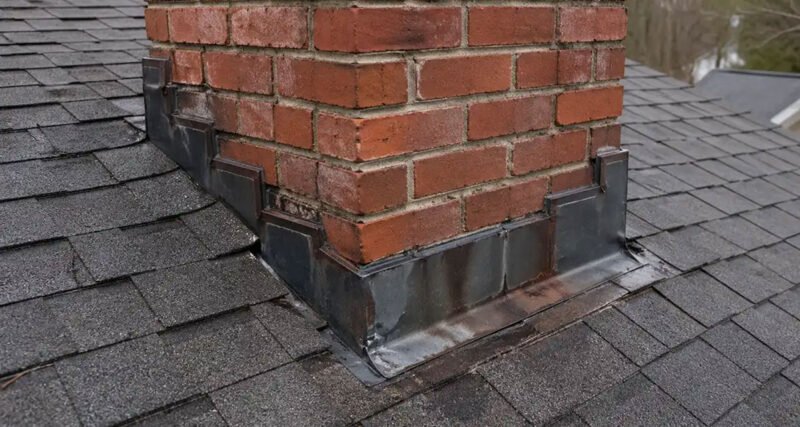
Chimney flashing is the metal barrier that bridges the gap between the chimney brick and the roof surface. It comes in two layers: step flashing, woven into the shingle courses and bent up against the brick, and counter-flashing, which sits on top and is embedded into the mortar joints. When either layer fails, water runs straight down the chimney face and into the house.
The most common flashing failure is not age; it is bad installation. Roofers sometimes reuse old flashing during a re-roof or attach counter-flashing with silicone caulk instead of cutting it into the mortar. A heavy storm and a stiff wind can rip that loose in one night.
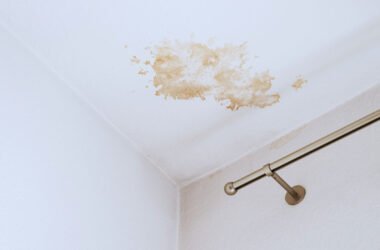
Look for curled or missing shingles directly around the chimney base, rust stains on the metal, and water marks on the ceiling that appear several feet away from the fireplace.
Fix: A roofer will grind a reglet into the mortar and insert new metal counter-flashing, or use tap-in anchors with a high-grade sealant as a short-term measure. Expect to pay $300 to $800 for a professional flashing repair. A tube of polyurethane sealant costs $12, but it buys you weeks, not years.
A Cracked Chimney Crown Lets Water Sneak Through
The chimney crown is the concrete slab that caps the top of the masonry, sloping outward to shed water. Hairline cracks form as the crown expands and contracts through freeze-thaw cycles. Once water gets through those cracks, it travels down inside the chimney structure and can exit anywhere: the attic, the ceiling, or the wall behind the fireplace.
This leak often shows up far from the actual entry point, which makes it one of the hardest causes to diagnose from inside the house.
Small surface cracks can be sealed with a flexible crown coat product like ChimneySaver. Crowns with structural damage (wide gaps, missing chunks, sections that have separated from the brick) need to be removed and re-poured. A crown coat runs $150 to $400 when done professionally. A full crown rebuild runs $600 to $1,200.
Porous Bricks and Deteriorating Mortar Joints
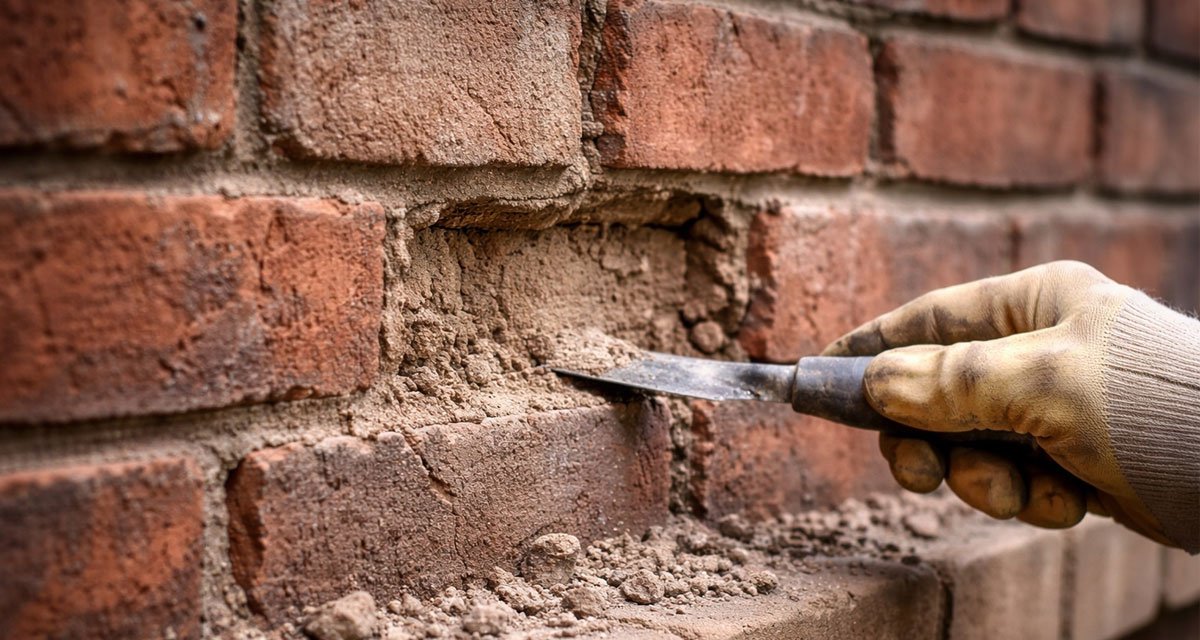
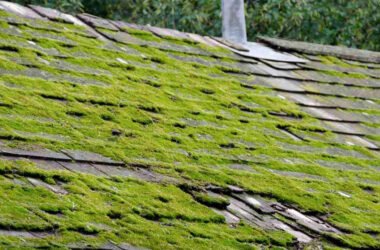
Brick is not waterproof. Older chimneys in particular absorb rainwater like a sponge, and when the mortar between bricks erodes (a condition called spalling), water seeps straight through the wall. You can spot this from the ground: look for moss or vegetation growing out of the mortar, white mineral deposits on the brick face, and chunks of brick that have flaked off in layers.
Repointing the chimney (removing deteriorated mortar and packing in fresh mix) stops water penetration at the source. After repointing, applying a breathable water repellent helps the brick shed rain without trapping moisture inside. Professional repointing costs $500 to $1,500 depending on chimney height and condition. A water repellent treatment adds $150 to $300.
Quick Diagnostic Table: Symptom, Cause, Fix, and Cost
Use this table to narrow down the likely cause of your chimney leak based on what you are seeing inside the house. Each symptom points to a specific failure point and a matching repair approach.
| Symptom | Most Likely Cause | Fix | Approximate Cost |
|---|---|---|---|
| Leak starts during or right after rain, stops quickly | Failed flashing or open flue top | Reflash chimney; install chimney cap | $300–$800 |
| Slow, persistent damp patch that never fully dries | Cracked crown or porous brick | Crown coat or repointing | $150–$1,500 |
| Water on ceiling several feet from chimney | Water traveling along rafters from flashing gap | Inspect attic; repair flashing | $300–$800 |
| Leak only during wind-driven rain | Gaps in mortar or missing counter-flashing | Repoint masonry; install proper counter-flashing | $500–$1,500 |
| Stains on interior brick above fireplace | Condensation inside flue | Install chimney liner; improve ventilation | $1,500–$4,000 |
| New roof, new leak around chimney | Roofer reused old flashing or attached with caulk | Proper reflash with mortar-cut counter-flashing | $500–$1,200 |
DIY Fix vs. Calling a Pro: How to Decide
Not every chimney leak needs a contractor. If you can safely reach the chimney with an extension ladder and the issue is surface-level (sealing hairline cracks in the crown, patching small mortar gaps, or brushing on water repellent), these are within reach of a competent DIYer with a caulk gun and the right masonry products. A tube of Crown Coat is $50 and a gallon of siloxane water repellent is $40.
But if the flashing needs to be cut into the mortar, the crown needs to be re-poured, or the chimney shows structural cracks wider than a quarter-inch, call a licensed roofer or mason. The risk is not just a bad repair; it is a fall from height. Chimney work is one of the most dangerous DIY jobs in home maintenance. If you cannot work with both feet on a stable roof surface, hire it out.
What Homeowners on Reddit Are Saying
Across r/Roofing, r/DIYUK, and r/HomeImprovement, the same frustration keeps surfacing: homeowners spend thousands on a new roof only to find water still coming in around the chimney.
The pattern is consistent: roofers complete the shingle work but leave the old flashing untouched, or tack it back on with silicone.
“He said that, when they were working around the chimney, they noticed that the lead step flashing had been attached to the chimney with silicon rather than mortar. In the ensuing rainstorm, pieces of the lead step flashing had blown off, and water had gotten in. I just paid 13k for a new roof — the last thing I need to worry about right now is a roof leak.”
— u/username802, r/Roofing, 7 upvotes, 16 comments (2018), source
In a more recent thread on r/DIYUK, a homeowner posted photos of water damage beneath the chimney breast and asked for theories. The community quickly spotted the problem: missing mortar on the shared chimney wall and flashing that did not overlap properly.
“The flashing is a mess. Side looks like it is missing and been bodged with render. Front flashing looks like it feeds water behind it. Whole thing needs refurbished — everywhere it has got stuff growing needs sorted pronto.”
— r/DIYUK, 17 upvotes, 74 comments (2024), source
One roofer in the thread summed up the reality bluntly: proper counter-flashing requires grinding a groove into the brick. Many crews skip it because homeowners do not know to ask for it. If you hire a roofer, specify mortar-cut counter-flashing in the contract.
Frequently Asked Questions
Can I fix a chimney leak myself?
Surface-level fixes like sealing small crown cracks, patching minor mortar gaps, and applying water repellent are DIY-friendly if you can safely access the chimney. Flashing replacement and structural masonry work require a professional, both for quality and for safety on a sloped roof.
How much does it cost to fix a chimney leak?
Simple repairs like crown sealing or a chimney cap installation run $150 to $400. Flashing replacement ranges from $300 to $1,200. Full chimney rebuilds with new crown, repointing, and flashing can run $2,500 to $5,000. The cost depends far more on chimney height and accessibility than on materials.
Why is my chimney leaking after I just got a new roof?
This is distressingly common. Roofing contracts often exclude chimney work, and crews may reuse the old flashing or reattach it with caulk instead of mortar. If you are getting a new roof, explicitly include new chimney flashing, mortar-cut counter-flashing, and a crown inspection in the written scope of work.
Does homeowners insurance cover a chimney leak?
Homeowners insurance typically covers sudden, accidental water damage, like a tree limb piercing the roof or a storm tearing off flashing. It does not cover leaks caused by neglect, deferred maintenance, or gradual deterioration. If your chimney has been slowly leaking for months, that is almost certainly on you.
What to Do Next
Start in the attic with a flashlight during daylight. If you see damp brick, water trails on rafters, or daylight poking through gaps around the chimney, you have your starting point. Then work from the top down: check the crown for cracks, inspect the mortar for gaps and plant growth, and examine the flashing for rust or separation. A tube of sealant costs $12 and takes 20 minutes to apply. If the leak stops, you found the problem. If it persists, call a roofer who cuts flashing into mortar, not one who reaches for a caulk gun.