



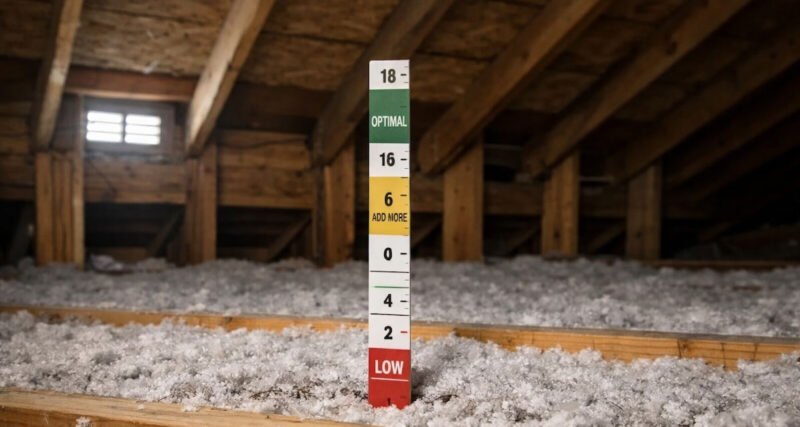
Most attics need between R-38 and R-60 of insulation, which translates to 10 to 18 inches of material depending on type and climate zone. Yet 90 percent of American homes fall short of that mark, according to the Insulation Institute (2023).
The gap between what most attics have and what they actually need costs the average household $200 to $400 per year in wasted energy, per U.S. Department of Energy estimates. Getting the depth right is one of the highest-ROI upgrades a homeowner can make.
Below is a complete breakdown of how much insulation your attic actually needs, what the numbers mean in real inches, and what it costs to close the gap.
How to Tell If Your Attic Has Enough Insulation
Grab a ruler and measure from the attic floor to the top of your insulation, insights as useful as knowing the best neighborhood for your next investment. If the depth sits at or below your floor joists, typically 6 to 7 inches, you need more. That joist-level depth only provides about R-21, well below the minimum R-38 recommended for even the warmest U.S. climate zones.
Other warning signs include insulation that has shifted to one side of the attic, dark spots or discoloration throughout the material, and visible settling that has compressed previously fluffy layers. Cellulose in particular migrates over time, leaving edges and eaves exposed while the center stays piled high.
A five-minute tape measure check can reveal whether your attic is costing you an extra $30 to $50 per month in heating and cooling losses. Most homeowners are surprised by how thin their coverage actually is once they climb up and look.
R-Value Requirements by Climate Zone
The U.S. Department of Energy divides the country into seven climate zones, each with a specific R-value recommendation for attic insulation. Homes in warmer southern states need less depth, while northern states require significantly more material to prevent heat loss through the roof assembly.
| Climate Zone | States (Examples) | Recommended R-Value | Fiberglass Inches | Cellulose Inches |
|---|---|---|---|---|
| 1 | Southern Florida, Hawaii | R-30 to R-49 | 10-16 | 8-13 |
| 2 | Texas, Arizona, Louisiana | R-38 to R-60 | 12-20 | 10-16 |
| 3 | Georgia, North Carolina, Oklahoma | R-38 to R-60 | 12-20 | 10-16 |
| 4 | Virginia, Tennessee, Missouri | R-38 to R-60 | 12-20 | 10-16 |
| 5 | Ohio, Pennsylvania, Colorado | R-49 to R-60 | 16-20 | 13-16 |
| 6 | Minnesota, Montana, Vermont | R-49 to R-60 | 16-20 | 13-16 |
| 7 | Northern Minnesota, Alaska | R-49 to R-60 | 16-20 | 13-16 |
According to the DOE’s 2024 Insulation Fact Sheet, the R-value gap in older homes is staggering. Many pre-1980 houses have just 4 to 5 inches of insulation, providing R-15 at best. That is less than half the minimum recommendation for zone 2, and a third of what zones 5 through 7 demand.
The contrast is worth absorbing: a home built in 1975 in Michigan might have R-15 in the attic while the current standard calls for R-60. The homeowner is paying winter heating bills on a house insulated to 25 percent of modern code.
Insulation Types and How Much You Need of Each
Different materials achieve the same R-value at very different thicknesses. Blown-in cellulose packs more thermal resistance per inch than fiberglass batts, while closed-cell spray foam outperforms both by a wide margin. Here is what each material requires to hit common R-value targets.
| Material | R-Value per Inch | Inches for R-38 | Inches for R-49 | Typical Cost (per sq ft) |
|---|---|---|---|---|
| Fiberglass batts | R-3.0 to R-3.8 | 10-13 | 13-16 | $0.50-$1.50 |
| Blown-in fiberglass | R-2.5 to R-3.7 | 10-15 | 13-20 | $1.00-$2.00 |
| Blown-in cellulose | R-3.5 to R-3.8 | 10-11 | 13-14 | $1.00-$2.50 |
| Open-cell spray foam | R-3.5 to R-3.7 | 10-11 | 13-14 | $1.50-$3.50 |
| Closed-cell spray foam | R-6.0 to R-7.0 | 5-6 | 7-8 | $3.00-$7.00 |
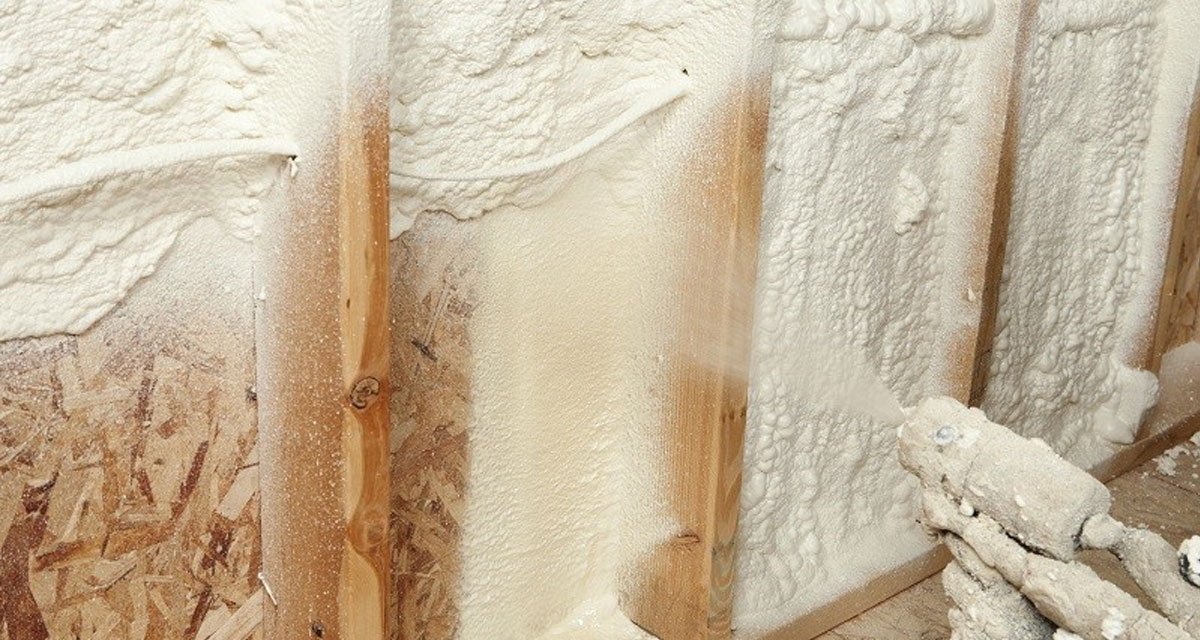
Closed-cell spray foam also creates an air seal that fiberglass and cellulose cannot match, which means it can outperform its R-value rating in real-world conditions. A 7-inch layer of closed-cell foam often delivers comfort results equivalent to 14 or more inches of blown-in fiberglass.
“Quoted $8K for Attic Insulation. Wondering if DIY is a legitimate option.”
— r/DIY, 81 upvotes, 89 comments (2024), source
Professional quotes like this are common for larger homes or spray foam jobs. For blown-in cellulose or fiberglass on a standard 1,000-square-foot attic, most homeowners report paying between $1,500 and $2,500 installed.
Cost of Adding Attic Insulation
Professional attic insulation installation runs $1.50 to $3.50 per square foot for blown-in materials and $3 to $7 per square foot for spray foam. A 1,500-square-foot attic typically costs $2,000 to $5,000 for blown-in and $4,500 to $10,000 for closed-cell spray foam.
The U.S. Department of Energy estimates that proper insulation and air sealing can cut heating and cooling costs by 10 to 50 percent. For a household spending $2,000 annually on energy, that is $200 to $1,000 back each year. Most blown-in insulation jobs pay for themselves within 2 to 4 years through reduced utility bills.
“Insulation cost for 1000 sqft attic”
— r/HomeMaintenance, 13 upvotes, 53 comments (2025), source
Federal tax credits through the Inflation Reduction Act (2022) cover up to 30 percent of insulation costs, capped at $1,200 per year. Many state programs add additional rebates, which can bring the effective cost of a blown-in job below $1,000 for qualifying homeowners.
Signs You Have Too Little Insulation
Ice dams forming along your roofline in winter, rooms that never reach thermostat temperature, and energy bills climbing 15 to 25 percent year over year all point to insufficient attic insulation. Any single sign warrants a closer look; two or more together make the case clear.
- Ice dams or icicles along the eaves
- Upstairs rooms noticeably hotter in summer or colder in winter than the rest of the house
- Heating or cooling system running constantly without reaching set temperature
- Visible floor joists when you look across the attic floor
- Insulation that has dark streaks, moisture damage, or pest contamination
- Drafts near ceiling fixtures, attic hatches, or recessed lights
“Those that added insulation to their attic, how noticeable was the difference in temp/comfort and utility bills?”
— r/homeowners, 110 upvotes, 158 comments (2024), source
Homeowners in that thread consistently reported a noticeable comfort difference within the first day and measurable utility savings within the first billing cycle. Several noted their HVAC systems stopped running constantly for the first time in years.
Frequently Asked Questions
Can you have too much attic insulation?
Technically yes, but it is extremely rare in practice. Over-insulating only becomes a problem if you block soffit vents or trap moisture, which causes mold. As long as ventilation pathways remain clear, adding extra insulation above DOE recommendations will not cause harm, though the energy savings diminish past R-60.
How many inches of insulation should be in an attic?
Between 10 and 20 inches, depending on climate zone and material type. Northern states (zones 5-7) need 13 to 20 inches of fiberglass or 13 to 16 inches of cellulose to meet R-49 to R-60 standards. Southern states can reach adequate coverage at 10 to 13 inches.
Is R-38 enough for an attic?
R-38 meets the minimum DOE recommendation for climate zones 1 through 4, covering the southern half of the U.S. For zones 5 through 7, R-38 falls short of the recommended R-49 to R-60 range. If you live north of the Virginia-Kentucky line, aim higher.
How often should attic insulation be replaced?
Fiberglass and cellulose insulation can last 20 to 30 years if undamaged. Replace sooner if you see moisture damage, pest infestation, significant settling, or foul odors. Spray foam lasts 80 years or more under normal conditions and rarely needs replacement.
Does attic insulation help in summer?
Absolutely. Insulation resists heat flow in both directions. In summer, a properly insulated attic prevents rooftop heat (which can reach 150 degrees Fahrenheit) from radiating down into living spaces. Homeowners with adequate insulation typically report 5 to 10 degree cooler upstairs rooms during peak summer months.
What to Do Next
Grab a tape measure this weekend and check your current depth. Compare that number to the climate zone table above. If you are under 10 inches of fiberglass or cellulose in zones 1-4, or under 13 inches in zones 5-7, the math favors adding more material. Start with blown-in cellulose for the best balance of cost, performance, and ease of installation.