



It is 10 p.m. and the rest of the house has cooled to a reasonable temperature. The thermostat says 72. But the bedroom, the one you actually need to sleep in, feels closer to 80. The ceiling fan is on high. The vent is open. Nothing helps. You are lying there wondering why one room is so much hotter than the rest of the house and whether the only solution is to buy a window unit and accept defeat, notes Meridian Residential Group of experts.
Sound familiar? The answer is almost never one thing. Most hot rooms are caused by two or three factors stacking on top of each other, and the stack is different for every house. A south-facing bedroom with a single undersized supply duct, a closed return vent behind the dresser, and an attic with four inches of thirty-year-old insulation is not one problem. It is four problems that all happen to land on the same room. Fixing just one of them helps. Fixing all of them solves it.
Here is the diagnostic order, from the things you can check in thirty seconds to the things that require a professional. Start at the top. Most people find the fix before they get to number four.
#1: Check the Easy Stuff First — Vents, Filters, and Sunlight
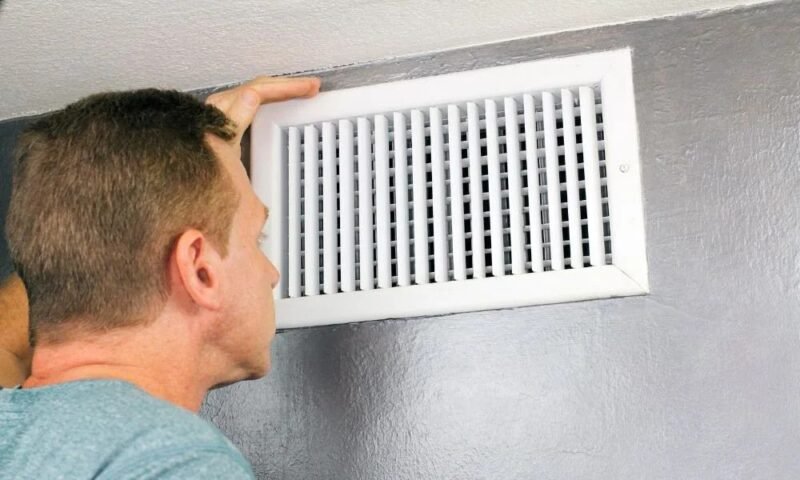
The most common cause of one room being hotter than the rest of the house is also the easiest to overlook: the supply vent in that room is partially or fully closed, blocked by furniture, or the register damper inside the duct was pushed shut at some point and never reopened. Walk into the hot room and put your hand over the supply vent while the AC is running. You should feel a steady stream of cold air. If the airflow is weak compared to other rooms, the vent is obstructed or the duct feeding it has a problem. Move the dresser. Open the damper. Rerun the test.
While you are looking at vents, check the return air path. Every room with a supply vent needs a way for air to get back to the air handler. In older homes, this is often the gap under the door. If the hot room has a door that fits tight to the floor and no dedicated return vent, the room pressurizes when the AC runs. Pressurized air pushes back against the supply duct, reducing airflow into the room. The fix is sometimes as simple as undercutting the door by three-quarters of an inch or installing a transfer grille in the wall. A room with zero return path will never cool properly regardless of how cold the supply air is.
Sunlight is the next free fix. A south-facing or west-facing room with uncovered windows gains heat faster than the AC can remove it during the hottest part of the day. The Sansone Air Conditioning guide (2018) identifies overexposure to sunlight as the number one cause of a single hot room, noting that the greenhouse effect from direct sun can raise a room’s temperature by five to ten degrees above the rest of the house. Blackout curtains or cellular shades block significantly more heat than mini-blinds or sheer curtains. Install them and keep them closed during peak sun hours. The temperature difference is noticeable within the same afternoon.
The air filter for the entire system lives at the air handler, not in the hot room, but a clogged filter reduces airflow to every room. The rooms at the end of the longest duct runs feel the reduction first. If the filter has not been changed in three months or more, replace it before investigating anything else. A dirty filter creates a system-wide airflow deficit that shows up in the farthest room first. The Department of Energy (2024) notes that a severely clogged filter can increase HVAC energy consumption by up to 15%, and the airflow reduction is most pronounced at the registers farthest from the air handler.
#2: The Thermostat Might Be Lying to You
The thermostat controls the AC based on the temperature of the air immediately around it, not the temperature of the hot room. If the thermostat is on the first floor in a shaded hallway and the hot room is an upstairs bedroom with west-facing windows, the thermostat has no way to know that room exists. It cools until the hallway hits 72 and shuts off, leaving the bedroom at 80 indefinitely. This is the most common cause of upstairs rooms being hotter than downstairs rooms, per Sansone Air Conditioning (2018), which notes that multi-level homes almost always have this issue because the thermostat is on the main floor while the upper floor has more direct contact with outside heat.
The fan switch is the simplest partial fix. Setting the thermostat fan from “Auto” to “On” runs the blower continuously, circulating air through the whole house even when the AC compressor is not running. This does not cool the hot room directly, but it mixes the air between rooms and reduces the temperature difference. Strada Air Conditioning (2025) recommends running the fan continuously in multi-level homes as a low-cost way to even out temperatures. The downside is higher electricity use from the blower motor and more frequent filter changes. It also increases humidity in the house during cooling season because the blower re-evaporates moisture off the coil after each cycle.
A thermostat placed in direct sunlight or above a heat-generating appliance reads artificially high, causing the AC to run longer than necessary and overcool the rest of the house while the hot room still lags behind. Check the thermostat’s location. If it is on an exterior wall that gets afternoon sun, near a kitchen, or above a lamp or television, the reading is not accurate. Moving a thermostat costs a few hundred dollars. Leaving a badly placed one where it is costs more in wasted energy over a single summer.
#3: Ductwork Problems — The Hidden Cause
If the easy fixes do not narrow the gap, the ductwork feeding the hot room is the next place to look. A duct can be pinched, disconnected, leaking, or simply too small for the room it serves. The Department of Energy (2024) identifies duct leakage as one of the most overlooked causes of uneven room temperatures and high energy bills. A supply duct with a disconnected joint or a tear in the flexible duct material dumps conditioned air into the attic or crawlspace instead of the room. The room gets a fraction of the airflow it was designed to receive.
The simplest diagnostic is a tissue test. Tape a single square of toilet paper over the supply vent in the hot room and do the same in a room that cools properly. Run the AC and compare how far the tissue lifts. If the hot room’s tissue barely moves while the cool room’s tissue stands nearly horizontal, the duct has a restriction or a leak. The fix depends on what you find. A crushed flex duct needs replacement. A disconnected joint needs reconnection and sealing with mastic. A duct that has come loose from the register boot inside the wall requires cutting drywall to access. None of these are particularly expensive in materials. The labor is the variable.
Sansone Air Conditioning (2018) notes that ductwork has an average lifespan of ten to fifteen years. If the house is older than that and the ducts have never been inspected, deterioration is likely. Rodents chew through flex duct. Tape dries out and separates. Insulation sleeves sag and leave sections of duct uninsulated in a 130-degree attic. A duct running twenty feet through an unconditioned attic gains heat along its entire length before reaching the register. The air that started at 55 degrees at the air handler may arrive at 68 degrees at the hot room. The room never cools because the air feeding it is barely cooler than the room itself.
Ducts buried in walls and ceilings require a professional diagnostic. An HVAC technician can measure static pressure and airflow at each register to quantify how much capacity each duct is delivering and identify leaks with a duct blaster test. The test costs between $200 and $500 and provides a room-by-room airflow map that eliminates guesswork.
#4: Insulation and Windows — The Building Envelope
If the ductwork is intact and the airflow is adequate, the problem is in the room itself. The room cannot hold the cold air the AC is delivering because the building envelope is leaking or under-insulated. Heat enters the room through the ceiling, walls, and windows faster than the AC can remove it. The result is a room that never reaches the set point no matter how long the system runs.
Attic insulation above the hot room is the first suspect. Many homes have uneven insulation depth across the attic floor. The section above the master bedroom might have twelve inches of blown-in fiberglass while the section above the hot spare bedroom has three inches because a previous owner moved insulation to install a ceiling fan and never put it back. Go into the attic and look. If the insulation above the hot room is visibly thinner than the rest of the attic, adding insulation to match the depth of the surrounding area is a weekend project that costs under a hundred dollars in materials.
Windows are the second major heat entry point. Single-pane windows, which are still common in homes built before 1980, have an R-value of roughly 1. A typical exterior wall has an R-value of 13 to 19. The window is a thermal hole in the wall ten to fifteen times larger than the surrounding surface. Strada Air Conditioning (2025) notes that south-facing rooms with uncovered windows overheat due to poor insulation and recommends curtains and blinds as the first line of defense. Window film adds another layer of heat rejection for rooms where curtains are impractical, reducing solar heat gain by 30% to 50% depending on the film type. American Window Film (2025) specifically recommends this as a solution for rooms that remain hot despite proper HVAC function.
The walls themselves matter less than the ceiling and windows but are not irrelevant. An upstairs room with three exterior walls loses cooling capacity to the outside on three sides instead of one or two. A room above an unconditioned garage has a floor that acts as a radiant heat panel whenever the garage heats up. These are structural issues that insulation and air sealing address incrementally. A home energy audit, either DIY or professional, identifies the biggest thermal leaks and gives you a prioritized list of fixes.
#5: Your AC Might Be the Wrong Size for the House
If the hot room is a home addition, a converted garage, or a finished attic that was not part of the original floor plan, the central AC was not sized to include it. The system was designed for the square footage that existed when it was installed. Adding three hundred square feet of living space without upsizing the equipment or adding a dedicated duct run guarantees that the farthest rooms, usually the addition, will never reach the set point on hot days.
ENERGY STAR (2025) emphasizes that proper sizing is critical: an undersized system cannot keep up with cooling demand, while an oversized system short-cycles and fails to dehumidify. Both problems produce uneven temperatures but for different reasons. An undersized system starves the rooms at the end of the longest duct runs. An oversized system cools the rooms near the thermostat quickly and shuts off before conditioned air ever reaches the distant rooms. A professional load calculation (Manual J) determines the correct system size based on square footage, window area, insulation levels, ceiling height, and local climate, not a rule of thumb based on square footage alone.
The fix for a sizing problem is either replacing the system with a correctly sized unit, adding a ductless mini-split to the hot room, or installing a zoned system with motorized dampers that direct airflow where it is needed. A mini-split for a single room costs between $2,000 and $5,000 installed. A full system replacement runs $5,000 to $12,000 depending on system size and efficiency. Strada Air Conditioning (2025) recommends professional zoning for larger homes where multiple rooms have temperature inconsistencies, noting that DIY approaches like closing vents make the imbalance worse by increasing static pressure in the remaining ducts.
| What to Check | DIY Diagnostic | Likely Fix | Approximate Cost |
| Supply vent blocked or closed | Hand over vent: feel for airflow | Open damper, move furniture | $0 |
| Return air path blocked | Door gap < 1/2 inch, no return vent | Undercut door, add transfer grille | $0–$100 |
| Sunlight overheating | South/west windows, no coverings | Blackout curtains, window film | $30–$200 |
| Dirty system filter | Pull filter: grey and clogged | Replace filter | $8–$25 |
| Fan set to “Auto” in multi-level | Thermostat fan switch | Set to “On” during peak hours | $0 (+$15–$30/mo electric) |
| Thermostat in wrong location | In direct sun, near kitchen/electronics | Relocate thermostat | $200–$500 |
| Duct leak or restriction | Tissue test: weak airflow at register | Seal duct, replace crushed section | $200–$1,000 |
| Low attic insulation above room | Visual inspection: thinner than surrounding | Add blown-in insulation | $50–$200 (DIY) |
| Single-pane or unshaded windows | Window feels hot to touch on sunny day | Window film, curtains, replacement | $50–$800/window |
| AC undersized for house/addition | System >10 yrs, addition unaccounted | Mini-split or system replacement | $2,000–$12,000 |
Frequently Asked Questions
Why is my upstairs so much hotter than downstairs even with the AC running?
Heat rises, and the upstairs has more direct contact with the outside through the attic and roof. Add the fact that most thermostats are on the first floor, where they sense cooler air and shut off the AC before the upstairs reaches the set point. Running the fan continuously helps mix air between floors. Closing downstairs supply vents slightly can redirect more airflow upstairs, but do this sparingly since excessive vent closure increases static pressure and reduces overall system efficiency.
Will closing supply vents in the cooler rooms push more air to the hot room?
Closing one or two vents partially can redirect some airflow toward the hot room, but closing more than that backfires. Residential duct systems are designed for a specific static pressure. Closing too many vents increases pressure in the remaining ducts, forces air through existing leaks, and pushes the blower motor outside its efficiency curve. Strada Air Conditioning (2025) and Sansone (2018) both explicitly recommend keeping vents open. The Department of Energy identifies closed-off rooms as a cause of disrupted airflow that reduces overall system performance.
Can adding a ceiling fan fix a room that is always hotter than the rest of the house?
A ceiling fan does not lower the air temperature. It creates a wind-chill effect on your skin that makes the room feel four to six degrees cooler, which is enough to make a hot bedroom sleepable. The fan does nothing for the underlying airflow or insulation problems, and it costs roughly the same to run as a light bulb. Install one and run it counterclockwise in summer to push air downward. It is a bandage, not a cure, but it is a $150 bandage that works while you figure out the real fix.
How much temperature difference between rooms is considered normal?
A two- to three-degree difference between rooms on the same floor is within normal range for most residential HVAC systems. Differences of five degrees or more indicate an airflow, duct, or insulation problem worth investigating. A room that is consistently eight to ten degrees warmer than the thermostat set point has a significant issue, usually a combination of duct restriction and solar heat gain, and will not fix itself.
Is a ductless mini-split worth the cost for a single hot room?
If the hot room is an addition, a converted space, or a room where fixing the ducts would require cutting into finished ceilings and walls, a mini-split is often the most cost-effective solution. A single-zone mini-split installed costs $2,000 to $5,000 and provides independent temperature control for that room without modifying the existing ductwork. The alternative, running new ductwork through finished space, can cost as much or more and involves drywall repair and painting. ENERGY STAR certified mini-splits are highly efficient and many qualify for utility rebates that offset part of the installation cost.
The Bottom Line
A single hot room is almost never one big problem. It is a vent pushed mostly closed three years ago, a duct that leaks in the attic, and a west-facing window with no curtain, all converging on the same bedroom. The order of investigation matters because the high-cost fixes like replacing the AC or adding a mini-split are only worth considering after you have ruled out the low-cost fixes that solve the problem 80% of the time. Open the vent. Move the dresser away from the return. Hang blackout curtains. Change the filter. Run the tissue test on the supply register. Check the attic insulation above the room with a flashlight. Each step takes ten minutes and costs nothing or close to it, and any one of them might be the thing that lets you sleep through the night without buying a window unit.