


A reliable air conditioner does more than keep indoor temperatures comfortable. It also helps control humidity, maintain consistent airflow, and create a more pleasant living environment during periods of intense heat. However, even a well-designed system can lose efficiency when routine maintenance is overlooked. Dust can restrict airflow, coils can become dirty, condensate drains can clog, and small performance changes can develop into larger mechanical problems. A year-round maintenance routine helps identify these issues before they interfere with comfort or place unnecessary strain on the equipment.
For homeowners, the key is consistency rather than waiting for a noticeable failure. Some maintenance tasks can be handled routinely, while others require trained attention. By dividing maintenance into practical areas—filters, coils, drainage, refrigerant, airflow, thermostats, and professional inspections—homeowners can keep their cooling systems operating more efficiently throughout the year.
Start With Regular Filter Maintenance
Air filters are among the simplest components to maintain, yet they have a direct effect on system performance. As a filter collects dust, pet hair, pollen, and other airborne particles, resistance to airflow increases. According to ENERGY STAR, a dirty filter can slow airflow and force the HVAC system to work harder to maintain the desired indoor temperature. Regular filter checks can also help limit dust and dirt buildup within the system.
Check the filter regularly and follow the replacement or cleaning recommendations for the particular filter and equipment. Homes with pets, occupants with allergies, or significant indoor dust may require more frequent attention. A clean filter also helps prevent debris from reaching internal components where it can accumulate on coils and other surfaces.
Filter maintenance should be treated as a routine household task rather than something reserved for summer. In regions where air conditioners operate for much of the year, including South Florida, consistent checks are especially important. Incorporating this step into a broader AC maintenance routine can help homeowners notice changes in airflow before they become more serious.
Keep Coils and Outdoor Components Clean
The indoor and outdoor coils perform essential heat-transfer functions. The evaporator coil absorbs heat from indoor air, while the condenser coil releases heat outdoors. When either coil becomes coated with dirt or debris, heat transfer can become less effective. The system may then need to run longer to achieve the desired temperature.
The outdoor unit deserves particular attention because leaves, grass clippings, dust, and other debris can accumulate around the cabinet. Keep the surrounding area reasonably clear so air can move freely through the condenser. Avoid placing objects directly against the unit, and arrange landscaping so vegetation does not obstruct airflow.
Coil cleaning is more technical than replacing a filter, since improper methods can damage sensitive components or interfere with system performance. When coils appear dirty or cooling efficiency begins to decline, homeowners arranging AC maintenance Palm Beach Gardens services can have the condenser, airflow, and other system components professionally evaluated as part of a broader tune-up. Regular maintenance can help identify developing issues before they contribute to reduced cooling performance or unexpected system problems.
Check Condensate Drainage Before It Becomes a Problem
Air conditioners naturally remove moisture from indoor air. That moisture collects as condensation and normally leaves the system through a condensate drain. Over time, algae, dirt, and biological buildup can restrict the drain line. If water cannot escape properly, it may back up into the drain pan or surrounding area.
A clogged condensate line can produce more than an inconvenient leak. Persistent moisture near building materials can contribute to water damage, staining, unpleasant odors, and conditions favorable to microbial growth. Some systems also have safety switches designed to shut the equipment down when excessive condensate is detected.
Homeowners should periodically check for unusual water around the indoor air handler and pay attention to unexpected shutdowns. Because condensate systems vary by installation, recurring drainage problems should be evaluated rather than repeatedly treated as a minor inconvenience.
Monitor Refrigerant Performance and Cooling Changes
Refrigerant is essential to the cooling cycle, but homeowners generally should not attempt to handle or recharge it themselves. An air conditioner does not normally consume refrigerant during ordinary operation. If the system develops a low-refrigerant condition, there may be a leak or another underlying issue that needs to be identified.
Changes in cooling performance can provide useful warning signs. These may include longer operating cycles, inadequate cooling, unusual ice formation on refrigerant lines or the indoor coil, or air that does not feel as cool as expected. None of these symptoms alone proves that refrigerant is the cause, because airflow restrictions, electrical problems, dirty coils, and other faults can create similar symptoms.
A qualified technician can measure system performance and determine whether refrigerant levels and operating pressures are appropriate. Correct diagnosis matters because adding refrigerant without addressing a leak may only provide a temporary improvement.
Protect Airflow and Use the Thermostat Wisely
Efficient cooling depends heavily on unrestricted airflow. In addition to maintaining filters, homeowners should make sure supply and return vents are not blocked by furniture, curtains, rugs, or other household items. Closed or obstructed vents can alter air distribution and increase pressure within portions of the duct system.
Pay attention to rooms that consistently feel warmer or cooler than others. Uneven temperatures may indicate duct leakage, inadequate insulation, airflow restrictions, equipment problems, or an improperly balanced system. These symptoms are worth investigating rather than compensating for indefinitely by lowering the thermostat.
The thermostat itself should also be kept clean and positioned away from direct sunlight, heat-producing appliances, and drafts that could distort temperature readings. Programmable or smart thermostats can help establish appropriate temperature schedules, but their usefulness depends on proper setup and accurate sensing.
Adjust Maintenance With the Seasons
Although South Florida does not experience the same seasonal extremes as colder regions, air-conditioning equipment still benefits from a seasonal maintenance mindset. Before periods of heavier cooling demand, inspect filters, check the outdoor unit, look for drainage concerns, and observe whether the system starts and operates normally.
A simple annual routine can include these steps:
- Check or replace the air filter according to equipment and household conditions.
- Inspect visible areas around indoor and outdoor units for dirt, moisture, or obstructions.
- Confirm that supply and return vents remain unobstructed.
- Watch for unusual sounds, odors, cycling patterns, or changes in cooling performance.
- Check the condensate area for signs of standing water or leakage.
- Keep the outdoor condenser area clear of leaves, vegetation, and stored objects.
- Schedule professional maintenance when performance changes or routine service is due.
These checks should not replace professional service. Instead, they help homeowners identify changes between inspections and communicate useful observations to a technician.
Schedule Professional Tune-Ups Periodically
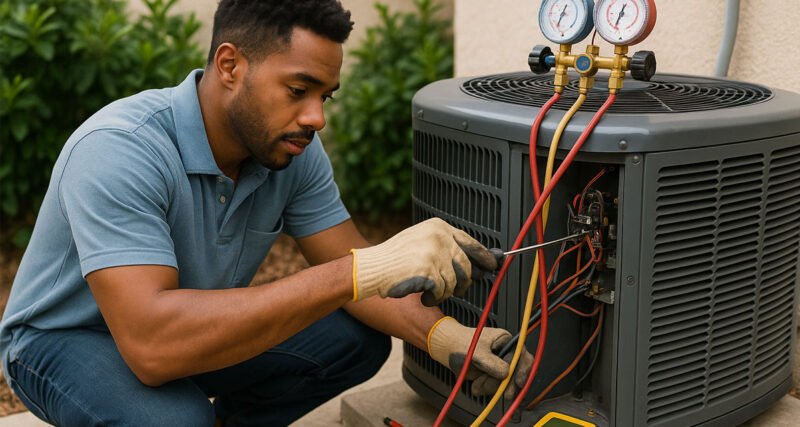
Some aspects of air-conditioning maintenance require specialized instruments, electrical knowledge, and an understanding of refrigeration systems. A professional tune-up can involve inspecting electrical connections, measuring operating performance, checking refrigerant-related conditions, examining coils and drainage components, and evaluating airflow.
Professional maintenance is particularly valuable when an older system begins showing subtle changes. Strange noises, repeated short cycles, unexplained increases in operating time, water leakage, or inconsistent cooling should not be ignored. Addressing developing issues earlier can reduce the likelihood of a sudden interruption during a period of high demand.
A tune-up also provides an opportunity to review the overall condition of the system rather than focusing on a single symptom. Maintenance should be based on the equipment manufacturer’s recommendations, the system’s age and condition, and how heavily it is used.
End Note
Keeping an air conditioner efficient throughout the year is primarily a matter of regular observation and timely maintenance. Clean filters support airflow, clean coils promote effective heat transfer, clear condensate drains help control moisture, and proper thermostat settings support consistent operation. At the same time, unexplained cooling changes or refrigerant concerns deserve professional evaluation rather than guesswork.
A practical maintenance routine does not require homeowners to dismantle equipment or perform complicated repairs. Instead, it combines simple recurring checks with professional tune-ups when needed. By paying attention to small changes and maintaining the system consistently, homeowners can support dependable cooling, reduce avoidable strain, and keep indoor comfort more consistent throughout the year.