



An air conditioner coil that freezes up is a specific problem with a specific component: the evaporator coil inside the air handler or furnace. The previous guide on AC freezing covered the general causes: dirty filter, low refrigerant, and restricted airflow. This guide goes deeper into the coil itself. A coil can freeze even when the filter is clean, the vents are open, and the refrigerant charge is correct. The problem is in the coil or the components directly connected to it. The coil may be so coated with dirt and debris that no amount of airflow can reach the fins. The metering device that controls the flow of refrigerant into the coil may be restricted. The refrigerant may not be distributed evenly through the coil circuits, causing one section to freeze while another remains warm. A partial freeze, ice on only part of the coil, is a different problem from a fully frozen coil, and it points to a different set of causes.
The pattern of ice on the coil is a diagnostic tool. A fully frozen coil, ice covering the entire surface, is almost always caused by low airflow or low refrigerant charge. The entire coil is starved of heat, and the entire coil freezes. A partially frozen coil, ice on only the bottom half, only the inlet side, or in patches, indicates a problem with refrigerant distribution, a restricted metering device, or a coil that is partially blocked with dirt on the air side. The ice tells you where the problem is. A coil that freezes from the inlet, the point where the refrigerant enters, and the ice spreads outward from there, is low on refrigerant. A coil that freezes in patches, with some sections clear and others iced, has restricted airflow through the iced sections, either from dirt on the coil surface or from a blower that is not moving air evenly across the coil face.
EPA WaterSense advises that maintaining home equipment prevents failures and saves energy. A frozen coil not only stops the AC from cooling, it can also cause water damage when the ice melts and overwhelm the drain pan.
Cause #1: The Coil Itself Is Dirty — Not Just the Filter
The air filter protects the coil from dust and debris entering the air handler. Over years of operation, even with regular filter changes, a fine layer of dust and grime accumulates on the evaporator coil. The dust sticks to the condensation on the coil surface. It bakes on. It acts as an insulating blanket between the air and the metal fins. The coil cannot absorb heat effectively. The refrigerant inside the coil gets colder than it should. When the coil temperature drops below freezing, ice forms on the dirtiest sections first, the areas where airflow is most restricted by the buildup.
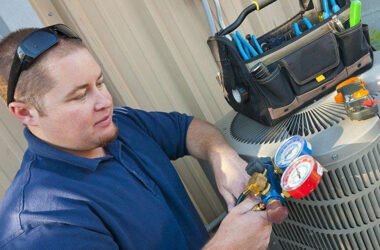
A dirty evaporator coil must be cleaned. This is a professional service because the coil is inside the air handler or furnace cabinet, typically behind sealed panels, and accessing it requires working around electrical components and refrigerant lines. The technician uses a commercial coil cleaner, a pump sprayer, and a brush. The cleaner foams into the coil, lifts the dirt and grime, and is rinsed away. The cleaning costs $100 to $200 and should be done every two to three years, more often in homes with pets, in dusty environments, or where the filter has been neglected. A coil that has never been cleaned in a 15-year-old system may be so impacted that cleaning cannot fully restore airflow. In that case, coil replacement is the only permanent fix.
Cause #2: Failing Metering Device — TXV or Piston
The metering device controls the flow of refrigerant into the evaporator coil. It is a restriction between the high-pressure liquid line and the low-pressure coil. Two types are common in residential systems. A thermal expansion valve, a TXV, modulates the flow based on the temperature and pressure of the refrigerant leaving the coil. It opens wider when the cooling load is high and closes when the load is low. A fixed orifice, a piston with a precisely sized hole, provides a constant restriction regardless of the load. Both can fail or become restricted.
A TXV that sticks partially closed restricts the flow of refrigerant into the coil. The pressure in the coil drops. The temperature drops. The coil freezes. The freeze starts at the point where the refrigerant enters the coil and spreads outward. The rest of the system may have a full refrigerant charge. The problem is that the refrigerant cannot get into the coil. A stuck TXV can sometimes be diagnosed by measuring the superheat, the temperature of the refrigerant leaving the coil compared to its saturation temperature. A high superheat with a low suction pressure indicates a restricted metering device. A technician can confirm the diagnosis and replace the TXV if necessary.
A fixed orifice that becomes partially clogged with debris, a piece of solder, a metal shaving, or desiccant from a failed filter drier, creates the same symptoms as a stuck TXV. The orifice is a small brass fitting with a hole roughly the diameter of a pencil lead. It does not take much debris to restrict it. Cleaning or replacing the orifice and replacing the filter drier may solve the problem. If debris has circulated through the system, a more extensive cleanup, flushing the refrigerant lines, may be necessary.
Cause #3: Partial Freeze — Uneven Airflow or Refrigerant Distribution
A coil that freezes only on one section, typically the bottom, the top, or one side, has an airflow or refrigerant distribution problem in that specific section. The most common cause of a bottom-section freeze is a multi-row coil where the lower rows are caked with dirt that the filter did not stop. The air takes the path of least resistance through the clean upper rows. The lower rows receive almost no airflow and freeze. The fix is coil cleaning.
A freeze on only one side of the coil, left or right, can be caused by a blower that is not distributing air evenly across the coil face. The blower outlet may be partially blocked, the ductwork may be poorly designed, or the blower wheel may be dirty and unbalanced. A freeze that is patchy, with isolated spots of ice, can be caused by a coil with internal restrictions in the refrigerant circuits. The refrigerant flows through multiple parallel paths, called circuits, inside the coil. If one circuit is partially restricted, the refrigerant in that circuit expands to a lower pressure and temperature than the other circuits. That circuit freezes while the others operate normally. An internal circuit restriction requires coil replacement.
How to Thaw the Coil and Restart Safely
Turn the AC off at the thermostat. Set the fan to “On” to blow warm indoor air across the frozen coil. The fan-only operation will speed the thaw without running the compressor. The thawing takes one to four hours depending on the ice thickness. Place towels or a shallow pan under the air handler. The meltwater may exceed the drain pan capacity if the ice is thick.
Do not chip at the ice. The evaporator coil is made of thin aluminum fins pressed onto copper tubing. A screwdriver, an ice pick, or any tool used to chip the ice will puncture the aluminum and can puncture the copper. A punctured coil leaks refrigerant. The repair cost is hundreds of dollars more than the patience to let the ice melt naturally.
Once the ice is completely melted, check the filter. If it is dirty, replace it. Check the coil surface with a flashlight. If it is visibly caked with dirt, schedule a professional coil cleaning. If the coil is clean and the filter is clean, the freeze is likely caused by low refrigerant or a failing metering device. Call a technician. Do not restart the AC expecting a clean filter to fix a freeze that recurs. The filter was not the cause if the coil froze with a clean filter already in place.
Frequently Asked Questions
Why are the refrigerant lines outside frozen too?
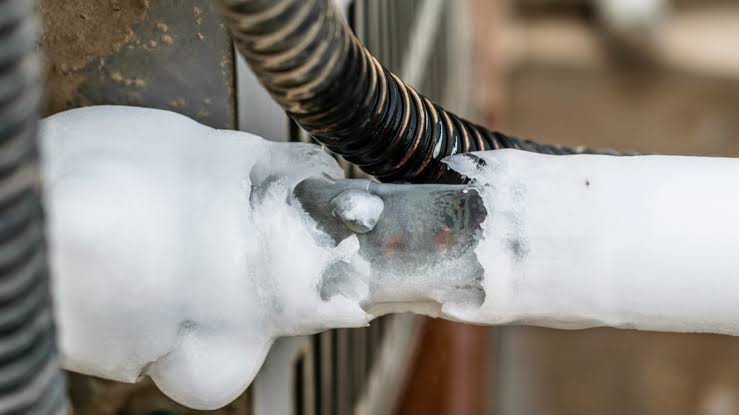
Ice on the larger insulated copper line, the suction line, at the outdoor unit indicates that liquid refrigerant is returning to the compressor. This is called floodback or slugging. The coil is so cold that refrigerant is not fully evaporating before it leaves the coil. Liquid refrigerant entering the compressor can destroy it. Turn the AC off immediately. Do not restart it until the coil is completely thawed and the cause of the freeze is corrected. Liquid floodback is a serious condition that can destroy a compressor in minutes.
Is a frozen AC coil the same as a heat pump defrosting?
No. A heat pump defrost cycle is a normal operation that melts frost on the outdoor coil in winter. The indoor coil is warm during heating mode and does not freeze. An AC coil freeze is abnormal and occurs in cooling mode when the indoor coil temperature drops below freezing. The defrost cycle on a heat pump is a feature. The ice on an AC coil is a failure.
Can I clean the evaporator coil myself?
If you can safely access the coil, yes. Turn off power to the air handler at the breaker. Remove the access panel. Use a soft brush and a commercial no-rinse coil cleaner. Do not use a pressure washer or a garden hose. The water pressure will bend the fins and can drive water into the electrical components and the ductwork. If the coil is in a difficult-to-access location, such as a horizontal unit in an attic with limited clearance, hire a professional. The risk of damaging the coil, the electrical components, or yourself is not worth the money saved.
The Bottom Line
An evaporator coil that freezes up has a problem that is specific to the coil or the components that feed it. A fully frozen coil with a clean filter is low on refrigerant. A partially frozen coil is dirty, has restricted airflow, or has a failing metering device. The pattern of ice on the coil tells you where the problem is. Ice at the refrigerant inlet that spreads outward is a metering device or low charge. Ice on the lower portion of the coil is dirt. Patchy ice is uneven airflow or an internal circuit restriction. Let the ice melt naturally. Do not chip it. Clean the filter. Inspect the coil surface. If the coil is dirty, have it professionally cleaned. If the coil is clean and the freeze recurs, call a technician. The coil freeze is a symptom of a problem that will not fix itself.