



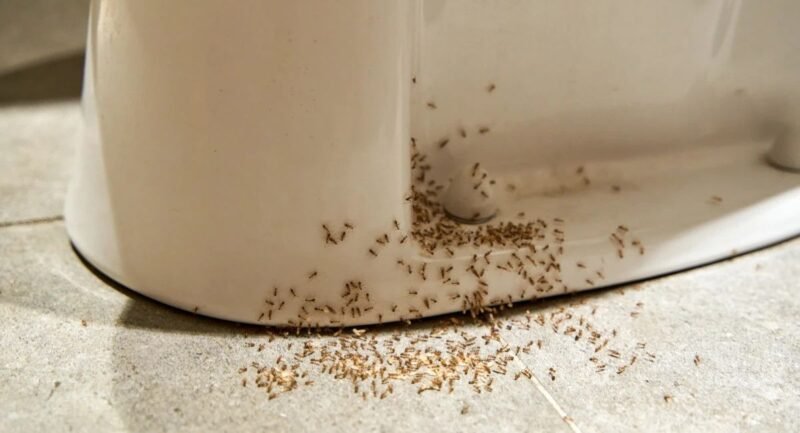
Ants in the bathroom feel like a betrayal of the basic agreement between humans and insects. The kitchen, maybe. The patio, fine. But the bathroom is supposed to be clean. It is the room where you go to get clean. Finding a line of ants marching across the sink in the morning is unsettling in a way that ants on the kitchen counter are not. The bathroom is the wettest room in the house. Ants need water. A bathroom with an ant problem is a bathroom with a moisture problem, an access problem, or both. Fix the moisture, seal the access, and the ants stop coming.
The most common bathroom ants are not carpenter ants, though those show up too. The small brown or black ants trailing across the tile are usually odorous house ants or pavement ants, species that nest outdoors and send workers indoors to forage for water and food. They are attracted to moisture first and food second. The water they are after could be a slow drip from a faucet, condensation on a toilet tank, a bead of water around the base of the shower door, or simply the humidity that keeps the bathroom slightly damp between showers. The ants do not need a puddle. A film of moisture on a surface is enough.
Why Ants Choose the Bathroom Over Other Rooms
Ants need three things to survive: water, food, and shelter. The bathroom provides two of the three in abundance. The water is everywhere. The food is less obvious but present: soap residue, toothpaste splatter, dead skin cells in the grout, hair in the drain, and the thin layer of organic matter that accumulates on every bathroom surface. A single drop of shampoo dried on the shower wall is a meal for an ant. They are not looking for crumbs. They are looking for the microscopic residue that every bathroom has, no matter how clean it is kept.
The bathroom is also the room with the most direct access to the inside of the walls. Every pipe that enters the bathroom, the sink drain, the toilet supply, the shower valve, the tub overflow, passes through a hole in the wall that is often not sealed. The gap around a pipe under the sink is an ant highway from the wall cavity to the bathroom. Once inside the wall, ants can travel from the foundation to the second floor through the plumbing chases, emerging in the bathroom because that is where the openings are. An ant infestation in the bathroom does not necessarily mean the nest is in the bathroom. It means the bathroom is where the ants found a way in.
What to Check When Ants Appear in the Bathroom
Follow the trail. Ants move in lines. The trail tells you where they are entering and what they are after. A trail leading to the sink drain means they are foraging for moisture and residue in the drain. A trail leading to a crack in the grout or a gap in the caulk around the tub means they are nesting in the wall cavity behind the tile. A trail leading to the window means they are coming in from outside. The trail is the diagnostic tool. Do not kill the ants until you have followed the trail to its source. Killing the visible ants without finding the entry point means new ants will replace them within hours.
Check for moisture problems first. Look under the sink for drips from the supply lines or the P-trap. Run your hand along the base of the toilet where it meets the floor. Feel for dampness around the shower door track and the tub overflow. Check the ceiling below the bathroom for water stains that would indicate a leak in the supply lines inside the wall. Carpenter ants are specifically attracted to wood that has been softened by moisture. If the ants in your bathroom are large, black, and roughly half an inch long, they are carpenter ants. Their presence means there is wet wood somewhere in the bathroom structure. The ants are a symptom. The water damage is the problem.
Check for entry points. Seal gaps around pipes under the sink with expanding foam or caulk. Seal cracks in the grout and gaps in the caulk around the tub and shower with fresh silicone. Check that the window screen is intact and the weatherstripping seals when the window is closed. Check the baseboard for gaps where it meets the floor. Ants can enter through a gap the thickness of a piece of paper. A tube of caulk costs $5. A pest control service call costs $150. Caulk the gaps first.
How to Get Rid of Bathroom Ants and Keep Them Out
Clean the trail with soap and water or a household cleaner. Ants follow pheromone trails left by the ants that came before them. Wiping the trail with cleaner erases the chemical path. Without the trail, new ants cannot find their way to the food or water source. This is a temporary fix. The ants will re-establish the trail within a day or two if the entry point and attractant remain. It buys you time to find and fix the underlying problem.
Use ant bait, not spray. Spray kills the visible ants. It does not kill the colony. The ants you see are workers, roughly 5 to 10 percent of the colony. Killing them triggers the colony to produce more workers. Bait stations contain a slow-acting insecticide mixed with a food attractant. The workers carry the bait back to the nest and feed it to the colony, including the queen. The colony dies over the course of several days to a week. Place bait stations along the ant trail, not where you want the ants to go. The bait must be on the trail for the ants to find it. Gel baits placed directly in the path of the trail work faster than solid bait stations because the ants encounter the bait immediately.
For carpenter ants in the bathroom, bait is the first step. If bait eliminates the visible ants and they do not return, the nest was small or located outdoors. If ants continue to appear after two weeks of baiting, the nest is in the wall or floor structure and requires professional treatment. A pest control professional can inject insecticidal dust or foam into the wall cavity through the ant entry point. The dust coats the nest and kills the colony. Do not spray liquid insecticide into a wall cavity. The moisture from the spray can cause additional water damage and mold growth in the already-damp wood the ants were nesting in.
How to Prevent Ants From Returning to the Bathroom
Fix the moisture that attracted them. Repair dripping faucets and leaking supply lines. Improve bathroom ventilation with an exhaust fan that runs during and after showers. Wipe down the shower walls and door after use. A squeegee takes 30 seconds and removes the water film that ants are drinking. Keep the bathroom as dry as a bathroom can reasonably be kept.
Seal the entry points permanently. Caulk around pipes, baseboards, window frames, and any gap where the wall meets the floor or the tub meets the tile. The sealant will need to be replaced every few years as it dries and cracks. Add it to the list of annual bathroom maintenance tasks. A bathroom with intact seals and no moisture problems will not have ants. The ants are not seeking out your bathroom specifically. They are following moisture and finding gaps. Eliminate both and the ants will forage somewhere else.
Frequently Asked Questions
Are ants in the bathroom a sign of water damage?
Not always. Small ants like odorous house ants and pavement ants come into bathrooms for water and food residue and do not necessarily indicate a water leak. Carpenter ants in the bathroom are a stronger indicator of moisture-damaged wood because they prefer to nest in wood softened by water. If the ants are large, black, and half an inch long, investigate for leaks in the walls, under the floor, or around the shower and tub. If the ants are small, brown or black, and less than an eighth of an inch long, they are likely foraging for water and can be managed by sealing entry points and reducing moisture.
Are ants coming from the bathroom drain?
Ants do not nest in drains, but they will enter through the overflow opening in the sink or tub and forage for moisture and organic residue inside the drain pipe. A drain filled with soap scum, hair, and toothpaste residue is an ant buffet. Clean the drain with a brush or a foaming drain cleaner. Pouring boiling water down the drain once a week dissolves the organic buildup and removes the food source. If ants are consistently emerging from the drain, seal the overflow opening with a piece of tape overnight to confirm that is the entry point, then keep the drain cleaner going forward.
Can I get rid of bathroom ants without an exterminator?
Yes, for most bathroom ant problems. The combination of bait stations to kill the colony, caulk to seal entry points, and moisture reduction to remove the attractant solves the problem in the majority of cases. Ant bait takes several days to a week to eliminate the colony. During that time, you will see more ants as the bait attracts them. Do not spray them. The bait needs to be carried back to the nest. Call an exterminator if carpenter ants persist after two weeks of baiting, if you find frass, sawdust-like material, indicating a nest in the wall, or if ants are emerging from multiple rooms suggesting a large colony inside the structure.
The Bottom Line
Ants in the bathroom are there for water first and food second. The bathroom is the wettest room in the house, and the gaps around pipes, cracks in the grout, and openings in the caulk provide entry from the wall cavities. Follow the trail to find the entry point. Clean the trail to disrupt the foraging. Place bait on the trail to kill the colony. Fix the moisture that attracted them. Seal the gaps they used to get in. A bathroom with no water leaks, intact seals, and a clean drain will not have ants. The ants are not the problem. The moisture and the gaps are the problem. The ants are just the only part of the problem that walks across the sink while you are brushing your teeth.