


A sump pump that keeps running usually means water is still entering the pit, the float switch is stuck, the check valve is leaking backward, or the discharge line is blocked, notes KRS Holdings in Richmond.
The detail that matters is whether the pump is running continuously or cycling every few seconds. Those two patterns point to different problems. A pump that runs all day during a hard storm may be doing its job. A pump that runs when the pit is nearly empty is telling you to stop and inspect the system before the motor overheats.
Quick Answer: Why Does My Sump Pump Keep Running?
A constantly running sump pump is usually caused by one of six things: a stuck float switch, a failed check valve, a clogged or frozen discharge line, water draining back toward the foundation, a high groundwater table, or an undersized pump or pit.
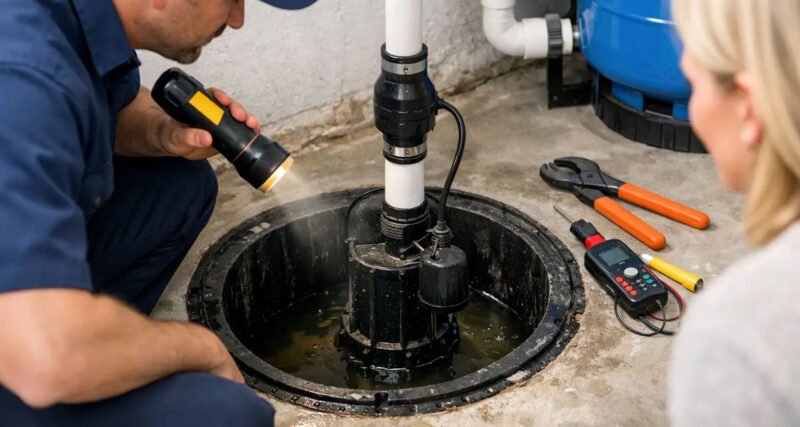
Start with the safest visual checks. Look at the water level in the pit, watch the float move, listen for short cycling, and check where the discharge pipe sends water outside. Do not reach into a live sump pit, and do not handle wiring while the pump is plugged in.
| What you notice | Most likely cause | First safe check |
|---|---|---|
| Pump runs even when the pit is low or nearly empty | Float switch is stuck, tangled, or failing | Unplug the pump, then see whether the float has room to rise and fall |
| Pump shuts off, then starts again within seconds | Check valve is leaking or missing | Listen for water rushing back down the pipe after shutoff |
| Pit stays full while the pump runs | Discharge line is clogged, frozen, kinked, or crushed | Check the outside outlet for flow, ice, mud, leaves, or a blocked extension |
| Pump runs heavily after rain or snowmelt | High groundwater or surface drainage overload | Check gutters, grading, downspouts, and where sump water exits |
| Water exits outside but returns to the pit quickly | Discharge outlet is too close to the foundation | Confirm the outlet sends water downhill and away from the house |
When Constant Running Is Normal and When It Is a Problem
A sump pump can run often during heavy rain, rapid snowmelt, or a seasonally high water table. It becomes a problem when it never reaches shutoff, cycles every few seconds, or runs while the pit is already low.
A sump pump is a water-removal device for basements and crawl spaces. It collects water in a basin and pumps it through a discharge pipe away from the foundation. Canada.ca describes the same basic system: water enters the pit, a float activates the pump, and a check valve helps keep discharged water from flowing back inside.
The pump should have a rhythm: water rises, the float lifts, the motor turns on, water leaves, the float drops, and the motor shuts off. If one part of that sequence breaks, the pump can keep running even when the basement is not flooding.
The annoying part is that the sound can be misleading. A steady hum may mean the pump is moving water correctly. It may also mean the impeller is spinning against a blockage. The pit tells the truth faster than the noise does.
A Stuck Float Switch Can Keep the Pump On
The float switch is the on-off control for most sump pumps. If the float is wedged against the basin wall, caught on the power cord, weighed down by debris, or mechanically worn out, the pump may keep running after the water level drops.
A float switch is a level sensor. When water lifts the float, the switch turns the pump on. When the water drops, the switch should fall and shut the motor off. That simple movement is why the float needs open space inside the basin.
Unplug the pump before touching anything. Then check whether the float can move freely through its full range. Look for gravel, a shifted pump body, a cord wrapped around the float arm, or a lid that presses against the float. If the float moves freely but the pump still does not shut off when plugged back in, the switch may need replacement.
This is the easiest failure to miss because the pit can look calm from above. A half-inch of plastic touching the wall is enough to keep the whole system awake.
A Failed Check Valve Creates a Water Loop
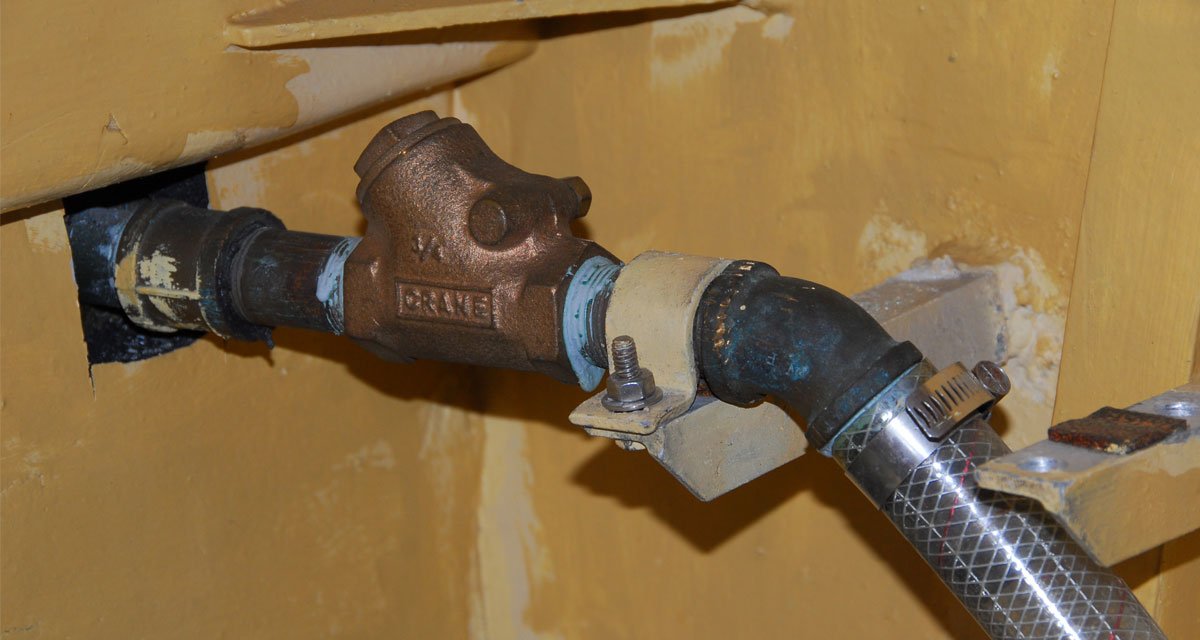
A check valve stops pumped water from sliding back into the sump pit. When it fails, the pump may remove water, shut off, hear the same water fall back down the pipe, and turn on again moments later.
A check valve is a one-way valve installed on the discharge pipe. National Renewable Energy Laboratory standard work specifications say sump pumps should be installed with a check valve to prevent water from reentering the sump well, and discharge water should be sent at least 10 feet away from the building.
The classic sign is short cycling. The pump runs, stops, then restarts in a tight loop. You may hear a slosh or thud in the vertical pipe after shutoff. That is water falling back through a weak valve or through a missing valve.
Reddit homeowners describe the same loop in plain language. One r/Homebuilding commenter put it this way:
“Then my guess is that the check valve has failed. It pumps the water up a hose, turns off, all the water drains back into the pit from the hose, it turns on…”
– r/Homebuilding, April 2026
If the valve is cracked, jammed open, installed backward, or missing, replacement is usually a plumber-level job for most homeowners. The part is not exotic, but a bad cut or loose clamp on a discharge line can create a wet mess fast.
A Clogged or Frozen Discharge Line Makes the Pump Work Without Moving Water
If the discharge line is blocked, the pump may run continuously because it cannot clear the pit. The blockage may be ice, mud, leaves, a kinked hose, a crushed pipe, or an outlet buried under mulch or snow.
The discharge line is the path from the sump pump to the outside drainage point. When that path is restricted, the pump may sound busy while the pit water barely drops. In cold climates, the outdoor portion is the usual suspect. In warmer months, debris and crushed corrugated extensions are common.
Go outside while the pump is running and look for strong water flow at the outlet. Weak flow, no flow, or water bubbling near the foundation can mean the line is blocked or broken. If the line is frozen solid, forcing the pump to run can overheat the motor.
Federal Emergency Management Agency guidance on sump pump maintenance tells homeowners to keep the pump and pit clear of debris and test the pump before storms. That advice sounds basic, but it catches many constant-running problems before a storm turns them into a basement event.
Water May Be Draining Back Toward the Foundation
A sump pump can keep running when it successfully pumps water outside, but the outlet drops that water too close to the foundation. The same water seeps back into the drain tile, returns to the pit, and starts the cycle again.
Surface drainage is the quiet part of the system. The U.S. Environmental Protection Agency says ground next to a building should slope away from the foundation. That matters because surface water and groundwater can keep pressure against basement walls and keep feeding the sump pit.
Walk the discharge route after the pump runs. The water should move away from the building, not pool against the wall, driveway edge, window well, or low spot beside the house. A short splash block may be fine for a downspout on a dry day. It is rarely enough for a sump pump that is moving gallons during a storm.
Downspouts matter too. If roof water dumps next to the same wall that feeds the sump pit, the pump becomes part of a loop it can never win. Extend downspouts, clear gutters, and keep the sump discharge pointed to a legal drainage area where water will not come back or flood a neighbor.
High Groundwater Can Make the Pump Run for Hours
A high groundwater table can make a sump pump run for long stretches even when nothing is mechanically wrong. The pump is not stuck in this case. It is responding to a steady supply of water under and around the foundation.
A high water table means groundwater is close enough to the basement floor or footing drains that water keeps entering the sump pit. This can happen after long rain, saturated soil, spring thaw, irrigation problems, or a house built in a naturally wet location.
The clue is consistency. If the pit fills quickly with clear water and the pump lowers it each time, the pump may be working correctly. If that pattern lasts for days, the question changes from “why does my sump pump keep running” to “is my drainage system asking too much from one pump?”
That is when a second pump, battery backup, larger basin, exterior grading changes, or professional drainage review may make more sense than simply replacing the pump. A stronger pump can move more water, but it cannot fix a yard that sends water straight back to the foundation.
The Pump or Pit May Be Too Small for the Water Load
An undersized pump or small basin can make the system run constantly because water enters faster than the pump can remove it, or the pit fills so quickly that the float cycles over and over.
Pump capacity is usually rated in gallons per hour at a specific lift height. Lift height means how far the pump must push water upward before it exits the house. A pump that looks adequate on the shelf may perform very differently if the discharge line climbs high, runs far, or has many elbows.
The basin size matters just as much. A very small pit gives the float little room between “on” and “off.” That can create rapid cycling even when the pump is strong. Rapid cycling is hard on motors and switches because the equipment starts over and over instead of running in clean, longer cycles.
| System issue | What it looks like | Better fix |
|---|---|---|
| Undersized pump | Pit rises during storms even while the pump runs | Match pump capacity to lift height and water volume |
| Small basin | Frequent starts and stops with shallow water changes | Use a larger basin if the space and local code allow |
| Single point of failure | No backup if power fails or the main pump burns out | Add a battery backup or secondary pump where flood risk is high |
| Drainage overload | Water returns from yard, roof, or foundation drains | Correct grading, gutters, discharge routing, and exterior drainage |
Safe Troubleshooting Steps Before You Call a Plumber
You can diagnose many constant-running sump pump problems without tools. The safe approach is to observe the water level, unplug before touching anything, check the float, confirm discharge flow, and stop testing if wiring, sewage, or flooding risk appears.
- Look at the pit water level. If the pump runs with a low pit, suspect the float or switch. If the pit stays high, suspect discharge restriction or water overload.
- Unplug the pump before touching the float. Move the float gently and remove visible debris. Do not force a switch that feels jammed.
- Listen after shutoff. Water rushing back down the pipe points toward a check valve problem.
- Check the outside outlet. Water should leave strongly and drain away from the house. Watch for ice, mud, kinks, crushed pipe, or a buried extension.
- Test with a bucket only if the pit is safe and clean. Pour water slowly into the basin and watch whether the pump starts and stops at sensible levels.
- Stop if the pump is hot, smells burnt, or hums without moving water. Those are motor-risk signs, not a reason to keep experimenting.
Call a plumber or sump pump technician if the pump will not shut off after the float is free, the check valve appears faulty, the discharge line is buried or frozen, the pump trips a breaker, or the basement is actively at risk. Electrical work around water is not a place to improvise.
Should You Repair or Replace a Constantly Running Sump Pump?
Repair makes sense when the problem is a stuck float, loose check valve, blocked extension, or poor discharge routing. Replacement becomes more likely when the motor overheats, the pump is old, the switch fails repeatedly, or the unit cannot keep up with normal storms.
A sump pump is a mechanical appliance, not a permanent fixture. If it has been running nonstop for long periods, assume some wear has already happened. Motors are not designed to run forever without rest, and a tired pump often fails during the next heavy rain rather than on a quiet afternoon.
Use this decision rule: fix the system path before blaming the pump. A brand-new pump will still run constantly if the discharge line is frozen, the check valve sends water backward, or the outlet dumps water next to the foundation. Replace the pump when the pump itself is the weak link, not when it is being asked to fight bad drainage.
How to Prevent a Sump Pump From Running Constantly Again
Prevention comes down to reducing water load and keeping the pump cycle clean. Keep the pit clear, test the float, maintain the check valve, route discharge away from the house, and manage roof and surface water before it reaches the foundation.
- Test the pump before rainy seasons by adding water to the pit and confirming a clean start and shutoff.
- Clean mud, gravel, and debris from the basin so the float and impeller do not jam.
- Keep the discharge outlet open, sloped, and clear of ice, leaves, mulch, and soil.
- Make sure the discharge endpoint sends water away from the foundation and does not drain toward a neighbor or sanitary sewer unless local rules allow it.
- Extend downspouts and correct grading where roof water or surface runoff collects near basement walls.
- Consider a battery backup if the pump protects finished space, stored valuables, or a basement that has flooded before.
The most reliable sump pump system is boring. It turns on, moves water out, shuts off, and gives you no reason to think about it at 2 a.m.
FAQ
How often should a sump pump run?
A sump pump should run only when water in the pit reaches the float’s activation level. During storms it may run often, but in dry weather it should not run continuously.
Is it bad if my sump pump runs all night?
It can be normal during heavy rain or snowmelt, but all-night running deserves a check. Confirm the pit is filling with real water and the pump is not stuck on.
Why does my sump pump run every 30 seconds?
A sump pump that runs every 30 seconds usually has short cycling from a failed check valve, small pit, stuck float, or water returning too close to the foundation.
Can a sump pump burn out from running constantly?
Yes, a sump pump can overheat or wear out faster if it runs continuously. Continuous operation is especially risky when the pump is hot, humming, or not moving water.
Should I unplug a sump pump that will not stop running?
Unplug it only long enough to inspect a low or empty pit safely. If water is rising, leave flood protection in place and call for help rather than disabling the pump.
Why does my sump pump keep running after rain stops?
After rain stops, groundwater can keep moving toward the foundation for hours or days. If the water level drops normally each cycle, the pump may be handling delayed drainage.
Final Judgment
Do not ignore a sump pump that keeps running. The harmless version is a wet season and a pump doing its job. The expensive version is a stuck switch, failed check valve, blocked discharge line, or drainage loop wearing out the motor before the next storm.
Check the pit, the float, the check valve symptoms, and the outside discharge route in that order. If the pump is moving water and the yard is sending it right back, solve the water path. If the pump is running with no water to move, solve the pump before it solves the problem by burning itself out.