



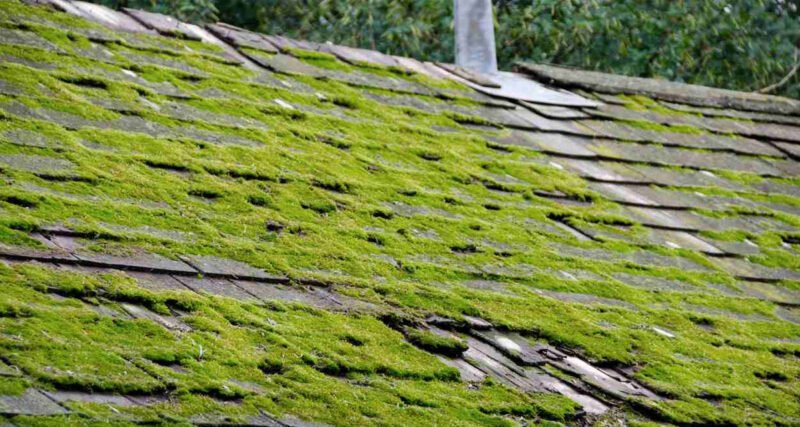
What causes moss on roof shingles is usually a simple mix: shade, lingering moisture, tree debris, and a roof surface that dries too slowly after rain or dew. Moss does not appear because shingles are dirty in some vague way says Inglewood Property Management. It appears because the roof has become a cool, damp growing surface.
The frustrating part is that removal alone rarely fixes the cause. A roof can look clean in May and start growing green again by the next wet season if the shade, debris, and drainage pattern stay the same.
The Main Causes of Moss on Roof Shingles
Moss grows on roof shingles when spores land on a surface that stays moist long enough for them to establish. The strongest causes are shade, slow drying, organic debris, clogged drainage, humid local weather, and roof sections that face away from direct sun.
Oregon State University Extension puts the problem plainly: moisture is hard to control in wet regions, but moss also needs shade. That is why the same roof can be clean on one slope and fuzzy on another.
| Cause | Why It Encourages Moss | Where You Usually See It |
|---|---|---|
| Shade from trees or buildings | Shingles dry slowly after rain, dew, or fog | North-facing slopes, under branches, beside taller walls |
| Leaves, needles, and pollen | Debris holds moisture and gives spores a place to settle | Valleys, roof edges, behind chimneys, under tree canopy |
| Clogged gutters or poor drainage | Water backs up or lingers near shingle edges | Eaves, gutter lines, low-slope transitions |
| Humid or rainy climate | Wet cycles are frequent enough that the roof never fully resets | Pacific Northwest, wooded lots, coastal and shaded neighborhoods |
| Rough or aging shingle surfaces | Granule loss and texture trap more dirt and moisture | Older asphalt shingles, shaded concrete tile, worn roof sections |
Personally, I look first at the drying pattern, not the green patch. If the roof still looks damp hours after the sunny slope is dry, moss has already been given the better half of the argument.
Why Shade and Moisture Matter Most
Shade matters because it slows evaporation. Moss does not need soil, but it does need a damp surface long enough to anchor and spread across the spaces, edges, and rough spots on shingles.
North-facing roof slopes are common trouble spots in the United States because they receive less direct sun. Overhanging trees make the effect stronger: they block light, reduce airflow, and drop leaves that sit in the shingle laps after a storm.
By the second rainy week, those leaves are not crisp anymore. They flatten into a damp mat in the valley, the shingle grit darkens, and the roof keeps a cold wet sheen long after the driveway has dried.
That is the environment moss likes. Not dramatic. Just damp.
“When I first moved in 7 years ago, I painstakingly removed all the moss manually with a putty knife. However, came back fairly quickly and I don’t know if I need to take care of it. It doesn’t “seem” to be hurting anything, but would like a 2nd opinion. This side of the roof doesn’t get much Sun and I live in the PNW. Thank you.”
– r/Roofing, November 2025 (1,106 upvotes)
That homeowner’s detail is useful because it names the real pattern: the moss came back where the roof got little sun. Scraping changed the surface for a while. It did not change the roof’s microclimate.
How Tree Debris Feeds the Problem
Tree debris turns a damp shingle surface into a better moss bed. Leaves, needles, pollen, and small twigs trap water, collect dust, and settle into the grooves where wind and rain do not clear them quickly.
The University of Missouri Extension notes that leaves or needles left by overhanging and nearby trees can retain moisture and lead to moss formation. The same document points to roof keyways, the spaces between shingles, as areas that need careful cleaning.
Here is the part people often miss: trees cause moss in two different ways. They shade the roof from above, then drop the material that keeps the shaded areas wet from below.
If you have ever cleaned gutters after a storm, you know the texture. The top layer looks like leaves. The bottom layer is a wet paste of needles, roof grit, and dark organic sludge. Moss does not need much more invitation than that.
Why Roof Valleys Often Collect Moss First
Roof valleys collect moss early because water, leaves, and shingle grit all move toward the same low channel. Even when the roof drains correctly, valleys stay damp longer than open slopes.
Behind chimneys and skylights, the effect can be similar. Anything that slows water, catches leaves, or creates a pocket of shade can become a small moss nursery before the rest of the roof shows much growth.
Moss Is Not the Same as Algae
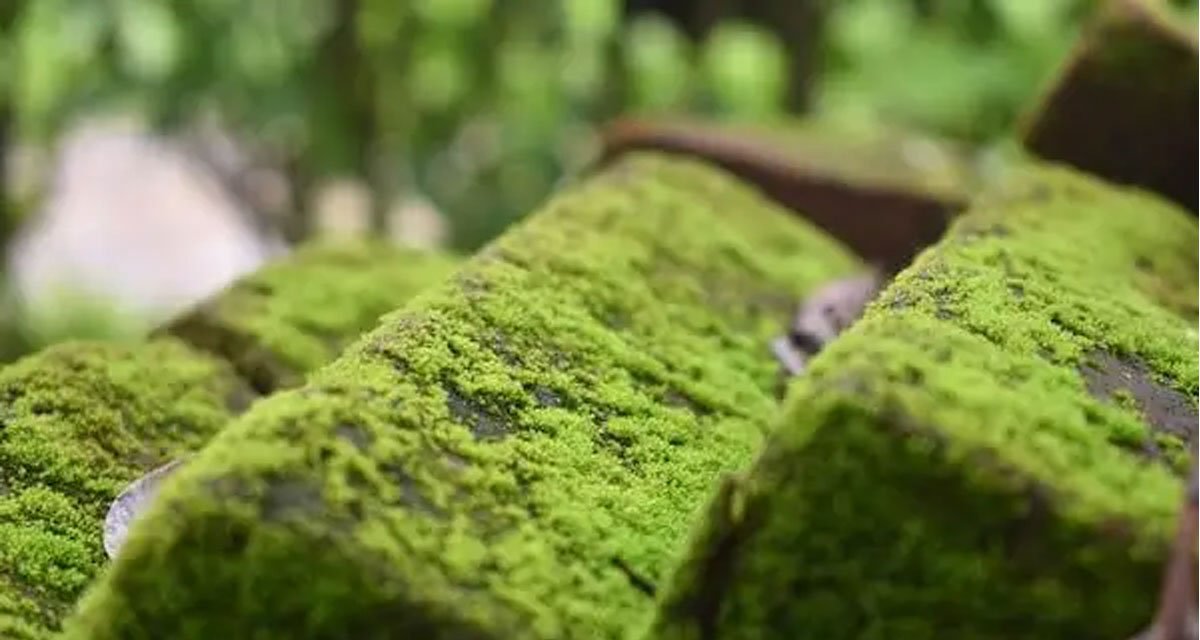
Moss is a small plant that grows into a raised, spongy mat. Algae usually appears as flat black, brown, or green staining. The distinction matters because moss can physically lift shingle edges while algae is more often a discoloration issue.
The Asphalt Roofing Manufacturers Association distinguishes between algae staining and moss on asphalt roofing systems. In its residential roofing manual, ARMA warns that moss growth can damage asphalt shingles and block water flow.
| Roof Growth | What It Looks Like | Main Cause Pattern | Roof Risk |
|---|---|---|---|
| Moss | Raised green clumps or carpet-like patches | Shade, moisture, debris, slow drying | Can lift shingles, hold water, and interfere with drainage |
| Algae | Dark streaks or staining, often blackish | Humidity, airborne algae, roof surface nutrients | Mostly cosmetic at first, though staining can spread |
| Lichen | Flat, crusty patches, often gray-green or white | Long-term damp exposure and rough surfaces | Can be stubborn and may damage granules if removed harshly |
A good rule: if it casts a tiny shadow or feels like a cushion, treat it as moss. If it looks like a stain painted into the roof, you are probably looking at algae or related discoloration.
Why Moss Comes Back After Cleaning
Moss comes back after cleaning when the roof conditions stay the same. Removing visible growth may reset the surface, but spores can return by wind, trees, and animals if shade and moisture remain.
This is where things get tricky. A clean roof is not necessarily a changed roof.
If branches still hang over the shingles, gutters still clog in fall, and the north slope still stays damp until afternoon, the next moss cycle has a place to start. The regrowth may look like a failed product or a bad cleaning job when the deeper issue is site condition.
“Same here. Gotta re apply more through the wetter darker months . Not so bad through summer.”
– r/Roofing, November 2025 (27 upvotes)
That seasonal detail tracks with the biology. Moss pressure is higher during cool, damp months and lower when heat and sun dry the roof faster.
Does Moss Damage Asphalt Shingles?
Moss can damage asphalt shingles over time because it holds water against the roof surface and can lift the leading edges of shingles as it thickens. The risk is higher when moss is dense, long-standing, or growing near seams and drainage paths.
On asphalt shingles, the problem is not that moss instantly eats through the roof. The slow damage comes from moisture retention, lifted shingle edges, blocked runoff, and rough removal methods that strip granules.
Oregon State University’s Solve Pest Problems resource says moss on roofs can damage shingles, slow or prevent water flow, and contribute to water damage over time. It also notes that dried moss and roof debris can add a fire concern in areas exposed to embers.
Pressure washing is the mistake I would avoid most aggressively. It feels satisfying for about ten minutes, then you may have a cleaner roof with fewer protective granules on it.
When Moss Is a Warning Sign
Moss is more concerning when it is thick enough to hide shingle edges, fill valleys, clog gutters, or grow under lifted tabs. Small scattered patches are still worth addressing, but dense mats point to a moisture pattern that has been active for a while.
Look for curled shingle edges, missing granules, soft decking, staining under the eaves, or gutters packed with green clumps. Those signs shift the conversation from “why is it growing?” to “has it already caused damage?”
What the Moss Pattern Reveals
The location of moss often tells you the cause. A single shaded slope points to sunlight and airflow. Growth near the eaves points to gutter or edge moisture. Thick moss in valleys points to debris and slow drainage.
Do the check after a rain, not on a perfect dry afternoon. Walk the property from the ground, use binoculars if needed, and compare roof sections by how long they stay dark and damp.
- Check the shaded side first. If moss is mainly on the north or tree-covered slope, shade is the lead cause.
- Look under overhanging limbs. Branches within easy leaf-drop distance usually mean debris is feeding the problem.
- Scan valleys and roof edges. Moss in these zones often means water and debris are collecting there.
- Check gutters from a safe position. Overflow stains, plant matter, or green clumps suggest drainage is part of the cause.
- Compare old and newer shingle areas. Older, rougher shingles can hold more dirt and moisture than smoother surfaces.
The step people skip is timing. If you only inspect when everything is dry, you miss the exact condition that explains the growth.
The Fixes That Change the Growing Conditions
Preventing moss means changing the roof environment: more light, better airflow, cleaner drainage, and less debris sitting on shingles. Chemical treatment can help, but it works better when the roof dries faster afterward.
Start with the boring fixes. Trim branches so sunlight reaches the roof. Clear leaves from valleys and gutters. Keep downspouts moving water away from the roof edge. If the roof is old or losing granules, ask a roofer whether the surface itself is becoming too rough to stay clean.
- Trim overhanging limbs. Aim for sunlight and airflow, not just a prettier tree line.
- Clean gutters before wet seasons. Full gutters keep roof edges damp and can push water where it should not sit.
- Remove loose debris gently. Use roof-safe methods and avoid scraping upward under shingle tabs.
- Consider zinc or copper strips where appropriate. Rain can carry trace metal ions down the roof, which may help discourage regrowth.
- Avoid pressure washing asphalt shingles. It can remove granules and shorten roof life.
Roof work is also a fall-risk job. If the slope is steep, the moss is heavy, or the roof is already brittle, the practical answer is to call a roof cleaner or roofer rather than turning a maintenance issue into an emergency-room story.
FAQ
What causes moss on roof shingles most often?
Shade and lingering moisture cause moss on roof shingles most often. Tree debris, clogged gutters, humid weather, and rough shingle texture make the problem worse.
Why does moss grow on one side of the roof?
Moss usually grows on one roof side because that section gets less sun or airflow. North-facing and tree-shaded slopes often stay damp longer.
Does moss mean my roof is leaking?
Moss does not automatically mean your roof is leaking. Heavy moss can raise the risk by holding water, lifting shingles, and blocking drainage paths.
Should I remove moss or leave it alone?
Remove roof moss before it becomes thick enough to lift shingles or clog gutters. Use gentle, roof-safe methods or hire a professional for steep or aging roofs.
Will moss come back after treatment?
Moss can come back after treatment if shade, moisture, and debris remain. Prevention works best when cleaning is paired with better sunlight, airflow, and drainage.
The Practical Takeaway
Moss is a roof-environment problem before it is a cleaning problem. The green patch is only the visible part; the real cause is usually a roof section that stays damp, shaded, and littered with enough organic material for spores to settle.
Fix the drying conditions and moss becomes much less stubborn. Ignore them, and the same corner of the roof will keep making its quiet little comeback.