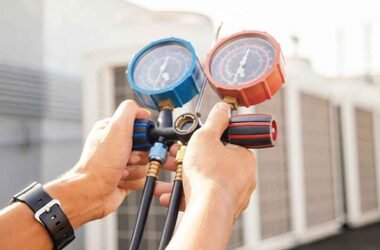




The thermostat reads 74. The unit outside is humming. But the air coming out of the vents feels like a weak fan rather than central air conditioning. You are standing in front of a vent on a 93-degree afternoon, one hand in the airflow, trying to decide if that temperature drop is even a few degrees and honestly, it does not feel like much of anything.
This is one of the most common HVAC complaints and also one of the most fixable. When your AC is running but not cooling, the causes follow a predictable pattern: start with the cheapest fix and work your way up. Run through this checklist in the order it appears, highlights Estate Home Las Vegas Company. If you are wondering why is my AC running but not cooling, the answer is almost always in the first three steps below.
Try This First: A 3-Minute Diagnostic Checklist
Before you dig into individual components, run three checks that resolve roughly 40 percent of “AC running but not cooling” complaints without opening a single tool. Each step eliminates one possible cause before you move to the next one.
Step 1: The thermostat. Confirm the system is set to “Cool” and not “Heat” or “Off.” Then set the fan to “Auto” instead of “On.” When the fan runs continuously, warm air from the ductwork gets pushed into the house between cooling cycles, making the space feel warmer than the thermostat reads.
Step 2: The temperature differential test. Hold a thermometer at the supply vent closest to the indoor unit. A properly functioning AC produces air that is 14 to 20 degrees Fahrenheit cooler than the return air temperature near the filter grille. A difference under 14 degrees points to a problem in the refrigerant circuit, airflow, or compressor performance. This test takes 30 seconds and immediately separates low-refrigerant problems from airflow restrictions.
Step 3: The outdoor unit. Walk outside and look at the condenser. Is the fan spinning? Is the unit buried in overgrown grass, leaves, or debris that was fine in March but now choking the coils by June?
1. Dirty Air Filter: The Most Common Cause
An $8 fiberglass filter takes sixty seconds to swap and fixes roughly one-third of all residential AC cooling failures. A clogged filter reduces airflow across the evaporator coil, and when airflow drops, the coil gets colder than intended. Cold enough that condensation freezes on the surface. Ice acts as insulation, so the refrigerant can no longer absorb heat from your indoor air. The system runs. The air passing through stays warm.
Change your filter every 30 to 90 days depending on the type:
| Filter type | MERV rating | Replace every | Typical cost |
|---|---|---|---|
| Fiberglass disposable | 1–4 | 30 days | $1–$5 |
| Pleated polyester | 5–8 | 60–90 days | $8–$20 |
| High-efficiency | 11–13 | 60–90 days | $20–$40 |
| Washable electrostatic | 4–8 | Monthly cleaning | $15–$30 (one-time) |
Oddly enough, the highest-MERV filters are not always the best choice for residential systems. A MERV 13 filter restricts airflow significantly, which can cause the same freezing problem you were trying to avoid. Stick with MERV 8 for most single-family homes unless a doctor in the house needs higher filtration for allergies.
2. Thermostat Issues: Wrong Setting, Wrong Mode
The thermostat is the only interface between you and the AC, but it is also the easiest thing to set wrong and forget about. If the system was recently serviced or someone in the house adjusted the temperature, the thermostat is the first place to look.
Check three things. First, the mode. The display must say “Cool”, not “Heat,” “Off,” or “Econ.” Second, the fan setting. “Fan On” keeps the blower running constantly, which recirculates warm duct air between cycles. Switch it to “Auto.” Third, the set point. This needs to be at least three degrees below the current room temperature for the system to kick on. A digital thermostat with dead batteries is functionally a blank wall plate, so replace them if the screen is dim or flickering.
A thermostat located near a heat-producing appliance, a stove, a television, or direct sunlight, reads the microclimate and not the whole room. The AC runs longer trying to satisfy a sensor that is being tricked by a nearby toaster.
Personally, I have watched a service technician drive 45 minutes to a house, walk to the thermostat, switch it from Heat to Cool, and collect a trip fee. That is an expensive lesson in checking the obvious first.
3. Frozen Evaporator Coil: Ice Blocks the Cooling
A frozen evaporator coil is the most common downstream effect of an airflow or refrigerant problem. The coil gets cold enough that moisture in the air freezes on its surface, and that ice layer prevents the refrigerant inside the coil from absorbing heat from your home. The unit keeps running. The fan keeps blowing. But the air that comes out of the vents is barely cooler than room temperature.
The early signs are subtle and easy to miss. The condensate drain pan overflows because the ice melts during off-cycles and dumps more water than the drain line can handle. The refrigerant lines, the copper tubes running from the indoor unit to the outdoor unit, develop frost or visible ice buildup. Airflow from the vents drops noticeably because the ice is physically blocking the coil surface.
If you see ice on the copper lines or the coil, turn the AC off at the thermostat and switch the fan to “On.” Running the blower without the compressor pushes room-temperature air across the coil and speeds up the thaw. A frozen coil can take 12 to 24 hours to fully thaw depending on humidity and temperature. Do not try to chip the ice off: you will damage the thin aluminum fins.
A coil that freezes repeatedly is almost always telling you one of two things: the filter needs changing more often, or the system is low on refrigerant and needs a professional leak search.
4. Dirty or Blocked Condenser Unit (Outdoor)
The condenser unit sits outside and dumps the heat your AC removed from the house into the outdoor air. If the condenser cannot reject heat because the coils are dirty or the fan cannot pull air through them, the heat stays inside the refrigerant and travels back into the house.
The fix starts at ground level. Trim vegetation back so there is at least two feet of clearance on all sides of the unit. Grass clippings, leaves, and cottonwood seeds accumulate on the coil surface over the winter and early spring and act like a layer of insulation by early summer. Turn off power at the disconnect box, remove the protective grille, and spray the coils from the inside out with a garden hose. Not a pressure washer, because that bends the fins.
If the fan is not spinning at all while the compressor is humming, that is almost certainly a capacitor or fan motor issue. If the fan spins slowly or wobbles, the motor bearing may be seized or the capacitor is failing to deliver full starting torque.
In my experience, a condenser unit choked with sycamore seeds is the most preventable cause of a service call. It takes fifteen minutes to clean and the system goes back to blowing cold air immediately.
5. Bad Capacitor: The Most Common Electrical Failure
The capacitor is a cylindrical component inside the outdoor unit’s electrical panel that stores and releases energy to start the compressor and fan motor. When a capacitor fails, the compressor or fan hums but does not turn, or turns too slowly to function. The system keeps running. The air stays warm.
A bad capacitor shows visible signs before it fails completely. The top of the cylinder bulges outward instead of lying flat. Burn marks or soot appear around the terminal connections. Electrolyte leaks from the crimp seam, leaving a sticky or oily residue on the base of the component.
Testing requires a multimeter set to capacitance mode. Touch the probes to the labeled terminals: Herm for the compressor, Fan for the fan motor, C for common. A capacitor rated for 35 microfarads that reads 28 or lower is weak and should be replaced. This is the most common DIY-replaceable electrical part on an AC system and costs between $10 and $25 at an HVAC supply house. Safety note: capacitors hold a charge even with the power off. Short the terminals across a screwdriver or a 20k-ohm resistor before handling.
The contrast is hard to miss: a $15 part causes a $300 service call. HVAC technicians replace bad capacitors multiple times a week during peak cooling season, because it is the single most common electrical failure in residential AC systems.
6. Refrigerant Leak: Not a DIY Fix
Refrigerant is the chemical that absorbs heat from indoor air and releases it outside. If the system is low on refrigerant, the evaporator coil cannot get cold enough to remove heat effectively, and the compressor runs longer trying to compensate. The result is higher electric bills, warmer air, and eventual compressor damage.
Leaks happen at connection points: the Schrader valve cores, brazed joints on the copper lines, or pinhole corrosion on the coil itself. Signs include a steady hissing sound at the outdoor unit while the system is running, a visible oil residue on copper tubing near fittings (the oil mixes with the refrigerant and leaks out together), and ice formation that comes back within days of thawing the coil.
Per the U.S. Environmental Protection Agency regulations under Section 608 of the Clean Air Act, only EPA-certified technicians can purchase and handle refrigerant. Adding refrigerant to a leaking system, known as “topping off,” is both illegal and pointless. The new charge leaks out at the same rate as the old one. The leak must be found and repaired first. Per Wikipedia, air conditioning systems remove heat through the refrigeration cycle, which depends on proper refrigerant charge to function.
A refrigerant refill runs $150 to $400 depending on the type and amount. Leak repair adds $200 to $1,000 depending on accessibility. What most articles do not mention is that the price difference between a repair and a replacement narrows fast once the system passes 12 to 15 years of age.
7. Condenser Fan Not Spinning: Airflow Failure
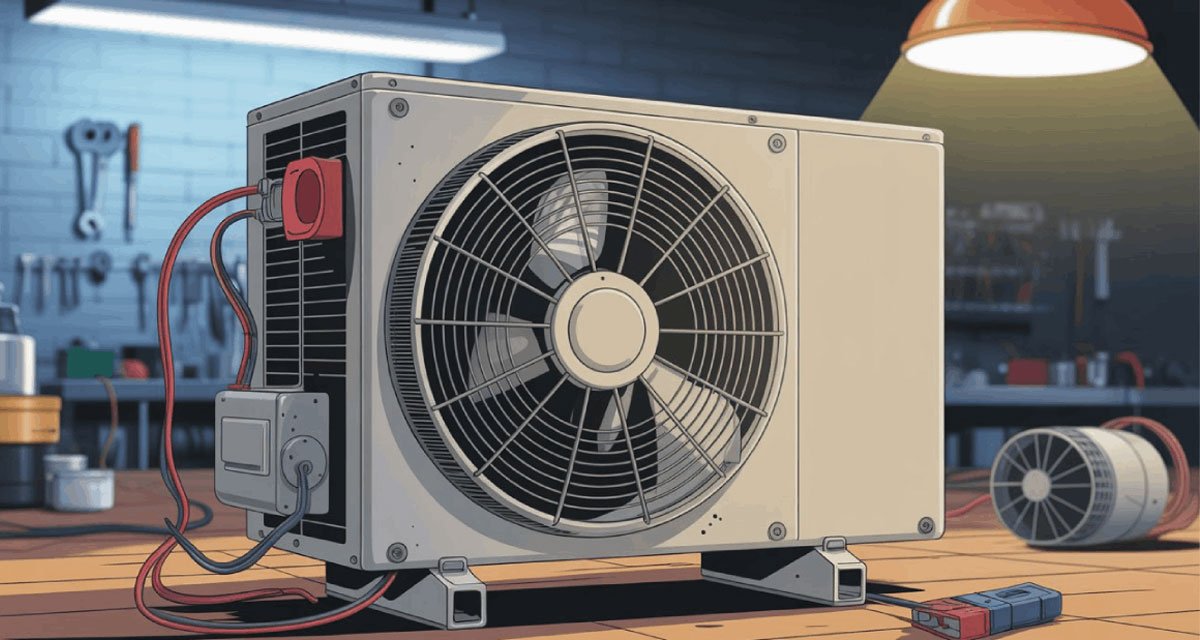
The outdoor fan pulls air through the condenser coils so the refrigerant can release heat. If the fan does not spin, the compressor and refrigerant keep running but the heat stays trapped inside the coil. The unit runs, the electric meter spins, and the house stays warm.
Start with the capacitor. It controls both the compressor and the fan motor. If the capacitor is weak, the fan may hum but not start. This is the same $15 part discussed in section 5. If the capacitor tests fine, the issue is either a seized motor bearing (the fan blade does not spin freely by hand when the unit is off) or a failed fan motor winding, which requires motor replacement.
One quick diagnostic trick: with the system on and the disconnect pulled, gently push the fan blade with a wooden stick. If the fan starts spinning on its own after that nudge, the capacitor is not storing enough starting energy and needs replacement. If the blade does not budge or spins with grinding resistance, the bearing is seized.
Fan motor replacement costs $200 to $450. Capacitor replacement costs $10 to $25. The diagnostic is the same either way: check the capacitor first.
8. Undersized or Aging AC System
An air conditioner sized correctly for a 15-year-old house may now be underpowered. Additions, finished basements, new windows, extra insulation, and additional appliances generate more heat load than the original Manual J calculation accounted for. The system runs constantly and never reaches the set temperature because it was designed for a smaller or less insulated space.
The age of the equipment matters too. A central AC past 12 years of service typically operates at reduced capacity. Compressor efficiency drops, coil fins corrode, and refrigerant charge slowly depletes through micro-leaks that do not show up on a gauges test but still reduce performance over time. Per ENERGY STAR data, replacing a 10-year-old system with a SEER 16 unit cuts cooling energy use by roughly 30 percent compared to a 10 SEER unit from the early 2000s.
If the system is undersized by less than half a ton, a zoning system or supplemental unit for the largest room may be cheaper than replacing the whole system. An HVAC contractor performs a load calculation, not a rules-of-thumb estimate, before recommending equipment changes.
DIY or Call a Pro? A Troubleshooting Decision Guide
Most AC problems follow a predictable pattern. The fix starts with the cheapest and easiest option and moves toward the labor-intensive ones only if necessary.
- Change the filter. If the air gets colder, you are done. Full stop.
- Check the thermostat. Confirm Cool mode, Auto fan, set point at least 3°F below room temperature.
- Inspect the outdoor unit. Clear debris. Hose down the coils. If the fan does not spin, test the capacitor.
- Check for ice. If the evaporator coil or refrigerant lines are frozen, turn the system off, run the fan, and let it thaw before doing anything else.
- Test the temperature differential. Less than 14°F difference between supply and return air means the system needs a professional diagnosis.
What you can fix yourself: dirty filter, obstructed condenser, thermostat settings, capacitor replacement (with proper safety precautions). What needs a licensed professional: refrigerant leak detection and repair, compressor replacement, evaporator coil replacement, ductwork sealing, electrical panel troubleshooting beyond the capacitor.
The line between a $15 fix and a $1,500 repair is thinner than most homeowners think. A capacitor swap is DIY territory. A compressor that will not start despite a good capacitor is not.
Sound familiar? Most homeowners start with one of these steps and realize the problem was simpler than they expected.
Frequently Asked Questions
Why is my AC running but not cooling after I changed the filter?
A dirty filter was likely not the only issue. Check the thermostat settings and inspect the outdoor condenser unit for debris or a non-spinning fan. If both are fine, measure the temperature differential: less than 14 degrees suggests low refrigerant or a failing compressor.
Can low refrigerant cause my AC to run but not cool?
Yes. Low refrigerant reduces the evaporator coil’s ability to absorb heat, and the system runs longer without reaching the set temperature. Ice on the copper refrigerant lines or the coil itself is the most visible sign of low refrigerant.
How do I check if my AC capacitor is bad?
Look for a bulging top, burn marks near the terminals, or oily residue on the capacitor casing. For a precise check, use a multimeter set to capacitance: a reading more than 6 percent below the labeled rating means the capacitor is weak and should be replaced.
Why is my AC running but ice forming on the lines?
Ice on the refrigerant lines means the evaporator coil is too cold, usually from restricted airflow (dirty filter) or low refrigerant (leak). Turn the system off, run the fan to thaw the coil, then check whether the filter needs changing or a technician needs to look for leaks.
Should I turn off my AC if it’s not cooling?
Yes. Running an AC that is not cooling, especially with a frozen coil, puts extra strain on the compressor and can cause permanent damage. Switch the thermostat to Off and the fan to On to thaw the coil before diagnosing further.
How often should I change my AC filter?
Every 30 days for basic fiberglass filters, 60 to 90 days for pleated polyester or MERV 8 filters. Homes with pets, construction dust, or allergy sufferers should replace at the shorter end of that range.
AC running but not cooling: is it the compressor?
It could be, but the compressor is rarely the first thing to fail. A humming compressor that does not start is usually a bad capacitor, not a dead compressor. Check the capacitor before assuming the compressor is the problem.
Why is my outdoor AC unit running but the fan not spinning?
The capacitor that starts the fan motor is the most likely cause. If the fan spins when pushed gently with a stick, the capacitor is weak. If it does not spin at all or grinds when moved by hand, the fan motor bearing is seized.
How much does AC refrigerant refill cost?
R-410A refrigerant refills typically run $150 to $400 depending on how much the system needs. Topping off an AC without fixing the leak is both temporary and illegal under EPA regulations: the new charge will leak out at the same rate.
When should I call a professional instead of DIY?
Call a professional if the filter and thermostat checks did not help, the capacitor tests fine and the fan still does not spin, the temperature differential is under 14 degrees, or ice keeps coming back after thawing the coil. DIY territory covers filter changes, thermostat settings, condenser cleaning, and capacitor replacement with proper safety precautions.
Start With the Simplest Fix First
An AC that runs but does not cool is rarely a mystery. The filter is the most common cause, the capacitor is the most common electrical failure, and a frozen coil is a reliable sign that one of those two things, or a refrigerant leak, has been going on too long. When homeowners ask why is my AC running but not cooling, the answer is usually one of these three things. Most of the fixes cost less than taking the system apart would suggest. The trick is knowing which ones you can do yourself and which ones save you money by being left to a pro.
What gets fixed is not always the most expensive part. It is the one you check first.