



Recognizing the signs your windows need replacement early saves money and prevents structural damage. Windows don’t fail overnight. They telegraph their decline through drafts, condensation, sticking sashes, and creeping energy bills, sometimes for years, before the damage becomes structural. Catching those signals early is the difference between a straightforward swap and a five-figure remediation project, explains Keyrenter North Dallas team.
The tricky part is that most signs are easy to rationalize away. A little fog between the panes? “It’ll clear up.” A window that needs muscle to open? “It’s an old house.” Sound familiar? Each of those small annoyances corresponds to a specific failure mode, and ignoring them long enough turns a window problem into a wall problem.
Drafts You Can Feel (and Pay For)
A draft you can detect with your hand is a window that has already lost most of its insulating value. Even a 1/16-inch gap around a single window frame leaks as much air as leaving a small vent cracked open year-round.
The simplest test takes 30 seconds on a cold day. Stand near each window and hold your palm about two inches from the frame edges — not the glass, the seams where the sash meets the sill and where the frame meets the wall. If you feel cold air movement, the weatherstripping has compressed past usefulness or the frame itself has warped enough to break the contact seal. Either way, caulk and foam tape won’t fix the underlying problem.
According to ENERGY STAR, replacing single-pane windows in an average home saves $126 to $465 annually in energy costs. With older double-pane windows, the savings drop to $27 to $111 per year — still real money, but the real benefit at that point shifts from pure payback to comfort and noise reduction. That cold spot by the window isn’t just uncomfortable. It’s heated air you paid for, leaving the house.
Fog Between the Glass Panes Means the Seal Is Dead
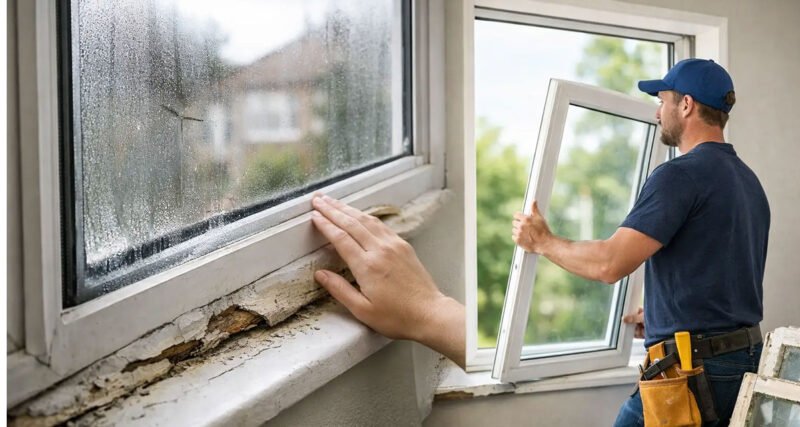
Condensation trapped between two panes of glass means the hermetic seal has failed. The insulating gas, usually argon or krypton, has escaped, and the window’s thermal performance has dropped to near single-pane levels.
This one is easy to spot but surprisingly easy to dismiss. That hazy film that appears on cold mornings and vanishes by noon is moisture that found its way past a broken seal. Once the desiccant inside the spacer bar becomes saturated, the same material that keeps new windows clear for years, there is no drying it out. The fog will keep returning, and over time mineral deposits etch the interior glass surfaces, leaving permanent clouding that no cleaning product can reach.
A failed seal doesn’t automatically mean water will leak into your walls. The structural integrity of the frame is a separate question. But it does mean you’re effectively living with a single-pane window in that spot, heating and cooling the outdoors, while watching the view you paid for slowly disappear behind a permanent haze.
“My house is 18 years old and has original windows. I’ve noticed some condensation in between the panes of a few, and some feel drafty. What should I be looking for to know if they actually need replacement?”
— r/HomeImprovement, 10+ comments (2021), source
Windows That Won’t Open, Close, or Lock
A window that sticks, jams, or refuses to lock has a mechanical problem that goes beyond old paint. Warped frames, rusted balance mechanisms, or a house that has settled unevenly can all render a window non-functional, and a window you can’t lock is a security risk, not just an inconvenience.
Paint is the usual suspect people reach for, and sometimes it actually is the culprit. But if scraping the paint track doesn’t restore smooth operation, or if the window opens but won’t stay open without a prop, the balance system has failed. On double-hung windows, this typically means the sash cords have snapped or the spiral balances in the side channels have lost tension.
Windows that won’t lock deserve immediate attention. Burglars check windows first, and a ground-floor window that cannot be secured from the inside is an open invitation. In many jurisdictions, non-locking windows also represent a code violation for rental properties, a liability that goes well beyond the heating bill.
Rotting, Warping, or Softening Frames
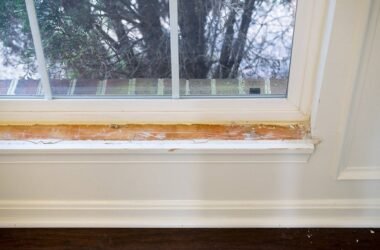
Soft wood around a window frame is rot, not “a little water damage”, and it spreads faster than most people realize. Once the frame’s structural integrity is compromised, the window stops sealing properly regardless of how good the glass is.
Wood rot moves through three stages. First, paint bubbles or cracks, letting moisture reach bare wood. Second, the wood darkens and softens, you can press a screwdriver tip a quarter-inch deep with minimal effort. Third, the rot spreads inward and sideways, eating through the frame and eventually reaching the rough opening in the wall. By stage three, you’re not just replacing a window; you’re cutting out sheathing and possibly stud sections. The timeline from stage one to stage three can be as short as two winters in a rainy climate.
Different frame materials age at dramatically different rates, which makes the material choice as important as the window itself:
| Frame Material | Typical Lifespan | Maintenance Burden | Best For |
|---|---|---|---|
| Wood | 20–30 years | High (painting, sealing every 3–5 yrs) | Historic homes, aesthetics |
| Vinyl | 20–40 years | Low (occasional cleaning) | Budget-conscious, most climates |
| Aluminum | 25–35 years | Low to moderate | Modern architecture, warm climates |
| Fiberglass | 30–50+ years | Very low | Extreme climates, long-term holds |
| Composite | 30–40 years | Low | Wood look without wood maintenance |
When Outside Noise Becomes Inside Noise

If you can understand conversations happening on the sidewalk or distinguish individual car engines from your living room couch, your windows have lost their acoustic seal. Well-sealed double-pane windows typically reduce exterior noise by 25 to 35 decibels, the difference between noticing traffic and being distracted by it.
Single-pane windows are the worst offenders, transmitting sound almost unimpeded. But older double-pane windows become noise-leaky through the same mechanism that causes drafts: air gaps carry sound waves just as efficiently as they carry cold air. The seal degradation is rarely visible, but your ears will tell you the story clearly enough.
The fix isn’t always a full replacement. Laminated glass inserts and secondary glazing can cut noise substantially without touching the frames. But if you’re already seeing multiple signs, drafts, fog, and noise, the window has likely reached the end of its useful life across all dimensions at once.
“Replacing Windows in house, need help deciding, I’ve got quotes ranging from $8,000 to $22,000 for the whole house and I genuinely don’t know what’s a fair price or what material makes sense for my climate.”
— r/HomeImprovement, 5 upvotes, 14 comments (2026), source
The Energy Bill With No Other Explanation
When your heating or cooling costs climb 15 to 25 percent year-over-year with no change in thermostat habits and a functioning HVAC system, leaky windows are the most likely culprit, especially if they’re more than 15 years old.
The Department of Energy estimates that windows account for 25 to 30 percent of a home’s heating and cooling energy use. Old or failing windows push that number higher. In winter, warm indoor air hits cold glass and loses heat through conduction, while gaps in the frame let heated air escape outright. In summer, the process reverses: outdoor heat radiates through the glass and infiltrates through frame gaps.
One diagnostic trick worth trying: on a windy day, walk the perimeter of your house with a stick of incense. Hold it near each window’s edges and watch the smoke. If it wavers, flickers, or streams sideways, you’ve found a leak. No special equipment, no contractor required, and the results are hard to argue with.
Repair or Replace? The Math Worth Doing
Repair makes sense when the problem is isolated, a broken latch, a failed balance, a small section of rot on an otherwise solid frame. Replacement becomes the better call when two or more signs appear together, or when the window is past 70 percent of its expected lifespan.
The math changes depending on the window’s age and condition:
| Window Age | Frame Condition | Recommendation | Est. Cost per Window |
|---|---|---|---|
| Under 10 years | Good, single issue | Repair if isolated | $50–$300 |
| 10–20 years | Fair, 1–2 signs | Evaluate; partial replacement | $300–$800 repair / $400–$1,200 replace |
| 20–30 years | Deteriorating, 3+ signs | Replace | $400–$1,500+ |
| 30+ years | Original, likely single-pane | Replace, energy savings alone justify it | $500–$2,000+ |
Homeowners often fixate on the upfront cost of replacement, which runs $400 to $1,500 per window installed, depending on material and labor, without factoring in what they’re currently losing. A house with 15 leaky windows in a cold climate might be hemorrhaging $300 to $600 per heating season. At the upper end, five winters of that pays for the replacement in avoided energy costs alone. The windows are an asset that starts earning back the moment they’re installed, which is a better financial story than most home improvement projects can tell.
Frequently Asked Questions
How long do windows typically last?
Double-pane vinyl or wood windows typically last 15 to 30 years depending on climate, sun exposure, and maintenance. Fiberglass windows can exceed 40 years. The manufacturer’s warranty is a useful benchmark, most cover 10 to 20 years, and one of the clearest signs your windows need replacement is fog or condensation appearing just after that warranty expires.
Can I replace just one window at a time?
Yes, and for isolated failures it’s the right call. The case for whole-house replacement builds when multiple windows are within a few years of each other in age and showing the same wear patterns. Doing them together usually drops the per-unit labor cost by 20 to 30 percent since the crew is already on site with scaffolding and disposal arranged.
Are new windows worth the investment if I’m selling soon?
Probably not if you’re listing within 12 months. According to Remodeling Magazine’s Cost vs. Value report, window replacement recovers roughly 70 to 75 percent of its cost at resale. You’ll sell faster, buyers notice old windows within the first 30 seconds of a walkthrough, but you won’t get your full investment back on a short timeline.
What time of year is best for window replacement?
Spring and fall are ideal. Moderate temperatures mean installers won’t be fighting extreme heat or cold, and you won’t have a gaping hole in your wall during the worst of winter or the peak of summer. That said, reputable crews work year-round, and the per-window disruption usually lasts only 30 to 60 minutes.
“Finally pulled the trigger on replacing all 22 windows last spring. The biggest surprise wasn’t the energy savings, it was how quiet the house got. Didn’t realize how much road noise I’d been tuning out for years.”
— r/homeowners, 12 upvotes, 8 comments (2023), source
Windows are one of the few home components that tell you they’re failing, loudly, if you know what to listen for. Drafts, fogged glass, sticking sashes, rotting frames, and climbing energy bills, these are the signs your windows need replacement, and they’re not separate problems to triage one at a time. They’re symptoms of the same underlying reality: a building envelope that’s losing its ability to separate inside from outside. The worst time to replace a window is after it has already let water into the wall. The best time is when the signs are clear but the framing behind it is still dry.