



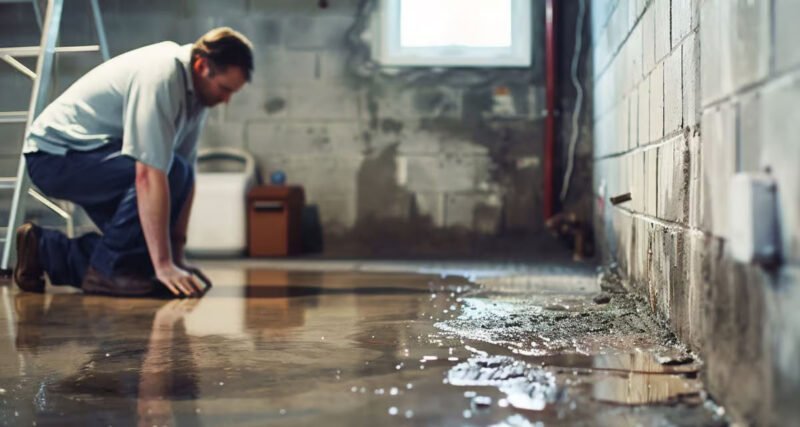
You walked into the basement on a Saturday morning and noticed a smell you couldn’t quite place, an insight as valuable as knowing the Best Areas Invest Albany. Basement water problems rarely start with a flood. They start with a smell you get used to, a crack you tell yourself has always been there.
Basement water problems rarely start with a flood. They start with a smell you get used to, a crack you tell yourself has always been there, or a white powder on the wall you assume is just dust from the furnace. These are the basement waterproofing signs homeowners miss every day — and each missed sign carries a price tag that compounds with time. The U.S. Department of Housing and Urban Development identifies moisture as the single greatest threat to the long-term durability of American homes, ahead of age, pests, and normal wear. Catching it early changes everything about the cost, the repair scope, and whether your homeowners insurance covers any of it.
Most basement moisture enters through routes you cannot see without looking for them. Water travels through porous concrete via capillary action, seeps through hairline cracks at the cove joint where floor meets wall, and condenses on cool surfaces when humidity crosses a threshold most homeowners never measure. None of these processes announce themselves loudly.
Compounding the problem is the fact that basements are the least-visited part of most houses. You go down there to do laundry, grab storage, or check the circuit breaker. The rest of the time, whatever is happening inside the walls stays out of sight. A 2022 thread on r/homeowners captured this perfectly: a homeowner noticed a small amount of water after heavy rain and asked when they should start worrying. The top reply was blunt: “By the time you see standing water, the problem has been going on for at least a season, probably longer.”
Seasonal patterns also play a role in hiding the evidence. Spring snowmelt saturates soil around the foundation for weeks before water forces its way inside. Summer thunderstorms deliver sudden hydrostatic pressure spikes. Fall leaves clog gutters and send roof runoff straight down the foundation wall instead of away from it. Winter freeze-thaw cycles widen existing cracks millimeter by millimeter. Each season creates conditions that either cause water intrusion or mask the damage until the next wet cycle.
Community Insight: “When we bought our house, the inspector noted ‘evidence of prior moisture’ in the basement but said it looked old. The seller painted over the stains. A year later after a week of heavy spring rain, the same wall had water beading through the paint. The lesson: dried stains aren’t resolved problems — they’re paused ones.” — r/FirstTimeHomeBuyer
The Signs You Can See
Basement waterproofing signs homeowners miss fall into three categories: what you can see with your eyes, what your nose and skin detect, and what your equipment is trying to tell you. The visible signs are the easiest to check and the most likely to be dismissed as cosmetic. Here is how to read what your basement walls are actually saying.
Efflorescence — The White Powder That’s Not Just Dust
Efflorescence looks like white, chalky powder or crystalline fuzz on concrete or masonry walls. It forms when water migrates through the wall, dissolves mineral salts inside the concrete, and deposits them on the surface as the water evaporates. Brushing it off with your hand doesn’t fix anything — the minerals are coming from inside the wall, and new deposits will appear as long as water keeps moving through.
Efflorescence itself is not structurally dangerous, but it is a reliable indicator that water is traveling through your foundation in quantities large enough to carry dissolved solids. If you see it concentrated along a specific crack, that crack is an active water pathway. If it covers a broad area near the floor, groundwater is being forced through the wall by hydrostatic pressure from the outside. Either scenario means your waterproofing, whether it’s an exterior membrane, a drain tile system, or simply the natural drainage of the surrounding soil, has a failure point.
Water Stains and Discoloration Patterns
Water stains on basement walls and floors tell a story if you know how to read them. A single horizontal stain line at the same height around the perimeter often indicates a past flooding event rather than ongoing seepage. Vertical streaks running down from a specific point suggest a leak from above, a window well, a pipe penetration, or a crack in the upper portion of the foundation wall. Dark patches near the floor that grow after rain, especially at the cove joint where the wall meets the floor, point to groundwater pressure pushing water up from below.
The color matters too. Brownish stains typically come from dirty surface water carrying soil particles. White or grayish rings are mineral deposits, essentially efflorescence in stain form. Greenish-black discoloration means mold or algae are growing on the damp surface, which brings a different set of problems entirely.
Cracks That Matter vs Cracks That Don’t
Not every crack in a basement wall means structural trouble. Concrete shrinks as it cures, and hairline vertical cracks, thinner than a credit card, running straight up and down, are almost always shrinkage cracks from the original pour. They may still leak water but rarely threaten structural integrity.
The cracks that should get your full attention:
- Horizontal cracks anywhere in a foundation wall indicate the wall is bowing inward under soil pressure. These are structural events, not cosmetic ones. A horizontal crack wider than 1/8 inch requires an engineer’s assessment.
- Stair-step cracks in block or brick foundation walls follow the mortar joints in a diagonal pattern. These signal differential settlement, one part of the foundation is sinking faster than another.
- Widening cracks of any orientation. Mark the end of a crack with a pencil line and date it. If the crack extends past your mark within a few months, water is actively working its way through and freeze-thaw cycles may be accelerating the damage.
- Cracks at the cove joint, the seam where the basement floor meets the wall, are the most common entry point for groundwater and the most frequently overlooked because homeowners assume the floor and wall are one solid piece. They aren’t.
A 2026 thread on r/masonry captured this perfectly: a first-time home buyer posted photos of vertical cracks and a stair-step crack in their basement, asking whether to walk away from the deal. The masonry professionals in the thread were unanimous: vertical cracks, likely fine, just get them sealed. The stair-step crack, that’s a negotiation point, because it probably means the footer settled unevenly.
Peeling Paint and Bubbling Wall Coatings
Paint and drywall were never designed to withstand moisture from behind. When water infiltrates a basement wall, it pushes against paint and drywall compound from the inside out. The result is blistering, bubbling, or peeling that looks different from normal wear. Normal peeling happens at edges and corners where paint was applied too thin. Moisture-driven peeling happens in the middle of a wall, often in circular patterns, as hydrostatic pressure pushes water vapor through the surface.
If your basement has drywall installed over foundation walls, tap it in a few spots near the floor. A hollow, solid sound is what you want. A dull thud or a soft give under your knuckle means the drywall has absorbed moisture and is losing structural integrity. By the time drywall feels soft, the framing behind it may already have mold growth.
The Signs You Can Smell and Feel
Some of the most telling basement waterproofing signs homeowners miss cannot be seen at all, they are detected by smell, touch, and the way the air feels when you walk downstairs. These sensory signals often appear months before any visible water, and ignoring them is what turns a $500 fix into a $15,000 excavation.
Musty Odors, Why “Basement Smell” Isn’t Normal
The idea that basements are supposed to smell musty is one of the most persistent myths in home ownership, and also one of the most expensive. That damp, earthy smell is produced by mold and mildew colonies metabolizing organic material in a moist environment. A dry basement has no smell. If yours does, water is present somewhere, even if you cannot see it.
The National Institute for Occupational Safety and Health (NIOSH) has found that building dampness, not just visible mold, but the damp conditions that produce the odor, is linked to respiratory symptoms, asthma exacerbation, bronchitis, and sinus problems. The smell is often strongest near the floor, where moisture concentrates, or in corners with poor air circulation. If the odor gets stronger after rain, you have active water entry. If it’s constant regardless of weather, the moisture source is likely condensation from high humidity or a slow groundwater seep that never fully dries.
Community Insight: “I kept telling myself the basement smell was just ‘old house smell.’ My wife insisted we get it checked. Turned out the previous owner had put drywall directly over a foundation crack and there was a whole ecosystem of mold behind it. $4,700 later, the basement finally smells like nothing. Which is what it should have smelled like all along.”, r/HomeImprovement
Mold vs Mildew, How to Tell the Difference
Mold and mildew are both fungi that thrive in damp conditions, but they signal different levels of severity and require different responses.
| Characteristic | Mildew | Mold |
|---|---|---|
| Appearance | Powdery, flat; white or gray turning to yellow/brown | Fuzzy or slimy; black, green, red, or blue |
| Growth surface | Stays on the surface, wipes off easily | Penetrates porous materials, roots into drywall, wood, carpet |
| Smell | Mild mustiness, often described as “damp socks” | Strong, earthy, pungent, intensifies in enclosed spaces |
| Health risk | Minor respiratory irritation for most people | Allergic reactions, asthma attacks, mycotoxin exposure risk for certain species |
| What it indicates | Surface moisture problem, humidity too high, condensation | Sustained water intrusion, leak, seepage, or long-term dampness inside building materials |
| DIY removal | Vinegar or hydrogen peroxide on hard surfaces; improve ventilation | Porous materials (drywall, carpet) must be removed; hard surfaces need professional-grade cleaning if area exceeds 10 sq ft (per EPA guideline) |
High Humidity and Condensation
Condensation on basement walls, pipes, and windows is often mistaken for a leak. The distinction matters because the fix is completely different. Condensation occurs when warm, humid air contacts a cool surface and releases moisture, no foundation crack required. A simple test: tape a 12-inch square of clear plastic sheeting tightly to a wall with duct tape on all four edges. Leave it for 24 hours. If moisture appears on the outside of the plastic (the room side), the problem is condensation. If moisture appears under the plastic (against the wall), water is seeping through from the outside.
The EPA recommends keeping indoor relative humidity between 30% and 50%. A basement consistently above 60% humidity creates conditions where dust mites proliferate, they cannot survive below 50%, and where certain species of mold begin colonizing within 48 hours. A $15 hygrometer from any hardware store gives you a number instead of a guess. If your basement reads above 60% in summer with the air conditioning running, you have a moisture source beyond normal seasonal humidity: either groundwater seepage, an unsealed sump pit, or air leaks pulling in humid outdoor air through cracks and gaps.
High basement humidity also correlates with elevated indoor radon levels. Radon, a colorless and odorless radioactive gas that is the second-leading cause of lung cancer in the United States, enters homes through foundation cracks and openings. Damp basement conditions often indicate the same entry pathways radon uses, and the stack effect, warm air rising through the house and pulling soil gases up through the basement, is amplified when humidity differentials create air movement. If you are testing for radon, you should also be measuring humidity, because they often share a root cause.
Rust and Rot on Metal Fixtures
Take a flashlight and examine the metal in your basement: water heater legs, furnace cabinet, exposed pipes, support columns, the metal brackets on shelving units. Rust on these items, especially near the floor, means humidity has been consistently high enough to trigger oxidation. Iron and steel begin rusting at around 50% relative humidity and the rate accelerates sharply above 60%. If your stored tools have developed surface rust or your washer and dryer connections show orange discoloration at the fittings, your basement has a chronic humidity problem even if the walls look dry.
Wood rot follows a similar pattern. Check wooden stair stringers, the bottom plate of framed walls, and any wood in contact with the basement floor. Press a screwdriver into suspicious areas. Sound wood resists. Rotting wood gives way with minimal pressure.
The Signs Outside Your House (Before Water Gets In)
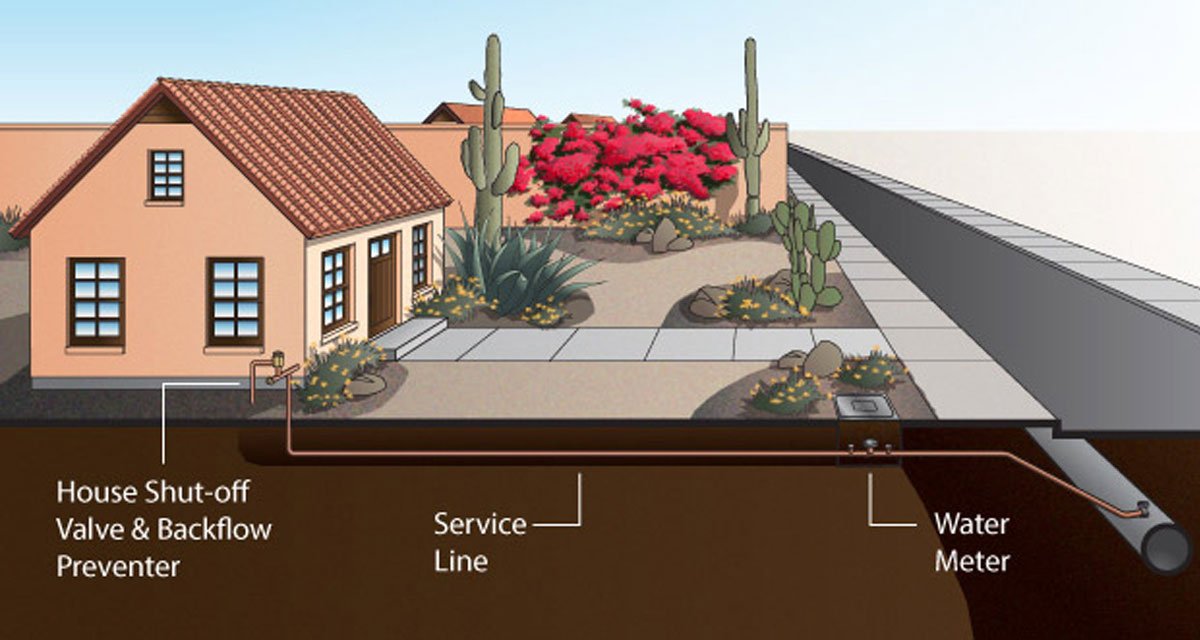
The best time to diagnose a basement waterproofing problem is before water reaches the foundation. Walk the perimeter of your house during the next heavy rain with an umbrella and pay attention.
Grading and Drainage Red Flags
Stand at any point along your foundation and look at the ground. The soil should slope away from the house at a minimum of 6 inches of drop over the first 10 feet. If the ground is flat or, worse, slopes toward the foundation, every rainfall directs water against the basement wall instead of away from it. Over time, this saturates the soil directly against the foundation and dramatically increases hydrostatic pressure.
Other outdoor signs that predict indoor problems:
- Pooling water anywhere within 10 feet of the foundation that remains 24 hours after rain has stopped. This means the soil in that area is already saturated and additional rain has nowhere to go except down along the foundation wall.
- Downspouts discharging within 6 feet of the foundation. Extensions are cheap, a 10-foot downspout extension costs under $20 and moves thousands of gallons of roof runoff away from your basement each year.
- Window wells filling with water or lacking covers. A window well without a cover is a funnel directing rainwater straight to the weakest point in your basement wall. If the bottom of the well is lower than the surrounding grade without a gravel drain at the base, it’s essentially a small pond against your foundation.
- Soil pulling away from the foundation during dry weather, creating a gap that becomes a direct channel for the next rainstorm. Clay-rich soils are especially prone to this shrink-swell cycle.
Downspout and Gutter Warning Signs
Clogged gutters overflow during rain and send a concentrated sheet of water straight down along the foundation wall. A single downspout can channel hundreds of gallons per hour during a heavy storm. If that water lands at the base of your foundation instead of being carried away, you have effectively created a continuous soak cycle for your basement walls.
Walk outside during the next moderate rain and check every downspout. Water should exit the extension with visible force and flow away from the house. If it trickles, drips, or pools at the elbow, the downspout or the underground drain it connects to is blocked.
The Signs Coming From Your Equipment
Your sump pump and dehumidifier are the last line of defense between a dry basement and an indoor flood. When they start failing, they almost always give warning signs first, noises, cycling changes, or performance drops that most homeowners never notice because nobody taught them what to listen for.
Sump Pump Failure Warning Signs
A sump pump is your basement’s last line of defense, and it has its own set of warning signs that most homeowners never check for until the pump fails during a storm. By then, the basement already has water in it.
- Strange noises. A properly functioning sump pump makes a low hum when running. Grinding, rattling, or clanking means the impeller is damaged or debris is caught in the mechanism.
- Short cycling. If the pump turns on and off rapidly, every 30 seconds or less, the float switch is misadjusted, the check valve has failed, or the pit is too small for the inflow rate. Short cycling burns out the motor within months.
- Continuous running without shutting off. Either the float switch is stuck in the “on” position, the discharge pipe is frozen or blocked, or the pump is undersized for the volume of water entering the pit. A pump that runs continuously will overheat and fail, often within hours.
- Visible rust or corrosion on the pump body, discharge pipe, or electrical connections.
- Age over 7 years. Most residential sump pumps have a service life of 7 to 10 years. If your pump is approaching or past this range, it is running on borrowed time regardless of how well it seems to be working.
- No water in the pit during wet weather. This can mean the pump is working perfectly and groundwater is not entering, or it can mean the drain tile system that feeds the pit is clogged and water is accumulating somewhere else in your basement unseen.
- No backup power system. The storms that cause basement flooding are the same storms that knock out power. A sump pump without a battery backup or water-powered backup is a sump pump that will be off when you need it most.
What Happens If You Ignore These Signs
Every basement waterproofing sign you overlook has a clock attached to it. The damage compounds, what starts as a cosmetic issue becomes a structural one, and what begins as a maintenance expense becomes a crisis that threatens your home’s value and your family’s health. The progression follows a predictable pattern that is expensive to reverse but surprisingly cheap to interrupt early.
Structural Damage Timeline
Water damage to a foundation is not linear. It accelerates. Year one might produce efflorescence and a faint smell. Year two brings visible damp spots and a crack that widens slightly. By year five, the crack has become a water channel, the surrounding concrete has begun spalling (flaking apart), and the rebar inside the foundation wall is rusting and expanding, which cracks the concrete further from the inside. This is the point where repair costs jump from four figures to five.
According to HomeAdvisor, basement waterproofing repair costs range from $2,000 to $7,000 for standard systems. Foundation structural repairs, which become necessary when water damage has been ignored long enough to compromise the wall itself, can exceed $15,000 and are rarely covered by homeowners insurance, which typically excludes damage from groundwater seepage and gradual deterioration.
Health Risks Beyond Mold
The health conversation around damp basements usually stops at mold, but the full picture is wider. The EPA classifies indoor mold as a respiratory irritant and allergen; the CDC notes that prolonged exposure can trigger asthma in children who were previously healthy. But damp basements also create conditions where dust mites thrive, and dust mite allergens are a leading trigger for year-round allergy symptoms and asthma. Dust mites cannot reproduce below 50% relative humidity, making basement humidity control a direct public health intervention for any household with allergy or asthma sufferers.
Radon exposure, as noted earlier, correlates with the same foundation entry points that admit water. The EPA estimates radon causes approximately 21,000 lung cancer deaths per year in the United States. A damp basement should prompt both a humidity reading and a radon test, available for under $30 at most hardware stores, because the conditions that produce one often indicate vulnerability to the other.
The Real Cost of Waiting
A thread on r/RealEstate from a home inspector captured the financial asymmetry: “I see it every week. A $300 crack injection that wasn’t done three years ago is now a $12,000 excavation and drain tile job. Water is patient and it doesn’t negotiate.”
The cost trajectory is well-documented. Early-stage intervention, sealing cracks, improving exterior grading, extending downspouts, runs from a few hundred to $2,000. Once water has penetrated enough to require interior drain tile or an exterior waterproofing membrane, costs land between $5,000 and $15,000. When structural repair enters the equation, figures above $20,000 are common. The difference between stage one and stage three is often nothing more than time.
What to Do When You Spot the Signs
Start outside. Clean your gutters, extend your downspouts, and check that soil slopes away from the foundation. These three steps cost almost nothing and solve a surprising percentage of basement water problems, especially if the water only appears after rain.
Then move inside. Buy a hygrometer. Tape plastic sheeting to a suspect wall for 24 hours to distinguish condensation from seepage. Mark any cracks with a date and pencil line so you can track whether they are active. If you have a sump pump, pour a bucket of water into the pit and confirm it activates and discharges properly.
If these DIY steps don’t resolve the signs within a few weeks, or if you find horizontal cracks, stair-step cracks, or cracks wider than 1/8 inch, bring in a foundation specialist or structural engineer, not a waterproofing salesperson. An engineer charges a flat fee for an assessment and has no incentive to sell you a system you don’t need. A waterproofing company’s free inspection exists to sell you their particular solution.
Frequently Asked Questions
Is some basement dampness normal in older homes?
Minor condensation during extreme humidity swings is common in older homes without vapor barriers, but visible dampness, efflorescence, or musty odors are never “normal”, they are signs of active moisture intrusion that will worsen over time. Older homes were often built without modern waterproofing, which makes early detection more important, not less.
Can I waterproof my basement myself?
Exterior grading corrections, downspout extensions, gutter cleaning, and applying interior sealant to hairline cracks are all DIY-appropriate. Interior drain tile installation, exterior excavation, and structural crack repair require professional equipment and expertise. The plastic sheet test described above can help you determine whether your problem is within DIY scope.
Does homeowners insurance cover basement water damage?
Standard homeowners policies typically exclude damage from groundwater seepage, foundation leaks, and gradual deterioration. They may cover sudden events like a burst pipe or a sump pump failure if you have a specific water backup endorsement. Check your policy language, the distinction between “surface water” and “groundwater” in policy exclusions is a frequent point of dispute during claims.
Do I need a sump pump or full waterproofing?
A sump pump manages water that has already entered the basement through a drain tile system. It does not stop water from entering. If water is seeping through walls or the cove joint rather than being collected by drain tile and directed to the sump pit, you need waterproofing, possibly an interior drain system or exterior membrane, not just a better pump.
Should I fix basement water problems before selling my house?
Disclosure laws in most states require sellers to disclose known water intrusion and foundation issues. A buyer’s inspector will flag efflorescence, musty odors, and crack patterns. Addressing the problem before listing gives you control over the solution and cost; leaving it for the buyer to discover typically results in a negotiation where you pay for their worst-case estimate, not the actual repair cost.
How often should I inspect my basement for water signs?
At minimum, inspect twice a year: once after spring thaw when groundwater pressure peaks, and once after autumn leaf fall when gutters are most likely clogged. If you live in an area with heavy summer thunderstorms, add a midsummer check. Walk the exterior during rain at least once per season to observe downspout discharge and surface pooling.
Sound familiar? The most expensive basement waterproofing sign is the one you talked yourself out of seeing. The smell you got used to, the crack you decided was probably fine, the damp spot you covered with a storage bin. Water does not self-correct and foundations do not heal. Every month a sign goes unaddressed, the repair gets bigger, the health risk increases, and the bill gets steeper. A hygrometer costs $15. The plastic sheet test takes 24 hours and a roll of tape. The alternative is finding out the hard way that your basement has been quietly failing for years, and by then, the only thing left to do is write a very large check.