



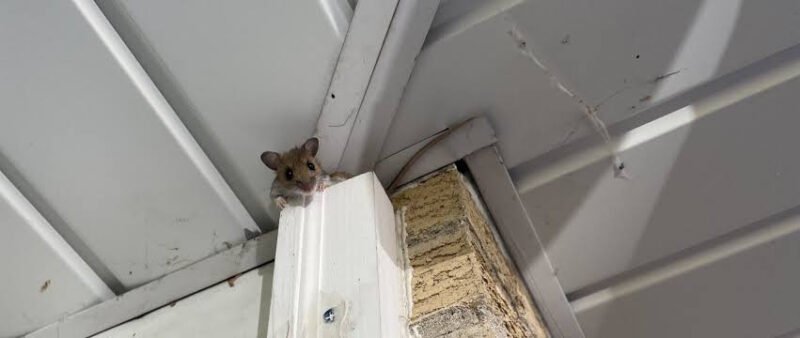
Mice do not break into houses. They walk in, observes Intersection Real Estate solutions. A mouse can fit through a gap the size of a dime, roughly a quarter of an inch. The gap under a garage door, the opening around a utility pipe, the crack in the foundation that has been there since the house was built and nobody has ever looked at. The mouse finds the gap because it is following the scent of food, the heat leaking from the house, or simply the edge of the foundation as it travels along its nightly foraging route. The mouse is not targeting your house specifically. Your house is in the way of what the mouse was already doing, and the gap made it easier to go inside than to go around.
A mouse infestation is three things working together: an attraction outside the house, an entry point into the house, and a reason to stay inside once the mouse gets in. The attraction is food, shelter, or warmth. The entry point is a gap, crack, or opening. The reason to stay is the same attractions that brought the mouse to the house in the first place, now amplified because the food is inside, the shelter is inside, and the warmth is inside. Removing any one of the three, the attraction, the entry, or the interior habitat, breaks the chain. Removing all three eliminates the problem permanently. Most people try to remove just the mice, with traps or poison, and leave the attraction and the entry point intact. New mice replace the dead ones within weeks because the house is still the easiest, warmest, best-fed option in the neighborhood.
Food: The Strongest Attractant
Mice eat roughly three grams of food per day, about the weight of a single peanut. They do not need much. What they need is consistent access. A bag of birdseed leaning against the garage wall is a year’s supply of food for a mouse colony. A bowl of dry cat food left on the back porch overnight is a nightly meal. A compost pile with kitchen scraps that is not turned regularly is a buffet. The attractions are not the obvious things, the uncovered trash can, the spilled cereal in the pantry. They are the things you do not think of as food because you do not eat them. Mice eat birdseed, grass seed, dry pet food, and the residue in unrinsed recyclables. A recycling bin full of soda cans with a few drops of sugar water in each one is a food source for a mouse.
Pet food is the most overlooked mouse attractant. A 40-pound bag of dog food stored in the garage in an unsealed container feeds a mouse colony indefinitely. Store pet food in metal or heavy plastic containers with tight-fitting lids. Do not leave pet food bowls out overnight. Feed pets during the day and pick up the bowls. The cat that you got to catch mice is leaving a bowl of dry food on the floor every night that attracts more mice than the cat will ever catch. The cat is a net attractant if you leave food out for it.
Bird feeders attract mice indirectly. The birds knock seed to the ground, and the mice eat the spillage at night. Move bird feeders at least 30 feet from the house. Clean up spilled seed under the feeder regularly. If you have a persistent mouse problem, take the bird feeder down for a month and see if the mice leave. In many cases, the bird feeder is the primary food source supporting the mouse population that occasionally ventures into the house.
Shelter: Clutter, Woodpiles, and Overgrown Vegetation
Mice need shelter close to the house before they find a way inside. A woodpile stacked against the foundation provides shelter directly adjacent to the entry points. The mice live in the woodpile and explore the foundation nightly. Move firewood at least 20 feet from the house and store it on a rack elevated off the ground. A woodpile on the ground against the house is a mouse apartment building with a tunnel directly into your basement.
Overgrown vegetation against the foundation provides cover for mice to travel from their outdoor nests to the entry points. Shrubs, ground cover, ivy, and tall grass against the house create a hidden corridor where mice can move undetected. Trim vegetation back at least 12 to 18 inches from the foundation. Maintain a gravel strip around the perimeter of the house. Gravel is difficult for mice to burrow through and exposes them to predators when they cross it. A bare strip of gravel around the foundation is one of the simplest and most effective mouse deterrents available.
Clutter inside the house provides shelter for mice that have already gotten in. Stacks of cardboard boxes in the basement, piles of clothing in a closet, stored materials in the attic, all provide nesting sites and travel corridors. Mice nest in insulation, shredded paper, fabric, and any soft material they can gather. A cluttered basement is a mouse preserve. The mouse can travel from one end of the basement to the other without ever being exposed because it moves through the clutter. Decluttering removes the shelter that allows mice to establish a permanent presence inside the house.
Entry Points: The Gaps You Cannot See
Mice enter through gaps that are surprisingly small. A quarter-inch gap under an exterior door is a mouse door. A gap around a pipe under the sink, where the hole in the wall is larger than the pipe, is a mouse door. A gap where the siding meets the foundation, a crack in the mortar, an unscreened attic vent, a gap around a window air conditioner, all of these are mouse doors. The entry points are not hidden. They are in plain sight, but they are the size of a dime and you have to look for them specifically.
Inspect the exterior of the house with a flashlight. Look along the foundation, around every pipe and utility penetration, around windows and doors, at the corners where the siding meets the trim. Anything larger than a quarter of an inch is a potential mouse entry point. Seal gaps with steel wool, copper mesh, or expanding foam. Steel wool packed into a gap and sealed with caulk stops mice because they cannot chew through steel wool. Expanding foam alone will not stop a mouse. The mouse chews through the foam. The steel wool or copper mesh is the barrier. The foam or caulk holds it in place.
Check the garage door seal. The rubber weatherstrip at the bottom of the garage door is often the largest gap on the entire exterior of the house. Replace it if it is cracked, flattened, or does not seal against the floor. Install a threshold seal under the garage door for an additional barrier. The garage is the most common entry point for mice because the door seal deteriorates and nobody notices until the mice are nesting in the Christmas decorations.
Common Mistakes in Mouse Prevention
Mistake one: using poison. Rodenticide kills mice, but mice that eat poison often die inside the walls, where they decompose over the course of several weeks. The smell of a dead mouse in a wall is one of the worst odors a house can produce, and there is no way to remove the carcass without cutting into the drywall. Poison also kills predators that eat poisoned mice. Hawks, owls, foxes, and neighborhood cats that catch a poisoned mouse ingest the rodenticide and can die. Poison is a problem that creates more problems. Traps are a better solution for mice that are already inside, and exclusion is the solution for preventing them from getting in.
Mistake two: relying on cats. A cat will catch some mice. It will not catch all of them, and it cannot reach the mice living in the walls, the attic, or the crawlspace. The cat hunts what it can see. The mouse colony living in the insulation above the kitchen ceiling is invisible to the cat and unaffected by its presence. A cat is a supplement to mouse control, not a replacement for sealing entry points and removing attractants.
Mistake three: sealing the interior without sealing the exterior. Finding a gap in the baseboard and sealing it does not prevent the mouse from entering the wall cavity. It only prevents the mouse from entering the room from the wall. The mouse is still in the wall, and it will find another gap into another room. The exterior is where the exclusion happens. Seal the outside, then seal the inside. The order matters.
Frequently Asked Questions
How do I know if mice are in my house right now?
Look for droppings. Mouse droppings are small, dark, and roughly the size of a grain of rice. They are found along baseboards, in cabinets, under sinks, and in pantry corners. Fresh droppings are dark and soft. Old droppings are grey and hard. Finding fresh droppings means mice are currently active. Other signs include gnaw marks on food packaging or wood, a musky odor in enclosed spaces, and the sound of scratching in walls at night. Mice are nocturnal. If you hear scratching in the walls after dark, mice are moving through the wall cavities.
What material actually stops mice from chewing through?
Steel wool and copper mesh are the only inexpensive materials that mice cannot chew through. Pack either into gaps and seal over them with caulk or expanding foam. The steel wool or mesh is the physical barrier. The sealant holds it in place. Metal flashing, hardware cloth with a quarter-inch mesh, and concrete patch are also effective for larger openings. Expanding foam, caulk, wood, plastic, and drywall can all be chewed through by a determined mouse.
Why do mice come inside in the fall?
Mice do not hibernate. They remain active all winter and need a warm place to nest and a reliable food source. In the fall, as outdoor temperatures drop and natural food sources decline, the warmth and food inside a house become increasingly attractive. The mice that have been living in the woodpile all summer start exploring the foundation more aggressively as the weather cools. The same gaps that were present all summer become entry points in the fall because the mice are more motivated to find them. Fall is the most important time to seal entry points and remove attractants from around the foundation.
The Bottom Line
Mice are attracted to a house by food, shelter, and warmth. The food is pet food left out overnight, birdseed spilled under the feeder, and pantry items in unsealed packaging. The shelter is woodpiles against the foundation, overgrown vegetation, and clutter inside the basement and garage. The entry points are gaps the size of a dime around pipes, under doors, and along the foundation. Remove the attractants, seal the gaps with steel wool and caulk, and the mice will find another house. Leave the attractants and the gaps in place, and you will be trapping mice every fall for as long as you own the house. The mice are not the problem. The food, the shelter, and the gaps are the problem. The mice are just the part of the problem that leaves droppings in the pantry.