



The cost to build a retaining wall is usually discussed in terms of materials per square foot. That number is useful for comparing materials but misleading as a total project cost. The materials are roughly a third to half of what you will spend. The rest is labor, equipment, drainage, and the things that go wrong during excavation. This guide focuses on those costs, the ones that are not listed on the price tag at the lumberyard, emphasizes Keyrenter Richmond company.
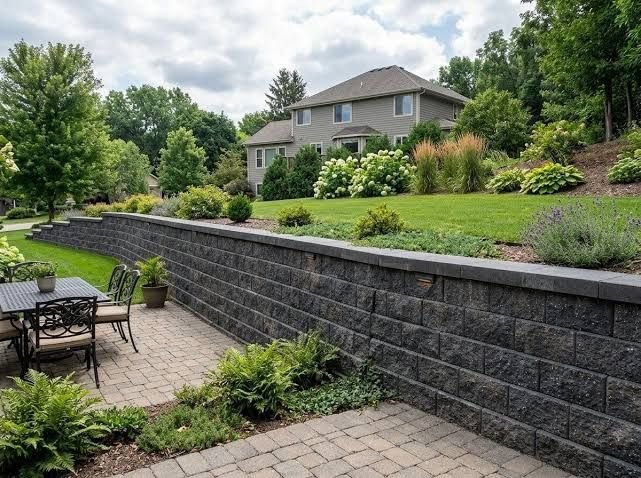
A four-foot segmental block wall 30 feet long has 120 square feet of face area. The blocks cost $800 to $1,500. The gravel for the base and backfill costs $200 to $400. The drain pipe and landscape fabric cost $50 to $100. The materials total roughly $1,100 to $2,000. A contractor charges $3,500 to $6,000 for the same wall installed. The difference is labor, equipment, overhead, and profit. Understanding what is in that difference is how you decide whether to build it yourself or write the check.
Where the Labor Cost Goes
Excavation is the largest labor line item. Digging a trench 30 feet long, 24 inches wide, and 12 inches deep by hand takes one person roughly four to six hours in average soil. In rocky or clay soil, it takes eight to twelve hours. A contractor with a mini excavator digs the same trench in 30 minutes. The excavator rental costs $200 to $400 per day. The contractor charges $75 to $150 per hour for the operator and machine. The excavation line item on a contractor’s invoice for a 30-foot wall is typically $500 to $1,000.
Base preparation is the second largest line item. Spreading and compacting gravel takes time. A plate compactor rents for $50 to $80 per day. Hand tamping is free and takes three times as long. The base must be perfectly level and fully compacted. Rushing the base is the most common cause of retaining wall failure. The contractor’s invoice for base prep, including the gravel material which is priced separately, is typically $300 to $600 in labor.
Block installation is the visible part of the job. Laying segmental block takes roughly one to two hours per 10 square feet of wall face for a professional crew. A 120-square-foot wall takes 12 to 24 labor hours. At $75 to $150 per hour for a two-person crew, the block installation labor is $900 to $3,600. This is the largest single line item and the one that varies most with wall height and material. Natural stone takes roughly twice as long as segmental block per square foot. The labor cost for a natural stone wall is correspondingly higher.
The DIY Math: When It Pays to Do It Yourself
The labor to build a retaining wall is 40 to 60 percent of the installed cost. On a $5,000 contractor quote, $2,000 to $3,000 is labor. That is the amount you save by doing it yourself. The trade-off is time, physical effort, and risk. A segmental block wall is a manageable DIY project. The blocks are uniform, the interlocking lip sets the batter, and the process is repetitive. A natural stone wall is a significant physical challenge. Each stone must be selected and fitted. The learning curve is steep.
Equipment rental narrows the gap between DIY and professional. A mini excavator costs $200 to $400 per day. A plate compactor costs $50 to $80 per day. A masonry saw costs $60 to $100 per day. Renting the right equipment for a weekend costs $300 to $600 and saves days of labor. The equipment cost is the same whether you or a contractor is using it. The difference is that the contractor already knows how to operate the equipment and you will spend the first hour learning.
The Cost of Not Building the Wall
A slope that needs a retaining wall will continue to erode without one. The erosion is slow. An inch of soil washes away each year. After five years, the grade has dropped five inches and the edge of the lawn is creeping toward the house. After ten years, the foundation may be exposed. After twenty years, the slope has moved enough that a retaining wall costs twice what it would have cost originally because the grade change is larger and the wall must be taller. The cost of not building the wall is the cost of the wall at a future date plus the cost of repairing the damage the erosion caused in the meantime.
Water damage from poor drainage behind a slope without a retaining wall is a separate cost. A slope that directs runoff toward the foundation saturates the soil around the footings. Saturated soil expands and contracts with freeze-thaw cycles, stressing the foundation. Foundation repairs cost $5,000 to $15,000 for minor cracks and $30,000 or more for major structural work. A $4,000 retaining wall with proper drainage is cheaper than the foundation repair it prevents.
Frequently Asked Questions
How much do contractors charge per hour for retaining wall work?
Landscape and hardscape contractors charge $50 to $100 per hour per person, or $75 to $150 per hour for a two-person crew. Excavation contractors with equipment charge $100 to $200 per hour including the machine and operator. Most retaining wall quotes are flat-rate, not hourly, based on the contractor’s estimate of the labor hours required. Asking for the hourly breakdown helps you understand what is driving the cost and whether the quote is reasonable for the scope of work.
What is the single biggest way to save money on a retaining wall?
Do the excavation yourself. Renting a mini excavator for a weekend costs $200 to $400 and saves $500 to $1,000 in labor. The excavation is not technically difficult. It is physically demanding. The risk is hitting a utility line, which is why you call 811 before digging. The second biggest savings is choosing segmental block over natural stone. The material cost difference is $500 to $1,500 for a typical wall. The labor savings are larger because segmental block installs roughly twice as fast.
The Bottom Line
The cost to build a retaining wall is materials plus labor plus equipment plus drainage. Materials are the visible cost. Labor is the hidden cost that represents 40 to 60 percent of the total. Equipment rental narrows the gap between DIY and professional. The cost of not building the wall is the erosion that continues while you wait, the foundation damage that may result, and the larger wall you will eventually need when the grade change has gotten worse. A retaining wall is not a landscaping expense. It is insurance against the hillside moving into the house.