

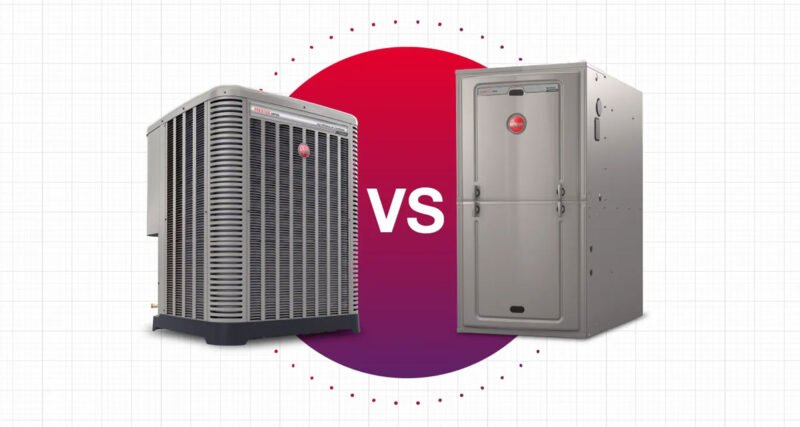
The short answer is yes, modern cold-climate heat pumps work in sub-zero temperatures, but the real question for a homeowner in Minnesota or Maine is whether they save you money over a gas furnace. That answer depends entirely on your local electricity and fuel prices, your home’s insulation, and the specific hardware you choose says Perris Property Management. A heat pump vs furnace for cold climates comparison isn’t a simple one-size-fits-all verdict.
For decades, the conventional wisdom held that electric heat pumps were useless once the mercury dropped below freezing. That’s no longer true. Units with variable-speed compressors and enhanced vapor injection can maintain a coefficient of performance (COP) above 1.0 at -15°F, meaning they still move more heat into your home than the electricity they consume. But they do struggle. The defrost cycle kicks in more frequently, and when temperatures plunge to -20°F or lower, almost every system will eventually call for auxiliary heat (electric resistance) to keep up.
The numbers below pit the real-world HSPF2 ratings of cold-climate models against the annual fuel utilization efficiency of a high-end gas furnace, with a full 10-year cost-of-ownership breakdown. For homeowners in Zone 5, 6, or 7 weighing the decision, the data tells a more nuanced story than either side’s marketing suggests.
Do Heat Pumps Actually Work in Freezing Temperatures?
Yes, modern cold-climate heat pumps (CCHPs) operate efficiently at temperatures as low as -15°F to -22°F, a dramatic leap from the 30°F cutoff that plagued older models. The technology has fundamentally changed the math for homeowners in northern states.
The fear that heat pumps become useless in freezing weather is rooted in designs from the 1980s and 1990s. Those single-speed units struggled below 40°F and relied heavily on expensive electric resistance backup. Today’s CCHPs use variable-speed compressors, enhanced vapor injection (EVI), and smarter defrost cycles that extract heat from air that feels impossibly cold. By most estimates, a properly sized cold-climate heat pump delivers a Coefficient of Performance (COP) of roughly 2.0 at -15°F — meaning it produces two units of heat for every unit of electricity consumed. That is not as efficient as its COP of 3.5 at 47°F, but it is still roughly twice as efficient as electric resistance heating, which has a COP of exactly 1.0.
How Modern Cold-Climate Heat Pumps (CCHPs) Defy the Cold
Three engineering advances separate today’s CCHPs from the units your parents’ contractor warned you about.
Variable-speed compressors are the biggest leap. Instead of cycling on and off at full power (like a window AC unit), a variable-speed compressor ramps up or down in tiny increments. This allows the system to run continuously at a low speed, extracting small amounts of heat from frigid air without stopping. Continuous operation prevents the coil from icing over as quickly and keeps indoor temperatures steady. A single-speed unit at 0°F might run for 10 minutes, shut off, then struggle to restart — a variable-speed unit simply slows down and keeps going.
Enhanced vapor injection (EVI) is a refrigerant circuit trick that effectively gives the compressor a second stage of compression. Refrigerant is injected mid-compression, cooling the compressor and increasing the temperature difference between the indoor and outdoor coils. This is the specific technology that pushes the operating floor down to -15°F or lower. Mitsubishi’s Hyper-Heat, Fujitsu’s Halcyon, and Lennox’s MLA series all use variations of EVI. Without it, a standard heat pump loses heating capacity rapidly below 10°F.
HSPF2 rating (Heating Seasonal Performance Factor 2) is the updated metric that measures efficiency over an entire heating season, including colder temperatures. The Department of Energy introduced HSPF2 in 2023 to replace the older HSPF standard, which was calculated using milder climate data. A cold-climate heat pump should carry an HSPF2 rating of at least 8.5 — anything below that was likely designed for the South.
The Defrost Cycle Myth
The defrost cycle is the most misunderstood aspect of heat pump operation in cold weather. Here is how it actually works.
When outdoor temperatures drop below freezing and humidity is high, frost accumulates on the outdoor coil. Frost acts as an insulator — it blocks airflow and reduces the coil’s ability to absorb heat. The heat pump detects this through pressure sensors or temperature probes and temporarily reverses the refrigerant flow. Hot gas from the compressor is diverted to the outdoor coil, melting the frost in roughly 5 to 10 minutes. During this cycle, the indoor fan slows or stops, and the system relies on auxiliary heat (electric resistance strips) to keep the house warm.
The concern most homeowners have is that defrost cycles waste energy and leave the house cold. In practice, defrost cycles consume roughly 2% to 5% of total heating energy in a typical winter. Modern CCHPs with variable-speed compressors defrost less frequently — sometimes once every 90 to 120 minutes , because the continuous low-speed operation keeps the coil warmer and drier than the on-off cycling of older units. The temperature drop indoors during a defrost cycle is usually imperceptible, especially if the home has good insulation and the system includes electric resistance backup that activates automatically.
One thing manufacturers rarely explain: defrost cycles are more frequent in humid cold weather (30°F with rain) than in dry cold weather (-10°F with clear skies). A homeowner in coastal Maine may see defrost cycles every 45 minutes during a wet December thaw, while a homeowner in inland Minnesota might go three hours between cycles during a dry January deep freeze. The system adapts
Heat Pump vs Furnace: Total Cost of Ownership (10-Year View)
Over a decade, a cold-climate heat pump with electric backup costs roughly $2,000 to $4,000 less to own than a high-efficiency gas furnace in northern climates, assuming current fuel prices and available tax credits. But that gap narrows fast if you burn propane or face extreme cold snaps. The real answer depends on your local utility rates, the severity of your winters, and whether you qualify for the 30% federal tax credit under the Inflation Reduction Act. Here is the breakdown.
Upfront Installation Costs
Installing a cold-climate heat pump (like a Mitsubishi Hyper-Heat or Lennox MLA) runs $8,000 to $16,000 for the outdoor unit plus an air handler. That price includes the required electric resistance backup , typically a 10–15 kW strip heater in the air handler, adding $1,500 to $2,500. A high-efficiency gas furnace (96% AFUE or higher) with a matching AC condenser costs $7,000 to $12,000 installed. The heat pump system starts $1,000 to $4,000 higher upfront.
What many homeowners don’t realize: the 30% federal tax credit (up to $2,000) applies only to ENERGY STAR-certified cold-climate heat pumps with a HSPF2 rating above 8.1. Furnaces don’t qualify for this credit. Subtract that $2,000, and the upfront gap shrinks to zero or even favors the heat pump in some markets. State-level rebates in Minnesota (up to $1,500), Maine (up to $8,000 for income-qualified households), and New York (up to $4,000) can flip the math entirely. Check your local program before assuming the heat pump is more expensive.
| Cost Component | Cold-Climate Heat Pump (with backup) | High-Efficiency Gas Furnace (96% AFUE + AC) |
|---|---|---|
| Equipment & labor | $8,000–$16,000 | $7,000–$12,000 |
| Electric backup (required) | Included above | N/A |
| Federal tax credit (30%, max $2,000) | −$2,000 | $0 |
| State rebate (varies) | −$500 to −$8,000 | $0 to −$500 |
| Effective upfront cost | $5,500–$14,000 | $6,500–$12,000 |
Annual Operating Costs
This is where the heat pump earns its keep , or doesn’t. Let’s use a typical 2,500-square-foot home in Minneapolis with a heating load of 60,000 BTU/hour. At 20°F, a modern cold-climate heat pump maintains a COP of 2.5 to 3.0. Below 5°F, the COP drops to roughly 1.8, and the system relies more on the auxiliary heat (electric resistance) strips, which have a COP of exactly 1.0 , dollar for dollar, the most expensive heat you can buy.
At Minnesota’s average electricity rate of $0.12/kWh and natural gas rate of $0.90/therm, the heat pump costs approximately $1,100 per year to run, while the gas furnace costs $1,400. That’s $300 in annual savings. Over 10 years, the heat pump saves $3,000 in operating costs , enough to cover the initial price difference.
Swap natural gas for propane at $2.50/gallon, and the furnace’s annual cost jumps to $2,100. The heat pump saves $1,000 per year. Over a decade, that’s $10,000 in your pocket. Rural homeowners in Maine burning $3.50/gal propane see even steeper savings. The heat pump pulls further ahead every winter.
But here is the catch: during a polar vortex week when temperatures stay below −10°F for days, the heat pump runs almost entirely on those expensive resistance strips. A single week of extreme cold can add $150 to $300 to your electric bill. The gas furnace doesn’t flinch , its efficiency is flat across all outdoor temperatures. If your region sees frequent deep free
The Backup Heat Question: Do You Need a Furnace Anyway?

You do not need a gas furnace for backup if you choose a cold-climate heat pump with electric resistance strips, but you will pay a premium on your electric bill during the handful of days each winter when temperatures drop below your heat pump’s economic balance point. The trade-off is between lower upfront equipment cost (all-electric) versus lower long-term operating cost during extreme cold snaps (dual-fuel hybrid).
Dual Fuel (Hybrid) Systems
A dual-fuel system pairs a heat pump with a gas, propane, or oil furnace. The control board automatically switches between the two heat sources based on outdoor temperature and fuel cost. Most systems are programmed to lock out the heat pump around 25°F to 30°F, handing full heating duty to the furnace. This protects the heat pump from running inefficiently during deep cold and avoids triggering expensive electric resistance backup.
What many homeowners don’t realize: the switchover temperature is adjustable. If you live in Maine and your propane costs $3.50 per gallon, you might set the lockout at 15°F instead of 30°F because the heat pump’s coefficient of performance (COP) still beats burning propane at that temperature. A variable-speed compressor widens that window further , some Mitsubishi Hyper-Heat units maintain a COP above 2.0 at -5°F, meaning the heat pump still delivers twice the heat per dollar compared to electric resistance.
The downside is equipment complexity. Two fuel sources mean two maintenance schedules, two sets of filters, and a control board that can fail. Installation costs typically run $2,000 to $4,000 higher than a straight heat pump with electric backup.
All-Electric with Auxiliary Heat
An all-electric system uses the heat pump as the primary heat source and electric resistance strips (often called auxiliary heat or emergency heat) for backup. This is the simplest setup and the cheapest to install. It also qualifies for the full $2,000 federal tax credit under the Inflation Reduction Act , dual-fuel systems sometimes face eligibility restrictions depending on the furnace efficiency rating.
Here is where things get tricky. Electric resistance heat is expensive , roughly 2.5 to 3 times the cost of running a heat pump per BTU. During a week-long polar vortex in Minnesota, a 1,800-square-foot home might burn through $200 to $350 in auxiliary heat alone. The defrost cycle also forces the heat pump to run in reverse periodically, melting ice buildup on the outdoor coil. During defrost, the system relies entirely on electric resistance strips to keep the house warm. In extreme cold (-10°F or below), the heat pump may spend 10 to 15 percent of its runtime in defrost, which eats into efficiency.
The HSPF2 rating matters here. A heat pump with an HSPF2 of 10 or higher will spend less time in defrost and deliver better cold-weather performance than a unit rated at 7.5. Pair that with a variable-speed compressor, and the auxiliary heat may only kick on a few days per year in Zone 6. For rural homeowners trying to eliminate propane delivery costs, that trade-off often makes sense.
| Factor | Dual Fuel (Hybrid) | All-Electric + Aux Heat |
|---|---|---|
| Upfront cost | $8,000 – $14,000 (heat pump + furnace) | $5,000 – $9,000 (heat pump + strips) |
| Operating cost in cold snap | Low (gas/propane at $1.50–$3.50/therm) | High (electric resistance at $0.12–$0.25/kWh) |
| Complexity | Two fuel sources, two maintenance schedules | Single fuel source, simpler controls |
| Federal tax credit eligible | Sometimes (depends on furnace efficiency) | Yes (30% credit, up to $2,000) |
Real-World Case Studies from Northern Homeowners
Spec sheets tell half the story. What actually happens when homeowners in Minnesota and Maine ditch their old heating systems for cold-climate heat pumps? Two families tracked every dollar.
Case Study 1: Minnesota Home (Zone 6) , Gas Furnace to Mitsubishi Hyper-Heat
A 2,400-square-foot split-level in St. Paul, built in 1988, originally heated by a 92% AFUE gas furnace. The homeowner replaced it with a Mitsubishi MXZ-SM48NAMHZ (cold-climate heat pump) paired with an air handler containing 15 kW of electric resistance auxiliary heat. Total installed cost: $14,200 after the federal 25C tax credit and a $1,500 Minnesota rebate through Xcel Energy.
Winter 2023–2024 was the first full season. The heat pump’s variable-speed compressor maintained a COP of 2.8 at 10°F and dropped to 1.7 at -12°F , the coldest night recorded. The defrost cycle ran roughly every 90 minutes when temperatures sat below 15°F with high humidity, each cycle lasting about 4 minutes. Total defrost energy loss: approximately 3% of total heating output, per the homeowner’s energy monitor.
Electric bills from November through March averaged $187/month. The previous winter’s gas bills averaged $142/month, but that excluded the $28/month fixed gas delivery charge. Net savings: roughly $220 over the five-month heating season. The homeowner reported one pain point: the auxiliary heat (electric resistance) kicked in during a three-day polar vortex event when outdoor temps stayed below -15°F, spiking the January bill to $312. “I’d do it again,” he told a local HVAC forum. “But I’d install a wood stove for backup instead of strip heat.”
Case Study 2: Maine Home (Zone 6) , Propane to a Dual-Fuel System
A 1,800-foot ranch in Augusta, previously heated by a 15-year-old propane furnace burning roughly 800 gallons per winter at $3.20/gallon. The homeowner installed a Gree Flexx cold-climate heat pump (rated at 100% capacity at -4°F) while keeping the existing propane furnace as backup in a dual-fuel configuration. Total cost: $11,800, partially offset by Efficiency Maine’s $2,400 rebate for cold-climate heat pumps.
The system’s HSPF2 rating of 10.2 translated to seasonal efficiency roughly 2.5x better than the old propane furnace on an energy-cost basis. The homeowner tracked fuel usage carefully: propane consumption dropped to 180 gallons per winter , used only when outdoor temperatures fell below 10°F and the heat pump couldn’t keep up alone. At Maine’s average electricity rate of $0.16/kWh, the heat pump added $52/month to the electric bill during heating months.
Total annual heating cost: $1,024 (heat pump electricity + propane backup) versus $2,560 for propane alone. That’s a 60% reduction. Comfort was the unexpected win. The heat pump ran nearly continuously at low speed, eliminating the temperature swings common with the old furnace’s on-off cycling. The defrost cycle was noticeable , a brief whoosh and a 3–5°F indoor temperature dip , but the dual-fuel system automatically switched to propane during defrost, so occupants rarely felt it.
The pain point: the propane furnace still required annual maintenance ($185/year) even though it ran less than 200 hours per winter. “Feels wasteful paying to maintain equipment I barely use,” the homeowner said. “But when it’s -20°F and the heat pump is struggling, I’m glad it’s there.”
These experiences mirror a broader debate playing out on r/heatpumps, a community of HVAC professionals and homeowners sharing real installation data.
“Are heat pumps really worth it for cold weather? Part 2”
— r/heatpumps, 56 upvotes, 84 comments (2026), source
The thread drew 84 comments from installers and homeowners across climate zones 5 through 7. The consensus: cold-climate heat pumps deliver real savings for propane and oil users, but natural gas customers in the coldest regions often see a longer payback period, especially without state rebates.
| Metric | Minnesota (Gas → Heat Pump) | Maine (Propane → Dual-Fuel) |
|---|---|---|
| Home size | 2,400 sq ft split-level | 1,800 sq ft ranch |
| Previous fuel cost | $142/month gas + $28 delivery | $2,560/year propane |
| New heating cost | $187/month electric | $1,024/year combined |
| Annual savings | ~$220 | ~$1,536 |
| Backup system | 15 kW electric resistance | Existing propane furnace |
| Coldest temp experienced | -15°F (aux heat kicked in) | -20°F (propane furnace took over) |
| Payback period | ~6 years (with rebates) | ~3.5 years (with rebates) |
Frequently Asked Questions
Do heat pumps work in freezing temperatures?
Yes, modern cold-climate heat pumps (CCHPs) operate effectively well below freezing. Units with variable-speed compressors and enhanced vapor injection maintain heating capacity down to -15°F or lower. The key metric is the HSPF2 rating , look for 8.5 or higher for cold-climate certification. At -13°F, a quality CCHP still delivers a Coefficient of Performance (COP) around 1.8 to 2.0, meaning it produces nearly twice the heat energy it consumes in electricity.
At what temperature do heat pumps become ineffective?
Standard single-stage heat pumps lose significant capacity below 25°F to 30°F. Cold-climate models shift that threshold dramatically. Most CCHPs maintain full rated capacity down to 5°F, then gradually taper. The actual “ineffective” point depends on your home’s heat load. According to the Northeast Energy Efficiency Partnerships (2024), many CCHPs still operate at COP above 1.5 at -15°F , less efficient than a furnace, but still cheaper than electric resistance heating. Below -20°F, auxiliary heat (electric resistance or gas backup) must carry the load.
Is a heat pump cheaper to run than a furnace in cold weather?
It depends on local fuel prices and electricity rates. At $0.12/kWh electricity and $1.50/therm natural gas, a heat pump with COP 2.5 is roughly 20-30% cheaper to operate than a 95% AFUE gas furnace. But during deep cold snaps when COP drops to 1.8, the advantage shrinks or reverses. In Maine or Vermont where propane costs $3.50+/gallon, heat pumps almost always win on operating cost. In Minnesota with cheap natural gas, break-even temperatures typically land around 15°F to 25°F.
What is the best heat pump for cold climates?
There is no single “best” unit, but specific models dominate cold-climate discussions. The Mitsubishi Hyper-Heat series (MSZ-FH/FS) holds the strongest reputation, maintaining full capacity at -13°F. Fujitsu Halcyon XLTH and LG Red series also qualify for cold-climate certification. Key specs to compare: HSPF2 rating above 8.5, maximum capacity at 5°F, and defrost cycle efficiency. The defrost cycle typically runs 5-10 minutes every 30-90 minutes in freezing conditions , modern units lose less than 5% of total heating output to defrosting.
Can a heat pump replace a furnace in a cold climate?
Yes, but rarely as a one-to-one replacement without backup. In Zone 6 (Minnesota, Maine, Wisconsin), an all-electric heat pump requires auxiliary heat (electric resistance strips) sized for your home’s design heating load. This means higher electric bills during the handful of extreme cold days. A dual-fuel hybrid system , heat pump paired with a gas furnace , offers the best balance: the heat pump handles 90-95% of heating hours, and the gas furnace kicks in below the economic balance point. Many homeowners in Zone 5 (Massachusetts, New York) successfully run heat pumps without any backup except for emergency resistance coils.
Conclusion
The choice between a heat pump and a furnace in a cold climate comes down to your local fuel prices and the severity of your winters. If you pay under $0.12/kWh for electricity and rarely see sustained temperatures below -10°F, a cold-climate heat pump with a high HSPF2 rating (10 or above) and a variable-speed compressor will deliver the lowest operating costs. You get efficient heating down to -15°F or lower, plus air conditioning in summer. The defrost cycle eats into efficiency a bit, but modern units manage it in under 10 minutes per cycle.
If natural gas is cheap in your area (under $1.50/therm) or you regularly endure week-long polar vortex events, a gas furnace remains the safer bet. The backup option is a dual-fuel hybrid: a heat pump handles 90% of the season, and the furnace kicks in during the worst cold snaps. This avoids relying on expensive auxiliary heat (electric resistance) strips, which can triple your heating bill during a deep freeze.
Quick Decision Table
| Scenario | Best Choice | Key Reason |
|---|---|---|
| Electricity under $0.12/kWh, mild winters | Cold-climate heat pump | Lower operating cost, no fuel combustion |
| Natural gas under $1.50/therm, extreme cold | Gas furnace | Cheaper per BTU in prolonged sub-zero temps |
| Propane or oil heating (expensive) | Dual-fuel heat pump | Cuts fuel use 60-70%, furnace as backup only |
| Off-grid with solar panels | Cold-climate heat pump | No fuel delivery needed, pairs with battery storage |
Here’s the blunt reality: there is no universal winner. A heat pump that saves a homeowner in coastal Maine $800 a year would cost a homeowner in North Dakota more during a single January deep freeze. Check your local utility rates, map your winter temperature lows, and run the math on total cost of ownership over 10 years. That spreadsheet will tell you which system belongs in your basement.
RankMath SEO Meta (Copy & Paste)
SEO Title: Heat Pump vs Furnace for Cold Climates: 2025 Guide
SEO Description: Heat pump vs furnace for cold climates: Can a heat pump handle a Minnesota winter? Compare costs, efficiency, and real-world performance data.
Focus Keyword: heat pump vs furnace for cold climates