



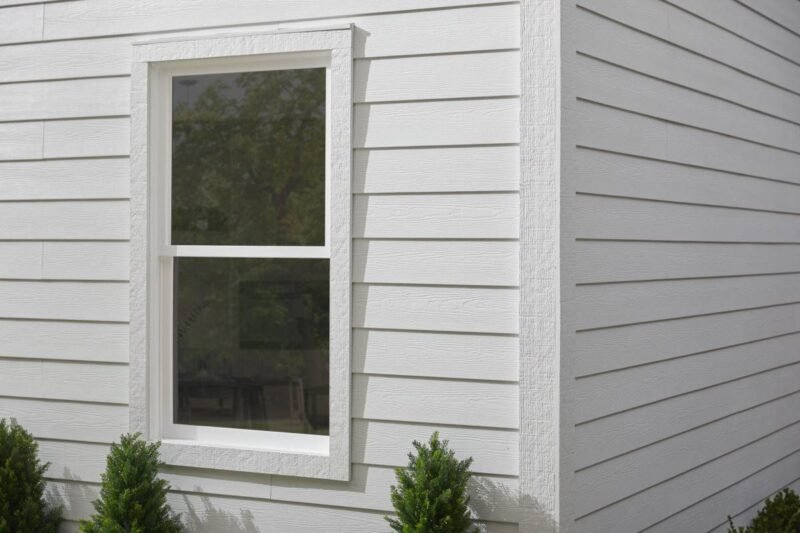
Installing Hardie siding is installing a specific manufacturer’s product line, not a generic material. James Hardie manufactures fiber cement siding, but the installation requirements are specific to the Hardie product you are using. HardiePlank lap siding installs differently from HardiePanel vertical siding. HardieShingle installs differently from both. HardieSoffit has its own ventilation requirements. HardieTrim boards have their own fastening schedule. And the entire installation changes depending on whether you are in a HardieZone HZ5 or HZ10 climate region. Installing Hardie siding correctly means following the instructions for the specific product in the specific climate zone. The instructions are in the installation manual that comes with the siding. This guide explains what the manual assumes you already know.
The HardieZone system divides North America into two climate regions. HZ5 covers the northern United States and Canada, where freeze-thaw cycling, snow, and ice are the primary weather challenges. HZ10 covers the southern United States, where heat, humidity, and heavy rain are the primary challenges. The installation requirements differ between the two zones. In HZ5, the bottom edge of the siding must be a minimum of six inches above grade. In HZ10, the minimum is eight inches. In HZ5, a rainscreen gap behind the siding is recommended. In HZ10, it is required. The flashing details at windows and doors are more extensive in HZ10 because wind-driven rain is a greater concern. The product you buy is labeled with the zone it is approved for. Install HZ5 product in HZ5 zones and HZ10 product in HZ10 zones.
The Hardie Product Ecosystem
HardiePlank is the lap siding product. It is available in widths from four to 12 inches, in smooth or wood-grain texture, and in primed or ColorPlus factory-finished versions. The planks are installed horizontally, blind-nailed through the top edge, with a minimum one-and-a-quarter-inch overlap. The exposure determines the number of courses. The starter strip determines the angle of the first course. HardiePlank is the product that most people mean when they say Hardie siding.
HardiePanel is the vertical siding product. The panels are four feet wide and eight, nine, or ten feet long, with a smooth or stucco texture. The panels are installed vertically with the seams covered by HardieTrim battens or expressed as a caulked joint. HardiePanel is often used on larger walls, on commercial buildings, and as an accent material on residential projects. The fastening schedule for panels is different from planks. Panels require fasteners at every stud along the edges and every other stud in the field.
HardieShingle is the shingle siding product. The shingles are individual rectangles, typically 12 by 24 inches, installed in courses like roofing shingles. Each shingle is face-nailed with two nails. The exposure is adjustable. HardieShingle is used for accent areas, gable ends, and whole-house installations where a more textured appearance is desired. The layout must be planned so the courses land evenly at the top of the wall. The exposure is adjusted slightly across the height of the wall to avoid a narrow strip at the top.
HardieSoffit is the soffit product. The panels are vented or solid, installed horizontally under the eaves. The vented panels provide attic ventilation. The installation requires F-channel or J-channel along the wall and the fascia. HardieSoffit is heavier than vinyl soffit and requires additional fastening. The panels must be supported at both ends and at intermediate points for spans longer than 24 inches.
HardieTrim is the trim product. The boards are available in widths from three and a half to 11 and a quarter inches, in smooth or wood-grain texture. HardieTrim is used for corner boards, window and door trim, fascia, and any application where a trim board would traditionally be used. HardieTrim is fastened with the same corrosion-resistant nails as the siding. The fasteners must be flush. The joints between trim boards must be gapped one-eighth of an inch and caulked.
Warranty Requirements and Common Installation Errors
The James Hardie warranty requires that the siding be installed according to the published installation instructions in effect at the time of installation. The warranty covers manufacturing defects for 30 years and the ColorPlus finish for 15 years. The warranty does not cover damage caused by improper installation. The most common installation errors that void the warranty are: insufficient clearance above grade, fasteners driven too deep or not deep enough, missing or improperly installed flashing at windows and doors, and painting over ColorPlus finish with a non-approved paint.
The clearance above grade is the most frequently violated warranty requirement. The minimum clearance is six inches in HZ5 and eight inches in HZ10. The clearance is measured from the bottom edge of the siding to the finished grade, not to the top of the soil before landscaping. A siding installation that clears the dirt by six inches but is later surrounded by mulch and soil that raises the grade to within two inches of the siding has a clearance problem that will cause the siding to wick moisture and fail. The clearance must be maintained after landscaping. The grade must slope away from the house so water drains away from the wall.
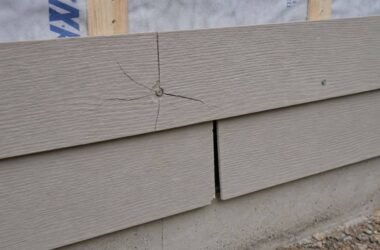
The fastener depth is the second most common warranty issue. Fasteners driven too deep dimple the plank and create a stress point where the plank can crack. Fasteners left proud prevent the next course from seating and create a shadow line. The correct fastener depth is flush, with the nail head exactly even with the surface. This requires practice and attention on every nail. A pneumatic nailer with adjustable depth control makes consistent flush fastening easier than a hammer.
Frequently Asked Questions
How do I know which HardieZone I am in?
The HardieZone map is published by James Hardie and available on their website. Generally, HZ5 covers the northern half of the United States, roughly north of the 37th parallel, and all of Canada. HZ10 covers the southern half. The zone determines the minimum clearance above grade, the rainscreen requirements, and the flashing details. The product is labeled with the zone. Buy the product that matches your zone.
Can I paint over Hardie ColorPlus finish?
Yes, but doing so voids the ColorPlus finish warranty. The ColorPlus finish is a factory-applied, baked-on coating that is designed to last 15 years without repainting. If you choose to paint over it, the new paint must be 100 percent acrylic latex and the surface must be clean and dry. The ColorPlus finish is a better coating than any field-applied paint. Painting over it reduces the durability of the finish to that of the field-applied paint. If you want a different color, order the siding in that color from the factory.
Can I use HardieTrim as a starter strip?
No. The starter strip for HardiePlank lap siding must be a piece of the same lap siding installed upside down, a wood furring strip of the correct thickness, or a metal starter strip. HardieTrim is not designed for use as a starter strip and does not provide the correct angle for the first course. Using HardieTrim as a starter strip will cause the first course to hang at the wrong angle and will be visible as a flare at the bottom of the wall.
The Bottom Line
Hardie siding is a product line, not a material category. HardiePlank, HardiePanel, HardieShingle, HardieSoffit, and HardieTrim each have their own installation requirements within the overall HardieZone climate system. The installation manual that comes with the siding is the final authority. The clearance above grade is the most important dimension. The fastener depth is the most important technique. The warranty covers the product for 30 years if it is installed correctly. The warranty does not cover improper installation. Follow the instructions. Measure the clearance. Flush the fasteners. The siding will outlast the warranty.