




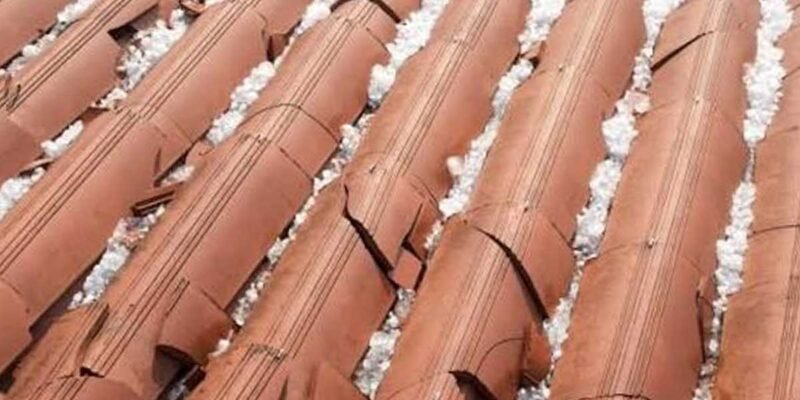
What Hail Seasons Actually Do to a Roof and When Damage Crosses the Line Into Replacement
Hailstorms are one of those weather events that feel dramatic while they’re happening and deceptively manageable once they stop. The noise, the visible dents on vehicles, and the debris on the ground all suggest obvious, immediate damage. Then the storm passes, the sun comes out, and the roof looks exactly the same from the driveway as it did before the storm. Most homeowners take that visual normalcy as confirmation that their roof came through unscathed, go back inside, and don’t think about it again.
This is precisely where post-hail roof damage creates its most significant problems. The damage that hail inflicts on roofing systems frequently isn’t visible from the ground, doesn’t cause immediate leaking, and doesn’t produce any interior symptoms for months or even years. By the time those symptoms appear, what started as manageable impact damage has progressed into something requiring considerably more intervention than an inspection and targeted repair would have been addressed shortly after the storm.
How Hail Actually Damages Asphalt Shingles
Asphalt shingles are the dominant roofing material in residential construction, and they have a specific vulnerability to hail impact that explains why hail damage is taken seriously by both roofing professionals and insurance companies even when it doesn’t look severe at first glance.
The surface of an asphalt shingle is coated with granules, small mineral particles that serve multiple functions simultaneously. They protect the asphalt layer beneath them from UV degradation, they provide fire resistance, and they contribute to the shingle’s water-shedding ability. When a hail impact strikes a shingle with sufficient force, it dislodges granules from the impact point, leaving the underlying asphalt exposed in a circular pattern roughly matching the hailstone’s diameter.
This granule loss is the core mechanism of hail damage, and its significance isn’t immediately obvious from looking at it. A dime-sized bare spot on an asphalt shingle looks minor. What it represents is a permanent loss of UV protection at that specific point. Without granule coverage, the exposed asphalt oxidizes and becomes brittle significantly faster than the protected surrounding material. Over the following months, what was a granule-loss impact becomes a brittle, cracked spot that allows water infiltration. And because this process happens across every impact point simultaneously across the entire affected roof section, the damage that looked minor immediately after the storm has become systemic by the time symptoms appear.
The Difference Between Functional and Cosmetic Damage
Not every hail impact on a roof produces functional damage, and understanding this distinction is important for evaluating what a post-storm inspection actually reveals. Hailstones vary significantly in size, density, and the angle of impact, and these variables determine whether a given impact crosses the threshold from cosmetic to functional damage.
Cosmetic damage produces visible impact marks, surface texture changes, or minor granule displacement that affects appearance without compromising the shingle’s functional ability to protect the roof deck below. Insurance policies vary in how they treat cosmetic damage, with some specifically excluding it and others covering it as part of a broader storm damage claim.
Functional damage compromises the shingle’s ability to perform its protective role. Granule loss exceeding a certain threshold leaves insufficient UV protection and water resistance. Cracks in the shingle mat that penetrate to the underlying layers create direct water infiltration pathways. Bruising that damages the shingle mat beneath the surface may not show crack patterns immediately but creates structural weakness that failure follows.
The distinction between cosmetic and functional damage isn’t always visible without training and specific assessment criteria, which is why the same roof can receive dramatically different assessments from an untrained homeowner, an insurance adjuster, and a qualified roofing professional. Understanding what each party’s assessment is based on helps homeowners navigate post-storm conversations with their insurance company more effectively.
What Hail Size Means for Damage Severity
Hailstone size is the most commonly referenced variable in post-storm damage discussions, and while it’s a useful starting point, it’s not the complete picture. The general relationship between hailstone size and damage threshold for common roofing materials provides a framework:
Hail under three-quarters of an inch in diameter rarely causes functional damage to asphalt shingles in good condition, though it may affect older shingles whose granule adhesion has already been compromised by age. Hail in the three-quarter to one-inch range creates impact patterns on shingles and may cause functional damage depending on the shingle’s age and condition and the storm’s wind speed and direction. Hail over one inch in diameter causes functional damage to most asphalt shingles regardless of condition and often creates immediate punctures or severe bruising.
What the size framework doesn’t capture is the effect of wind speed and direction on impact energy, the role of roof pitch and orientation relative to storm direction, the condition of shingles before the storm, and the cumulative effect of multiple moderate hail events on a roof that didn’t quite reach replacement threshold from any single storm but has been progressively compromised across several seasons.
Identifying When Damage Warrants Repair vs Full Replacement
The decision between repair and full replacement following hail damage involves several factors that a thorough professional inspection needs to address before a recommendation can be made responsibly. The age of the existing roofing material is the most significant factor, because it determines how much service life remains and whether investing in repair of a specific damaged area makes economic sense given the remainder of the roof’s condition.
A roof with five or more years of remaining useful life on an otherwise sound shingle system, where hail damage is genuinely limited to specific sections, is a reasonable candidate for targeted repair that restores the damaged sections while preserving the undamaged material. A roof that’s already within a few years of its expected service life presents a different calculation: repair costs applied to material that will need replacement regardless in the near term may represent spending that would have been better directed toward accelerating the planned replacement.
The distribution of damage across the roof matters equally. Hail impacts that are isolated to specific sections due to storm direction and pitch orientation may leave large portions of the roof genuinely undamaged and worth preserving. Hail damage distributed uniformly across the entire roof surface leaves no undamaged sections to preserve through partial repair.
Working with a roofing company in Dallas, TX that specifically understands how to distinguish impact patterns indicating functional damage from those that are primarily cosmetic provides the assessment foundation that drives an accurate repair versus replacement recommendation rather than defaulting to replacement on every storm-affected roof or minimizing damage that genuinely warrants full replacement.
Navigating the Insurance Claim Process
Hail damage roofing claims are among the most common property insurance claims filed, and the process of getting from a post-storm inspection to an approved claim settlement involves steps where informed homeowners consistently achieve better outcomes than those who simply accept the first assessment presented to them.
The insurance adjuster who inspects the roof following a claim is employed by the insurance company and is applying the company’s criteria for what constitutes covered damage. These criteria are legitimate and the adjuster’s assessment is generally professional, but there are cases where an adjuster’s assessment and a qualified roofing contractor’s assessment of the same roof differ in ways that affect the claim outcome meaningfully. Homeowners who have their own independent roofing inspection before or alongside the insurance adjuster’s visit are in a better position to have a factual conversation about specific points of disagreement than those who simply accept the adjuster’s findings without independent professional input.
Documentation of damage through photographs taken as soon as safely possible after a storm provides the homeowner’s own record of post-storm conditions that predates any assessment and can be referenced in claim conversations. This documentation matters most in cases where damage assessment is contested or where the claim process extends long enough that seasonal weathering affects the roof’s appearance between the storm and later assessments.
When Replacement Is the Right Answer
Some post-hail situations make the repair versus replacement question relatively straightforward. A roof that has experienced multiple significant hail events across its lifespan has accumulated progressive granule loss and impact bruising that may not have triggered replacement from any individual storm but has collectively compromised the entire system beyond the point where targeted repair addresses the actual condition.
A hail event that damages a roof already in the final years of its service life accelerates the replacement timeline in a way that’s actually financially beneficial when an insurance claim is involved: the storm creates a covered replacement event that the homeowner would have been funding independently within a few years regardless.
Understanding these scenarios clearly before entering the claim and contractor conversation prevents the common situation where homeowners either over-invest in repairing a roof that needed replacement or agree to replacement before confirming that repair wouldn’t have been both adequate and more economical.
A qualified roofing company in Dallas, TX approaches this assessment with the homeowner’s actual best interest in mind, providing honest guidance about when repair is appropriate and when the damage pattern, age, and condition of the existing system make replacement the more sensible long-term decision rather than recommending the more expensive option regardless of what the specific situation actually warrants.
The Window That Closes After Every Storm
Post-hail roof inspections have a practical urgency that the absence of visible symptoms makes it easy to underestimate. Insurance policies typically have filing deadlines measured in months from the date of a storm. Damage documentation is clearest immediately after impact before weathering affects the impact patterns. And the progressive nature of granule-loss damage means that waiting to address confirmed functional damage simply allows the compromised areas to deteriorate further while the window for efficient remediation remains open.
The homeowners who navigate post-hail roof situations most successfully are those who get a professional inspection within a reasonable period after any significant storm, understand what the inspection findings mean in terms of the repair versus replacement decision, and proceed with an informed claim and contractor engagement based on that assessment rather than waiting for interior symptoms to confirm what an exterior inspection would have identified much earlier.