

Pipes start freezing when outside temperatures drop below 20°F (-6°C), and a single burst can dump hundreds of gallons of water into your home within hours. The fix is straightforward: insulate exposed pipes, keep indoor heat above 55°F, and let vulnerable faucets drip during extreme cold, notes Mark Thomas Properties Property Management team.
According to the Insurance Institute for Business & Home Safety (IBHS, 2023), the average water damage claim from a burst pipe runs about $5,000. Some homeowners pay far more. The good news? Most freeze damage is entirely preventable with a few hours of prep work before winter hits.
Why Pipes Freeze in the First Place
Water expands by roughly 9% when it freezes, generating up to 2,000 psi of pressure inside a pipe. That force is enough to split copper, PVC, and even steel. The pipes most at risk sit in unheated spaces: crawl spaces, attics, garages, and along exterior walls with poor insulation.
The Building Research Council at the University of Illinois identified 20°F (-6°C) as the critical threshold for unprotected pipes. Below that temperature, water inside an uninsulated pipe can freeze solid in as little as six to eight hours. Pipes in interior walls rarely freeze because they benefit from the home’s ambient heat.
A single quarter-inch crack in a frozen pipe can release up to 250 gallons of water per day, enough to destroy flooring, drywall, and furniture in a single afternoon.
Steps to Keep Your Pipes from Freezing
Insulate exposed pipes, maintain indoor heat above 55°F, and let faucets drip during extreme cold. These three actions prevent the vast majority of residential pipe freeze incidents every winter.
Insulate Exposed Pipes
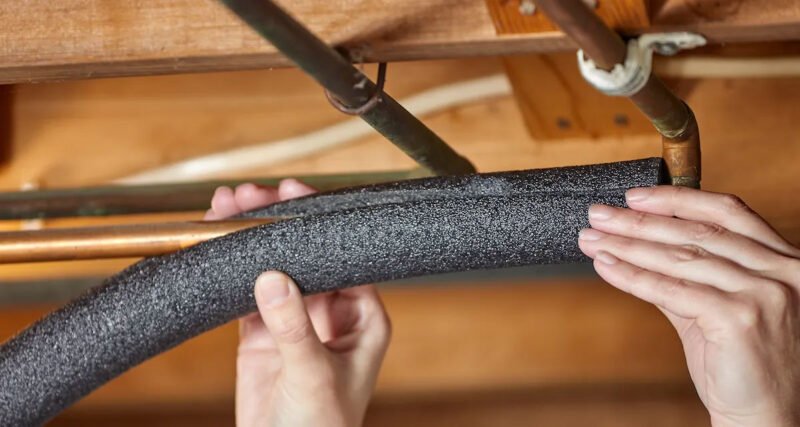
Foam pipe sleeves, fiberglass wraps, and electric heat tape are the three most common insulation options. Each works best in different situations.
| Insulation Type | Best For | Cost per Linear Foot | DIY Difficulty |
|---|---|---|---|
| Foam pipe sleeves | Accessible straight runs | $0.50 – $1.50 | Easy |
| Fiberglass pipe wrap | Irregular shapes, bends | $0.75 – $2.00 | Easy |
| Electric heat tape | High-risk areas, extreme cold | $3.00 – $8.00 | Moderate |
| Thermostatically controlled heat cable | Crawl spaces, long exterior runs | $5.00 – $12.00 | Moderate |
Prioritize pipes in unheated areas first: crawl spaces, attics, garages, and exterior wall cavities. Use heat tape or heat cable anywhere temperatures regularly dip below 20°F. For milder climates, foam sleeves alone are usually enough.
Keep the Heat On
The U.S. Department of Energy recommends keeping your thermostat at or above 55°F (13°C) at all times during winter, even when you leave the house. Open kitchen and bathroom cabinet doors to let warm air circulate around pipes under sinks. Keep garage doors closed if water supply lines run through that space.
Set the thermostat to the same temperature day and night. Dropping the heat at bedtime to save on energy bills is fine in most conditions, but during a hard freeze, that overnight dip can push pipe temperatures below the danger zone.
Let Faucets Drip
Running water through a pipe, even at a trickle, helps prevent freezing by relieving pressure buildup. Turn on the faucets served by exposed pipes and let cold water drip steadily.
“Winter- how do I prevent pipes from freezing? Is it hot or cold water I allow drip?”
— r/Adulting, 121 upvotes, 71 comments (2022), source
Cold water works just fine. The goal is movement, not temperature. Hot water dripping wastes energy and actually draws from the water heater, raising utility costs with no extra freeze protection.
A $2 foam pipe sleeve installed on a Saturday morning could save you from a $5,000 repair bill next January. The math never favors waiting.
Special Situations That Need Extra Attention
Mobile homes, vacation properties, and homes on well water face higher freeze risks and need precautions beyond the basics. Standard advice assumes a conventional, occupied house with central heating.
Mobile Homes and Manufactured Housing
Pipes in mobile homes are especially vulnerable because supply lines often run through the crawl space beneath the floor with minimal insulation. Install skirting around the base to block wind. Wrap all exposed supply lines with heat tape, and check that underbelly insulation is intact before each winter.
“Urgent: How to keep pipes from freezing overnight in mobile home with water turned off?”
— r/Plumbing, 6 upvotes, 43 comments (2026), source
If the water is already off and a freeze is imminent, open every faucet and drain the lines as completely as possible. A wet-dry vacuum can help pull remaining water from low points in the system.
Vacation or Vacant Homes
A house sitting empty in January is a burst pipe waiting to happen. Two options: winterize the plumbing by draining the entire system and adding antifreeze to traps, or keep the heat running at 55°F minimum with a smart thermostat you can monitor remotely.
“Best solution to keep pipes from freezing in secondary residence”
— r/DIY, 3 upvotes, 28 comments (2024), source
Smart water leak detectors ($30-$80) paired with a Wi-Fi thermostat give you early warning if temperatures inside the house drop unexpectedly. Owners of weekend cabins often skip winterization entirely, assuming the furnace will handle everything, until the first burst pipe turns a short getaway into a $15,000 renovation project.
Warning Signs Your Pipes May Be Freezing
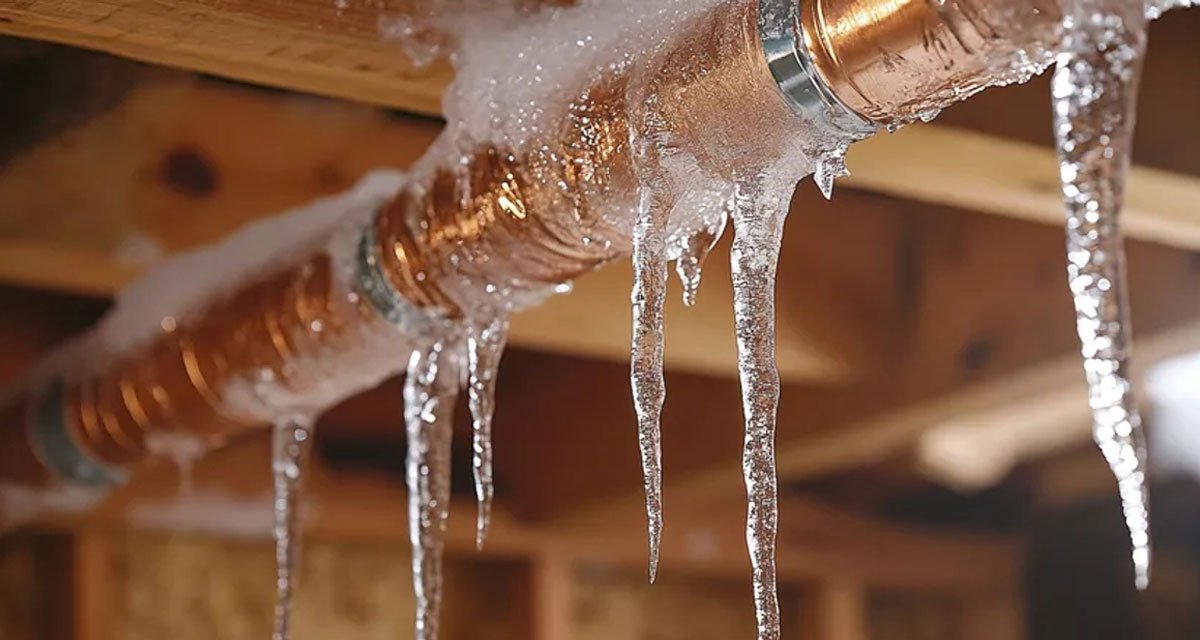
Reduced water pressure, frost on exposed pipes, and unusual banging sounds are the three earliest indicators of a pipe freeze in progress. Catching these signs early gives you a window to act before a full freeze sets in.
- Frost visible on the pipe surface — ice crystals forming on the outside mean the interior temperature has dropped well below freezing
- Water pressure drops or stops entirely — partial ice blockage restricts flow before a complete freeze
- Strange smells from faucets or drains — an ice blockage traps odors that would normally vent through the drain system
- Banging or clanking when you turn on water — ice chunks shifting inside the pipe create noise as water tries to push past them
If you notice any of these, act immediately. Open the faucet to relieve pressure, locate the affected pipe, and begin gentle thawing (see next section).
How to Safely Thaw Frozen Pipes
Apply gentle heat using a hair dryer, heating pad, or warm towels. Never use an open flame. A blowtorch or propane heater can crack the pipe from thermal shock or, worse, start a house fire.
| Method | Safe? | Notes |
|---|---|---|
| Hair dryer | Yes | Move back and forth along the pipe, start near the faucet |
| Heating pad or electric blanket | Yes | Wrap around the frozen section, leave for 30-60 minutes |
| Warm towels | Yes | Soak in hot water and drape over the pipe, replace as they cool |
| Portable space heater | Caution | Keep away from flammable materials, never leave unattended |
| Blowtorch or propane heater | No | Fire hazard and risk of cracking the pipe from rapid heating |
| Open flame of any kind | No | Causes thermal shock and is a leading cause of winter house fires |
Always open the faucet before you start thawing so melting water can flow out and relieve internal pressure. Work from the faucet backward toward the frozen section.
Every year, house fires start because homeowners point a blowtorch at a frozen pipe in a crawl space full of insulation and old boxes. A $15 hair dryer does the same job without putting your home at risk.
If you cannot locate the frozen section, the pipe has already cracked, or water does not resume after 30 minutes of thawing, call a licensed plumber.
Frequently Asked Questions
At what temperature do pipes freeze?
Unprotected pipes can freeze when outdoor temperatures fall below 20°F (-6°C), according to research from the Building Research Council at the University of Illinois. Interior pipes are safer because household heat keeps them above the danger zone. Pipes along exterior walls or in unheated spaces freeze first.
Should I drip hot or cold water to prevent pipes from freezing?
Cold water is all you need. The dripping prevents freezing by keeping water moving and relieving pressure, not by adding warmth. Using hot water wastes energy and costs more without providing additional protection.
Can pipes freeze in one night?
Yes. An uninsulated pipe exposed to temperatures at or below 20°F can freeze solid within six to eight hours. A sudden overnight temperature drop is one of the most common causes of frozen pipes, especially in homes where the thermostat is lowered before bed.
Does homeowners insurance cover burst pipes?
Most standard homeowners policies cover water damage from burst pipes as long as the damage is sudden and accidental. Damage resulting from neglect, such as leaving a home unheated for weeks during winter, is typically excluded. Check your specific policy for coverage limits and deductibles.
How much does it cost to fix a burst pipe?
The pipe repair itself usually costs between $150 and $600, depending on location and pipe material. Water damage from the burst is the expensive part. The Insurance Institute for Business & Home Safety (IBHS) reports that the average water damage claim from a frozen pipe is approximately $5,000, with some claims exceeding $20,000.
Conclusion
Frozen pipes are one of the most predictable and preventable winter emergencies. Insulate exposed pipes before the first freeze, keep your thermostat above 55°F, drip faucets connected to vulnerable lines during extreme cold, and know the warning signs that a freeze is starting.
If you own a mobile home or vacation property, take the extra steps outlined above. And if a pipe does freeze, skip the blowtorch and reach for a hair dryer. Ten minutes of slow, steady heat beats an insurance claim every time.