



Finding the best insulation for older homes is less about picking the highest R-value and more about matching the material to how a century-old wall handles moisture. Blown-in cellulose leads the pack for most pre-1960s houses, filling irregular wall cavities without major demolition and letting the structure breathe, knowledge as essential for landlords as understanding the Oklahoma Landlord Tenant Law.
Why Insulating an Older Home Is Completely Different From a New Build
Houses built before the 1960s were not designed to be airtight. They relied on passive air movement through wall cavities, attic vents, and gaps around windows to manage moisture. Shoving modern insulation into those cavities without accounting for that airflow can turn a drafty-but-dry house into a sealed box full of rot within two winters.
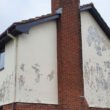
Most pre-war homes have solid masonry or timber-frame walls with no vapor barrier. When you add insulation that traps moisture against those materials, condensation forms at the dew point inside the wall. Wood rots. Brick spalls. Plaster crumbles. The repair bill dwarfs whatever you saved on heating.
This is not a theoretical risk. Building scientists have documented thousands of cases where well-intentioned insulation retrofits caused structural damage because the installer treated a 1920s house like a 2020s subdivision build. The material matters less than whether it is compatible with how the wall was originally designed to manage water.
Best Insulation for Older Homes: The Five Materials Ranked by Real-World Performance
No single material wins in every situation. The table below ranks the five most common options by how they perform specifically in older construction, where breathability and installation method matter as much as R-value.
| Material | R-Value per Inch | Best Use in Older Homes | Installed Cost (sq ft) | DIY-Friendly |
|---|---|---|---|---|
| Blown-In Cellulose | 3.2 – 3.8 | Finished wall cavities, attics | $0.60 – $2.30 | No (needs blower) |
| Spray Foam (Closed-Cell) | 6.0 – 7.0 | Rim joists, basements, roof decks | $1.50 – $3.50 | No |
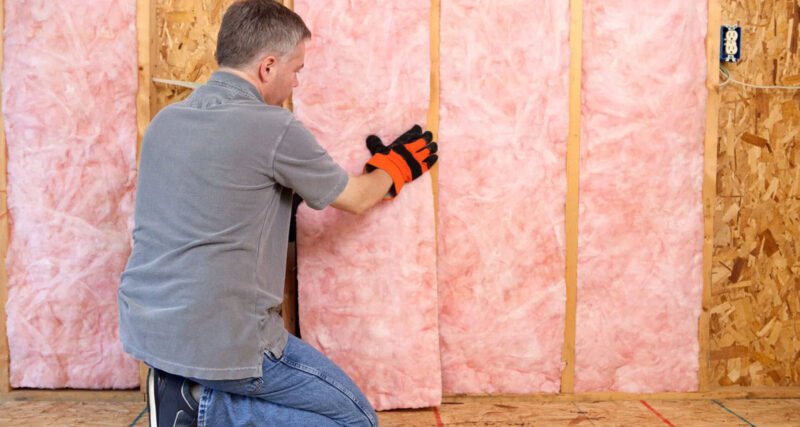
| Mineral Wool (Rockwool) | 3.0 – 3.3 | Attics, open wall cavities, soundproofing | $1.00 – $2.00 | Yes |
| Fiberglass Batts | 2.9 – 3.8 | Attic floors, open stud bays during renovation | $0.30 – $1.50 | Yes |
| Rigid Foam Board | 3.6 – 6.5 | Exterior sheathing, basement walls | $0.50 – $2.00 | Yes |
Blown-in cellulose earns the top recommendation because it packs into irregular cavities at 3.5 pounds per cubic foot, creating a dense barrier that resists air movement without forming a vapor-proof seal. It is approximately 80% recycled newsprint treated with borate fire retardant, which also deters pests and mold. Installation requires drilling 1-to-2-inch holes through siding or interior plaster, blowing the material in, then patching, a process that preserves more original fabric than tearing out entire walls.
Closed-cell spray foam offers the highest R-value per inch, but its vapor-impermeability makes it risky in old walls that need to dry to the interior or exterior. Use it sparingly: rim joists, basement headers, and roof decks where condensation control is manageable. Open-cell spray foam is more vapor-permeable but delivers half the R-value and absorbs water, disqualifying it for below-grade applications.
Mineral wool, sold primarily as Rockwool, stands out for one property that fiberglass cannot match: it repels water while remaining vapor-open. If your old house has intermittent leaks or high humidity, mineral wool will not sag, mold, or lose R-value when damp. It also achieves an STC rating roughly 5 points higher than fiberglass of the same thickness, a bonus in old homes where walls transmit sound like a drum.
Where to Insulate First: The Order That Maximizes Every Dollar
The average home loses roughly 25% of its heat through the roof and another 15% through the floor and basement. Walls account for about 35%, but they are also the most expensive and risky to insulate in an old house. Spending your budget in the right sequence produces better comfort gains for less money.
- Attic and roof. Heat rises. An uninsulated attic in a cold climate can reach R-5 or less, equivalent to leaving a window cracked open all winter. Air-seal all penetrations (chimney gaps, light fixtures, plumbing vents) with fireproof caulk or foam, then blow in cellulose to R-49 or R-60 depending on your zone. This job often pays for itself in under three years.
- Basement rim joists and crawl spaces. Cold air seeps in at the foundation sill where the house frame meets the concrete. Sealing rim joists with rigid foam cut to size plus spray foam around the edges costs a few hundred dollars and eliminates the stack effect that pulls cold air up through the whole house.
- Exterior walls. Do walls last. They are the hardest to access, the most expensive per square foot, and carry the highest moisture risk. If the attic and basement are already insulated and the house still feels drafty, walls become the logical next step.
The Wall Insulation Problem That Trips Up Even Experienced Contractors
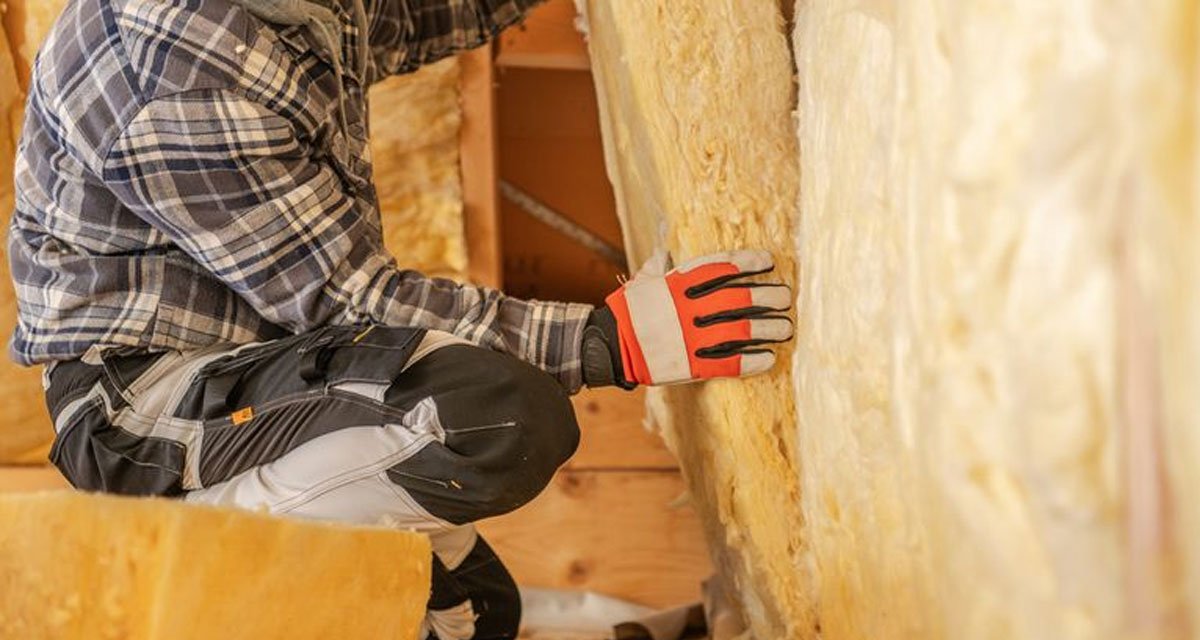
Old houses breathe through their walls. A 1910 home with plaster on wood lathe, no house wrap, and original clapboard siding allows moisture to migrate freely in both directions. Seal the inside with closed-cell foam and that moisture now condenses inside the wall cavity. By the time you see the damage, it has been rotting the structure for years.
The safest approach for solid masonry walls, common in pre-1920s construction and virtually all brick row houses, is exterior insulation. Attach rigid foam board to the outside, cover it with a drainage plane and new siding, and the thermal envelope moves outside the masonry. The bricks stay warm and dry on the interior side, eliminating freeze-thaw damage. This is expensive but it is the only method that does not compromise the wall’s moisture physics.
For wood-framed houses with empty stud bays, blown-in cellulose through small exterior holes remains the least destructive interior option. The key is density: cellulose must be packed to 3.5 pounds per cubic foot to eliminate air movement without creating a vapor barrier. An installer who treats it like loose attic fill will leave voids and air channels that defeat the purpose.
If you are already opening walls for a gut renovation, mineral wool batts friction-fit between studs give you a vapor-open assembly that can dry in both directions. Add a smart vapor retarder on the interior side in cold climates for extra insurance, but skip polyethylene sheeting entirely, it creates the same condensation trap as closed-cell foam.
Climate Decides Everything: What Works in Minnesota Does Not Work in Georgia
| Climate Zone | Recommended Wall Strategy | Attic R-Value Target | Vapor Barrier Placement |
|---|---|---|---|
| Cold (Zones 5-7: Northeast, Midwest, Mountain West) | Dense-pack cellulose in cavities; exterior rigid foam if re-siding | R-49 to R-60 | Interior side (warm-in-winter side), vapor-retarder class II |
| Mixed-Humid (Zone 4: Mid-Atlantic, Ohio Valley, Pacific NW) | Vapor-open assembly: mineral wool or dense-pack cellulose, no interior poly | R-38 to R-49 | None required; let assembly dry both directions |
| Hot-Humid (Zones 1-3: Gulf Coast, Florida, South Texas) | Exterior-side vapor barrier only; avoid interior-side vapor barriers entirely | R-30 to R-38 | Exterior side only; interior must remain vapor-open |
| Hot-Dry (Zone 2B-3B: Southwest, inland California) | Standard cavity insulation; vapor diffusion less critical in dry air | R-30 to R-38 | Building code minimum; neither side is especially critical |
The vapor barrier rule trips up more DIY insulation jobs than any other technical detail. In heating-dominated climates, the barrier goes on the warm side, which is the interior. In cooling-dominated climates, it goes on the exterior. Getting this backwards in a mixed-humid climate is how a perfectly good insulation job turns into a mold remediation project.
What Homeowners Who Have Done This Are Saying
Real-world results from people who have insulated century-old houses reveal patterns that manufacturer brochures do not mention. Sound familiar? On the r/buildingscience subreddit, one homeowner in a cold, wet climate captured a tension that runs through every old-house insulation discussion.
“There’s no one size fits all answer for old homes. It becomes more about what NOT to do than what to do. The biggest mistake is treating an old house like a modern one and sealing it up tight.”
— r/buildingscience, 43 upvotes, 54 comments (2025), source
Across multiple threads on r/HomeImprovement and r/centuryhomes, a consensus emerges among experienced DIYers: attic air-sealing plus blown-in cellulose delivers the most noticeable improvement for the least money. Several homeowners reported cutting heating bills by 30% to 40% after a proper attic job, numbers that align with Department of Energy estimates for homes that started with R-5 or less in the attic.
Wall insulation draws far more cautious discussion. On a 2022 thread with 56 comments, homeowners who had blown cellulose into walls of 80-year-old houses reported mixed results. Those in dry climates were satisfied. Those in damp climates, particularly the Pacific Northwest and Northeast, described condensation on interior walls during cold snaps when the insulation created a cold spot at the studs, a phenomenon called thermal bridging that no amount of cavity fill solves.
What It Costs and What You Get Back
According to the Department of Energy, homeowners can reduce heating and cooling costs by an average of 15% after air-sealing and insulating, with payback periods ranging from under two years for simple attic jobs to over ten years for full exterior wall retrofits. The Inflation Reduction Act of 2022 expanded federal tax credits covering 30% of insulation material costs, up to $1,200 annually, through 2032.
| Project Scope | Typical Cost (1,500 sq ft home) | Annual Energy Savings | Payback Period |
|---|---|---|---|
| Attic air-seal + R-49 cellulose | $1,500 – $3,000 | $200 – $600 | 2 – 5 years |
| Rim joist sealing + insulation | $400 – $1,000 | $50 – $150 | 3 – 7 years |
| Blown-in wall cavities (all exterior walls) | $4,000 – $8,000 | $300 – $700 | 6 – 12 years |
| Exterior rigid foam + re-siding | $15,000 – $30,000 | $400 – $900 | 15 – 25 years |
These ranges reflect national averages. Costs in high-cost-of-living metro areas run 30% to 50% higher. The attic job is the clear winner on payback, which is why every energy audit starts there.
Frequently Asked Questions
Can I insulate the walls of an old house without removing the drywall or plaster?
Yes. Blown-in cellulose or injection foam can be installed through small holes drilled from the exterior or interior, typically 1 to 2.5 inches wide. The holes are patched afterward. This method works on wood-framed houses with empty stud bays but is not suitable for solid masonry walls, which require exterior insulation to avoid trapping moisture inside the brick.
Is spray foam safe for old houses?
Closed-cell spray foam is safe in specific locations like rim joists, basement headers, and roof decks, but it is risky inside exterior wall cavities of older homes because it creates a vapor barrier that can trap moisture against wood framing and masonry. Open-cell foam is more vapor-permeable but absorbs water, making it unsuitable for below-grade or high-humidity applications. For wall cavities, dense-pack cellulose or mineral wool are safer choices.
What R-value do I need for my older home?
The Department of Energy recommends R-49 to R-60 for attics in cold climates (Zones 5-7), R-38 to R-49 for mixed climates (Zone 4), and R-30 to R-38 for hot climates (Zones 1-3). Wall R-values are lower: R-13 to R-21 for wood-framed walls depending on zone. Check the Energy Star insulation R-value map for your specific ZIP code before buying materials.
Will insulating my old house cause mold problems?
It can, if the wrong material is installed in the wrong location without accounting for moisture management. The high-risk scenario is installing a vapor-impermeable material like closed-cell spray foam or polyethylene sheeting on the interior side of walls in a mixed or cold climate, which traps condensation inside the wall cavity. Properly installed dense-pack cellulose or mineral wool in a vapor-open assembly does not create this risk. Always address existing water leaks and drainage issues before adding insulation.
What is the best insulation for older homes with original lath and plaster walls?
Dense-pack cellulose blown in through small access holes is the preferred method for walls with original lath and plaster. It conforms to the irregular cavities behind the plaster keys without requiring demolition. Mineral wool batts are a good alternative if the plaster has already been removed during renovation. Avoid spray foam against the back of plaster, as the expansion pressure can crack the plaster and the vapor barrier it creates may cause the wooden lath to rot.
Getting It Right the First Time
Start with the attic. Air-seal every penetration, then blow in cellulose to your climate zone’s recommended R-value. Tackle rim joists and basement drafts next. Only move to walls after those two projects are done and you still feel cold. When you reach the walls, hire someone who has insulated at least a dozen old houses, not just new construction. The best material in the wrong hands is worse than mediocre material installed with an understanding of how a 100-year-old wall breathes.
Three rules will keep you out of trouble: keep the assembly vapor-open in mixed and cooling climates, never sandwich moisture-sensitive materials between two impermeable layers, and accept that an old house will never be as tight as a new one. That is not a flaw. It is how it was designed to survive. When the best insulation for older homes is the one that works with the building rather than against it, the deciding factor is almost never the R-number on the bag.