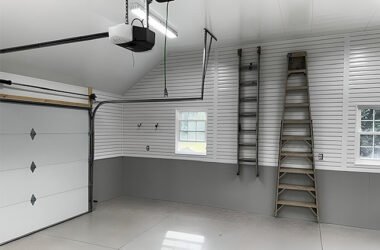




A garage remodel costs $3,000 to $15,000 for a cosmetic upgrade that includes flooring, paint, lighting, and storage, and $20,000 to $50,000 for a full conversion that adds insulation, drywall, HVAC, and upgraded electrical. The cost range is wide because a garage remodel can mean anything from a weekend cleanup and a floor coating to a near-complete living space conversion that rivals the square-foot cost of a home addition. The same diligence applies when it comes to real estate investing in San Diego.
The single largest variable is whether the garage remains a garage or becomes a conditioned living space. A garage remodel that keeps the overhead door and does not add HVAC is a $3,000 to $10,000 project. A garage conversion that removes the door, insulates to residential code, and installs heating and cooling costs $20,000 to $50,000 and triggers a building permit, an inspection, and potentially a property tax reassessment. Here is what each scope of work costs, line by line.
Cost by Remodel Scope
| Scope | Typical Cost | What It Includes |
| Basic refresh | $3,000–$8,000 | Epoxy floor, paint, LED lighting, shelving |
| Mid-range upgrade | $8,000–$20,000 | Above plus insulated garage door, wall insulation, upgraded electrical, workbench |
| Full garage remodel | $20,000–$35,000 | Above plus drywall, HVAC mini-split, ceiling insulation, new windows, storage systems |
| Garage conversion to living space | $35,000–$50,000+ | Remove overhead door, frame wall, insulate to code, flooring, electrical, plumbing, permit |
Garage Flooring: $500 to $5,000
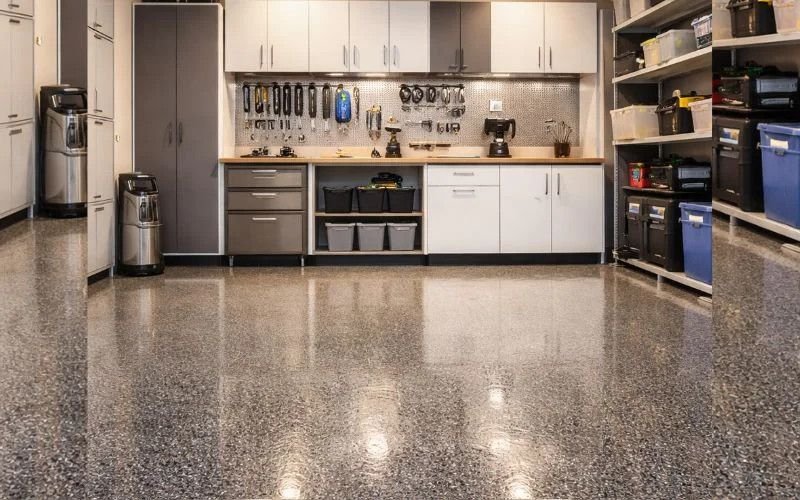
The garage floor is a concrete slab. The remodel options, from cheapest to most expensive, are a concrete sealer or densifier that penetrates the slab and resists stains and dust for $0.30 to $0.60 per square foot, or $150 to $300 for a two-car garage. An epoxy floor coating applied in two coats with color flakes for traction costs $3 to $7 per square foot for professional installation, or $1,500 to $3,500 for a 500-square-foot garage. A DIY epoxy kit costs $100 to $200 but lasts 2 to 5 years compared to 10 to 15 years for professional installation because surface preparation on a DIY job is rarely as thorough. Interlocking garage floor tiles made of rigid PVC or polypropylene cost $2 to $5 per square foot, or $1,000 to $2,500. They install in a day without adhesive and can be replaced individually if damaged. Polished concrete, which grinds the slab surface to a smooth sheen, costs $5 to $8 per square foot, or $2,500 to $4,000.
For garages built before 1978, any demolition or surface preparation that disturbs existing paint or flooring should follow lead-safe work practices. The EPA Lead-Safe Renovation guide for DIYers provides protocols for containing dust and protecting household members during renovation work in older homes.
Insulation and Drywall: $1,500 to $6,000
Insulating garage walls with fiberglass batts costs $0.50 to $1.00 per square foot for the material, or $500 to $1,000 for a two-car garage. Adding drywall over the insulation costs $1.50 to $2.50 per square foot installed, or $1,500 to $2,500. The combination of insulation and drywall in an unfinished garage costs $2,000 to $3,500 for walls only. Ceiling insulation adds $500 to $1,500 depending on whether it is batt insulation between exposed joists or blown-in insulation requiring a drywall ceiling first.
Insulating the garage door is a separate line item. An insulated garage door costs $800 to $2,500 installed depending on the material and R-value. Retrofitting an existing door with rigid foam panels costs $50 to $150 and provides approximately R-3 to R-6 of insulation, compared to R-10 to R-18 for a factory-insulated door.
Electrical Upgrades: $500 to $3,000
Most garages have a single 15-amp circuit powering one or two outlets and a light fixture. A garage remodel that adds a workbench, power tools, a freezer, or an electric vehicle charger requires more power. Adding a 20-amp dedicated circuit costs $200 to $400. Adding a 240-volt circuit for a table saw, a welder, or an EV charger costs $500 to $1,200 depending on the distance from the main panel. Upgrading the subpanel in a detached garage costs $800 to $1,500. Running a new circuit from the main house panel to a detached garage requires trenching a conduit, which adds $500 to $1,500 in excavation and conduit costs.
Additional outlets cost $100 to $200 each when added to an existing circuit. LED overhead lighting costs $50 to $150 per fixture installed or $200 to $600 to replace the single bare-bulb fixture with four to six flush-mount LED panels that eliminate shadows.
Heating and Cooling: $500 to $5,000
Options from cheapest to most expensive include a portable electric heater, which costs $50 to $150 and provides spot heat where you are working. A ceiling-mounted electric unit heater costs $200 to $500 plus a dedicated 240-volt circuit. A vented natural gas or propane unit heater costs $500 to $1,200 installed. A ductless mini-split heat pump that provides both heating and cooling costs $2,000 to $5,000 installed. A mini-split is the only option that provides air conditioning, which is valuable in a garage workshop that gets uncomfortably hot in summer.
Extending the home’s central HVAC system into the garage is generally not recommended because the garage is not sealed to the same standard as the living space, and garage contaminants including car exhaust, paint fumes, and sawdust can circulate through the whole-house ductwork.
Storage and Organization: $200 to $3,000
Wall-mounted shelving costs $50 to $200 per unit. Overhead ceiling storage racks that suspend from the ceiling joists and hold plastic bins cost $100 to $300 each. Slatwall panels with hooks and baskets cost $5 to $10 per square foot, or $200 to $500 for a single wall section. Custom cabinetry and workbenches cost $1,000 to $3,000 depending on the material, with metal cabinets being more expensive than wood, and custom-built workbenches costing more than prefabricated ones.
Permits, Codes, and the Property Tax Question
A cosmetic remodel that replaces flooring, paint, lighting, and storage without altering the structure or adding square footage generally does not require a permit. Adding electrical circuits, installing a gas line, or adding HVAC equipment requires a permit. Converting a garage to living space requires a building permit and a certificate of occupancy, and triggers a property tax reassessment in most jurisdictions. The reassessment adds the value of the converted square footage to the home’s assessed value, which increases the annual property tax bill by $500 to $2,000 depending on the local tax rate and the value of the conversion.
A garage conversion that is not permitted is a liability when selling the house. Unpermitted square footage cannot be listed as living space on the MLS listing. The appraiser will not count it. The buyer’s lender may refuse to finance the property. The cost of retroactive permitting, if it is even possible, includes opening walls for inspection and bringing the work up to current code, which can cost more than the original remodel.
Return on Investment: What a Garage Remodel Adds to Home Value
A garage remodel that improves functionality without reducing parking spaces returns 50 to 70 percent of the project cost in increased home value, based on the annual Cost vs. Value report published by Remodeling magazine. A basic refresh that adds $5,000 in flooring, paint, and lighting adds $2,500 to $3,500 in home value. A garage conversion that eliminates parking and adds living square footage is a different calculation. In neighborhoods where off-street parking is scarce, removing the garage reduces home value even if the added square footage is valuable. In neighborhoods where most homes have garages and parking is abundant, the added square footage may outweigh the loss of the garage. The local real estate market determines the answer. A real estate agent who knows the neighborhood can advise whether a conversion helps or hurts the sale price.
Frequently Asked Questions
Which parts of a garage remodel can I do myself?
Painting, installing shelving and storage systems, assembling workbenches, laying interlocking floor tiles, and replacing light fixtures are straightforward DIY tasks. Installing epoxy flooring is DIY-possible but the surface preparation is labor-intensive and the result depends on how thoroughly the concrete is cleaned and etched. Electrical work, gas line installation, HVAC installation, and structural modifications including removing the overhead door and framing a wall should be done by licensed contractors. The building department will not approve a permit for electrical or structural work done by an unlicensed homeowner in most jurisdictions.
Is a detached garage remodel more expensive than an attached garage?
Yes, by 20 to 40 percent. The added cost comes from running electrical service, which requires trenching a conduit from the house. Running a gas line, which also requires trenching. Adding HVAC, which cannot be extended from the house system and requires a standalone unit. And insulating and drywalling four walls instead of three, because a detached garage has no shared wall with the conditioned house. The flooring, storage, and lighting costs are the same regardless of whether the garage is attached or detached.
Does adding an EV charger count as part of a garage remodel?
Yes, and it is a separate cost of $500 to $2,500 depending on the charger type and the electrical work required. A Level 1 charger plugs into a standard 120-volt outlet and costs $200 to $400 for the charger plus minimal installation if the outlet already exists. A Level 2 charger requires a 240-volt circuit and costs $500 to $1,500 for the charger plus $500 to $1,000 for the electrical work. The electrical work includes running the circuit from the panel, installing the outlet or hardwiring the charger, and potentially upgrading the panel if the existing service does not have capacity for an additional 50-amp circuit.