


The air inside your home is two to five times more polluted than the air outside. That finding comes directly from the EPA’s TEAM Study, and it held true whether homes sat in rural farmland or next to industrial zones, knowledge as essential for property owners as understanding the North Dakota Landlord Tenant Law.
Three strategies fix the problem: eliminate pollution sources, bring in fresh air, and filter what remains. Most people jump straight to buying an air purifier, but the cheapest and most effective step costs nothing at all.
Every solution in this guide falls somewhere between free and $3,000, with a cost comparison table so you can pick what fits your budget and your biggest air quality concern.
Why Indoor Air Quality Matters More Than You Think
Americans spend roughly 90% of their time indoors, breathing air that most never test or even think about. The EPA links common indoor pollutants to respiratory disease, heart disease, and cancer. The World Health Organization attributes 3.2 million premature deaths per year to household air pollution globally.
Radon alone causes an estimated 21,000 lung cancer deaths annually in the United States, according to EPA data. It seeps through foundation cracks invisibly, odorlessly, and a $15 test kit from any hardware store is the only way to know if your home has a problem.
| Pollutant | Common Source | Health Effect |
|---|---|---|
| PM2.5 | Cooking, candles, dust | Respiratory inflammation, cardiovascular stress |
| VOCs | Cleaning products, paint, furniture | Eye/throat irritation, headaches, liver damage |
| Carbon monoxide | Gas stoves, furnaces, fireplaces | Dizziness, confusion, death at high levels |
| Radon | Soil gas through foundation | Lung cancer (second leading cause after smoking) |
| Mold spores | Damp bathrooms, basements, leaks | Allergic reactions, asthma attacks |
| NO2 | Gas stoves, kerosene heaters | Reduced lung function, increased asthma risk |
People spend nine out of every ten hours breathing air they never measure. That single statistic explains why indoor air quality deserves the same attention most homeowners give to water filtration or home security.
Control the Source: Stop Pollution Before It Starts
Removing or reducing pollution at the source is the single most effective indoor air quality strategy, according to the EPA. No amount of filtration compensates for a home that continuously generates pollutants faster than any device can capture them.
VOCs Hiding in Plain Sight
Volatile organic compounds show up in products most people use daily: spray cleaners, air fresheners, scented candles, nail polish, and pressed wood furniture. The EPA’s TEAM Study found that VOC concentrations inside homes routinely exceeded outdoor levels by a factor of two to five.
Formaldehyde off-gassing from composite wood products peaks during the first two years after purchase. Heat and humidity accelerate the process. Keeping new furniture in a well-ventilated room for the first few months measurably reduces exposure.
Practical swaps that cut VOC levels immediately: replace aerosol cleaners with vinegar-and-water solutions, switch scented candles for beeswax versions (which produce far fewer particulates), and choose “low-VOC” or “zero-VOC” paint for any interior project.
“We switched all our cleaning products to unscented versions and ditched the plug-in air fresheners. Within a week my wife’s chronic headaches dropped from daily to maybe once a week. Didn’t cost us a dime extra.”
— r/HomeImprovement, a community focused on DIY home upgrades (based on community feedback)
The candle that fills a room with lavender scent also releases benzene and toluene into the same air your family breathes all evening. Swapping it for 15 minutes of open-window ventilation achieves the same “fresh” feeling without the chemistry experiment.
Cooking and Gas Stove Emissions
Gas stoves produce nitrogen dioxide every time a burner ignites. A 2022 Stanford University study estimated that gas stove pollution contributes to approximately 12.7% of childhood asthma cases in the United States, a figure comparable to the impact of secondhand smoke exposure.
Running a range hood vented to the outside (not a recirculating filter hood) while cooking reduces NO2 exposure by 55-70%, according to research published in Environmental Science and Technology (2023). Cracking a kitchen window adds another layer of dilution.
Electric and induction cooktops eliminate combustion byproducts entirely. For households keeping gas stoves, the range hood is non-negotiable.
Improve Ventilation: Let Fresh Air In Strategically
Opening windows for 10 to 15 minutes daily flushes accumulated stale air and dilutes indoor pollutant concentrations. Mechanical ventilation systems handle the job year-round, regardless of weather or outdoor air quality.
Cross-ventilation works best: open windows on opposite sides of a room or hallway to create a natural draft. Morning hours typically offer the lowest outdoor pollution levels in most urban areas, making early ventilation the safest window of opportunity.
Bathroom and kitchen exhaust fans are mechanical ventilation hiding in plain sight. Running the bathroom fan for 15-20 minutes after a shower pulls moisture before it feeds mold. Running the kitchen fan before, during, and five minutes after cooking captures combustion byproducts at their peak concentration.
| Method | Cost | Best For | Limitation |
|---|---|---|---|
| Open windows (cross-ventilation) | Free | Mild climates, low-pollution areas | Not viable during extreme heat, cold, or high pollen |
| Bathroom/kitchen exhaust fans | $30-150 (already installed in most homes) | Moisture and cooking pollutant removal | Only works in specific rooms |
| ERV (Energy Recovery Ventilator) | $1,500-3,000 installed | Cold climates, tight-sealed homes | Requires professional installation |
| HRV (Heat Recovery Ventilator) | $1,500-3,000 installed | Very cold climates (below 0F winters) | Can dry indoor air excessively in winter |
ERV and HRV systems continuously exchange indoor and outdoor air while recovering 70-80% of the heating or cooling energy. They pay for themselves in homes sealed tightly for energy efficiency, where natural ventilation barely exists.
Clean the Air: Purifiers, Filters, and What Actually Works
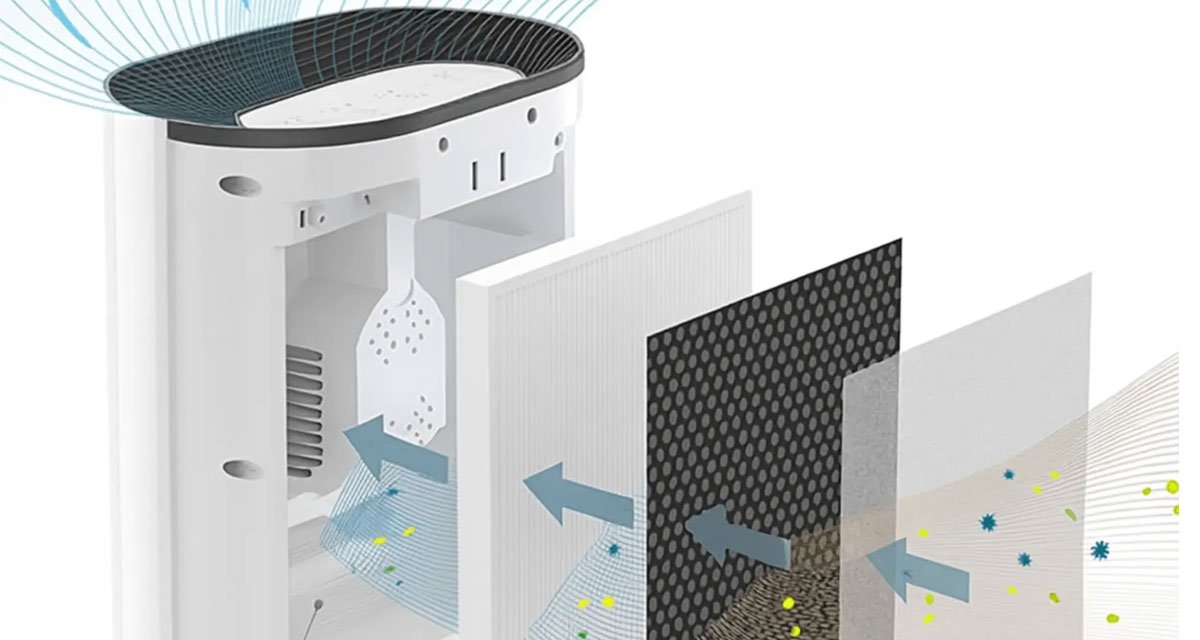
A true HEPA filter removes 99.97% of airborne particles down to 0.3 microns, making a portable air purifier the single most reliable upgrade for any room where you spend significant time. Not all air cleaning technologies deliver equal results, though.
HEPA vs. Other Air Cleaning Technologies
HEPA filters physically trap particles. Ionizers charge particles so they stick to surfaces (walls, furniture, your lungs). UV-C purifiers kill some microorganisms but do nothing for dust, allergens, or VOCs. Ozone generators, sometimes marketed as air purifiers, produce a lung irritant that the EPA explicitly warns against using indoors.
For HVAC systems, ASHRAE recommends MERV 13 or higher filters for residential use. A MERV 13 filter captures 85% or more of particles between 1 and 3 microns. Check that your system’s blower can handle the increased airflow resistance before upgrading; older systems may struggle with anything above MERV 11.
The Houseplant Reality Check
NASA’s 1989 Clean Air Study showed that certain houseplants absorb formaldehyde, benzene, and trichloroethylene. What rarely gets mentioned: that study used sealed chambers smaller than a phone booth. Scaling those results to a real room, you would need approximately 680 plants in a 1,500-square-foot home to match the air-cleaning capacity of a single HEPA purifier.
Plants do add humidity and psychological comfort. They just should not be your air quality strategy.
“Got a Levoit Core 300 for my 200 sq ft bedroom after wildfire season. PM2.5 dropped from 35 to under 5 within an hour. Best $100 I ever spent on my health.”
— r/AirQuality, a community dedicated to air quality monitoring and improvement (based on community feedback)
This experience tracks with published HEPA performance data. The Association of Home Appliance Manufacturers (AHAM) certifies purifiers by Clean Air Delivery Rate (CADR), and a CADR of 200+ handles rooms up to 250 square feet effectively.
What Each Solution Actually Costs
| Solution | Upfront Cost | Annual Maintenance | Effectiveness |
|---|---|---|---|
| Open windows regularly | Free | Free | Moderate (dilutes but doesn’t filter) |
| Switch to low-VOC products | $0-20 per swap | Negligible | High for VOC reduction |
| Upgrade HVAC filter to MERV 13 | $15-30 per filter | $60-120 (3-4 changes/year) | High for whole-home particle removal |
| Portable HEPA purifier | $80-300 | $30-60 (filter replacement) | Very high for single-room use |
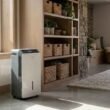
| Dehumidifier | $150-350 | $50-100 (electricity) | High for mold prevention |
| ERV/HRV system | $1,500-3,000 | $50-100 (filter + electricity) | Very high for whole-home fresh air |
Wildfire smoke, allergy seasons, and newborns all create moments where a $100 air purifier shifts from “nice to have” to “can’t sleep without it.” Knowing when your home needs active filtering is half the battle.
Monitor and Maintain: Keep Air Quality Consistent
An indoor air quality monitor costing $80 to $200 displays real-time PM2.5, CO2, and humidity readings, revealing problems completely invisible to human senses. Without measurement, every air quality improvement is a guess.
CO2 levels above 1,000 ppm signal poor ventilation. PM2.5 readings above 12 micrograms per cubic meter exceed the WHO’s recommended annual exposure limit. VOC sensors flag chemical spikes from cleaning, cooking, or new furniture off-gassing.
HVAC filter replacement follows a simple schedule: every 90 days for standard homes, every 60 days with pets, and every 30 days during allergy season or wildfire events. A clogged filter restricts airflow and pushes the system to work harder while cleaning less effectively.
Humidity sits in a sweet spot between 30% and 50%. Below 30%, airways dry out and static electricity increases. Above 50%, mold and dust mites thrive. A $10 hygrometer from any hardware store tracks humidity continuously.
“After getting an air quality monitor, I realized my supposedly clean bedroom hit 80 micrograms PM2.5 every single time I vacuumed. Switched to a vacuum with a sealed HEPA filter and the spikes disappeared completely.”
— r/IndoorAir, a community focused on indoor environmental quality (based on community feedback)
That kind of invisible spike, repeated daily for years, adds up to meaningful long-term exposure. A monitor turns abstract health advice into concrete, actionable data specific to your home.
Frequently Asked Questions
Do houseplants really clean indoor air?
Houseplants absorb trace amounts of VOCs, but real-world rooms are far too large for plants to make a measurable difference. NASA’s famous study used tiny sealed chambers. Scaling those results, a typical home would need hundreds of plants to match one portable HEPA purifier. Enjoy plants for aesthetics and mood, not filtration.
How often should I change my HVAC filter?
Replace standard HVAC filters every 90 days. Homes with pets should swap filters every 60 days due to hair and dander accumulation. During allergy season or wildfire smoke events, 30-day changes keep particle capture at peak efficiency.
What is the ideal humidity level for indoor air quality?
Keep indoor humidity between 30% and 50%. Below 30% causes dry skin, irritated airways, and increased static. Above 50% creates conditions where mold, bacteria, and dust mites reproduce rapidly. A dehumidifier or humidifier, paired with a hygrometer for monitoring, maintains this range year-round.
Are air purifiers worth the cost?
A HEPA air purifier costing $80-300 reduces PM2.5 by 50-80% in a single room, according to multiple peer-reviewed studies. For allergy sufferers, asthma patients, or homes near highways or wildfire-prone areas, the health benefit far exceeds the investment. Choose a unit with CADR ratings matching your room size for best results.
Can opening windows make indoor air quality worse?
Yes, in specific situations. Opening windows during high pollen counts worsens allergies. Homes near busy roads may pull in vehicle exhaust during rush hours. Wildfire smoke events make outdoor air dangerous. Check local air quality forecasts (AirNow.gov) before ventilating, and keep windows closed when outdoor PM2.5 exceeds 35 micrograms per cubic meter.
Start With One Change Today
Improving indoor air quality at home does not require a single expensive purchase. Run the kitchen exhaust fan while cooking. Open two windows on opposite walls for 15 minutes each morning. Replace your HVAC filter if you cannot remember when you last changed it.
Those three free actions address the biggest sources of indoor pollution: combustion byproducts, stale air buildup, and clogged filtration. Everything else, from air purifiers to ERV systems, builds on that foundation.