


The fastest way to fix low water pressure in house plumbing is to find the pattern first: one fixture, hot water only, the whole house, or the whole neighborhood. Do that before buying a booster pump, adjusting a regulator, or blaming the water company, explains McCourt Real Estate & Property Management team of experts.
Low pressure feels simple when the shower turns weak, but the cause can sit anywhere from a clogged faucet screen to a failing well pressure tank. If you are trying to understand how to fix low water pressure in house plumbing without guesswork, the fix changes completely once you know where the drop starts.
Start With the Pattern, Not the Part
Low water pressure should be diagnosed by location before repair. Check whether the problem affects one faucet, one bathroom, hot water only, every fixture, or nearby homes on the same water main.
Turn on a sink, a shower, and an outdoor hose bib one at a time. Then run two fixtures together and notice whether the flow collapses only under demand.
That small test keeps you from replacing the wrong thing. A kitchen faucet that trickles while the shower is strong usually points to the faucet, supply stop, cartridge, or aerator, not the main water line.
| What you notice | Most likely area | First move |
|---|---|---|
| Only one faucet is weak | Aerator, supply screen, cartridge, or local stop valve | Clean the aerator and check the under-sink valves |
| Only hot water is weak | Water heater, hot-side valve, mixing valve, or sediment | Check heater valves and whether several hot fixtures are affected |
| Whole house is weak | Main valve, meter valve, PRV, service line, well system, or supply issue | Measure pressure at an outdoor hose bib |
| Neighbors have the same problem | Utility supply or area work | Call the water provider before opening walls |
Measure the Actual Pressure Before Adjusting Anything
A hose-bib pressure gauge gives a better answer than feel. Attach it to an outdoor spigot, open the spigot fully, and read static pressure with no other water running.
Many homes feel comfortable around 40 to 60 psi, though acceptable pressure varies by utility, plumbing design, and local code. The International Plumbing Code requires a pressure-reducing valve where service pressure exceeds 80 psi, so chasing higher pressure can create a different plumbing risk.
Use the gauge twice: once with all fixtures off, then again while someone runs a shower or sink. A strong static reading that drops hard under use often points to restriction, undersized pipe, a clogged filter, or a failing supply component.
| Gauge reading | What it usually means | What to do next |
|---|---|---|
| Under about 40 psi | Often feels weak at showers, sprinklers, and upstairs fixtures | Check valves, PRV, utility pressure, or well system |
| About 40 to 60 psi | Usually serviceable for many homes | Look for fixture clogs or flow restrictions if only some fixtures are weak |
| About 60 to 80 psi | Generally strong enough unless flow is restricted elsewhere | Focus on clogged screens, filters, cartridges, or pipe restrictions |
| Over 80 psi | Pressure is high, not low, and can stress plumbing | Inspect or install a pressure-reducing valve |
For code context, see the International Plumbing Code water supply section. If your reading is high, do not keep turning parts until the shower feels nicer.
Fix Low Pressure at One Faucet or Shower
Single-fixture low pressure is usually a local restriction, not a whole-house pressure failure. Start with the removable pieces that catch grit: aerators, showerheads, supply-line screens, cartridges, and fixture stops.
Unscrew the faucet aerator and run the water briefly with it removed. If the stream improves, soak the aerator in vinegar, rinse the screen, and reassemble it over a covered drain.
“One way is to clean the aerator. Sometimes a dirty aerator will change the flow. Also the stop valve below that the supply line for hot and cold water can be turned to lessen water flow.”
– r/Plumbing, November 2025
That advice sounds almost too small, but it is exactly where a lot of sink complaints live. The tiny washer and screen can hold mineral grit like wet sand, and the pieces love to bounce into the drain if you are tired or rushing.
For showers, remove the showerhead and test the arm flow for a few seconds into a bucket. If the wall arm has strong flow but the showerhead is weak, clean or replace the showerhead rather than adjusting house pressure.
Do not assume every low-flow showerhead is broken. The U.S. Environmental Protection Agency WaterSense program notes that labeled showerheads must use no more than 2.0 gallons per minute, so a legal efficient fixture may feel different from an older head while still working normally.
When the showerhead and aerator are clean but one fixture still crawls, the cartridge or local shutoff valve may be partly blocked. That is a more delicate repair, especially with tub and shower valves hidden behind trim.
Fix Whole-House Low Pressure on City Water
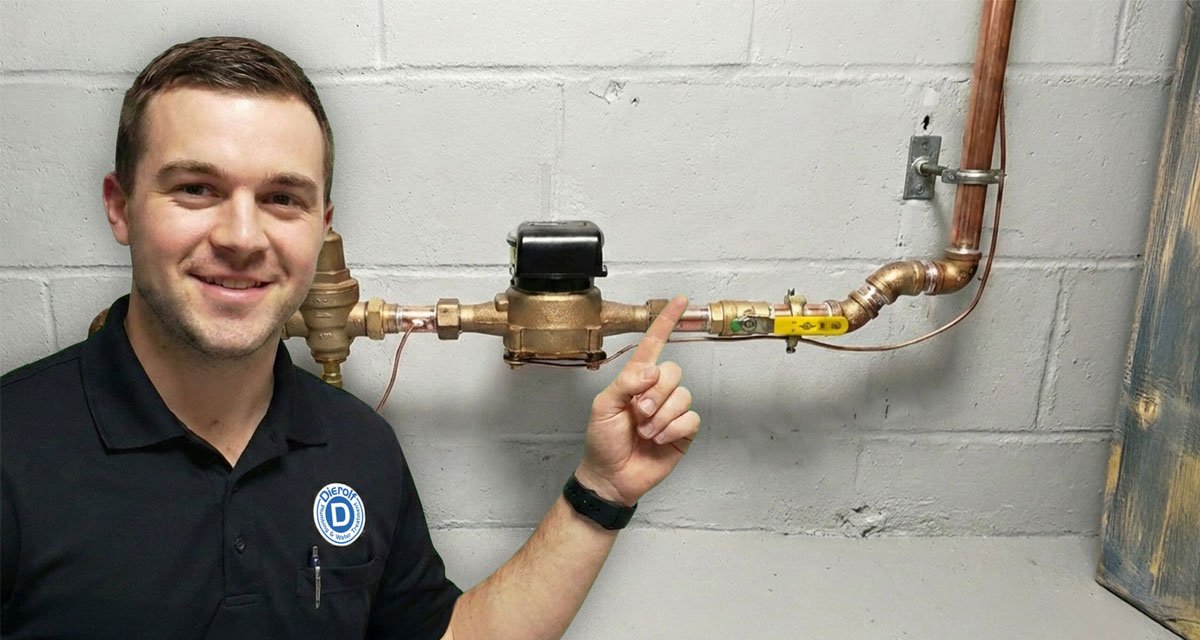
Whole-house low pressure on municipal water starts at the main shutoff, meter valve, pressure-reducing valve, and utility supply. Check those before replacing faucets or assuming the pipes have failed.
Find the main house shutoff and make sure it is fully open. If you recently had a repair, remodel, freeze event, or meter visit, a valve may have been left partly closed.
California Water Service tells customers to check whether the house valve is fully open and whether neighbors also have low pressure. That second question matters because utility-side issues are not fixed inside your bathroom wall.
If nearby homes are also weak, call the water provider and ask whether there is maintenance, a main break, pressure-zone work, or a meter-side issue. If only your home is affected, move downstream.
Check the Pressure-Reducing Valve
A pressure-reducing valve, often called a PRV, controls incoming pressure after the meter or main shutoff. A failing or misadjusted PRV can make the entire house feel weak even when the city main is fine.
Many PRVs have an adjustment screw, but this is not a part to crank casually. Mark the original position, turn in small increments, and recheck the gauge because too much pressure can damage supply hoses, water heaters, and older pipe joints.
If the gauge will not respond, the PRV may be clogged, worn, or stuck. Replacement is usually cleaner than fighting a corroded valve that no longer holds a stable setting.
Look for Restrictions After Plumbing Work
Low pressure after plumbing work often comes from loosened sediment. Turning water off and back on can send grit into aerators, cartridges, filters, and small fixture screens.
This is where the diagnosis can feel unfair. The repair may have been done correctly, yet the first shower afterward still spits weakly because debris moved into the wrong narrow passage.
Flush fixtures without aerators, check whole-house filters, and inspect any new shutoff valves. If the problem began right after work at the street, ask the utility whether the meter or service line was disturbed.
Fix Low Pressure in a House With a Well
Well-water pressure problems need a separate path because the pump, pressure switch, pressure tank, well yield, and filters all affect flow. City-water fixes do not apply once your own pump system is making the pressure.
Start at the pressure gauge near the tank. Watch the cut-in and cut-out range while water runs, then listen for short cycling, slow recovery, or a pump that cannot reach shutoff pressure.
“Hit the top and bottom halves with something metal. The top half should sound higher pitched (hollow). If they sound the same that is another sign your tank has failed.”
– r/askaplumber, December 2025
That is not a complete diagnostic test, but it captures a real-world clue: a waterlogged pressure tank behaves differently from a healthy bladder tank. If the tank has no proper air cushion, the pump may cycle often and pressure can feel erratic.
Also check sediment filters, iron filters, softeners, and cartridge housings before blaming the pump. A clogged whole-house cartridge can make the gauge look fine upstream while every fixture downstream feels starved.
If the pump runs constantly, pressure never builds, or water stops during a long tub fill, call a well contractor. Low well yield, a failing pump, or a bad pressure switch is not a good place for guesswork.
When a Booster Pump Is the Wrong First Fix
A booster pump can help when incoming pressure is consistently low and the plumbing is otherwise healthy. It is a poor first fix when the real issue is a partly closed valve, clogged filter, failing PRV, leak, or undersized service line.
Think of a booster as the last step after measurement, not the opening move. It adds cost, noise, electrical demand, and another mechanical part that needs service.
There is also a practical limit: a booster cannot create water the pipe cannot supply. If the service line is restricted or the well yield is low, boosting pressure may only make the system cycle harder.
Ask three questions before pricing one: What is the static pressure at the hose bib, what is the pressure under flow, and does the pressure drop before or after the house plumbing? Those answers decide whether boosting makes sense.
Call the Right Person for the Right Pressure Problem
The right call depends on where the pressure drop starts. Water utility, plumber, well contractor, and irrigation technician solve different pressure problems, and mixing them up wastes money.
| Problem pattern | Best first contact | Why |
|---|---|---|
| Neighbors also have low pressure | Water utility | The issue may be at the main, meter, pressure zone, or utility work area |
| Whole house is low, city water, no neighbor issue | Licensed plumber | PRV, shutoff valves, service line, filters, or leaks need inspection |
| Low pressure on a well | Well contractor or pump specialist | Pump, pressure tank, switch, well yield, and filtration need system testing |
| Only one faucet or shower is weak | DIY first, then plumber | Aerators, showerheads, cartridges, and local stops are common local causes |
| Sudden drop with wet spots, noise, or high water bill | Plumber quickly | A leak or service-line problem can worsen fast |
One warning is worth saying plainly: sudden low pressure plus damp flooring, a spinning meter, or an unexplained water bill is not a “wait and see” problem. Shut off what you safely can and get help.
The Repair Order I Would Use
The safest repair order for how to fix low water pressure in house plumbing is cheap test, easy restriction, system measurement, then part replacement. That sequence fixes the common problems without hiding the expensive ones.
- Ask whether the pressure problem is one fixture, hot-only, whole-house, or neighborhood-wide.
- Clean faucet aerators and showerheads where the problem is local.
- Confirm local stop valves and the main shutoff are fully open.
- Measure pressure at an outdoor hose bib with all fixtures off.
- Measure again while a shower or sink is running.
- Check whole-house filters, softeners, and recent plumbing work for restrictions.
- Inspect or test the PRV on city-water homes.
- Inspect the pressure tank, switch, pump behavior, and filters on well-water homes.
- Call the utility, plumber, or well contractor based on where the pressure drop begins.
Simple first. Measured second. Expensive last.
FAQ
What is a normal water pressure for a house?
Many homes work well around 40 to 60 psi, while pressure above 80 psi needs pressure-reducing protection under common plumbing code rules. Your local utility and plumbing layout can change what feels normal.
Can I adjust my pressure-reducing valve myself?
You can sometimes adjust a PRV in small turns while checking a gauge, but you should stop if the pressure does not respond smoothly. A stuck, leaking, or corroded PRV is usually a replacement job.
Why is my water pressure suddenly low?
Sudden low pressure can come from a utility outage, a partly closed valve, a clogged filter, a leak, a failed PRV, or a well-system fault. Check neighbors and the pressure gauge before taking fixtures apart.
Why is only my shower pressure low?
Shower-only low pressure usually points to the showerhead, cartridge, mixing valve, or local valve stops. Remove the showerhead briefly to see whether the weak flow is in the head or behind the wall.
Will a bigger well pump fix low water pressure?
A bigger well pump helps only when the pump is truly undersized and the well can supply enough water. Pressure tank problems, clogged filters, bad switches, and low well yield can mimic pump weakness.
Final Judgment
Low water pressure gets expensive when you skip the pattern test. Find where the pressure drops, measure it once, and most houses will point you toward either a five-minute screen cleaning or the right professional call.