



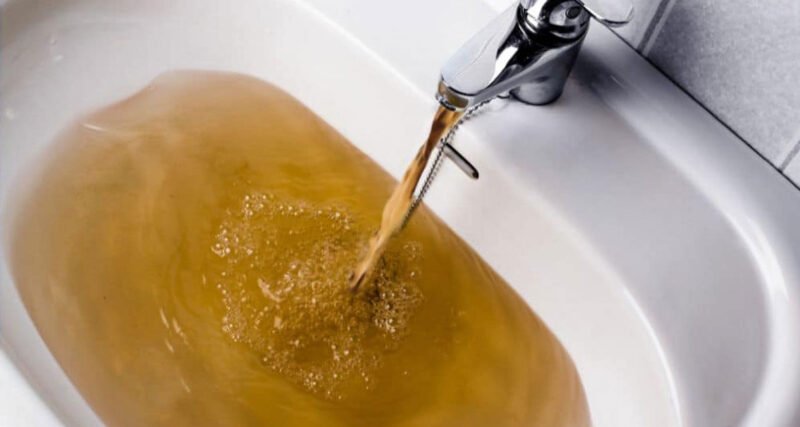
What causes brown water from faucets is usually rust, sediment, or minerals that were disturbed somewhere in the water line says Nash Management. The safest move is to pause drinking it, check whether it happens on hot water, cold water, one faucet, or the whole house, then decide whether this is a utility issue or a plumbing issue.
Brown water looks dramatic because it is dramatic. A glass that was clear yesterday suddenly looks like weak tea, and the sink bowl may collect tiny orange flecks around the drain.
Quick Answer: Why Faucet Water Turns Brown
Brown faucet water is most often caused by iron rust, stirred-up pipe sediment, manganese, water main work, hydrant flushing, a failing water heater, or corrosion inside older plumbing.
The color usually comes from particles suspended in the water, not from the water itself turning brown. The source can be outside your home in the public main, inside your service line, or at one fixture.
The exact pattern matters more than the shade. Light yellow-brown water after street work points one way; dark brown hot water from every tap points another.
| What you see | Most likely source | First move |
|---|---|---|
| Brown water from every faucet | Water main disturbance, service line sediment, or building-wide plumbing | Check neighbors and local water alerts before flushing heavily |
| Brown water from one faucet only | Aerator debris, fixture supply line, or localized pipe corrosion | Remove and rinse the aerator, then retest cold and hot water |
| Brown hot water only | Water heater sediment or tank corrosion | Stop treating it as a city-water issue and inspect the heater |
| Brown cold water after low pressure | Main break, hydrant flushing, valve work, or pressure change | Call the water utility if it does not clear or if neighbors see it too |
| Brown water with black specks | Manganese deposits, deteriorating rubber parts, or pipe debris | Do not drink until the source is clearer |
Is Brown Faucet Water Safe To Drink?
Do not assume brown faucet water is safe to drink until you know the cause. Rust and mineral sediment are often aesthetic problems, but discoloration can also appear during main breaks or contamination advisories.
The Centers for Disease Control and Prevention says drinking water advisories are issued when tap water is, or could be, affected by harmful germs, chemicals, toxins, or radioactive materials. If your city has issued an advisory, follow that advisory instead of home plumbing guesses.
Use bottled water for drinking, cooking, brushing teeth, making ice, and mixing baby formula if there is any advisory, sewage smell, oily film, sudden pressure loss, or heavy particulate. Boiling helps for some germs during a boil-water advisory, but it does not make chemically contaminated water safe.
Not always.
If the water clears quickly after a short cold-water flush and there is no advisory, many households use the water again after the sediment passes. Still, avoid washing white laundry until the water is clear; iron stains are not sentimental keepsakes.
The Pattern Tells You Where The Brown Water Started
The fastest diagnosis is pattern matching: test cold water, hot water, more than one faucet, and one neighbor if possible. That tells you whether to call the water utility or focus on your own plumbing.
Start with the cold side at a bathtub, utility sink, or outdoor spigot if you have one. Those fixtures usually move more water and are less likely to be skewed by a tiny faucet aerator.
- Run cold water from the lowest or largest fixture for 2 to 5 minutes and watch whether the color fades.
- Test a second cold-water faucet on another floor or another side of the home.
- Test hot water separately after the cold test.
- Ask a nearby neighbor whether they see the same color.
- Look for city alerts about flushing, main breaks, hydrant work, or pressure changes.
If cold water is brown at every faucet and neighbors see it too, the problem is likely outside your fixtures. If only hot water is brown, the water heater moves to the top of the list.
There is a particular kind of plumbing annoyance where the first cup looks awful, the second looks better, and by the fifth you wonder whether you imagined the whole thing. Keep testing anyway. The first minute often tells the truth.
The Most Common Causes, Ranked By What You See
The biggest causes of brown faucet water are disturbed iron sediment, rusty plumbing, water main activity, water heater sediment, manganese, and debris trapped at the faucet. Each one leaves a slightly different clue.
1. Rust And Iron Sediment In Pipes
Iron in pipes can oxidize into rust-colored particles. When water speed or pressure changes, those particles can break loose and tint the water yellow, orange, reddish brown, or dark brown.
The U.S. Environmental Protection Agency notes in a residential flushing handout that high iron levels can appear orange or reddish brown and that residual sediment may move into residential plumbing. That is why brown water often shows up after a disturbance rather than every day.
2. Water Main Breaks, Valve Work, Or Hydrant Flushing
Brown water after a main break or hydrant flushing is often caused by sediment being stirred up in the distribution system. Low pressure before the discoloration is another clue.
Community reports line up with that pattern. People often notice the color at the same time as neighbors, then learn about a main break or utility work nearby.
“Happens to us once a year or so. I think I read somewhere that it coincides with flushing the hydrants or something? I just let it all run for a minute or two and it goes back to clear. I gotta ask… why did you drink the discolored water??”
– r/astoria, May 2026
3. Water Heater Sediment Or Tank Corrosion
Brown water only from hot taps usually points to the water heater, not the city main. Sediment can collect at the bottom of the tank, and corrosion inside the tank can send rusty water through hot-water lines.
This is where things get practical. If cold water stays clear but hot water turns brown from several taps, flushing the street-side line will not fix the heater.
4. Older Galvanized Or Corroded Household Pipes
Older galvanized steel pipes can corrode from the inside and release rust. The water may be worse first thing in the morning or after the house sits unused because water has rested against corroded pipe walls.
This pattern tends to repeat. A one-time brown-water event after utility work is annoying; brown water every Monday morning is a clue your own plumbing may be aging out.
5. Manganese Or Dark Mineral Deposits
Manganese can create brownish-black or dark particles in water. It may stain fixtures, laundry, and appliance surfaces even when the water does not smell bad.
Dark flecks are easy to dismiss as dirt, but they can lodge in faucet screens and toilet fill valves. That little screen at the faucet tip can become a tiny museum of whatever moved through the line last week.
6. Debris Trapped In The Faucet Aerator
If only one faucet runs brown or gritty, the aerator may be holding sediment. Unscrew the aerator, rinse the screen, run water briefly without it, then reinstall it if the water clears.
Do this over a towel or a closed drain. Tiny washers are gifted escape artists.
What To Do Right Now
When brown water appears, stop using it for drinking and food prep, check for advisories, run a controlled cold-water flush, and document whether the color affects one fixture or the whole home.
Do not start by opening every tap at full blast for half an hour. If the cause is a main break or advisory, flushing harder will not make the water safer.
- Check your utility website, city alerts, local emergency notices, or 311-style service line.
- Use bottled water if the discoloration is heavy, persistent, oily, foul-smelling, or linked to a pressure outage.
- Run cold water from a bathtub or utility sink for a few minutes if no advisory is active.
- Keep the first dirty water away from laundry, ice makers, coffee machines, humidifiers, and pet bowls.
- Clean faucet aerators after the water clears because sediment can stay trapped there.
- Call the utility if neighbors also have brown water, pressure dropped, or the color does not clear.
Why avoid laundry? Iron-tinted water can mark white fabric fast, and the stain may set before you realize the rinse water looked wrong.
When To Call The Water Utility Vs A Plumber

Call the water utility when brown water affects multiple homes, cold water from many fixtures, or follows nearby main work. Call a plumber when it is hot-water-only, one fixture, or a repeating problem inside the home.
The utility call is not overreacting. A short report helps them connect scattered complaints into a main break, flushing issue, or pressure event.
| Call the water utility when | Call a plumber when |
|---|---|
| Neighbors see the same brown water | Only one faucet is affected |
| Cold water is brown across the home | Only hot water is brown |
| Water pressure dropped suddenly | The water heater is old, noisy, or producing rusty hot water |
| There was hydrant flushing or road work nearby | Brown water repeats after long periods of non-use |
| The color does not clear after brief flushing | Particles keep clogging aerators or appliance screens |
When you call, give them the time it started, whether hot and cold water are affected, whether pressure changed, your nearest cross streets, and whether neighbors see the same thing. Specific beats dramatic.
Stop The Repeat Cases You Can Actually Control
You cannot prevent every utility-side disturbance, but you can reduce repeat brown water by maintaining the water heater, cleaning aerators, replacing badly corroded piping, and watching local flushing notices.
If brown hot water keeps returning, ask about water heater flushing, anode rod condition, and tank age. If the tank is actively corroding, repeated flushing may buy time, not solve the cause.
For older homes, a licensed plumber can identify galvanized lines, corroded fittings, or a problem branch. The frustrating part is that water can look clear most days while still carrying rust when pressure changes.
For municipal events, your best prevention is attention. If the utility announces hydrant flushing, avoid laundry and let cold water clear before using ice makers or appliances.
FAQ
Can I Shower In Brown Water?
Showering in lightly discolored water is often less risky than drinking it, but avoid swallowing it and follow any local advisory. Use bottled or safe water for babies, wounds, and anyone with higher health risk if the cause is unknown.
Will A Filter Fix Brown Faucet Water?
A filter may catch some sediment, but it should not be your first safety decision. If a drinking water advisory is active, follow official instructions even if water passes through a home filter.
Why Is My Water Brown For A Few Seconds, Then Clear?
Brown water that clears after a few seconds often comes from settled rust or sediment near the fixture or in a branch line. If it repeats often, check the aerator, fixture supply line, and older piping.
Why Is Only My Hot Water Brown?
Brown hot water usually points to sediment or corrosion inside the water heater. Test cold water separately, then have the heater inspected if several hot taps show the same discoloration.
Should I Call The City For Brown Water?
Call the city or water utility if brown water affects cold water, multiple fixtures, neighbors, or follows a pressure change. They can confirm main work, flushing, breaks, or advisories.
What Causes Brown Water From Faucets After A Power Outage?
Brown water after an outage can happen when pumps, pressure zones, or building systems restart and disturb sediment. Check utility alerts and avoid drinking it until the water clears and no advisory is active.
The Practical Judgment
For most homes, what causes brown water from faucets is disturbed sediment, rust, or mineral buildup, but the right response is not to guess from color alone. Pattern first, safety second, flushing third.
If it is hot-only, look at the water heater. If neighbors have it too, call the utility. If an advisory exists, the advisory wins.