




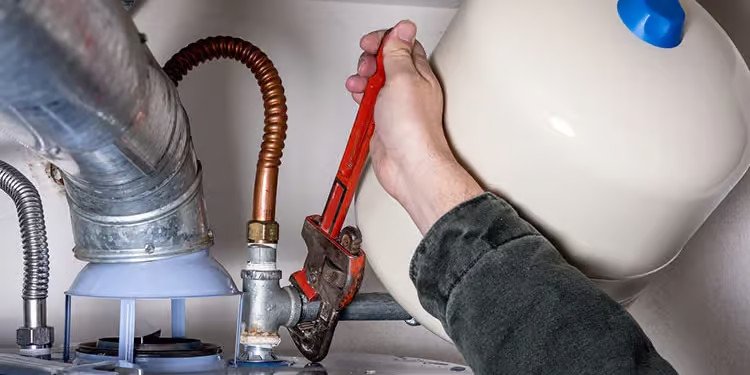
Nobody thinks about the water heater until the shower goes cold. Sound familiar? It sits in a closet, a basement corner, or a garage, heating water day after day for years, and the first indication that something is wrong is almost never a warning light. It is a lukewarm shower. A pop from the tank. A damp spot on the floor around the base. By the time these signs appear, the question is not whether the water heater can be repaired. The question is whether repairing it is throwing money at a unit that needs to be replaced, says Brentwood property management.
Rheem, the largest water heater manufacturer in the United States, states that most conventional tank water heaters last around ten years and recommends beginning replacement planning around year ten to maintain reliable performance and avoid unexpected failure (Rheem, 2025). Some units fail earlier due to hard water, neglected maintenance, or manufacturing defects. Some last twelve or thirteen years if the anode rod has been replaced on schedule and the tank has been flushed annually. But a water heater showing two or more of the signs below is a water heater on borrowed time, regardless of its age.
Here are the seven signs, from the ones you can check yourself to the ones that mean call a plumber today.
1: The Water Heater Is More Than 10 Years Old
Age is not a symptom. It is a probability. A ten-year-old water heater is not broken, but it is statistically near the end of its service life. Rheem (2025) advises that once a unit reaches this age, planning for replacement is smarter than waiting for an emergency. The serial number on the manufacturer’s label encodes the manufacture date. For most brands, the first two digits are the year and the next two are the month. A serial starting with “1510” was built in October 2015 and is now over ten years old. If the label is illegible or missing, the unit is old enough that replacement is the right conversation to have with a plumber before the tank makes the decision for you.
The anode rod is the reason tanks fail on roughly this timeline. Every tank water heater contains a sacrificial anode rod, a magnesium or aluminum rod that corrodes instead of the steel tank. The rod lasts five to eight years in most water conditions. Once it is fully consumed, the tank itself starts rusting. A tank with a depleted anode rod has no corrosion protection left, and the clock is running on a leak. Replacing the anode rod extends the tank’s life. Most homeowners never do it because most homeowners do not know the anode rod exists. If the unit is ten years old and the anode rod has never been replaced, the tank wall is almost certainly corroding from the inside.
2: Rusty or Discolored Water Coming From the Hot Tap
Run the hot water at a faucet for a minute and fill a clear glass. If the water is brown, reddish, or has visible particles floating in it, the inside of the tank is rusting. Rheem (2025) notes that discoloration, especially brown or reddish water, often points to corrosion inside the tank or a deteriorating anode rod. A failing anode rod releases rust-colored sediment into the water. Once the rod is gone, the rust is coming from the tank wall itself, and the tank is no longer structurally sound.
Confirm that the rust is coming from the water heater and not the pipes by running only cold water into a glass. If the cold water is clear and the hot water is rusty, the water heater is the source. If both are rusty, the problem is in the house plumbing or the municipal supply. Rusty hot water combined with any other sign on this list is a strong indicator that replacement is the right call. A new anode rod might buy time on a five-year-old unit. On a ten-year-old unit, the corrosion is likely past the point where a rod change helps.
3: Rumbling, Popping, or Banging Noises From the Tank
A water heater should be nearly silent. A quiet hum from a gas burner or a faint click when an electric element cycles on is normal. Rumbling, popping, cracking, or banging is not. Rheem (2025) identifies sediment buildup as the primary cause: mineral deposits settle at the bottom of the tank, trapping water underneath. When the burner or element heats the water trapped below the sediment layer, it boils explosively, producing the popping sound. The sediment also insulates the bottom of the tank from the water, forcing the burner to run longer and hotter. The extra heat stress accelerates tank fatigue and can eventually cause the steel to crack.
Flushing the tank can remove loose sediment and quiet the noise on a unit that is otherwise in good condition. If the tank has never been flushed and is more than seven years old, the sediment may have solidified into a concrete-like layer that flushing cannot dislodge. At that point, the noise is permanent, the efficiency loss is permanent, and the accelerated wear on the tank bottom is irreversible. The noise itself is not the problem. What the noise tells you about the condition of the tank is the problem.
4: Water Around the Base of the Tank
A puddle under the water heater is the most serious sign on this list. Rheem (2025) distinguishes between two types of leaks: external leaks from loose fittings, a failing temperature and pressure relief valve, or condensation, which are repairable, and leaks from the tank body itself, which are not. Water pooling around the base of the tank, as opposed to dripping from a pipe connection above, almost always means the tank has rusted through from the inside. There is no repair for a leaking tank. The only option is replacement, and the clock is measured in hours or days, not weeks.
A tank operating under pressure can go from a slow seep to a full rupture with little warning. The water coming out is typically 120 to 140 degrees. The volume in a full 50-gallon tank is enough to flood a basement or utility room in minutes. If you see water around the base, shut off the cold water supply valve at the top of the unit, turn off the power or gas supply, and call a plumber. Do not wait to see if it stops. It will not.
5: You Run Out of Hot Water Faster Than You Used To
A tank water heater holds a fixed volume of hot water. A 50-gallon tank should deliver roughly 35 to 40 gallons of hot water before the incoming cold water dilutes the temperature below a usable level. If a shower that used to last fifteen minutes now runs cold after eight, the usable capacity of the tank has decreased. Rheem (2025) identifies several causes: heavy sediment buildup reducing the volume of water the tank actually holds, a failed dip tube that lets cold water mix with hot at the top of the tank instead of entering at the bottom, a burned-out lower heating element on an electric unit, or a failing thermostat that shuts off the burner before the tank reaches the set temperature.
A failed heating element or thermostat is repairable. Sediment accumulation that has reduced the effective capacity by 25% or more on a unit over seven years old is generally not worth addressing because the sediment has already caused permanent efficiency loss and accelerated tank wear. If the reduced capacity is accompanied by noise or rusty water, the underlying problem is the tank condition, not a single replaceable component.
6: Your Energy Bills Are Climbing With No Other Explanation
A water heater accounts for roughly 18% of the average home’s energy use, second only to the HVAC system. As the unit ages and sediment accumulates, efficiency drops and the burner or elements run longer to maintain the set temperature. Rheem (2025) notes that a failing water heater often consumes more energy to produce the same amount of hot water as sediment buildup, aging parts, and worn heating elements decrease efficiency. The increase is gradual and easy to attribute to seasonal changes, but a bill that is consistently higher than the same month a year ago, with no change in household size or usage patterns, points to the water heater.
Upgrading to an ENERGY STAR certified water heater can significantly reduce long-term operating costs. A heat pump water heater, for example, uses roughly 60% less energy than a standard electric resistance unit. Rheem’s own ProTerra heat pump models deliver up to five times the efficiency of a standard electric water heater. The upfront cost is higher, but the monthly savings recover the difference within three to five years in most households.
7: You Have Repaired the Unit Multiple Times in the Past Two Years
A water heater that has needed a new thermostat, then a new heating element, then a new pressure relief valve within eighteen months is telling you something. The components are failing because the tank itself is degrading, and the internal environment is harder on parts than it was when the unit was new. Each repair buys a few more months. Collectively, the repair costs approach the price of a new unit. A new 50-gallon gas water heater costs between $600 and $1,200 installed depending on location and venting requirements. A new electric unit runs $400 to $900 installed. If the cumulative repair cost over two years exceeds half the price of a new unit, stop repairing and replace.
| Sign | What It Means | Repairable? | Approximate Replacement Cost |
| 10+ years old, no anode rod replacement | Tank corrosion is likely underway | No — plan replacement | $600–$1,200 (gas) / $400–$900 (electric) |
| Rusty hot water (clear cold water) | Anode rod depleted, tank rusting | Anode rod on units <7 yrs old | $600–$1,200 |
| Rumbling, popping, banging | Sediment buildup, overheating bottom | Flush on units <7 yrs; no on older | $600–$1,200 |
| Water pooling around base | Tank has rusted through | No — emergency replacement | $600–$1,200 (+ water damage) |
| Running out of hot water quickly | Sediment, failed dip tube, bad element | Element/dip tube: yes | $200–$400 (repair) or $600–$1,200 (replace) |
| Climbing energy bills | Efficiency loss from age and sediment | No — upgrade to ENERGY STAR | $600–$3,000 (heat pump) |
| Multiple repairs in 2 years | Components failing as tank degrades | No — stop repairing | $600–$1,200 |
Frequently Asked Questions
How long does a typical water heater last?
A conventional tank water heater lasts 8 to 12 years, with 10 years being the average per Rheem (2025). Tankless water heaters last 15 to 20 years because they do not store water and are not subject to the same internal corrosion. Heat pump water heaters have a similar lifespan to tank units. The actual lifespan depends heavily on water hardness, whether the anode rod has been replaced, and whether the tank has been flushed annually. Hard water with high mineral content can reduce a tank’s life by two to three years.
Can I replace the anode rod instead of replacing the whole water heater?
Yes, and doing so every five years is the single most effective way to extend a water heater’s life. The anode rod costs $30 to $60 and can be replaced by a homeowner with a socket wrench and enough ceiling clearance to pull the old rod out. However, replacing the anode rod only works if the tank is not already corroded. On a unit over eight years old that has never had the rod replaced, the tank wall has likely already begun to rust, and a new rod will not reverse existing damage. The rod is preventive maintenance, not a repair.
Should I replace my tank water heater with a tankless unit?
Tankless water heaters provide hot water on demand, never run out, and last roughly twice as long as tank units. The trade-offs are higher upfront cost, typically $1,500 to $3,500 installed depending on gas line and venting requirements, and the need for annual descaling in hard-water areas. Tankless makes the most sense for households that want endless hot water, have limited space, or are replacing a unit that is difficult to vent. For a straightforward swap in the same location with existing venting, a new tank unit is faster and cheaper to install.
The Bottom Line
A water heater does not fail without warning. It rumbles for months before the tank cracks. The hot water turns rusty for weeks before the leak appears. The bill creeps up for a season before anyone questions it. The signs are there. The question is whether you act on them during business hours on a weekday, when plumbers are available and pricing is normal, or at 8 p.m. on a Sunday when the tank lets go and the only option is an emergency call that costs double. If the unit is ten years old and showing any of the signs above, schedule the replacement on your timeline. The alternative is letting the tank pick the timeline, and the tank always picks the worst possible moment.