




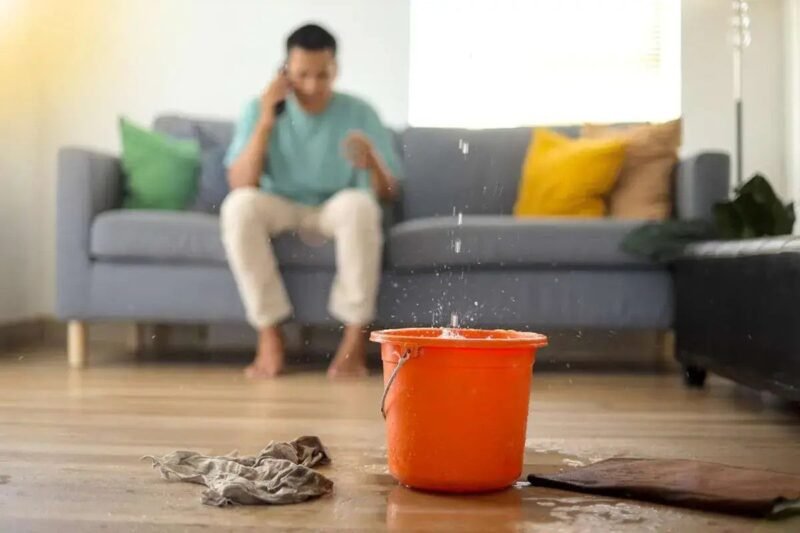
A hidden water leak does not announce itself with a puddle on the floor. It announces itself with a water bill that jumped $40 in a month when your usage did not change, a faint musty smell in a hallway you cannot place, or a discolored patch on the ceiling that was not there last week. By the time you see standing water, the leak has been running for weeks or months, and the damage behind the drywall is already worse than what is visible on the surface, notes Phoenix property management.
The EPA estimates that the average household’s leaks account for more than 9,300 gallons of water wasted every year, and nearly one in ten homes has leaks severe enough to waste 50 gallons or more per day. Most of those leaks are not the faucet you can see dripping. They are hidden: inside walls, under slabs, behind shower valves, in crawlspaces nobody visits. Repairing them costs money. Ignoring them costs more. Mold remediation for a long-running hidden leak typically runs $2,000 to $6,000. Structural repairs to rotted subfloor or framing can double that.
Here are the seven signs in the order you are most likely to notice them. Any single sign warrants investigation. Two or more means you almost certainly have an active leak.
1: Your Water Bill Spiked Without Explanation
A sudden jump in the water bill, with no corresponding change in household activity, is the most reliable early indicator of a hidden leak. The EPA recommends checking your water usage during a colder month when outdoor watering is minimal: a family of four using more than 12,000 gallons per month almost certainly has a leak somewhere. But you do not need to wait for a monthly statement. A faster diagnostic is the water meter test.
Locate your water meter. It is usually in a concrete box near the street or in the basement where the main supply line enters the house. Turn off every water-using fixture and appliance in the house. No faucets, no toilets refilling, no dishwasher, no washing machine, no ice maker cycling. Note the meter reading. Wait two hours without using any water. Check the meter again. If the reading has changed at all during a period of zero intentional use, water is leaving the pipes somewhere between the meter and the fixtures. The leak could be in the supply line under the yard, inside a wall, or under a slab. The meter test tells you there is a leak. Finding it is the next step.
The EPA notes that fixing easily corrected household water leaks can save homeowners about 10 percent on their water bills. The bill spike itself is the diagnostic. The meter test confirms it. The sooner you act on the number, the less damage the leak does while you wait.
2: You Hear Water Running When Nothing Is On
Ever heard water running at 2 a.m. when everyone is asleep? A properly sealed plumbing system is silent when no water is being used. If you hear water moving through pipes, a faint hiss behind a wall, or a toilet that refills itself at random intervals when nobody has flushed it, water is escaping somewhere. The sound is often most noticeable at night when the house is quiet and ambient noise is low. Walk through the house after everyone is in bed and listen near each bathroom, the kitchen, and any wall that contains plumbing. The sound of running water with no tap open means a pressurized supply line is leaking inside a wall or a toilet flapper is failing silently, the most common hidden leak in any home.
A toilet flapper that does not seal lets water trickle from the tank into the bowl continuously. The toilet does not overflow. It just runs a small stream of water 24 hours a day, and a single failing flapper can waste thousands of gallons a month. The EPA’s recommended test: put a few drops of food coloring in the toilet tank. Wait ten minutes without flushing. If color appears in the bowl, the flapper is leaking. Replace it immediately. Flappers cost under ten dollars and should be replaced at least every five years as the rubber degrades whether it looks worn or not.
3: Water Stains on Walls, Ceilings, or Floors
Yellow, brown, or copper-colored stains on drywall or ceiling panels are water traveling through building materials and evaporating at the surface, leaving mineral deposits behind. A stain directly below a bathroom or kitchen is almost always a supply line, drain line, or fixture seal leak in the room above. A stain on an exterior wall may be a roof leak, but if the stain worsens after rain, it is the roof. If it worsens regardless of weather, it is plumbing inside the wall.
The size of the stain does not correspond to the size of the leak. A stain the size of a dinner plate on the ceiling might be a pinhole leak in a copper supply line spraying a fine mist inside the joist cavity. The visible stain is just where the water finally breaches the painted surface. The actual wetted area behind the drywall is usually three to five times larger. Touch the stain. If it feels damp, the leak is active right now. If it is dry but discolored, the leak may be intermittent, triggered only when a specific fixture runs. Run each fixture in the room above individually while someone watches the stain. When the stain darkens or grows, you found the source.
4: Persistent Musty Odors or Damp Smell
Mold and mildew produce volatile organic compounds that smell musty, earthy, or sour. The odor is often noticeable before any visible mold appears because the microbial growth starts in the dark, damp cavity behind the drywall long before it pushes through to the painted surface. If a room or closet smells musty and the smell does not resolve with ventilation or cleaning, there is a moisture source. In a home with no obvious water intrusion, that moisture source is usually a slow plumbing leak inside the wall, floor, or ceiling cavity.
Under-sink cabinets are the easiest place to start. Empty the cabinet, run your hand along the bottom panel and the back wall, and smell the inside. Dampness or a mildew odor inside a cabinet that should be dry means the supply lines, shutoff valves, or drain connections above it are leaking in small amounts. A slow drip at a compression fitting evaporates before it forms a puddle but keeps the cabinet interior humid enough to grow mold indefinitely. Tighten the fittings. If the smell persists, the leak is inside the wall behind the cabinet.
5: Mold or Mildew in Unexpected Places
Mold in a shower corner is normal. Mold on a hallway baseboard, a bedroom ceiling, or the back wall of a closet is not. Mold needs three things to grow: moisture, organic material to feed on, and darkness. A hidden plumbing leak provides all three inside a wall cavity. By the time mold becomes visible on the room side of the drywall, the colony behind it is established and spreading.
Pay attention to the location pattern. Mold that appears at the base of an interior wall that does not share a bathroom or kitchen on either side is likely from a slab leak wicking moisture up through the floor. Mold on the ceiling below a second-floor bathroom is from a leaking supply line or drain in the bathroom above. Mold around a window frame that is not near a shower is from a leaking pipe in the exterior wall. Each pattern points to a different type of leak and a different repair approach. The mold itself is a symptom. Killing it without fixing the moisture source guarantees it comes back within weeks.
6: Peeling Paint or Bubbling Wallpaper
Paint and wallpaper adhere to drywall paper, not to water. When moisture saturates the drywall from behind, the bond between the paint and the surface fails. The paint bubbles, then cracks, then peels away in sheets. Wallpaper lifts at the seams first, then separates entirely. This damage is different from age-related paint failure because it is localized to a specific area and typically accompanied by one or more of the other signs on this list: a stain, a smell, or a soft spot when you press on the wall.
A bubbling patch on a ceiling below a bathroom is almost always a leaking shower pan drain, a failed wax ring on the toilet, or a loose supply connection at the sink or toilet. The water runs down the outside of the drain pipe inside the floor cavity, pools on top of the ceiling drywall, and eventually saturates through. By the time the paint bubbles, the drywall above it may already be soft enough to push a screwdriver through with minimal pressure. The ceiling repair involves cutting out the damaged section, drying the joist cavity, replacing the drywall, taping, mudding, and repainting. That repair plus the plumbing fix typically runs $800 to $2,500 depending on the extent of the damage and whether mold remediation is needed.
7: Warm Spots on the Floor (Slab Leak Indicator)
Homes built on concrete slab foundations route water supply lines through or under the slab. When a copper pipe buried in concrete develops a pinhole leak from corrosion or abrasion against the surrounding material, hot water leaking into the slab heats the concrete above it. Walking barefoot across the floor, you feel a specific area that is noticeably warmer than the surrounding floor. This is not a subtle difference. A hot water slab leak can make a patch of floor uncomfortably warm to the touch, almost like radiant floor heating that you did not install and do not want.
A cold water slab leak is harder to feel but produces a different indicator: the sound of water running continuously, even when no fixtures are on, combined with a water meter that never stops spinning. The water has nowhere to go except into the soil under the slab, so it drains silently without surfacing. The only clues are the meter and the bill. Both types of slab leak require professional repair. The plumber locates the leak with acoustic listening equipment or a thermal camera, then either breaks through the slab to repair the pipe at the leak point or reroutes the line through the attic or walls to bypass the failed section entirely. Rerouting is usually the more durable long-term solution because the original pipe is likely to develop additional leaks at other corrosion points. Slab leak repair costs $1,500 to $4,000 depending on access and whether rerouting is required. The water damage from letting it run is additional.
| Sign | What It Usually Means | DIY Diagnostic | Typical Repair Cost |
| Water bill spike | Any hidden leak, anywhere | Water meter test (2-hour no-use) | $0 (detection) to $4,000 (slab reroute) |
| Sound of running water | Toilet flapper or pressurized supply leak | Food coloring test (toilet); listen at night | $8 (flapper) to $1,500 (in-wall supply line) |
| Water stains on surfaces | Leak in wall or ceiling cavity | Touch test (damp=active); fixture isolation | $300–$2,500 |
| Musty odors | Slow leak creating persistent dampness | Sniff under sinks; check cabinet interiors | $200–$1,500 |
| Mold in unexpected places | Leak inside wall, floor, or ceiling cavity | Location pattern analysis (interior vs exterior, proximity to plumbing) | $500–$6,000 (with mold remediation) |
| Peeling paint or bubbling wallpaper | Water saturating drywall from behind | Press test (soft drywall = active leak) | $800–$2,500 |
| Warm spots on floor | Hot water slab leak | Barefoot walk; meter test confirmation | $1,500–$4,000 |
Frequently Asked Questions
How much water does a typical hidden leak actually waste?
The EPA reports that the average household with leaks wastes more than 9,300 gallons of water per year, and nearly one in ten homes has leaks wasting 50 gallons or more per day. A faucet dripping at one drip per second wastes over 3,000 gallons per year, enough for more than 180 showers. A toilet flapper that does not seal can silently waste thousands of gallons per month without any visible sign other than the bill and the occasional sound of the tank refilling.
Can I find a hidden water leak myself, or do I need a plumber?
You can identify the presence of a leak yourself using the water meter test and the food coloring toilet test, both recommended by the EPA. You can also check under sinks, listen for running water at night, and inspect for stains and odors. Finding the exact location of a leak inside a wall or under a slab requires equipment most homeowners do not own: acoustic leak detectors, thermal imaging cameras, and moisture meters. If the meter test confirms a leak and the visible checks do not reveal the source, call a licensed plumber with leak detection equipment. The service call for detection typically costs $150 to $400.
Does homeowners insurance cover damage from a hidden water leak?
Most homeowners insurance policies cover sudden and accidental water damage, such as a pipe that bursts. They typically do not cover damage from slow, ongoing leaks that occurred over weeks or months because the damage is considered a maintenance issue rather than a sudden event. This distinction is why catching a hidden leak early matters. A leak found and fixed in the first month is a plumbing repair. The same leak running for six months becomes a mold remediation and structural repair that insurance may deny, leaving you with the full cost.
What is the most common hidden water leak in a home?
A worn toilet flapper is the single most common leak in any house, per the EPA WaterSense program. The flapper is the rubber seal at the bottom of the toilet tank that lifts when you flush and drops back down to hold water in the tank. The rubber degrades over time, losing its ability to seal, and water trickles from the tank into the bowl silently. The leak is invisible because the water goes down the drain, not onto the floor. The food coloring test detects it in ten minutes, and a replacement flapper costs under ten dollars at any hardware store. The EPA recommends replacing flappers at least every five years as preventive maintenance.
The Bottom Line
A hidden water leak costs money in three ways: the water bill for water you never used, the plumbing repair to fix the leak, and the structural repair to fix what the water destroyed while it was leaking. The third cost is always the largest and grows every day the leak runs. The water meter test takes two hours of not using water and tells you definitively whether a leak exists anywhere in the system. Do it tonight. If the meter moves, start with the toilets because the flapper is the most common culprit and a ten-dollar fix. If the toilets pass, check under every sink, listen at night, and look at the ceilings below every bathroom. If none of those reveal the source, the leak is in a wall or under the slab, and you need a plumber with detection equipment. The $200 detection fee is the cheapest part of the entire repair, and it stops the meter from spinning while the damage gets worse.