



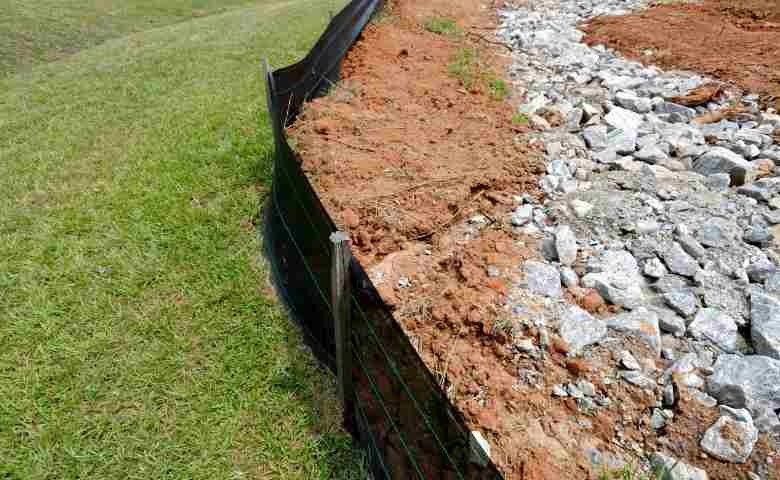
A silt fence is not a property fence. It is a temporary sediment control barrier installed around construction sites, excavation areas, and graded soil to prevent silt and sediment from washing into storm drains, streams, and neighboring properties. It is required by the Clean Water Act for any construction activity that disturbs more than one acre of soil, and by most local building codes for any project that exposes bare soil to rainfall. The fence is a length of geotextile fabric stretched between wooden or metal stakes, with the bottom of the fabric buried in a trench to create a seal against the ground. The same diligence applies when it comes to the California eviction process.
A properly installed silt fence catches sediment-laden runoff, pools the water behind the fabric, and allows the water to filter through slowly while the soil particles settle out. An improperly installed silt fence is a piece of plastic stapled to stakes that water flows under, around, or through, carrying the soil with it. The difference is the trench. The fabric must be trenched into the ground. If the bottom is not buried, the fence is decorative. Here is how to install a silt fence that passes a county inspection and actually stops sediment.
When a Silt Fence Is Required
Any construction project that disturbs soil and is within 50 feet of a waterway, drainage channel, storm drain inlet, or property line typically requires a silt fence or an equivalent sediment control measure as a condition of the building permit. The specific requirements are in the project’s erosion and sediment control plan, which is part of the permit application. The plan shows the location of the silt fence, the type of fabric, and the installation detail. Installing a silt fence that does not match the approved plan is a permit violation that can result in a stop-work order.
For residential projects including home additions, driveway installations, pool excavations, and major landscaping that exposes bare soil, the local building department will specify whether a silt fence is required and where it must be placed. The silt fence is typically installed before any grading or excavation begins and remains in place until the site is stabilized with vegetation, mulch, or gravel. Removing the silt fence before the site is stabilized is the most common violation that results in a failed final inspection.
The EPA recommends containing excavated soil during any construction project to prevent sediment and potential contaminants from leaving the work area. A silt fence is the primary method of soil containment for exterior projects.
Materials and Placement
Silt fence fabric is a woven or non-woven geotextile, typically black, sold in rolls of 100 feet in lengths of 24, 30, or 36 inches. The fabric is not landscape fabric. Landscape fabric is designed to allow water to pass through freely and will not filter sediment. Silt fence fabric is designed to slow water flow and trap soil particles. The fabric is labeled as silt fence or sediment control fabric and is sold at construction supply stores, not garden centers.
The stakes are 1-by-2 or 2-by-2 hardwood or pressure-treated wood, or 1-1/2-inch steel T-posts cut to length. The stake length is the fabric height plus 18 to 24 inches for driving into the ground. For a 36-inch fabric, the stakes are 5 to 6 feet long. Stakes are spaced 6 to 8 feet apart on level ground and 4 to 6 feet apart on slopes, where the water flow is faster and the fabric is under more stress.
The fence runs along the contour of the land, not the property line. The purpose is to intercept water flowing downhill. A silt fence that runs down a slope parallel to the water flow does nothing. The fence must be perpendicular to the direction of water flow. On a sloped site, this means the fence runs across the slope, roughly following the contour lines, turning up at the ends to prevent water from flowing around the ends. On a flat site, the fence runs around the perimeter of the disturbed area, keeping sediment inside the work zone.
Installation Steps
Dig a trench 6 to 8 inches deep along the entire fence line. The trench is on the uphill side of the fence, the side from which the water will flow. The fabric will be placed against the downhill wall of the trench, and the soil excavated from the trench will be backfilled on the uphill side to bury the bottom of the fabric. The trench is the most important part of the installation and the part most frequently done incorrectly or skipped entirely. A silt fence without a trenched bottom is not a silt fence. Water flows under the fabric and carries the sediment with it.
Drive the stakes on the downhill side of the trench. The stakes should be driven 18 to 24 inches into the ground. On hard or rocky soil, a steel T-post is easier to drive than a wood stake. The stakes should lean slightly downhill, approximately 5 to 10 degrees from vertical, to resist the pressure of water and sediment that will build up behind the fence.
Unroll the fabric along the uphill side of the stakes. The fabric must extend into the trench at the bottom and be tall enough to reach the top of the stakes. The fabric is stapled to the stakes with heavy-duty staples, at least three per stake, or attached with the wire ties provided with steel posts. The fabric should be taut but not stretched. A fabric that sags between stakes will catch debris and tear. A fabric that is over-stretched will pull the staples out when water pressure builds behind it.
Backfill the trench with the excavated soil on the uphill side of the fabric. Tamp the backfill firmly. The weight of the soil holds the bottom of the fabric in place and creates the seal that forces water to filter through the fabric instead of flowing under it. The backfilled soil should be mounded slightly above the surrounding ground level to direct water toward the fabric rather than over the top.
Join two sections of fabric by wrapping the end of one roll around a stake, pulling the next roll tight to the same stake, and stapling both layers together through the stake. Do not overlap the fabric without a shared stake. A joint between two fabric sections that is not supported by a stake will separate under water pressure.
Maintenance and Removal
A silt fence requires maintenance as long as it is in place. After each significant rainfall, inspect the fence. Remove accumulated sediment that has built up behind the fabric. If the sediment reaches one-third to one-half the height of the fence, it must be removed or the fence loses its capacity to hold additional sediment. A silt fence buried under a foot of dried mud is no longer a filter. It is a dam, and a dam that was not designed to be a dam will fail.
Check the stakes for leaning or pulling out of the ground. Restake any section where the stakes have shifted. Check the fabric for tears, sagging, or separation at the joints. Replace torn fabric. Silt fence fabric is not repair-grade. A tear reduces the filtering capacity along the entire length of the fence section because water will flow through the path of least resistance.
Remove the silt fence only after the site has been stabilized. Stabilization means the bare soil is covered with vegetation that has germinated and is actively growing, or with a layer of mulch, gravel, or sod that prevents erosion. On a construction site where a lawn is being established, the silt fence must remain in place until the grass is established enough to hold the soil, typically 4 to 8 weeks after seeding. Removing the fence before the grass is established exposes the bare soil to the next rainstorm, which undoes the purpose of the fence.
When removing the fence, pull the stakes, pull up the fabric, and fill the trench with the backfill soil. The fabric and the stakes can be reused on the next project if they are not damaged. Dispose of torn fabric. The fabric is not biodegradable and cannot be left in place as fill.
Common Mistakes That Fail an Inspection
The fabric is not trenched into the ground. The bottom of the fabric is resting on the surface with soil mounded against it. This fails because water flows under the fabric at the first rain. The inspector will check the trench by pulling up on the fabric. If it lifts free of the ground, the fence fails.
The fence runs parallel to the water flow instead of perpendicular to it. A silt fence on a slope must follow the contour of the land. A fence that runs straight down a slope channels water along the fence line instead of intercepting it. The inspector will check the fence alignment against the approved erosion control plan.
The fence is installed after the soil has already eroded. A silt fence is a preventive measure. If there is already a gully carrying sediment off the site, the silt fence must be installed uphill of the gully, not across it. A silt fence installed across an active erosion channel will be overwhelmed and destroyed by the first significant rainfall.
The stakes are spaced too far apart. A stake spacing of more than 8 feet on level ground or more than 6 feet on a slope allows the fabric to sag and the fence to fail under the weight of the water and sediment. The standard maximum spacing is 8 feet on flat ground and 6 feet on slopes.
Frequently Asked Questions
Is a silt fence better than a straw wattle for erosion control?
They serve different purposes on the same site. A silt fence is a perimeter control that surrounds the entire work area. Straw wattles are placed on slopes within the work area to slow water flow down the slope before it reaches the perimeter. A silt fence alone on a long slope may be overwhelmed by the volume and velocity of water running down the slope. Straw wattles spaced every 20 to 30 feet up the slope reduce the water velocity and allow the silt fence at the bottom to function. The combination of wattles on the slope and a silt fence at the perimeter is standard practice on graded sites with significant slope.
When do I need a reinforced silt fence instead of a standard one?
A reinforced silt fence has a wire backing, typically a welded wire mesh, attached to the downstream side of the fabric. The wire mesh supports the fabric against higher water pressure and prevents the fabric from tearing when sediment builds up behind it. A reinforced silt fence is required when the drainage area above the fence is large, more than 1/4 acre per 100 feet of fence, or when the fence is installed across a concentrated flow path such as a swale or a drainage channel. The project’s erosion control plan specifies when reinforced fence is required.
How long will a silt fence last?
The fabric degrades under UV exposure over the course of 6 to 12 months. A silt fence is designed as a temporary measure for the duration of a construction project, not a permanent installation. If the site will be disturbed for longer than a year, the fence will need to be replaced or a more durable sediment control measure such as a gravel berm or a sediment basin will need to be installed. The stakes last indefinitely if they are not broken during removal and can be reused across multiple projects.