



Just as the New Jersey Security Deposit Law safeguards landlord-tenant relationships, a sump pump maintenance checklist safeguards your basement. The weather forecast says three inches of rain tonight. You walk to the basement and stare at the sump pit. When was the last time you checked it?
A complete sump pump maintenance checklist for homeowners is not complicated. It takes about 15 minutes per season and costs less than $20 a year in supplies. The alternative is a flooded basement that costs $3,000 to $10,000 to repair — the kind of hidden liability worth checking before buying investment property in Orlando. Here is exactly what to do, and how often to do it.
Why Maintenance Matters: The Cost of Neglect
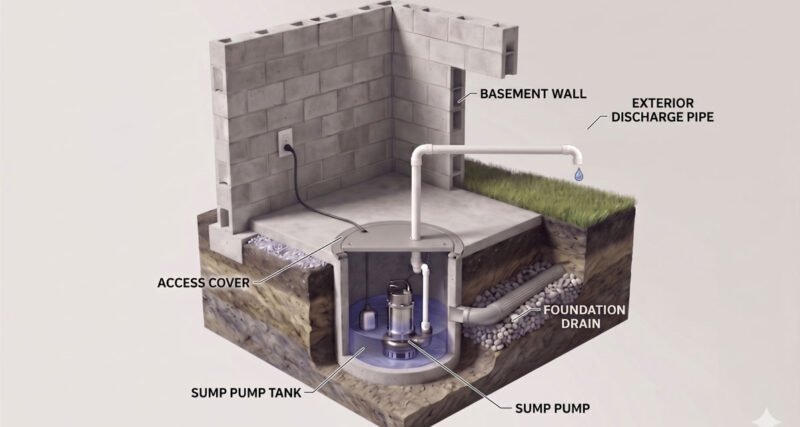
A sump pump is a mechanical device with moving parts that sit in a damp pit full of debris, silt, and small stones. It is expected to work perfectly for years with zero attention. That is not how machines work.
A new submersible sump pump costs $100 to $400. A battery backup adds $200 to $600. Annual maintenance, including a replacement check valve every five years, runs about $15 per year. Compare that to basement water damage restoration, which averages $3,000 to $10,000 per incident according to home insurance industry data. The math is not subtle.
“Sump pump maintenance — how often?”
— r/HomeMaintenance, 6 upvotes, 12 comments (2024), source
Most homeowners ask this exact question. The answer depends on the season, but the baseline is once per month during wet weather and once per quarter during dry months.
Monthly Sump Pump Checklist (5 Minutes)
A monthly check is a quick health scan. You are not disassembling anything. You are confirming five things: power is live, the pump activates, it drains properly, it sounds normal, and the discharge pipe is clear. Five tasks, five minutes.
| Task | What to Do | Pass Criteria | Fail Action |
|---|---|---|---|
| 1. Visual inspection | Look at the pump, pit, and discharge pipe | No visible leaks, rust on casing only | Rust on electrical connections = call a pro |
| 2. Pour water test | Pour a 5-gallon bucket into the pit | Pump activates within 10 seconds, drains fully, shuts off | Runs but doesn’t drain = clogged discharge; silent = dead pump |
| 3. Listen test | Stand near the pump while it runs | Quiet hum, no grinding or rattling | Grinding = debris in impeller; rattling = loose mount |
| 4. GFCI test | Press TEST then RESET on the outlet | TEST cuts power, RESET restores it | No trip = faulty GFCI, replace outlet |
| 5. Discharge check | Walk outside and check the pipe end | Water flows freely, pipe is clear | No water = blockage; frost = winterization needed |
Five tasks. Five minutes. Do this on the first weekend of every month during spring and summer. Monthly checks catch 80 percent of potential failures before they become emergencies.
Sounds familiar, doesn’t it? Most homeowners skip this step and pay for it later.
Seasonal Maintenance: Spring, Summer, Fall, Winter
Each season brings different threats to your sump pump system. Spring rains test your pump after winter dormancy. Summer storms can overwhelm an undersized unit. Fall leaves clog discharge pipes. Winter freezes block drainage entirely. Here is what to do each season.
Spring Preparation (Before Rainy Season)
Spring is when most sump pump failures happen. The ground thaws, snow melts, and spring rains arrive within weeks. If your pump survived winter without testing, now is the time to confirm it still works.
Remove the pump from the pit. Clean the intake screen with a stiff brush. Flush the pit with clean water and shop-vac out any silt at the bottom. Reinstall the pump, pour a test bucket, and confirm the discharge pipe is clear. Replace the backup battery if it is more than three years old. This takes 30 minutes once per year.
Summer Storm Season
Summer brings heavy, sudden downpours that can overwhelm an undersized pump. During storm season, check the pump after every heavy rain event, not just on your monthly schedule. Look for short-cycling, which indicates the pump is running too frequently and may be undersized.
A pump that runs every 30 seconds during a storm is working too hard. If the pit refills faster than the pump can drain it, the pump is likely undersized for the water volume entering your foundation.
Fall Maintenance
Falling leaves and autumn debris often clog outdoor discharge pipe openings. Walk the discharge line from the house to the exit point. Clear any leaves, mud, or nests from the pipe opening. Confirm the pipe slopes away from the foundation—settling soil can reverse the grade over time.
This is also the best time to replace the check valve if it has been more than five years. A failed check valve lets drained water flow back into the pit, doubling the pump’s workload all winter.
“Sump Pump Drainage Ideas”
— r/HomeMaintenance, 41 upvotes, 41 comments (2023), source
Winter Care: Frozen Pipe Prevention
A sump pump below the frost line will not freeze. The discharge pipe above ground absolutely will. A frozen discharge line is the number one cause of winter sump pump failure.
Before the first freeze, confirm the discharge pipe is pitched downward away from the house with no low spots where water can collect. Insulate any exposed pipe sections in unheated crawl spaces with foam pipe wrap. If your discharge line runs through an unheated garage or exterior wall, heat tape is a reliable solution.
A frozen pipe can be thawed with a hair dryer on the lowest setting, working from the house outward. Never use an open flame. Once thawed, check the entire pipe run and fix the drainage issue that caused the freeze.
Annual Deep Maintenance (30 Minutes)
Once per year, ideally in early spring, do the full maintenance cycle. This is the difference between a pump that lasts three years and one that lasts twelve.
Deep Cleaning Your Sump Pump — Step by Step
Unplug the pump. Disconnect the discharge pipe at the pump outlet. Lift the pump out of the pit. Remove the bottom screen or housing cover. Clean the impeller area with a stiff brush and running water. Remove any string, gravel, or debris wrapped around the impeller shaft. Reassemble, reconnect, and test with a bucket of water.
One piece of gravel caught in the impeller can reduce pumping capacity by 40 percent and draw 300 percent more current from the motor. That is the sound you hear as a grinding noise—that gravel hammering the impeller at 1750 RPM.
Check Valve Inspection and Replacement
The check valve is a one-way plastic or brass fitting in the discharge pipe. It prevents pumped water from flowing back into the pit. Test it by pouring water into the pit and watching the discharge pipe after the pump stops. If water flows backward, the check valve has failed.
Replacement costs $8 to $25 and takes ten minutes. Unscrew the old valve, install the new one with the arrow pointing away from the pump, and tighten the hose clamps. That is the entire job.
Battery Backup System Care
A battery backup pump is useless if the battery is dead. Most backup systems use deep-cycle marine or AGM batteries. Test the backup by unplugging the main pump and pouring water into the pit. The backup should activate within 15 seconds.
Replace the battery every three to five years regardless of apparent condition. A battery that holds a surface charge but drops to 11 volts under load will not last through a four-hour power outage.
When to Call a Professional
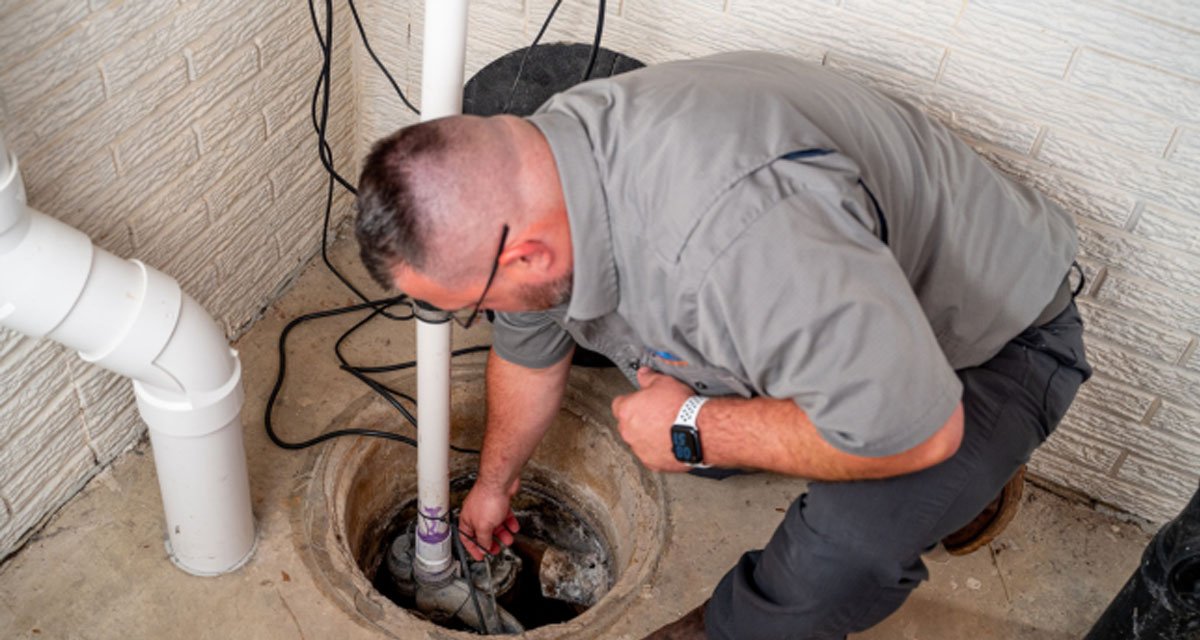
Professional sump pump inspections cost $75 to $150 and are worth it every two to three years. A pro will test the pump’s amp draw, confirm the discharge line slope, inspect the check valve, verify the backup system, and check for hidden issues like a cracked basin or failing float switch.
Call a pro immediately if the pump trips the breaker repeatedly, the motor runs but the pit never empties, or you notice a burning smell from the pump housing.
5 Signs It Is Time to Replace Your Sump Pump
A good sump pump maintenance checklist for homeowners covers more than just cleaning — it also tells you when to stop maintaining and start replacing. No pump lasts forever. These five signs mean replacement, not repair.
1. The pump is over 10 years old. Pedestal pumps last 10 to 15 years. Budget submersibles last 3 to 5. Premium submersibles last 7 to 12. Age alone is a valid reason to replace.
2. The motor runs but the pit never drains. A clogged impeller can sometimes be cleaned, but if the motor runs freely and the pump still moves no water, the impeller or volute is damaged beyond repair.
3. The pump trips the breaker every time it runs. This means the motor winding is drawing excessive current. Replace before it becomes a fire hazard.
4. Visible rust on the motor housing or power cord entry. Surface rust on the casing is cosmetic. Rust at the cord entry means moisture is inside the motor.
5. The pump runs continuously and never shuts off. This usually kills the motor within weeks. If the float switch and check valve check out fine, the pump itself is failing.
Frequently Asked Questions
How often should I maintain my sump pump?
Perform a quick check monthly during wet seasons and a full deep clean annually in early spring. Seasonal maintenance adds fall leaf clearing and winter freeze prevention.
Can I clean my sump pump myself?
Yes. Unplug the pump, remove it from the pit, clean the intake screen and impeller with a brush and water. Reinstall and test. Avoid submerging the motor or getting water inside the electrical housing.
How often should I replace the battery in my backup sump pump?
Deep-cycle batteries in sump pump backup systems should be replaced every three to five years. Test the backup monthly by unplugging the main pump and verifying the backup activates.
How often should the check valve be replaced?
Replace the check valve every five years or immediately if you notice water flowing back into the pit after the pump shuts off. The part costs $8 to $25 and takes ten minutes to install.
Do I need a professional to inspect my sump pump?
A professional inspection every two to three years is recommended. Costs range from $75 to $150 and cover amp draw testing, discharge line verification, and hidden issue detection.
What happens if my sump pump discharge pipe freezes?
A frozen discharge pipe blocks water from exiting, causing the pit to fill and potentially flood the basement. Thaw with a hair dryer on low heat working from the house outward. Insulate pipes before winter to prevent freezing.
When should I replace my sump pump instead of repairing it?
Replace if the pump is over 7 years old, the motor has failed, or repair costs exceed half the price of a comparable new pump. Minor issues like a stuck float switch or clogged intake screen are worth repairing.
How do I test my sump pump without water?
Lift the float switch manually. A working pump activates immediately when the float rises. Do not run the pump dry for more than a few seconds to avoid damaging the seals.
The Five-Minute Habit That Saves Your Basement
Pour water into the pit. Watch it drain. Listen to the hum. That is the entire monthly check and it takes less time than making coffee.
Most sump pump failures happen not because the pump was bad, but because nobody checked it between January and April. A five-minute monthly habit and a 30-minute annual cleaning turn a $100 appliance into a ten-year basement protector.
The best sump pump maintenance does not feel like maintenance. It is a quick walk to the basement with a bucket of water, a glance at the outlet, and the quiet confidence that you will not be the person standing in a flooded basement at 2 AM during the next thunderstorm.