



The garage is 28 degrees on a January morning. The car starts reluctantly. The tools are too cold to hold comfortably. The space heater you plugged in last winter added $80 to the electric bill and made a five-foot circle of lukewarm air around itself while the rest of the garage stayed cold. Heating a garage for free does not mean heating it to 70 degrees without spending money. It means capturing heat that already exists and would otherwise be wasted, and preventing the heat you do have from escaping, point out Best Orlando Property Management professionals. A garage that is 45 degrees instead of 28 degrees is a garage you can work in with a jacket on. A garage that is 55 degrees is comfortable. Neither requires a heating bill if the heat comes from the sun, from waste sources, and from the thermal mass of the building itself.
According to wikiHow’s garage heating guide, insulating the garage walls and ceiling is the first and most important step before considering any heating solution. A well-insulated garage may be comfortable enough without a heater at all. This guide covers strategies for heating a garage without paying for fuel: passive solar, waste heat capture, insulation as the foundation, and the difference between a garage that is warm for free and one that is merely less cold.
Insulation First: The Foundation of Free Heat
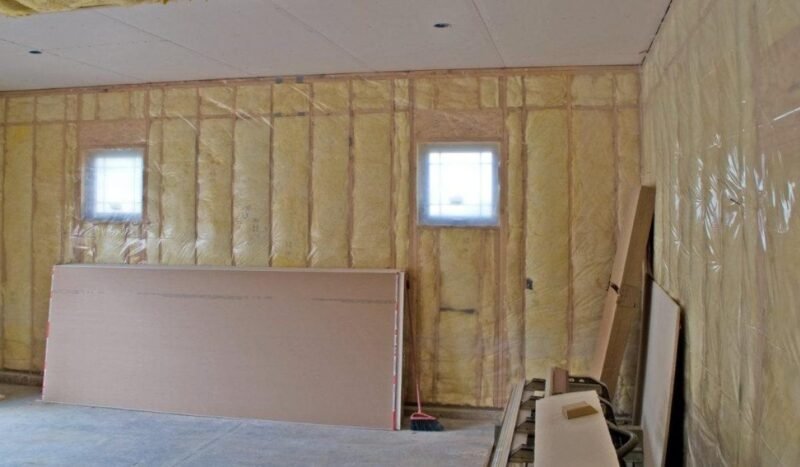
A garage cannot be heated for free if the heat escapes as fast as it arrives. An uninsulated garage loses heat through every surface. The walls, the ceiling, and the garage door are thermal holes that let heat out as quickly as the sun or waste sources can supply it. Insulation is not a heating strategy. It is the container that holds whatever heat is available. Without it, free heat is futile. The heat arrives and immediately leaves.
Insulating a two-car garage costs $550 to $1,350 in materials for DIY installation. Fiberglass batts in the walls cost $200 to $500. Batts or blown-in insulation in the ceiling cost $300 to $700. A garage door insulation kit costs $50 to $150. The insulation does not generate heat. It keeps the heat that already exists from leaving. A garage that gains 10 degrees of solar heat during the day loses it all overnight if the walls and ceiling are uninsulated. The same garage with R-13 walls and R-30 ceiling retains 5 to 8 degrees of that gain overnight. The insulation pays back not in dollars saved on a heating bill, because there is no heating bill, but in degrees of warmth retained from free sources.
Air sealing is part of insulation. The gaps around the garage door, the sill plate, and any windows or vents allow cold air in and warm air out. Weatherstrip the garage door. Caulk the gap between the bottom plate and the concrete floor. Foam-seal any penetrations where pipes or wires enter the garage. The air leaks are small individually but collectively they are the equivalent of leaving a window open year-round. Seal them. The materials cost $30 to $50.
Passive Solar: Heat From the Sun That Costs Nothing
The sun delivers roughly 1,000 watts of energy per square meter at midday. A south-facing garage wall or garage door receives hours of direct sunlight every day in winter when the sun is low in the sky. This energy is free. Capturing it requires a way to let it in and a way to store it.
If the garage has a south-facing window, open the curtains or blinds during the day. The sunlight enters and warms the air and surfaces inside the garage. Close the curtains at night to add a layer of insulation between the warm interior and the cold glass. A window that faces south is a passive solar collector that is already installed and costs nothing to operate. If the garage has no south-facing window, the garage door itself can serve as a solar collector. A dark-colored metal garage door absorbs solar radiation and conducts the heat to the interior. A light-colored door reflects the sunlight away. Painting the interior face of the garage door a dark color, or leaving the original dark metal exposed if it is not painted white, increases the solar gain. The temperature rise from a south-facing dark door on a sunny winter day is 5 to 15 degrees depending on the door size and the insulation level of the garage.
Thermal mass stores solar heat during the day and releases it at night. Concrete, brick, stone, and water absorb heat slowly and release it slowly. A concrete garage floor that receives direct sunlight through a south-facing window or door absorbs heat during the day and radiates it back into the garage for hours after the sun goes down. The floor temperature may rise only a few degrees, but a 400-square-foot concrete slab that is 5 degrees warmer than the air temperature radiates roughly 10,000 BTUs of heat back into the garage over the course of an evening. That is the equivalent of running a 1,500-watt space heater for two hours, for free. Dark-colored water barrels filled with water and placed against a south-facing interior wall serve the same purpose. The water absorbs solar heat during the day and releases it at night. Five 55-gallon drums of water can store roughly 50,000 BTUs of heat, enough to raise the temperature of a 4,000-cubic-foot garage by 4 to 5 degrees overnight.
Waste Heat: Heat You Already Paid For
The house is heated. The clothes dryer exhausts hot air outside. The refrigerator compressor runs and rejects heat from the coils. The car engine is hot after a drive. All of these sources produce heat that is currently being discarded. Capturing it requires moving it from where it is produced to where it is needed, the garage.
Dryer heat. An electric clothes dryer exhausts roughly 150 to 200 cubic feet per minute of warm, dry air at 120 to 140 degrees. This air is currently vented outside. A dryer vent diverter, a simple box with a flapper valve, redirects the dryer exhaust into the garage instead of outside during winter months. The diverter costs $15 to $30 and installs in the dryer duct in 15 minutes. It includes a lint filter to catch lint before it enters the garage air. The warm, dry air from one dryer load raises a two-car garage temperature by 3 to 5 degrees. Running the dryer with a load of towels or blankets produces the most heat because the dryer runs longer. The heat is free because the dryer was going to run anyway. The diverter simply changes the destination of the exhaust from outside to inside. Do not use a dryer vent diverter with a gas dryer. Gas dryers exhaust carbon monoxide. The diverter is safe only for electric dryers.
Car engine heat. A car engine that has been driven for 20 minutes or more contains roughly 200 to 300 pounds of cast iron and aluminum at 180 to 200 degrees. Pulling a warm car into an attached garage transfers that heat to the garage air over the next several hours. The engine block, the radiator, the exhaust system, and the transmission all radiate heat into the garage. A single warm car can raise a two-car garage temperature by 5 to 10 degrees over the course of an evening. An attached garage with a door directly into the house also allows waste heat from the house to migrate into the garage through the shared wall. The wall between the house and the garage is warm on the house side. That warmth transmits through the wall into the garage, slowly and continuously. The effect is small, a degree or two, but it is constant and free.
Appliance heat. A chest freezer in the garage rejects heat from its condenser coils into the garage air. The freezer runs more in summer, but even in winter it cycles on periodically and contributes a small amount of heat. The same is true for a second refrigerator. The heat output is small, roughly 300 to 500 BTUs per hour when running, but it runs 24 hours a day and the heat is free. Moving appliances that generate waste heat into the garage, instead of keeping them in the basement or utility room, captures that heat in the space where it is useful.
Solar Air Heater: The DIY Solar Collector
A solar air heater is a flat box mounted on a south-facing exterior wall or roof. The box has a glass or clear plastic front, a dark-colored absorber plate inside, and vents at the top and bottom that connect to the garage interior. Sunlight enters through the glass, heats the absorber plate, and warms the air inside the box. The warm air rises and enters the garage through the top vent. Cool air from the garage enters the bottom vent to replace it. The circulation is passive. No fan is required, though a small computer fan powered by a small solar panel increases airflow and heat output.
A 4-foot by 8-foot solar air heater produces roughly 4,000 to 6,000 BTUs per hour on a sunny winter day. Over a six-hour sunny period, that is 24,000 to 36,000 BTUs of free heat delivered into the garage. The materials cost $100 to $200 for plywood, rigid foam insulation, a black metal absorber plate, tempered glass or clear polycarbonate, and vent ducts. The construction takes a weekend. The heater produces heat for the life of the garage with no operating cost, no fuel, and no moving parts except possibly a small fan.
What to Expect: Realistic Temperature Gains
| Strategy | Temperature Gain | Cost | Best For |
| Insulation + air sealing only | 5-10°F | $550-1,350 | Every garage, the foundation |
| Passive solar (south-facing window or dark door) | 5-15°F on sunny days | $0-50 | Garages with south exposure |
| Dryer vent diverter (electric dryer only) | 3-5°F per load | $15-30 | Garages with an electric dryer adjacent |
| Warm car + engine heat | 5-10°F over several hours | $0 | Attached garages, driven daily |
| Solar air heater (DIY, 4×8-foot) | 10-20°F on sunny days | $100-200 | Garages with south-facing wall |
An uninsulated garage in a cold climate may be 28 degrees on a winter morning. The same garage, insulated and air-sealed, starts at 35 to 38 degrees before any heat is added. A south-facing dark garage door on a sunny day raises the interior to 45 to 50 degrees by afternoon. A warm car parked at 5 p.m. raises it to 50 to 55 degrees by evening. A dryer load run in the evening maintains the temperature into the night. The garage is not 70 degrees. It is 45 to 55 degrees, which is comfortable for working in a jacket, and it cost nothing to achieve beyond the insulation that was a one-time investment.
Frequently Asked Questions
Will a garage heated for free stay above freezing?
In most climates, yes. An insulated garage with passive solar gain and a warm car parked inside each evening will stay above freezing on all but the coldest nights. The critical threshold is whether the garage drops below 32 degrees overnight when no heat is being added. The insulation and thermal mass, the concrete floor, the stored items, the car itself, create a buffer that slows the temperature drop. An uninsulated garage drops to the outside temperature within a few hours of sunset. An insulated garage with thermal mass drops 5 to 10 degrees overnight. If the daytime high was 40 degrees, the overnight low inside the garage is 30 to 35 degrees, which is above freezing for everything except the coldest climates.
Is it safe to use a car engine or dryer for garage heat?
A warm car parked in an attached garage with the engine off is safe. The heat is residual heat from the engine block and exhaust system radiating into the garage. Never run a car inside a garage for heating. Carbon monoxide from the exhaust is lethal in an enclosed space. A dryer vent diverter is safe only for electric dryers. Gas dryers produce carbon monoxide and must be vented outside. The dryer vent diverter box is labeled for electric dryers only. Using one with a gas dryer can cause carbon monoxide poisoning. Never use a gas stove, oven, or grill as a garage heater. The carbon monoxide is odorless, colorless, and fatal.
The Warm Garage That Costs Nothing to Heat
A garage heated for free is not warm in the way a living room is warm. It is less cold. The insulation holds the baseline temperature 5 to 10 degrees above the outside air. The sun through a south-facing door or a solar air heater adds another 10 to 15 degrees on sunny days. The car engine adds 5 to 10 degrees in the evening. The dryer adds a few degrees per load. The garage settles at 45 to 55 degrees on a winter day when the outside air is 25 degrees. That is a garage you can work in. That is a garage where the tools are not painful to touch. That is a garage that costs nothing to heat because the heat was already there, in the sun, in the car, in the dryer exhaust. The only cost was the insulation, which is a one-time investment that pays back in degrees of warmth every winter for the life of the garage.