



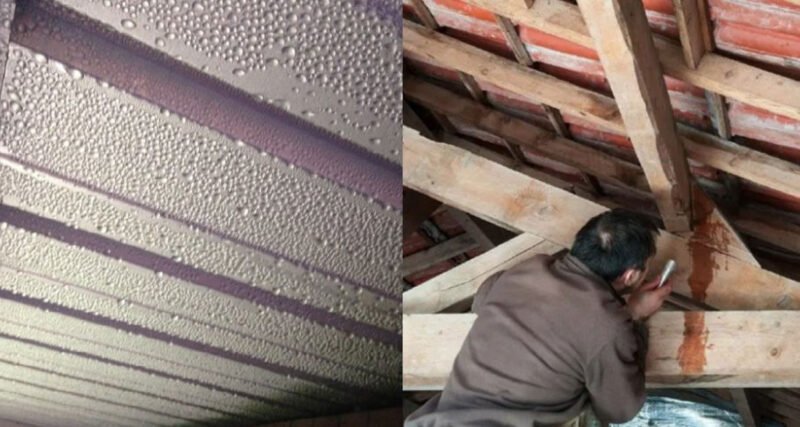
Condensation inside a polycarbonate roof is one of those problems that catches a lot of people off guard. The roof looks perfectly fitted, there are no obvious gaps, and yet moisture still builds up on the inside of the sheets. It’s frustrating, and without the right fix it can lead to drips, streaks and damp patches on whatever sits below.
Why Condensation Forms Inside Polycarbonate Sheets
Polycarbonate roofing sheets are hollow. Whether you’re using a triplewall or a 7-wall structure, the internal flutes run the length of the sheet and create small air pockets between the layers. That’s what gives the sheet its insulating properties. But those same internal channels can trap moisture if the open ends of the flutes aren’t properly sealed.
Warm, moist air from inside a building or from rainfall can enter the flutes through the open ends of the sheet. Once inside, the air cools and the moisture condenses on the inner walls of the channels. The result is water you can see but can’t easily reach. It tends to sit there and move around as the sheet expands and contracts with temperature changes.
It’s worth noting that some degree of condensation is almost impossible to eliminate entirely in a British climate. But the amount of moisture that gets in can be drastically reduced with the right installation approach.
What Breather Tape and Solid End Tape Actually Do
This is where most condensation problems start: the ends of the sheets are left open, or the wrong type of tape is used at each end. The two tapes serve different purposes and each one goes at a specific end.
Solid roofing tape is applied to the top end of the sheet, which is the end that sits closest to the wall or higher structure. It creates a completely sealed closure that stops water from running back up into the flutes from above. Because this end is protected by the wall or flashing above it, it doesn’t need to allow any airflow.
Breather tape goes on the lower, open end of the sheet. It’s a microporous tape that blocks insects, dust and debris from entering the flutes while still allowing air to move in and out. That airflow is important because it lets any moisture that does get in evaporate out again over time, rather than pooling inside the sheet permanently.
If you order a clear polycarbonate multiwall sheet cut to size, both tapes are usually applied before dispatch. If you’re buying in standard sheet sizes and cutting on site, you’ll need to apply them yourself during installation.
Ventilation and How It Affects Moisture Build-Up
Beyond the tape, ventilation in the space below the roof plays a significant role. A lean-to extension or conservatory that’s poorly ventilated will build up humid air, especially in winter when windows stay shut and heating is on. That warm, moist air rises and contacts the cooler underside of the polycarbonate, which causes surface condensation on the inside face of the sheet rather than inside the flutes.
This is a different problem to internal flute moisture, though the two can occur at the same time. Surface condensation can be reduced by improving airflow in the room, using a dehumidifier during colder months, or ensuring trickle vents are not blocked.
Installation Mistakes That Make Condensation Worse
A few common installation errors tend to make the problem significantly worse:
- Fitting the sheet with the flutes running horizontally rather than vertically, which prevents moisture from draining out
- Applying solid tape at the bottom end instead of breather tape, trapping moisture with nowhere to escape
- Leaving both ends of the sheet completely open, which allows unrestricted airflow and moisture entry
- Using general-purpose tape instead of the correct microporous breather tape
- Cutting sheets to size without resealing the open flute ends afterwards
The flutes must always run vertically from top to bottom on a pitched roof. This is both a structural requirement and a practical one, since it allows any water that does get inside the channels to drain out at the lower end through the breather tape rather than collecting in pools.
Checking the UV-Protected Side Faces Upwards
This one sounds basic, but it’s easy to get wrong on site. Polycarbonate roofing sheets have a UV-protective coating on one side only, and it should always face upwards towards the sun.
The UV layer is usually labelled on the protective film that comes with the sheet. Installing it the wrong way round won’t cause immediate condensation, but it will lead to long-term degradation of the sheet, which can affect how it seals and performs over time.
At the End of the Day…
Condensation inside a polycarbonate roof usually comes down to two things: open flute ends and inadequate ventilation. Fitting solid tape at the top, breather tape at the bottom, and making sure the flutes run vertically will solve the majority of cases.
If moisture is forming on the interior surface of the sheet rather than inside the channels, look at how much humid air is building up in the space below and tackle that side of the problem separately.