

An air conditioner that trips the circuit breaker is an air conditioner with an electrical problem. The breaker is a safety device designed to cut power when the current flowing through the circuit exceeds the breaker’s rating. A breaker that trips once may have been triggered by a momentary power surge or a transient condition. Reset it. A breaker that trips again, immediately or after the AC runs for a while, means the AC is drawing more current than the circuit can safely supply, or there is a short circuit that dumps current directly to ground. The breaker is doing its job. Resetting it repeatedly without finding the cause stresses the breaker, the wiring, and the AC components, and can eventually cause a fire.
The difference between a breaker that trips immediately when the AC tries to start, and one that trips after the AC has been running for a while, narrows the diagnosis significantly. An immediate trip indicates a short circuit, a grounded compressor, or a locked-rotor condition where the compressor cannot turn. The current spikes instantly to several times the normal running current. A delayed trip, after minutes or hours of operation, indicates that the AC is drawing more current than normal over time. The compressor is working harder than it should, usually because the condenser coil is dirty and cannot reject heat, or because the compressor itself is wearing out and drawing higher current as it degrades. The timing of the trip tells you what kind of problem you are looking for.
EPA WaterSense advises that properly maintained appliances operate more efficiently and safely. An AC that is tripping the breaker is not safe to operate until the cause is identified and corrected.
Immediate Trip: Short Circuit or Locked Compressor
A breaker that trips the instant the AC tries to start, the outdoor unit hums for a split second and then the breaker trips, is a short circuit or a locked compressor. The current draw spikes to the maximum the circuit can deliver before the breaker opens. This is an electrical emergency. Do not reset the breaker and try again. Each trip stresses the breaker contacts and the compressor windings. The breaker is rated for a limited number of fault interruptions. Exceeding that rating can cause the breaker to fail to trip when it should, a condition that leads to fires.
The most common cause of an immediate trip is a shorted or grounded compressor. The compressor motor windings have failed and are in contact with the compressor housing or with each other. The failure is internal to the compressor. It cannot be repaired. The compressor must be replaced, or the entire condensing unit must be replaced. A compressor that has shorted to ground can be confirmed by a technician with a megohmmeter, which measures the insulation resistance of the motor windings to ground. A reading of zero or near zero confirms the short. The repair cost is $1,500 to $3,500 for a compressor replacement, or $3,000 to $6,000 for a complete condensing unit replacement.
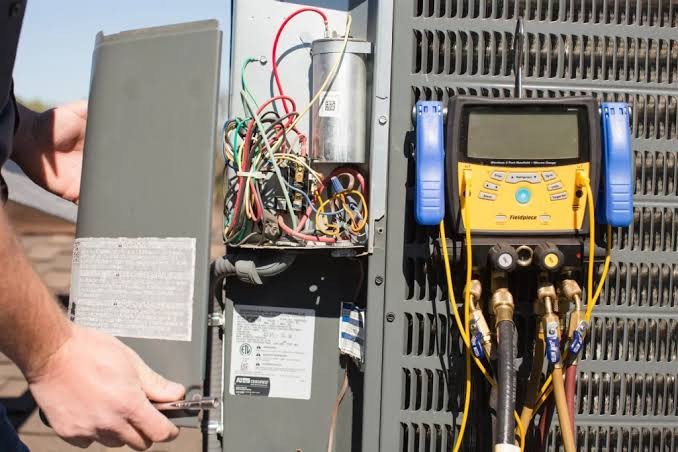
A failed capacitor can also cause an immediate trip if it has shorted internally. A capacitor that has shorted draws a massive current surge when the contactor closes. The breaker trips immediately. A shorted capacitor should be replaced by a technician. The part costs $20 to $50. The labor costs $150 to $300. Do not attempt to test or replace a capacitor yourself unless you are trained in safely discharging capacitors. A capacitor stores electricity and can deliver a dangerous or fatal shock even when the power is off.
A wiring fault, a bare wire touching the cabinet or another wire, can cause an immediate trip. The fault may be in the outdoor unit, in the disconnect box, or in the wiring between the breaker panel and the unit. A visual inspection of the wiring in the outdoor unit, with the power off at the breaker, may reveal a burned or chafed wire. If the wiring inside the unit looks intact, the fault may be in the wall or underground, and a technician or an electrician is needed to locate it.
Delayed Trip: Overcurrent From Dirty Coil or Failing Compressor
A breaker that trips after the AC has been running for a while, minutes or hours, indicates that the compressor is drawing more current than normal due to an increased mechanical load or an electrical degradation. The most common cause is a dirty condenser coil. The outdoor coil is packed with dirt and debris. It cannot reject heat efficiently. The compressor works against a higher pressure, called the head pressure, and draws more current. The longer it runs, the hotter it gets, and the more current it draws, until the breaker trips.
Clean the condenser coil. Turn off power at the disconnect switch. Remove debris from around the unit. Spray the coil from the inside out with a garden hose. Let the unit dry. Restore power. Run the AC and check whether the breaker still trips. A clean coil often reduces the current draw enough to stop the tripping. This is the only cause of a delayed breaker trip that a homeowner can fix without calling a technician.
If the coil is clean and the breaker still trips, the compressor may be wearing out. As a compressor ages, the internal bearings wear, the valves degrade, and the motor windings deteriorate. The compressor draws more current to do the same amount of work. The increase is gradual over years, until it reaches the point where the breaker trips. A worn compressor can be confirmed by a technician measuring the running current and comparing it to the manufacturer’s specification, found on the unit’s data plate. A compressor drawing significantly more than its rated load amps, RLA, is failing. The fix is compressor or condensing unit replacement.
The Breaker or Wiring Could Be the Problem
Circuit breakers can fail. A breaker that has tripped many times wears out internally and may trip at a lower current than its rating. The breaker becomes overly sensitive. A technician or an electrician can test the breaker by measuring the actual current draw of the AC and comparing it to the breaker’s trip curve. If the current is within the breaker’s rating and the breaker still trips, replace the breaker. A replacement breaker costs $10 to $30. The labor to replace it costs $100 to $200 if done by an electrician.
Loose electrical connections increase resistance. The increased resistance generates heat. The heat causes the connection to loosen further, creating a cycle that ends with the connection burning open or the breaker tripping from the heat. Loose connections are most common at the breaker terminals in the panel, at the disconnect switch, and at the contactor in the outdoor unit. A technician can check and tighten all connections as part of diagnosing the tripping problem.
Frequently Asked Questions
How many times can I reset the breaker before calling a technician?
Reset it once. If it trips again, do not reset it again. The breaker is telling you there is a problem. Resetting it repeatedly can damage the AC, the wiring, and the breaker itself. A breaker that is reset multiple times into a fault can fail to trip on a subsequent fault, turning a safety device into a fire hazard. One reset. Then diagnose or call a technician.
Why does my AC only trip the breaker on hot days?
The outdoor temperature is higher, so the condenser coil has a harder time rejecting heat. The head pressure is higher. The compressor draws more current. If the system is marginal, dirty coil, slightly overcharged, aging compressor, the additional current on a hot day pushes it over the breaker’s trip point. The same system on a mild day draws less current and does not trip. Clean the condenser coil first. If the tripping continues, have the system’s current draw measured on a hot day to determine whether the compressor is drawing more than its rated current.
Can other devices on the same breaker cause the trip?
An AC should be on a dedicated circuit, a breaker that serves nothing else. If the AC shares a circuit with other loads, lights, outlets, or appliances, the combined current draw of all devices may exceed the breaker rating when the AC starts. Check your electrical panel. The AC breaker should be labeled and should serve only the AC. If other devices are on the same circuit, an electrician should install a dedicated circuit for the AC.
The Bottom Line
An AC tripping the breaker has an electrical problem. An immediate trip is a short circuit, a grounded compressor, or a failed capacitor. It requires a technician and should not be reset. A delayed trip is an overcurrent condition caused by a dirty condenser coil, a failing compressor, or a weak breaker. Clean the coil first. If the tripping continues, call a technician to measure the current draw and diagnose the compressor and the electrical components. Reset the breaker once. If it trips again, do not reset it. The breaker is protecting your house from an electrical fire. Let it do its job. Find the problem. Fix it. Then reset it.