


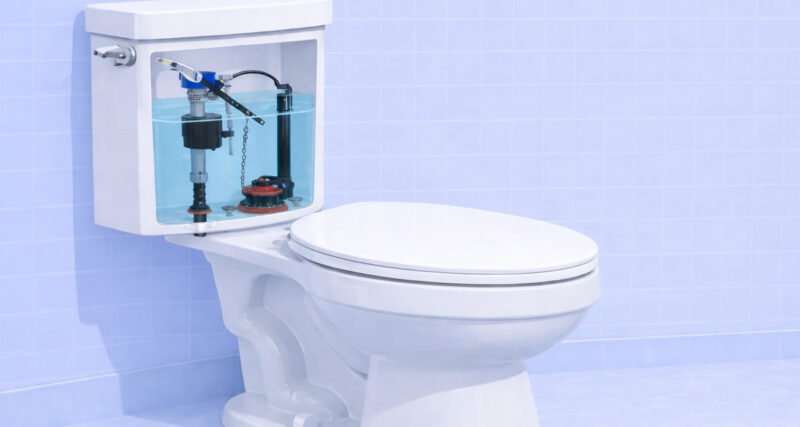
If you have been asking yourself why does my toilet keep running, the answer is almost always a worn-out flapper, observes Bartsch Management. The rubber seal at the bottom of the tank warps over time, lets water sneak into the bowl, and tricks the fill valve into cycling on and off, sometimes every few minutes. The fix costs about $5 and takes less than 15 minutes.
That quiet hiss you hear between flushes is not just annoying. A running toilet can dump 200 gallons down the drain every day. Over a month, that’s enough water to fill a small swimming pool. Your water bill feels it long before you see a puddle on the floor.
Most running toilets come down to six mechanical failures inside the tank. None of them require a plumber to diagnose. A screwdriver, a pair of hands, and ten minutes of your time will cover the vast majority of cases.
How a Toilet Tank Actually Works (60 Seconds of Physics)
A toilet tank has exactly three moving parts: the flapper, the fill valve, and the float. When you understand what each one does during a normal flush, spotting the broken one becomes obvious. Here is what happens when you press the handle:
The chain lifts the flapper. Water rushes from the tank through the flush valve into the bowl. The flapper drops back down when the tank empties. The fill valve opens to refill the tank. A float rises with the water level. Once the float hits the shutoff point, the fill valve closes. Silence.
A running toilet means something broke that sequence. Water keeps leaving the tank when it should not, so the fill valve keeps refilling. The trick is finding where the leak is.
6 Reasons Your Toilet Keeps Running (and How to Fix Each One)
Every running toilet is caused by water escaping from the tank when it should not be. The leak triggers the fill valve to refill, and the cycle repeats. These six failures account for virtually every case, and each one has a straightforward DIY fix.
1. Worn-Out Flapper — The Usual Suspect
The flapper is a rubber disc at the bottom of the tank. Every flush flexes it. Over time, chlorine in tap water hardens the rubber. It stops forming a tight seal against the flush valve seat. Water trickles through the gap, and the fill valve cycles to top off the tank. You hear it kick on for 10 seconds, then go quiet, then kick on again.
A flapper that looks fine can still leak. The test: put a few drops of food coloring in the tank, wait 20 minutes without flushing. If color shows up in the bowl, the flapper is the leak. Replacements are universal or brand-specific, costing $5 to $15. Bring the old one to the hardware store to match the size and hinge type.
To replace it: turn off the water at the wall valve, flush to empty the tank, unhook the old flapper from its pegs and chain, snap the new one in place, reconnect the chain with about half an inch of slack. Turn the water back on. That solves roughly 90% of running toilet cases.
2. Faulty Fill Valve — The Phantom Refiller
The fill valve is the tall column on the left side of the tank. When debris or mineral sediment gets inside, the valve cannot seal completely. Water seeps through even after the float has reached its stop point. You hear a constant low hiss, or the valve cycles on briefly without anyone flushing.
Start with a cleaning before replacing. Turn off the water, pop the cap off the fill valve, and hold a cup over it while a helper turns the water back on for five seconds. The blast flushes out grit. Replace the cap and test. If the hiss continues, a new fill valve costs $10 to $25 and swaps out with basic hand tools in 20 minutes.
3. Float Set Too High — The Silent Overflow
Near the center of the tank is an open vertical pipe: the overflow tube. If the water level climbs above the top of this tube, water pours directly into the bowl continuously. The fill valve never shuts off because the tank never reaches the shutoff point. You may not hear it happening. The only clue is a toilet that never goes fully quiet.
Check the water line. It should sit about an inch below the top of the overflow tube. If it is higher, adjust the float. On older ball-and-arm setups, turn the adjustment screw clockwise. On newer float-cup designs, pinch the clip and slide it down. Five seconds of adjustment can stop a leak dumping thousands of gallons a month.
4. Tangled or Too-Short Chain
The chain connects the flush handle to the flapper. If it is too tight, the flapper cannot sit flat against the valve seat after a flush. If it is too loose, it can slip under the flapper and hold it open. Either way, water keeps flowing.
After a flush, lift the tank lid and watch. The flapper should drop cleanly and seal without the chain pulling it sideways. You want roughly half an inch of slack. If the chain has kinked links, replace it entirely. A new chain costs about $3.
5. Dirty or Damaged Flush Valve Seat
The flush valve seat is the circular rim where the flapper rests. In homes with hard water, mineral buildup collects on this rim. Even a brand-new flapper will not seal against a crusty seat. The leak continues and the homeowner (understandably) assumes the flapper was not the problem.
Turn off the water, lift the flapper, and run your finger around the seat. If it feels rough or gritty, scrub it gently with a soft scouring pad or fine steel wool. Do not use anything abrasive enough to gouge the plastic. Wipe the rim clean, drop the flapper back down, and test.
6. Cracked Overflow Tube or Flush Valve Gasket
Less common but harder to spot. If the overflow tube itself develops a crack below the water line, water leaks into the bowl below the flapper entirely. The dye test will show color in the bowl, but the flapper looks perfect. If the flush valve gasket cracks, water can leak between the tank and the bowl, sometimes pooling at the base of the toilet.
Both repairs involve removing the tank from the bowl. If you are comfortable shutting off the water, draining the tank, and unbolting it, replacement gaskets cost around $10. Otherwise, this is the point where calling a plumber is reasonable. The labor runs $75 to $200 depending on your area.
How Much Water (and Money) a Running Toilet Wastes
A slow leak and a wide-open fill valve waste dramatically different amounts. Here is what each type costs, based on U.S. average water rates of $0.005 per gallon:
| Leak Type | Gallons per Day | Gallons per Month | Monthly Cost | Yearly Cost |
|---|---|---|---|---|
| Silent leak (flapper seep) | 30–50 | 900–1,500 | $4.50–$7.50 | $54–$90 |
| Audible trickle (partial seal) | 100–250 | 3,000–7,500 | $15–$37 | $180–$450 |
| Constant run (fill valve stuck) | 2,000–4,000 | 60,000–120,000 | $300–$600 | $3,600–$7,200 |
| Overflow tube spillover | 500–1,500 | 15,000–45,000 | $75–$225 | $900–$2,700 |
Even the smallest leak wastes more water than most people use for drinking and cooking in a month. The EPA estimates that household leaks nationwide waste nearly 1 trillion gallons of water annually. A single running toilet in your house is a meaningful slice of that number.
Quick Diagnostic Checklist (Pinpoint the Problem in 10 Minutes)
Before spending a dollar on parts, run through these four tests in order. Each one rules out or confirms a specific component, so by the end you will know exactly what needs to be replaced without any guesswork.
- The dye test. Drop food coloring into the tank. Wait 20 minutes. Color in the bowl means the flapper or flush valve seat is leaking.
- The water line check. Is the standing water level at or above the overflow tube opening? If yes, lower the float.
- The sound test. A constant hiss points to the fill valve. Intermittent cycling points to a slow flapper leak. A sudden loud refill followed by silence then another refill suggests the chain is catching.
- The chain watch. Flush and observe. Does the chain go taut? Does the flapper settle crooked? Does anything look caught or twisted?
By the end of these four checks, nine out of ten running toilets will have revealed their problem. The fix is almost always a single trip to the hardware store.
When to DIY vs. When to Call a Plumber
Flapper replacement, float adjustment, chain fixes, and fill valve cleaning are all firmly in DIY territory. No special tools. No risk of flooding. Parts are under $25.
Replacing the fill valve or the flush valve gasket is intermediate. You need to disconnect the water supply line and possibly remove the tank. Most people can handle this with a YouTube tutorial and a wrench. Budget an hour.
A cracked toilet tank, a leaking seal at the floor flange, or water damage around the base of the toilet are plumber calls. The risk of getting it wrong is a bathroom floor replacement, which costs far more than the $150 to $300 service call.
“Constantly running toilet. What do I Do? What should I look for? I have no clue.”
— Reddit user, r/fixit, 10+ comments (2018), source
That post is from someone who had never opened a toilet tank before. The top comment walked them through the flapper replacement, and the problem was solved. This is overwhelmingly the experience most people have. The parts are simple. The mechanism has barely changed in 60 years.
How to Prevent a Running Toilet Before It Starts
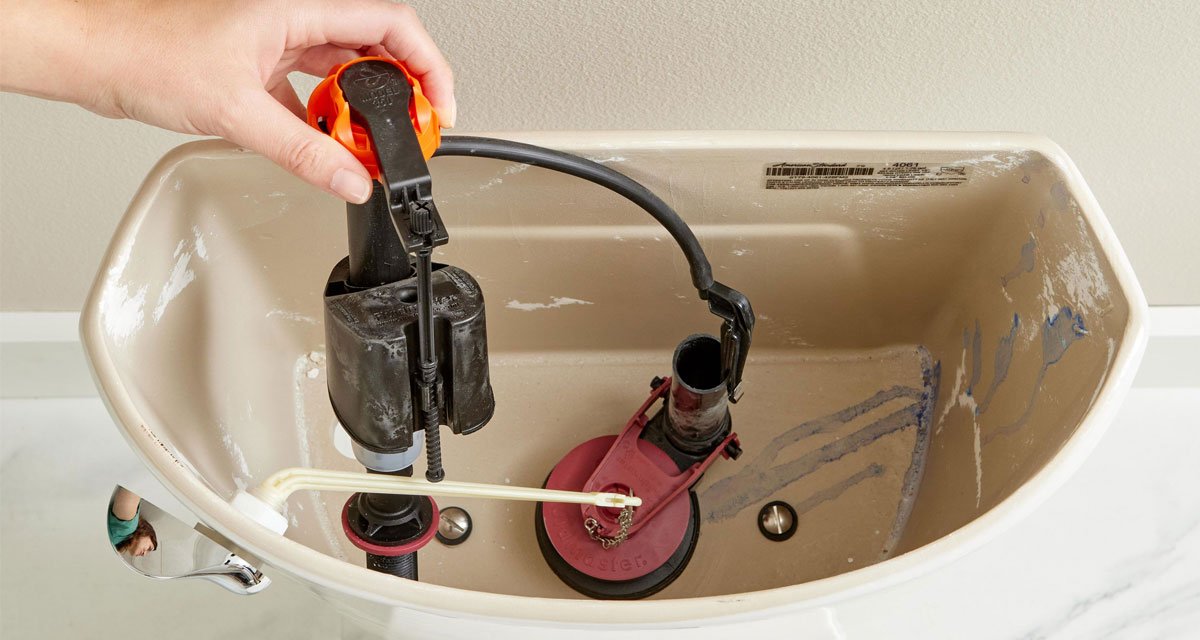
The best running toilet fix is the one you never need to make. A five-minute annual inspection of the parts inside the tank catches flappers before they warp, catches floats before they drift, and keeps a $5 part from turning into a $200 water bill surprise.
Inspect the flapper once a year. Touch the rubber. If it feels stiff, chalky, or slimy rather than pliable, replace it preemptively. The $5 part saves you from discovering the problem through a $200 water bill. Avoid dropping bleach tablets into the tank. They eat rubber seals from the inside out and are the single most common cause of premature flapper failure reported by plumbers.
If your home has hard water, clean the flush valve seat once a year with a soft pad. A minute of scrubbing prevents months of slow leakage. Keep water pressure between 40 and 60 psi. Higher pressure stresses every seal in the tank. A $10 pressure gauge on a hose bib tells you where you stand.
Frequently Asked Questions
How can you fix a toilet that keeps running?
Start with the flapper. In roughly 90% of cases, replacing the rubber flapper at the bottom of the tank stops the leak. Turn off the water, flush to drain the tank, unhook the old flapper, snap in a new one, and reconnect the chain with slight slack. If that does not work, check the float height, clean the fill valve, and inspect the chain and valve seat. Most fixes take under 30 minutes and cost less than $20 in parts.
Why does my toilet keep running — what is the single most common reason?
A worn-out or warped flapper. The rubber seal degrades over time from chlorine and mineral exposure, preventing it from forming a watertight seal against the flush valve seat. Water seeps into the bowl, the fill valve activates to refill the tank, and the cycle repeats endlessly.
What happens if I ignore a running toilet?
Your water bill climbs. A moderate leak wastes 100 to 250 gallons per day, adding $15 to $37 to your monthly bill. A severe leak can waste over 4,000 gallons per day and cost hundreds of dollars monthly. Beyond the money, continuous water flow through the tank accelerates wear on the fill valve, the flapper, and the flush valve gasket. The $5 fix you skip today becomes a $200 repair later.
Why does my toilet run when no one is using it?
This is a phantom flush. Water is escaping from the tank into the bowl through a slow leak, typically at the flapper. When enough water drains out, the float drops and triggers the fill valve to refill. You hear it run for a few seconds then stop. The food coloring test will confirm it. Put dye in the tank, do not flush, and check the bowl 20 minutes later for color.
How much does it cost to fix a running toilet?
DIY flapper replacement: $5 to $15. DIY fill valve replacement: $10 to $25. Full internal rebuild kit (flapper, fill valve, gasket, bolts): $20 to $35. Professional plumber visit: $75 to $200 for basic repairs, $250 to $450 if the toilet needs to be pulled and reset. The parts are cheap. Labor is what you are paying for when you call a plumber.
Can a running toilet really increase my water bill that much?
Yes, dramatically. According to the EPA’s WaterSense program, a running toilet can waste 200 gallons per day or more. At the national average water rate, that is roughly $36 per month for a moderate leak and over $300 per month for a fill valve that is stuck open. Many homeowners discover the problem only when their quarterly water bill arrives at double or triple the normal amount.
Fix the leak today. The parts are at every hardware store. The fix takes less time than reading about it. The quiet afterward is genuinely satisfying.