



The color of a garage gym matters more than the color of a living room. In a living room, the wrong color is an aesthetic problem. In a garage gym, the wrong color makes the space feel smaller, darker, and harder to train in, say BHB Real Estate professionals. A garage already has low natural light, a concrete floor, and a 7-foot overhead door that dominates one wall. The paint color has to work with those constraints, not against them. It has to make the space feel bigger, brighter, and more energizing without creating glare or visual fatigue during a workout.
The right garage gym color does four things: it reflects as much light as possible from the limited fixtures in the ceiling, it provides enough contrast with the floor and the equipment that you can see what you are doing, it sets the psychological tone for the type of training you do, and it hides the inevitable scuffs, chalk dust, and sweat marks that accumulate on garage walls. Here are the colors that work, the ones that do not, and how to combine them.
The Best Wall Colors for a Garage Gym
White and off-white are the first choice for a reason. A garage has one or two small windows and whatever light fixtures you have installed. White walls reflect 80 to 90 percent of the available light. A 60-watt-equivalent LED bulb in a white room effectively delivers more light to your eyes than the same bulb in a gray or beige room. More light means you can see the knurling on a barbell, the numbers on a dumbbell, and your own form in the mirror without adding more fixtures. The trade-off is that white shows every scuff, every chalk handprint, and every splash of sweat. Flat white paint hides wall imperfections but stains easily. Semi-gloss white wipes clean but highlights every bump in the drywall. Eggshell or satin white splits the difference and is the practical sheen for a gym wall.
Light gray is the second choice. Gray reflects 50 to 70 percent of light and hides scuffs and chalk dust better than white. A light gray wall with white trim and a white ceiling creates a clean, industrial look that suits a garage gym without feeling like a hospital room. Warm grays with a hint of beige or taupe feel more inviting than cool grays with a blue undertone, which can make a garage feel cold in winter. A light gray with a light reflectance value, or LRV, above 60 is the target. The LRV is printed on the paint can label or the color swatch. Above 60 is bright. Below 50 starts to feel dim in a garage.
Light blue-gray is an option for a garage gym that doubles as a yoga or stretching space. Blue is psychologically calming, which is the wrong tone for heavy deadlifts but the right tone for mobility work and cooldowns. A pale blue-gray with an LRV above 60 brightens the space while providing a subtle color that white and gray do not. Avoid saturated blues that absorb light and make the garage feel smaller.
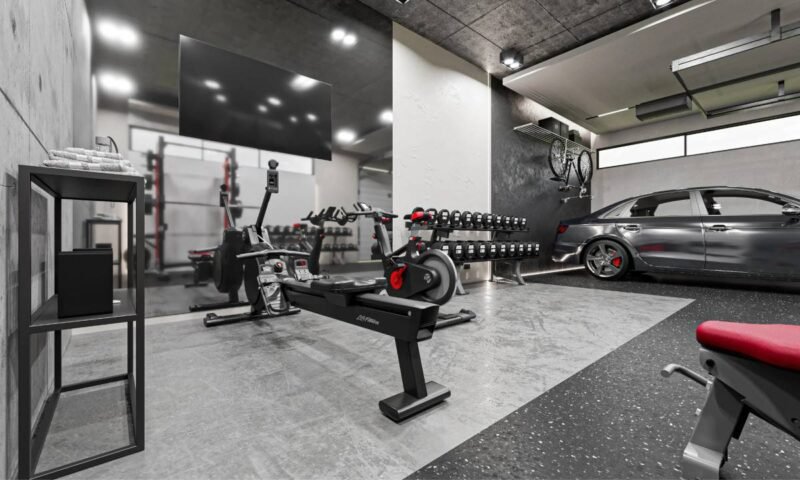
Dark accent walls are appropriate on the wall behind the squat rack or the deadlift platform. A dark charcoal or matte black accent wall frames the main training area, creates contrast that helps you focus on the equipment, and hides scuffs from barbells leaning against the wall. An accent wall should be the wall you face when you train, not the wall behind you. A dark wall behind you absorbs light and makes the room feel like it is closing in. A dark wall in front of you creates depth. One dark accent wall is a design choice. Four dark walls in a garage with no windows is a cave.
Colors to Avoid in a Garage Gym
Dark colors on all four walls. A garage already has limited natural light. Painting the walls charcoal, navy, forest green, or burgundy absorbs 80 to 90 percent of the available light. The space feels smaller, the ceiling feels lower, and the lighting you installed that was adequate with white walls is now insufficient. You will strain to see your equipment and your form. If you want a dark gym aesthetic, use dark colors on the floor, the equipment, or an accent wall, not on all four walls.
Bright, saturated reds and oranges. Red increases heart rate and perceived exertion. In a gym, that is either motivating or overwhelming depending on the intensity of the color and the duration of the workout. A bright red wall in a garage gym where you train for 90 minutes feels aggressive at first and exhausting by the end. A muted brick red or a rust-colored accent wall is a safer way to incorporate red without overwhelming the space.
High-gloss paint on the walls. Gloss reflects light directly into your eyes when you are lying on a bench or on the floor. A glossy ceiling or glossy walls create glare that is distracting and uncomfortable. Semi-gloss is appropriate for trim and doors. Eggshell or satin is appropriate for walls. Flat is appropriate for the ceiling.
The EPA notes that paints, varnishes, and solvents emit volatile organic compounds that can persist at elevated concentrations indoors during and after painting. For a garage gym where you will be breathing heavily during workouts, choose a low-VOC or zero-VOC paint and ventilate the space aggressively during application and for 48 to 72 hours afterward. The EPA’s guide to VOCs and indoor air quality recommends increasing ventilation and using products according to manufacturer directions to reduce exposure.
Ceiling and Floor Colors
The ceiling should be flat white regardless of the wall color. A white ceiling reflects light downward and makes the ceiling feel higher. A ceiling painted the same color as the walls lowers the perceived ceiling height, which in a garage with an 8-foot or 9-foot ceiling is already low enough that overhead pressing movements come close to the drywall. Flat sheen hides imperfections in the ceiling drywall and does not create glare when you are lying on a bench.
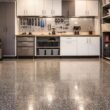
The floor color is determined by the flooring material, not by paint. Black or dark gray rubber gym mats are the standard for a reason. They absorb impact, provide traction, and hide dirt, chalk, and sweat. Lighter-colored flooring shows every footprint and every drop of sweat. If the garage floor is epoxy-coated or polished concrete, a medium gray with color flakes hides dirt and provides a neutral base that works with any wall color. Avoid glossy floor coatings, which become slippery when wet with sweat.
Color Combinations That Work
A white ceiling, light gray walls, and a charcoal accent wall behind the rack is the standard. It is clean, bright, and practical. A white ceiling, off-white walls, and black rubber flooring is the minimalist approach. The contrast between the walls and the floor defines the space without any color at all. A white ceiling, light blue-gray walls, and a navy accent wall with natural wood shelving creates a calmer, more residential feel that works for a garage gym used for yoga and bodyweight training as much as for lifting. A white ceiling, warm beige walls, and dark green accent wall with black rubber flooring adds warmth and color without sacrificing brightness. The warm beige reflects more light than gray and makes a cold garage feel slightly warmer in winter.
Common Mistakes When Painting a Garage Gym
Painting before installing adequate lighting. The color looks different under the single bare bulb in the ceiling than it does under the six LED panels you will eventually install. Install the lighting first or at least hold the color swatches under the type of light you will use. LED bulbs at 4000K color temperature, which is cool white, render colors more accurately than warm white 2700K bulbs and are the better choice for a gym.
Using leftover house paint from a bedroom or living room project. Interior wall paint is designed for living spaces, not for a garage that experiences temperature swings, humidity from vehicle exhaust, and impact from gym equipment. A garage gym wall should be painted with an acrylic latex paint rated for interior use on drywall. The same paint that works in a bedroom works in a garage gym. The difference is the sheen and the color, not the paint chemistry.
Ignoring the overhead door. The garage door is the largest single surface in the room. If it is a white insulated door, it already matches a white or light-colored wall scheme. If it is a bare aluminum door or a wood-grained door, paint it. A painted garage door that matches the walls visually integrates the door into the room. An unpainted door that contrasts with the walls dominates the space and reminds you that you are training in a garage, not a gym.
Frequently Asked Questions
Is an all-white garage gym too boring?
An all-white garage gym is bright, functional, and the easiest color scheme to execute. It is not boring if the equipment, the flooring, and the storage provide visual interest. Black rubber flooring, a black squat rack, colored bumper plates, and a flag or a banner on the wall add color without paint. An all-white room with black equipment and a few well-placed accents is a cohesive design, not a boring one.
Does paint type matter if the garage is not climate controlled?
Standard interior latex paint is adequate for a garage that is not heated or cooled. The paint does not know what temperature the room is after it cures. The temperature during application is what matters. Paint must be applied when the air and the wall surface are within the temperature range on the can, typically 50 to 90 degrees Fahrenheit. Painting a garage in winter when the walls are cold causes the paint to cure improperly, resulting in poor adhesion and an uneven finish.
Can I paint a garage gym in one day?
Yes, with preparation the night before. Tape the edges, cover the floor, and move the equipment away from the walls the evening before. Paint the ceiling first, then the walls, then the trim. A two-car garage takes 4 to 6 hours to paint with a roller and a brush. The paint dries to the touch in 1 to 2 hours, but the garage should not be used for a workout for at least 24 hours to allow the paint to cure enough to resist scuffing from equipment and sweat.