




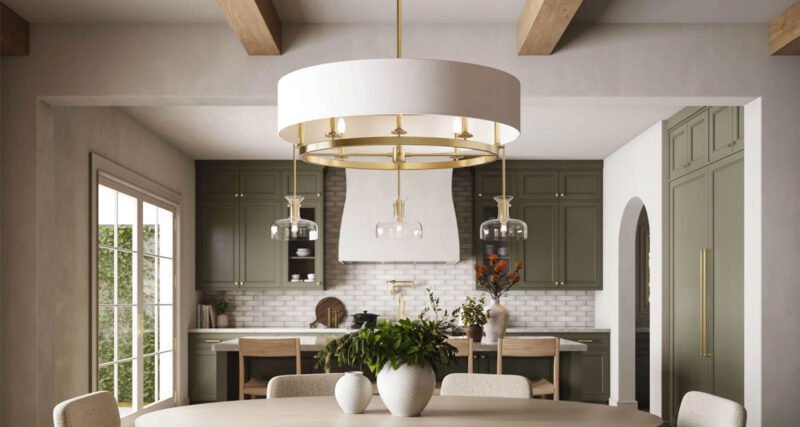
A stunning chandelier does not always create the visual impact homeowners expect. Many beautifully designed rooms still feel incomplete because the fixture sits too high, hangs too low, or lacks proper scale for the space.
Placement plays a major role in how lighting interacts with architecture, furniture, and surrounding decor. Small adjustments can completely change the balance and character of a room.
Many platforms offer a variety of lightning solutions, like designer chandeliers from Visual Comfort lighting, and many more to find luxury and modern lighting fixtures. This article explores key placement guidelines that help maximize visual balance, proportion, and overall room appeal.
Ceiling Height Sets the Foundation for Placement
The height of the ceiling determines how low to hang any chandelier. Fixtures may hang significantly lower in a room with high ceilings or vaulted ceilings as compared to a standard ceiling. The amount of vertical clearance impacts the ability to move throughout the room without being disturbed and helps create a visually pleasing environment.
Hanging a chandelier too low interrupts the flow of the rest of the room, while hanging one too high can result in it not being able to be seen. A proper ratio between the fixture height and ceiling height creates a pleasing, warm, and inviting space.
Tips for Ceiling Height Placement –
Start by measuring the height of your ceiling before selecting your fixture.
You should have a minimum of 7′ of clearance below the floor.
Hang fixtures at a lowered height in standard 8′ ceilings.
Hang fixtures at a higher height in 9′ (vaulted) or more ceiling.
Room Size Plays a Key Role in Fixture Scale
Chandelier selection and placement will rely on room size. A fixture that looks good in the showroom may seem out of proportion once it has been installed. Room dimensions will assist in determining the correct diameter of the chandelier and the scale of the entire room.
Designers typically look at the floor area as well as the ceiling height to make their recommendations. These two elements work together to give the overall appearance of balance.
Dining Areas Benefit From Precise Chandelier Alignment
Properly placed chandeliers are especially important in dining rooms, where the fixture is often seen as the main design focal point within the area. The chandelier should be placed directly above the dining table, which creates an obvious focal point where the dinner party is going to take place and provides a strong sense of visual order.
Properly aligning the chandelier over the dining table also helps to stabilize the furniture arrangement and provide a greater, symmetrically balanced overall appearance to the room. If the chandelier is placed correctly, it will provide the required function and aesthetic value during the meal and during the gathering afterward.
Entry Spaces Call for Strong Visual Balance
An entryway is the first impression of a home and, as such, chandelier placement is critical to creating that impression. The fixture that has been placed in the entryway creates an elegant look and establishes future expectations regarding the home’s interior.
Additionally, chandelier placement in relation to ceiling height and room dimensions contributes to the home’s overall inviting ambiance. Careful placement of the chandelier enhances the overall presentation of the space.
Open Floor Plans Require Clear Focal Points
Homes with open floor plans provide opportunities for the chandelier to establish an identifiable focal point between the many other (shared) living spaces that make up the visual environment.
For example, when chandeliers are used to delineate dining-room, seating-group, or gathering areas, they provide a way of defining these functional areas without creating a physical barrier. This helps to organize the large shared spaces while maintaining the feeling of openness.
Material and Finish Shape Overall Room Appeal
Looking at the aesthetics of chandeliers, their metal finishes interact with their surrounding decor. Examples of aesthetics include warm metal finishes, which can enhance the personality and depth of the room, while lighter finishes provide a clean image. Keeping your fixture finishes corresponding with all (hardware, furniture accenting, and architectural) will continue to provide a unified design. This will assist in developing a unified look throughout your home.
How a Quality Lighting Platform Expands Chandelier Style Options
A broad lighting collection gives homeowners access to fixtures suited for a wide range of room sizes and design preferences. Traditional chandeliers, contemporary silhouettes, and transitional styles each offer distinct visual benefits. Greater variety makes it easier to find a fixture that complements specific architectural features.
As an example, designer chandeliers from Visual Comfort lighting illustrate how diverse collections can accommodate everything from compact dining spaces to expansive entryways. Different sizes, finishes, and design styles allow homeowners to match fixtures to their unique interiors.
Proper chandelier placement influences far more than lighting alone. Ceiling height, room size, furniture arrangement, and material selection all contribute to the final result. Careful positioning helps create balance, strengthen focal points, and improve visual flow throughout the home. When scale and placement work together, a chandelier becomes an integral part of the design rather than a decorative afterthought. Thoughtful planning helps homeowners maximize both style and functionality in every room.