



According to RealtyWerx, installing basement replacement windows is a project where the window style you choose determines the ventilation, the security, and the ease of installation. Basement windows are smaller than standard windows, set into concrete or masonry foundation walls, and are often the original steel-frame units that came with the house 50 years ago. The replacement options are a hopper window that tilts inward from the top, a slider window that slides horizontally, or a casement window that cranks outward. The previous guide covered the general process of replacing a basement window. This guide covers the window styles, the measuring for each style, and the material choices between vinyl, aluminum, and composite frames.
The original basement windows in most older homes are steel-frame hopper windows. The steel frame is mortared into the concrete opening. The glass is a single pane. The hardware is a simple latch that has been painted shut for 30 years. The frame is rusted at the bottom corners. The replacement will be a vinyl-frame window, which will not rust, will have insulated glass, and will actually open. The vinyl frame is set into the concrete opening and sealed with polyurethane caulk. The transition from a rusted steel window that has not been opened since the Reagan administration to a clean vinyl window that tilts in for ventilation is one of the most satisfying improvements you can make to a basement for under $200 per window.
Basement Window Styles: Hopper, Slider, and Casement
A hopper window is hinged at the bottom and tilts inward from the top. It is the most common basement replacement window because it matches the original window style in most houses and it opens inward, which means the window well on the outside does not interfere with the operation. The hopper opens to roughly 45 degrees for ventilation. The screen is on the interior side. The hopper is the least expensive style and the easiest to install because the frame is simple and the hardware is minimal.
A slider window has one fixed sash and one sash that slides horizontally in tracks. It provides more ventilation than a hopper because the opening is half the total window area. The screen is on the exterior side and is exposed to the window well environment, where it will collect leaves, dirt, and snow. A slider requires more width than a hopper for the same glass area because one sash slides behind the other. If the existing opening is wider than it is tall, a slider is a better choice than a hopper. If the opening is taller than it is wide, a hopper is the standard.
A casement window is hinged on the side and cranks outward. It provides the most ventilation because the entire sash opens. It also provides the best seal when closed because the sash compresses against the weatherstripping around the entire perimeter. A casement window cannot be used in a basement opening that is below grade with a window well unless the well is large enough that the swinging sash does not hit the well wall. A casement that opens into the window well wall is a casement that does not open. Casement windows are the most expensive of the three styles and the least common in basements because of the well clearance issue.
Measuring for a Basement Replacement Window
Measure the concrete opening, not the old window frame. The old frame will be removed. The new window fits into the concrete opening. Measure the width at the top, middle, and bottom of the opening. Measure the height at the left, middle, and right. Use the smallest measurement in each direction. The new window is ordered to be slightly smaller than the opening, typically a quarter inch less in both width and height, to allow for shimming and sealant. The window manufacturer or retailer will calculate the exact size from your opening dimensions.
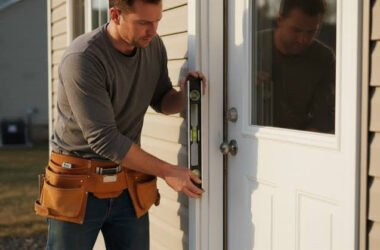
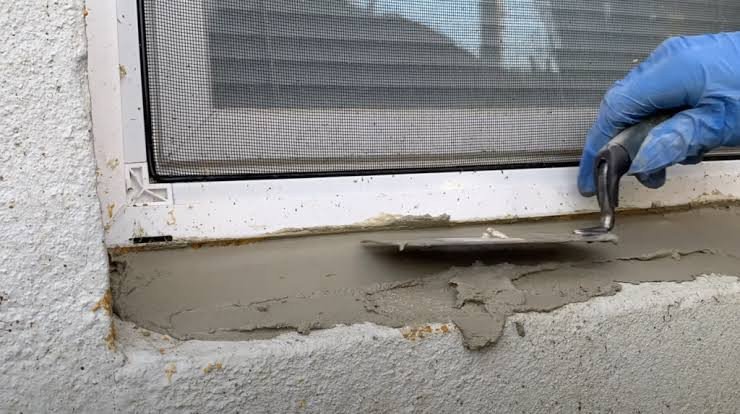
If the concrete opening is not square, which is common in older foundations, the new window must be shimmed to operate correctly. A window installed in an out-of-square opening will bind. The shims correct the alignment. The gap between the frame and the concrete is slightly wider on the side where the opening is out of square, and the sealant fills the wider gap. A gap of up to half an inch can be filled with sealant. A gap larger than half an inch should be filled with a backer rod, a foam cylinder inserted into the gap, before the sealant is applied. The backer rod provides a base for the sealant and prevents it from sagging into the gap.
Frame Materials: Vinyl, Aluminum, and Composite
Vinyl is the standard material for basement replacement windows. It does not rust, does not rot, and is the least expensive. The frame is white or beige and is hollow or foam-filled. The glass is insulated, two panes with an air or argon gap between them. A vinyl basement window costs $100 to $250 for a standard size. Custom sizes cost more but are still less than aluminum or wood.
Aluminum-frame windows are stronger than vinyl and can be painted. They are more expensive, $200 to $400 for a standard size. Aluminum conducts heat and cold more readily than vinyl, which means the frame can feel cold in the winter and can develop condensation on the interior side. Thermally broken aluminum frames, which have a plastic separator between the interior and exterior aluminum, reduce the condensation problem and cost more.
Composite and fiberglass frames are the premium option. They are stronger than vinyl, more thermally efficient than aluminum, and can be painted. They cost $300 to $600 for a standard size. For a basement window where thermal performance is less critical than in the living spaces above, vinyl is the practical choice for most installations. The cost difference between vinyl and composite for a basement window that is 24 by 36 inches is significant and the performance difference in a below-grade application is minimal.
Frequently Asked Questions
What is the best window style for a basement?
A hopper window is the best choice for most basements. It matches the original window style, opens inward so the window well does not interfere, and is the least expensive. A slider is better for wide, short openings. A casement is the best for ventilation and sealing but requires a large window well that does not interfere with the swinging sash.
Should I order custom basement windows or use stock sizes?
Measure the concrete opening first. If the opening matches a standard stock size within a quarter inch, a stock window works and costs less. If the opening is not a standard size, which is common in older homes, a custom window is necessary. The cost difference is roughly $50 to $100 per window. Ordering a stock window that is too small and filling the gap with sealant is a poor solution. The wide bead of sealant will eventually crack and leak. A custom window that fits the opening properly will seal correctly and last for decades.
Are basement windows a security risk?
Basement windows are the most common entry point for burglars because they are hidden from view by window wells and are often unlocked or easily broken. A replacement window with a secure latch, laminated or tempered glass, and a window well cover or security bars addresses the risk. A window well cover keeps people from entering the well. Security bars or a grate over the window prevent entry through the glass. If the window is in a bedroom, the security device must be operable from the inside without a key or tool to meet egress requirements.
The Bottom Line
Basement replacement windows are vinyl, aluminum, or composite frames set into the concrete opening after the old rusted steel frame is removed. A hopper window is the standard style. A slider is the alternative for wide openings. A casement is the premium choice if the window well allows outward swing. Measure the concrete opening at the narrowest points. Order the window a quarter inch smaller. Set it in the opening, shim it level and plumb, fasten it with concrete screws, and seal it with polyurethane caulk. The window that replaces the rusted single-pane original will let in light, keep out drafts, and actually open for the first time in decades.