



According to Oklahoma Red Door Management, installing window shutters on vinyl siding is a project where the fasteners matter more than the shutters. The shutters are decorative. They hang on the wall next to the window and do not move. The fasteners hold the shutters to the wall, and because the wall is vinyl siding, the fasteners must do two things that seem contradictory. They must hold the shutters securely against wind, impact, and gravity, and they must allow the vinyl siding underneath the shutters to expand and contract freely with temperature changes. A fastener that clamps the shutter tight against the siding prevents the siding from moving. When the siding expands, it buckles around the fastener. The buckle is permanent. The fix is new siding, not a new fastener.
The solution is shutter locks, also called shutter fasteners or shutter clips. These are plastic or metal clips that screw into the wall through the siding and lock the shutter in place with a quarter-turn or a push-in mechanism. The clip holds the shutter a fraction of an inch away from the siding surface, enough that the siding can slide freely behind the shutter. The gap is invisible because the shutter covers it. The shutter appears to be mounted flush against the wall. The siding behind it is free to move. The clip is the technology that makes shutter installation on vinyl siding possible. The alternative, driving screws directly through the shutter into the siding, pinches the siding and guarantees a buckle on the first hot day.
Finding Studs Through Vinyl Siding
The shutters must be fastened into the wall framing, not just the sheathing. Vinyl siding is attached to the sheathing with loose nails. The sheathing alone does not have sufficient holding power for a shutter that will catch wind and be pulled on by children, pets, and the occasional ladder. The fasteners must hit the studs. Finding studs through vinyl siding is harder than finding them through drywall because a stud finder that works on drywall does not work reliably on vinyl siding over sheathing. The siding creates an air gap that confuses the sensor.
The most reliable method is to locate the studs from inside the house, through the drywall, and transfer the measurements to the outside. Find the stud next to the window on the interior wall. Measure the distance from the window opening to the center of the stud. Transfer that measurement to the outside. The stud is in the same place on both sides of the wall. Mark the stud location on the siding with a piece of painter’s tape. Drill a small pilot hole through the siding and sheathing at the stud location to confirm you have hit solid wood. If the drill bit goes through the sheathing and then hits empty space, you missed the stud. Move the bit half an inch left or right and try again. The pilot hole will be covered by the shutter.
If you cannot access the interior wall at that window, use the exterior clues. On most houses, studs are spaced 16 or 24 inches on center. The window opening is framed with a king stud and a trimmer stud on each side. The first stud outside the window opening is typically 16 inches from the corner of the house or from the adjacent window. Tap on the siding with your knuckle. The sound changes from hollow over the sheathing to solid over the stud. The difference is subtle through vinyl but present. Combine the tapping with the 16-inch measurement from a known reference point, a corner, a door, another window, and you can locate the studs with reasonable accuracy.
Shutter Placement and Spacing
Shutters are installed on both sides of the window, centered vertically on the window opening. The top of the shutter aligns with the top of the window trim. The bottom of the shutter aligns with the bottom of the window trim. The shutter should be the same height as the window opening, not including the trim. If the shutter is taller or shorter than the window, it looks like it was bought from a different house.
The spacing between the shutter and the window trim is typically half an inch to one inch. The gap gives the shutter visual separation from the window and allows the siding behind the shutter to move without contacting the trim. The gap on both sides of the window should be equal. Measure from the edge of the window trim to the centerline of the stud. If the stud is close enough to the window that the shutter will overlap the stud when placed with a half-inch gap from the trim, the stud location determines the shutter placement. The fasteners must hit the stud. If the stud is too far from the window, install horizontal blocking between the studs at the shutter mounting locations before the siding goes on. For an existing wall where the siding is already installed and there are no studs where the shutter fasteners need to go, use hollow-wall anchors rated for exterior use and the weight of the shutters. The anchors are a compromise. Fastening into studs is always better.
Installing the Shutters With Clips
Mark the mounting hole locations on the shutter. Most vinyl shutters have dimples or indentations molded into the back face where the mounting holes should be drilled. Drill the holes through the shutter with a drill bit slightly larger than the screw shank. The hole must be large enough that the screw does not bind in the shutter. The shutter expands and contracts with temperature changes. A screw that binds in the shutter will cause the shutter to crack around the screw hole.
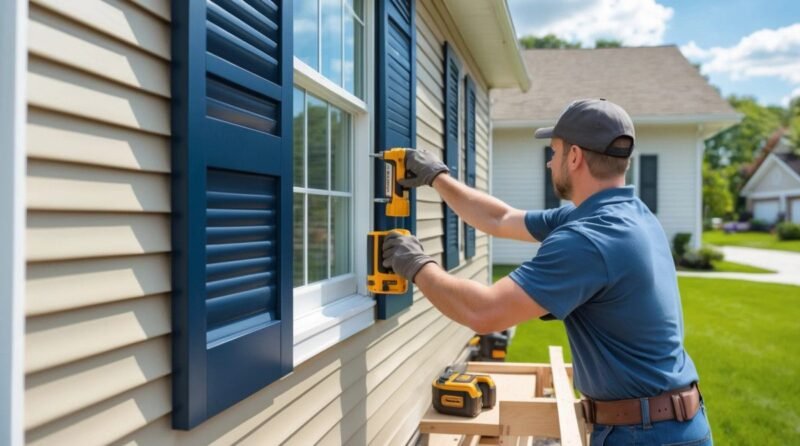
Position the shutter against the wall at the correct height and spacing from the window. Mark the screw locations on the siding through the mounting holes. Drill pilot holes through the siding and sheathing at the stud locations. Install the shutter clips or fasteners into the pilot holes. The clip base screws into the wall. The shutter snaps onto the clip. The clip holds the shutter with a gap between the shutter and the siding. If using screws with a standoff, the standoff is a plastic spacer that the screw passes through. The spacer holds the shutter away from the siding by the thickness of the spacer. Tighten the screw until the shutter is secure but not tight against the spacer. The shutter must be able to move slightly.
Install the shutters on both sides of the window. Step back and check that they are level, aligned with the window, and equally spaced from the trim on both sides. Adjust as needed. The shutters will settle slightly over the first few weeks as the fasteners seat and the shutters relax into position. Check the fasteners after a month and tighten any that have loosened.
Frequently Asked Questions
Can I screw shutters directly into vinyl siding without clips?
No. Screwing directly through the shutter into the siding pinches the siding between the shutter and the wall. The siding cannot expand. On the first hot day, the siding buckles around each screw. The buckles are permanent. Use shutter clips or standoff fasteners that hold the shutter away from the siding surface.
Can I install functional shutters on vinyl siding?
Functional shutters that open and close require hinges mounted to the window trim or the wall framing. The hinges must be fastened into the trim or the studs with screws long enough to penetrate the structural wood behind the siding. The shutters must be sized to actually cover the window when closed. Decorative shutters that are too narrow to cover the window look wrong when they are fixed open against the wall. They look even worse when they are hinged and visibly too small to close.
What if there are no studs where I need to mount the shutters?
If the studs are not in the right locations and the siding is already installed, use hollow-wall anchors rated for exterior use. Toggle bolts or molly bolts provide more holding power than plastic expansion anchors. Drill the anchor hole through the siding and sheathing. Install the anchor. Attach the shutter clip to the anchor. The anchor is not as strong as a stud-mounted fastener. For large or heavy shutters, especially wood shutters, cut an access hole in the siding, install blocking between the studs, patch the siding, and mount the shutters to the blocking. The patch is hidden behind the shutter.
The Bottom Line
Window shutters on vinyl siding are mounted with clips that hold the shutter away from the siding surface, allowing the siding to expand and contract freely behind the shutter. The fasteners must hit the studs. Locate the studs from inside the house and transfer the measurements to the outside. Place the shutters centered on the window, equal height to the window opening, with an equal gap on both sides. Use shutter clips, not direct screws. The clips are the difference between shutters that stay up for 20 years and shutters that buckle the siding on the first hot day.