



Replacing a window in a brick house is a different project from replacing a window in a house with siding. The brick is a veneer. It is not structural. The window is mounted to the wood framing behind the brick, and the brick is laid around the window opening with a gap between the brick and the window frame. The gap is sealed with caulk or mortar. The steel angle iron, called a lintel, that supports the brick above the window must remain in place and undamaged. Disturbing the brick around the window is expensive, time-consuming, and almost never necessary. The preferred method for replacing a window in a brick house is the insert method. The old window sashes and tracks are removed. The new window slides into the existing frame. The brick, the lintel, and the exterior seal are left untouched, explains KRS Holdings Tidewater team.
The insert method works when the existing window frame is sound. If the frame is rotted, an insert window will not work and a full-frame replacement is necessary. A full-frame replacement in a brick house requires removing the old frame from the rough opening without damaging the surrounding brick. The new window is installed with a nailing flange or mounting clips. The gap between the new window and the brick is sealed with backer rod and polyurethane caulk. The exterior trim, if any, is reinstalled or replaced. The brick is not disturbed. The seal between the window and the brick is the new exterior water barrier.
ENERGY STAR advises that proper air sealing around windows is critical for home energy efficiency. In a brick house, the gap between the window frame and the brick is a direct path for air leakage. A properly sealed replacement window eliminates this draft and improves the comfort of the room.
The Insert Method: Preferred for Brick Houses
The insert method is the standard for brick house window replacement because it preserves the existing seal between the window frame and the brick. The old window sashes, the moving glass panels, are removed from the inside. The tracks are removed. The old frame remains in place. The new window, a custom-sized insert unit, slides into the old frame. It is shimmed, leveled, screwed into place, insulated with low-expansion foam, and trimmed on the interior. The exterior is untouched. The brick, the caulk joint, and the lintel remain exactly as they were. The insert method takes about an hour per window and produces the best long-term result for brick houses.
The insert method requires that the old frame is square, sound, and free of rot. Probe the frame with an awl before ordering the insert window. If the wood is soft, the frame needs repair or full replacement. If the frame is solid, measure the inside of the frame at multiple points as described in the insert window guide. Order the new window to fit. The installation is from the inside. No exterior work is required.
Full-Frame Replacement: When the Old Frame Must Come Out
If the old frame is rotted, a full-frame replacement is necessary. The old sashes are removed first. The old frame is cut into sections with a reciprocating saw and pried out of the opening. The rough opening, the framed hole in the wood wall behind the brick, is exposed. The brick opening is slightly larger than the rough opening, creating a gap that was originally sealed with mortar or caulk.
The new window is installed into the rough opening from the outside or the inside. It is fastened through the nailing flange into the rough opening framing, or with mounting clips if the brick opening is flush with the framing. The gap between the new window frame and the brick, typically a quarter inch to half an inch wide, must be sealed.
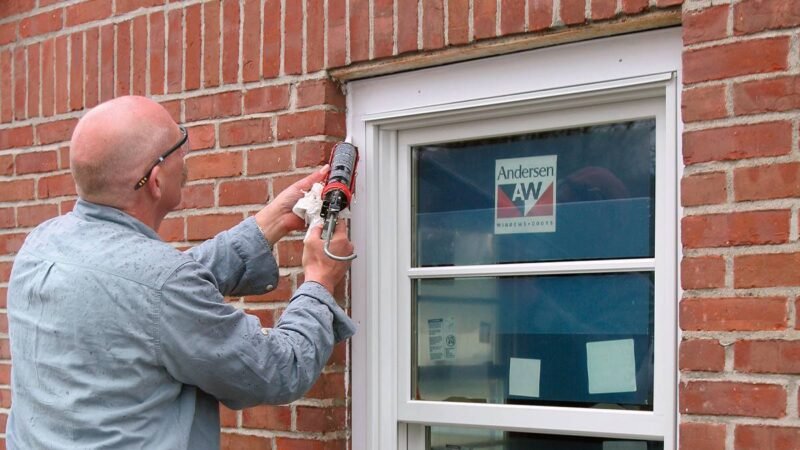
Seal the gap with a backer rod first. The backer rod is a closed-cell foam cylinder that is pushed into the gap. It provides a base for the sealant and prevents the sealant from sagging into a deep gap. Choose a backer rod diameter slightly larger than the gap width. Push it into the gap so it sits about a quarter inch below the surface. Apply polyurethane sealant over the backer rod. Polyurethane is the correct sealant for brick because it adheres to masonry, remains flexible, and resists UV exposure. Do not use standard acrylic caulk on brick. It will crack and separate from the masonry within a few years.
Tool the sealant with a putty knife or a caulking tool to create a concave profile that sheds water. The sealant should be continuous around the entire perimeter of the window with no gaps. The sealant is the exterior water barrier. It replaces the original mortar or caulk joint that was cut to remove the old window.
Lintel Assessment and Brick Condition
The lintel is the steel angle iron above the window that supports the weight of the brick above the opening. It is visible from the outside as a horizontal steel plate above the window. Check the lintel for rust, sagging, or displacement. A rusted lintel should be wire-brushed, primed, and painted before the new window is installed. A severely rusted or sagging lintel may need to be replaced, which is a masonry repair project, not a window project. If the lintel is failing, address it before or during the window replacement. A new window installed under a failing lintel will be crushed when the lintel eventually gives way.
Check the brick around the window opening for cracks, spalling, or loose mortar. Minor cracks can be filled with mortar or masonry caulk. Major cracks, especially stepped cracks that follow the mortar joints, may indicate foundation settlement and should be evaluated by a structural engineer before the window is replaced. The window is not the problem. The moving foundation is the problem. Replacing the window without addressing the foundation will result in the new window cracking as the wall continues to move.
Frequently Asked Questions
Why is the insert method better for brick houses?
The insert method preserves the existing seal between the window frame and the brick. That seal was made when the house was built and, if it is still intact, it is more reliable than a new seal made with caulk. Disturbing the brick opening creates a new gap that must be sealed, and the quality of that seal depends entirely on the skill of the installer. The insert method leaves the existing seal in place and adds a new window that seals against the old frame. Two layers of protection are better than one.
What type of caulk should I use between a window and brick?
Polyurethane sealant is the correct product for sealing between a window frame and brick. It adheres to masonry, remains flexible for decades, and resists UV exposure. Silicone sealant also works but is more difficult to paint. Acrylic latex caulk is not suitable for brick because it does not adhere well to masonry and hardens over time, eventually cracking and separating from the brick.
Should I repoint the brick around the window before replacing it?
If the mortar joints around the window are cracked, crumbling, or missing, repoint them before or during the window replacement. Repointing is removing the damaged mortar and replacing it with fresh mortar. The window opening should be structurally sound and weathertight before the new window goes in. A new window installed in a deteriorated brick opening will leak at the mortar joints, not at the window.
The Bottom Line
Window replacement in a brick house is best done with the insert method, which leaves the existing frame and the brick-to-frame seal intact. If the frame is rotted, a full-frame replacement is necessary, with the new window sealed to the brick with backer rod and polyurethane sealant. The lintel above the window must be sound. The brick around the opening must be in good condition. The seal between the window and the brick is the water barrier. Polyurethane sealant is the correct product for that seal. A window properly installed in a brick house will perform for decades without disturbing the masonry that makes the house a brick house.