



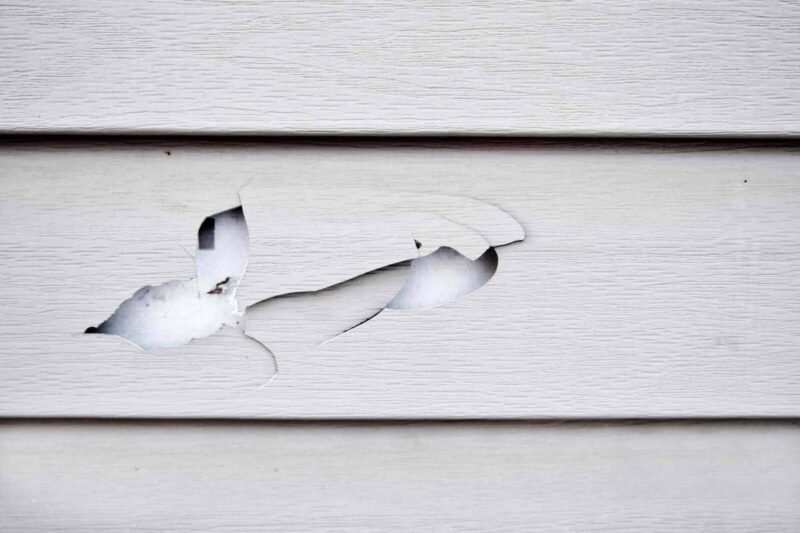
Replacing a single piece of vinyl siding is the repair you make when the damage is confined to one panel and the rest of the wall is fine, says Hendersonville property management. A cracked corner, a puncture from a falling branch, a melted spot from a reflected window. The damaged panel comes out. A new piece goes in. The repair is similar to replacing a section of siding, covered in the previous guide, with one important difference. A single piece replacement often means the replacement piece must be cut to fit between two existing panels and locked in place without the benefit of sliding in from an open end. The piece is inserted into the gap and snapped into the panel below. The top edge is held in place by the panel above. If the damaged piece is the top course against the soffit, the replacement piece must be held in place with a different tool: a snap-lock punch.
The snap-lock punch is the second specialty siding tool every homeowner should own. The first is the zip tool, covered in the previous guide. The snap-lock punch costs $10 to $15. It crimps small locking tabs into the cut edge of a siding panel. The tabs engage the utility trim or undersill trim at the top of the wall. Without the punch, the top course of siding has nothing to lock into and will flap in the wind. With the punch, the top course locks into the trim just like the factory edge locks into the panel below. The punch is used for the top course of any vinyl siding installation and for any replacement piece that does not have a panel above it to hold the top edge in place.
Cutting a Damaged Piece Out Without Removing the Whole Panel
If the damage is in the middle of a panel and the ends of the panel are undamaged and locked into J-channel or corner posts, you can cut out only the damaged section without removing the entire panel. This is faster than removing the full panel and less disruptive to the surrounding siding. Mark the cut lines on the damaged panel. The replacement piece needs to be four to six inches longer than the damaged area so there is enough material to work with. Cut vertically through the panel at both marks with tin snips. Cut horizontally across the damaged section to free it. Remove the damaged piece.
The replacement piece is cut from new siding. It must be the same width as the original panel and long enough to span the gap plus the overlap on both ends. The ends of the replacement piece slide under the existing panel ends on both sides, the same overlap that was originally built into the wall. The replacement piece is then snapped into the panel below. If the piece is more than a few feet long, nail it through the top flange slots. If it is short, two feet or less, the friction of the lock and the overlap at the ends will hold it without nails.
To insert the replacement piece, bow it slightly in the middle so the ends can slide under the existing panel ends. Do not bend it sharply enough to crease the vinyl. A gentle bow is enough. Slide one end under the existing panel, then the other. Push the center of the piece down until the bottom edge locks into the panel below. The replacement piece is now held at both ends by the overlap and at the bottom by the lock. The top edge slides under the panel above. If the top edge does not stay under the upper panel on its own, nail it through the top flange slots.
Replacing the Top Course: The Snap-Lock Punch Method
The top course of siding against the soffit is the most difficult piece to replace because there is no panel above it to hold the top edge in place. The top edge is held by utility trim or undersill trim that receives the cut edge of the panel. The replacement piece must be cut to width and the cut edge must be punched with locking tabs that engage the trim.
Remove the damaged top course by unlocking it from the panel below with the zip tool. The top edge is not nailed. It is held by the utility trim. Slide the damaged piece out from the trim. Cut the replacement piece to the correct width. The width is the distance from the locking lip of the panel below to the inside of the utility trim, minus a quarter inch for expansion. Cut the panel to width along its entire length. Punch locking tabs into the cut edge every six inches using the snap-lock punch. The punch crimps a small rectangular tab into the vinyl. The tab angles outward and locks into the utility trim.
Slide the replacement piece into place. Lock the bottom edge into the panel below. Push the top edge into the utility trim. The punched tabs will snap into the trim and hold the panel in place. The top course is not nailed. The punched tabs are the fasteners. Test the piece by pulling gently outward. If it releases from the trim, the tabs were not punched deeply enough or the piece was cut too narrow. Recut or repunch as needed.
Frequently Asked Questions
How much can I bend vinyl siding without breaking it?
Vinyl siding can be bowed several inches over a 12-foot length without permanent deformation. Do not crease it. A sharp bend creates a white stress line that will eventually crack. The bowing technique for inserting a replacement piece, bending it enough to slide the ends under the existing panels, is well within the material’s flexibility. If the piece needs to be bent more than six inches over its length to fit, it is too long and should be cut shorter.
Do I need a snap-lock punch for every repair?
No. The snap-lock punch is only needed when replacing the top course of siding, where the cut edge must engage utility trim, or when replacing a piece where the top edge cannot be held by the panel above. For repairs in the middle of a wall where the panel above holds the top edge of the replacement piece, the punch is not needed. Buy one when you need it. It is $10 to $15 and will be the tool that makes a top-course repair possible without replacing the entire wall.
Can I glue a replacement piece instead of locking it?
Construction adhesive can be used as a supplement to the mechanical lock for small replacement pieces that are difficult to secure. It should not be the sole means of attachment. Adhesive alone will eventually fail as the siding expands and contracts. The mechanical lock between panels is the primary connection. Adhesive is a backup.
The Bottom Line
Replacing a single piece of vinyl siding uses the same zip tool as a section replacement, plus a snap-lock punch if the damaged piece is the top course. Cut out the damaged section. Cut a replacement piece that is longer than the gap. Bow it gently to slide the ends under the existing panels. Snap the bottom edge into the panel below. For the top course, punch locking tabs into the cut edge and push it into the utility trim. The zip tool unlocks. The snap-lock punch locks. The siding repair kit costs $15 total and enables every vinyl siding repair a house will ever need.