



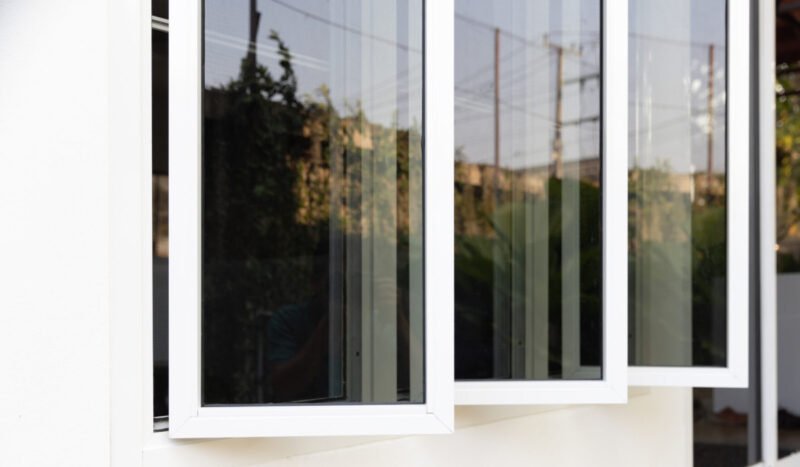
Replacing glass in a window is the repair you make when the glass is broken but the window frame is still sound. A baseball through the storm window, a crack from a fallen branch, fog between the panes of an insulated glass unit. The glass is what failed. The frame is fine. Replacing the glass costs a fraction of replacing the entire window. A single pane of glass cut to size at a hardware store costs $20 to $50. An insulated glass unit, an IGU, custom-ordered to fit the existing sash costs $100 to $300. The labor to remove the old glass and install the new one takes an hour for a single pane and two hours for an IGU, most of which is waiting for the glazing compound to set up enough to tool it smooth.
The process is called reglazing for a single-pane wood or metal sash, and IGU replacement for a modern vinyl or wood window with a factory-sealed double-pane unit. The techniques are different. Single-pane reglazing uses glazing points, small metal clips that hold the glass in the frame, and glazing putty, a pliable compound that seals the glass to the frame and hardens over several days. IGU replacement uses a removable stop or gasket that holds the sealed unit in the sash. The failed IGU is removed, measured, and a new one is ordered. When the new unit arrives, it drops into the sash and the stop or gasket is reinstalled. No putty. No glazing points. The IGU is a sealed assembly that is not designed to be taken apart.
ENERGY STAR advises that improving the efficiency of your home’s windows and doors can have a significant impact on reducing energy bills. A fogged IGU has lost its insulating gas and is performing at roughly the same level as a single pane. Replacing the failed unit restores the window’s thermal performance without replacing the entire window.
Replacing a Single Pane of Glass
Remove the old broken glass. Wear heavy gloves and eye protection. Broken glass is sharp. Remove the large pieces by hand, working from the top down. Remove the remaining small pieces with pliers. Remove the old glazing putty. Old putty is hard and brittle. Soften it with a heat gun on a low setting, or chip it out with a putty knife and a hammer. Be careful not to gouge the wood frame. Remove the old glazing points. They are small metal triangles pushed into the wood frame. Pry them out with a putty knife or pliers.
Clean the rabbet, the recessed shelf in the frame where the glass sits. Remove all debris, old putty, and paint. The surface must be clean for the new putty to adhere. Prime bare wood with an oil-based primer or a thin coat of linseed oil. The primer prevents the dry wood from absorbing the oil from the glazing putty, which would cause the putty to dry out and crack prematurely.
Measure the opening for the new glass. Measure the width and height of the rabbet. Subtract an eighth of an inch from each dimension. The glass must be slightly smaller than the opening to allow for expansion and to prevent the glass from binding against the frame. Order the glass cut to size at a hardware store or glass shop. Specify the thickness, typically three-thirty-seconds of an inch for single-strength glass or one-eighth of an inch for double-strength glass in larger windows.
Apply a thin bed of glazing putty or latex caulk to the rabbet. The bed provides a cushion for the glass and seals the exterior side of the glass to the frame. Press the new glass into the bed. Press glazing points into the wood frame every six to eight inches around the perimeter. Use the tip of a putty knife to push the points into the wood. The points hold the glass in place while the putty cures.
Apply the glazing putty to the exterior side of the glass. Roll a rope of putty between your hands to warm it and make it pliable. Press the rope into the gap between the glass and the frame. Smooth the putty with a putty knife held at a 45-degree angle, drawing it along the glass and the frame in one continuous motion. The putty should form a smooth, angled bead that seals the glass to the frame and sheds water. The putty will skin over in a few days and fully harden in a week or two. Paint the putty after it has skinned over to match the window frame. The paint extends the life of the putty by protecting it from UV exposure.
Replacing an Insulated Glass Unit
An IGU is a sealed assembly of two panes of glass with a spacer between them. The space is filled with air or an inert gas, typically argon, for insulation. When the seal fails, moisture enters the space between the panes and condenses on the inside surfaces. The fogging is permanent. The IGU must be replaced.
Remove the IGU from the sash. The IGU is held in place by removable stops on the interior or exterior side of the sash. The stops are thin strips of wood, vinyl, or aluminum that are snapped or screwed into the sash frame. Remove the stops carefully. They can be brittle and may break. If a stop breaks, it can be replaced with a matching piece from the window manufacturer or a millwork supplier. Once the stops are removed on one side, the IGU will lift out of the sash from the opposite side.
Measure the IGU. Measure the width and height of the visible glass area, not including the spacer or the frame. Also measure the overall thickness of the unit, the distance from the outside face of one pane to the outside face of the other pane. The thickness is typically half an inch, five-eighths of an inch, or three-quarters of an inch for residential windows. Provide these measurements to the glass supplier. The new IGU will be custom-made to match. The lead time is typically one to two weeks.
Install the new IGU. Set it into the sash from the side opposite the stops. Press it firmly against the fixed stop on the other side. The IGU should sit squarely in the sash with an even gap on all sides. Install the removable stops. The stops hold the IGU in place. Do not use adhesive. The IGU is designed to be held by the stops and the gaskets. Adhesive prevents future replacement.
Frequently Asked Questions
Should I replace the IGU or the entire window?
If the window frame is in good condition and the window operates correctly, replacing the IGU is the more cost-effective repair. An IGU costs $100 to $300. A replacement window costs $300 to $800 installed. If the window frame is rotted, the hardware is failing, or the window is old enough that the glass technology is outdated, replacing the entire window may be the better long-term investment. A new window will have better thermal performance than a new IGU in an old frame.
Can I replace regular glass with tempered glass?
Yes, but tempered glass must be ordered to size. It cannot be cut after tempering. Measure carefully. A window in a door, next to a door, in a bathroom, or within 18 inches of the floor is required by code to be tempered safety glass. If the original glass was tempered, the replacement must be tempered. If the original was not tempered, you can upgrade to tempered for safety, particularly in locations where children or high traffic create a breakage risk.
How long does glazing putty take to dry?
Glazing putty skins over in three to seven days and fully hardens in two to four weeks, depending on temperature and humidity. The putty can be painted after it skins over. Do not paint before the skin forms. The paint will not adhere to uncured putty. Oil-based putty takes longer to cure than latex-based putty. Latex glazing compounds are available that cure faster and clean up with water, but traditional oil-based putty is more durable over the long term.
The Bottom Line
Replacing glass in a window is either a single-pane reglazing job with putty and glazing points, or an IGU swap with removable stops. Single-pane replacement costs $20 to $50 and takes an hour. IGU replacement costs $100 to $300 and takes two hours plus a week or two for the new unit to be manufactured. Both repairs restore the window to full function without replacing the frame. A broken pane is not a reason to replace the window. It is a reason to call the glass shop and order a new piece of glass.