


Common causes of high HVAC bills rarely announce themselves with a bang. They accumulate silently: a filter no one changed, a coil that lost pressure one ounce at a time, a duct joint that crept apart in the attic. Your HVAC system burns through roughly half of your home’s energy budget, says Mike Dunfee Management group.
The same dollar jump can come from a dozen different problems. A two-dollar filter. A pinhole refrigerant leak you cannot see. Ductwork in the attic splitting apart for years. What follows walks through each cause with its specific symptoms, its typical dollar impact, and whether you fix it yourself or write a check to someone who can.
A Dirty Air Filter Costs More Than You Think
A clogged air filter is the single most common reason HVAC bills creep higher month after month, and it is also the cheapest to fix by a wide margin.
When the filter chokes on dust, pet hair, and pollen, airflow drops. The blower motor works harder to push the same volume of air, drawing more electricity with every hour of runtime.
The Department of Energy estimates a severely blocked filter can raise energy consumption by 15 percent. On a $250 summer cooling bill, that is an extra $37 you paid for nothing but neglect.
The symptom is subtle. Rooms at the far end of the duct run feel warmer than those near the air handler. The weakened airflow simply cannot reach them.
Hold the filter up to a light. If you cannot see through it, you are already months past due. Pleated 1-inch filters need replacement every 30 to 90 days. Homes with pets or smokers should stick to the shorter end. Thicker 4- or 5-inch media filters can go six months, but do not push past that without checking.
Refrigerant Leaks: Your System Runs But Cannot Keep Up
Air conditioners and heat pumps do not consume refrigerant like a car burns gasoline. It circulates in a sealed loop. If the level is low, there is a leak somewhere, period.
A system running 10 to 20 percent low on refrigerant loses roughly the same percentage of its cooling capacity. The compressor keeps running the same hours. You pay for a full runtime and get partial cooling.
The house never quite hits the thermostat setpoint. The outdoor unit runs almost continuously on hot days. If you hold your hand over the top of the condenser and the air blowing out feels lukewarm rather than hot, refrigerant is probably low.
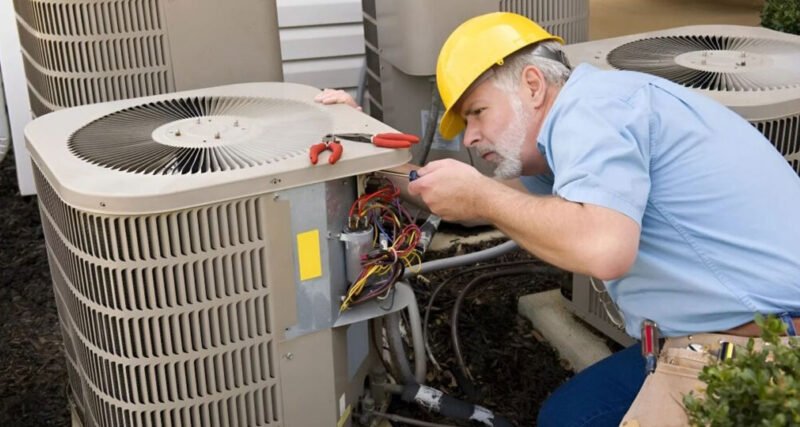
A technician can confirm the leak with a pressure gauge test. If the system is under 10 years old and the leak is accessible, repairing it costs roughly $200 to $600. If the leak is in the evaporator coil buried inside the air handler, the repair can cross $1,500.
One detail worth knowing: systems installed before 2010 may still use R-22 refrigerant, phased out of production in 2020. Remaining R-22 stocks now cost $100 to $200 per pound. A full recharge can run $600 to $1,200. That math alone pushes many older units toward retirement.
Leaky Ductwork: The Silent Energy Thief in Your Attic
Duct leakage is the problem nobody sees and everybody pays for. The average home loses 20 to 30 percent of conditioned air through gaps, cracks, and disconnected joints, according to Energy Star.
For every dollar you spend heating or cooling, up to 30 cents floats into the attic, crawlspace, or basement. It never reaches a living area. Over a full year of $3,000 in HVAC-related energy costs, duct leakage alone could be wasting $600 to $900.
The diagnostic clue is uneven room temperatures combined with dust buildup around supply registers. If certain rooms are always 5 degrees off from the rest of the house and the registers collect dust faster than they should, suspect the ducts.
A professional duct blaster test can quantify the leakage precisely, but a visual inspection of accessible duct runs often spots obvious gaps. Sealing runs $300 to $800 for a typical house.
Duct tape is not the answer. Despite the name, it degrades and peels within a few years. Mastic sealant or foil-backed tape is the proper material, and it will outlast the system.
Poor Insulation Forces Your HVAC to Work Overtime
Insulation and HVAC efficiency are two sides of the same coin. A house with R-19 attic insulation in a zone that calls for R-49 leaks heat in winter and absorbs it in summer.
The system compensates by running longer cycles to hit the thermostat setpoint. Those extra hours show up directly on the bill. The North American Insulation Manufacturers Association pegs the annual waste from under-insulated homes at 10 to 30 percent of heating and cooling costs.
The attic is the highest-return place to start. Adding blown-in cellulose or fiberglass batts costs $1,500 to $2,500 for a typical 1,500-square-foot attic and pays for itself within three to five years through lower bills.
Walls are harder and more expensive to retrofit. Focus on the attic first, then seal around windows and doors with weatherstripping and caulk. An energy audit, often subsidized by local utilities at $100 to $200, removes the guesswork with an infrared camera showing exactly where the thermal leaks are.
An Aging System or the Wrong Size: The Replacement Math
A 12-year-old air conditioner with a SEER rating of 10 consumes roughly 60 percent more electricity per unit of cooling than a modern SEER 16 unit. That gap widens every year as components wear, coils corrode, and compressors lose efficiency.
The unit still turns on and blows cold air, so it feels like it works. It just works expensively. The monthly bill tells the real story.
System sizing matters just as much as age. An oversized unit short-cycles: it blasts cold air for 10 minutes, satisfies the thermostat, shuts off, then restarts 15 minutes later. The startup surge draws two to three times the running current. The short runtime never gives the system time to dehumidify properly.
An undersized unit runs continuously on hot days and still cannot hold the setpoint. Both mistakes raise bills and shorten equipment life. A proper Manual J load calculation should drive any replacement decision, not a contractor’s rule-of-thumb guess based on square footage alone.
Thermostat Habits That Quietly Inflate the Bill
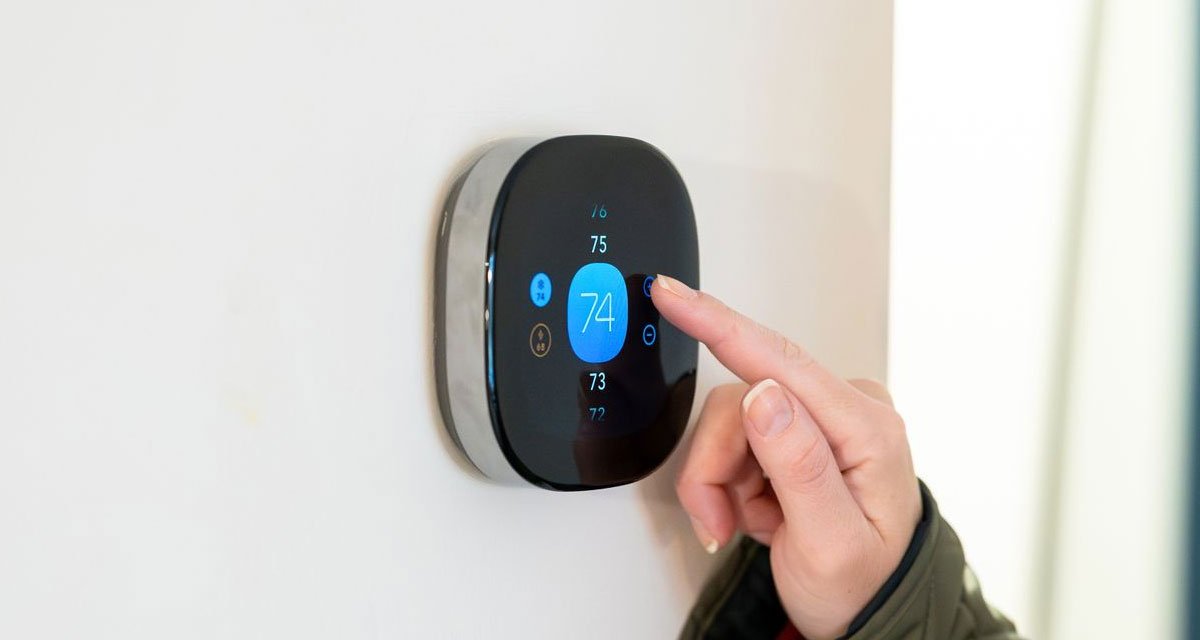
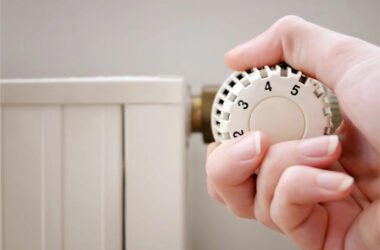
Setting the thermostat to 68 on a 95-degree day does not cool the house faster. It commands the system to keep running until it hits 68, which it may never do if the unit was sized for a 75-degree design temperature.
Every degree you lower the setpoint below 78 in summer adds roughly 3 to 5 percent to the cooling portion of your bill. Dropping from 78 to 72 can add 18 to 30 percent, purely because you asked the system to fight physics harder than it was designed to.
Programmable and smart thermostats handle setbacks automatically. Let the temperature drift 7 to 10 degrees when the house is empty, then recover 30 minutes before anyone gets home. The recovery period uses less energy than holding a deep setpoint all day.
If you already have a smart thermostat, check the “hold” vs. “schedule” setting. Many homeowners accidentally lock in a low temperature on manual hold and wonder why the bill is sky-high two months later.
| Cause | How to Spot It | Typical Bill Impact | Fix Cost | DIY or Pro |
|---|---|---|---|---|
| Dirty air filter | Filter opaque when held to light; weak airflow at far registers | 10-15% increase | $5-$20 | DIY |
| Refrigerant leak | AC runs continuously; house never reaches setpoint; ice on evaporator coil | 20-40% increase | $200-$1,500+ | Pro only |
| Leaky ductwork | Uneven room temps; dusty registers; high bills with normal usage | 20-30% waste | $300-$800 | Pro (small gaps DIY) |
| Poor insulation | Rooms near attic feel different from lower floors; ice dams in winter | 10-30% waste | $1,500-$2,500 (attic) | DIY or Pro |
| Aging system (SEER <13) | Unit 10+ years old; rising bills year-over-year; frequent repairs | 30-60% vs. new unit | $4,000-$12,000 (replace) | Pro only |
| Wrong-sized system | Short cycling (oversized) or continuous running (undersized) | 15-25% increase | $4,000-$12,000 (replace) | Pro only |
| Aggressive thermostat | Setpoint far from outdoor temp; manual hold discovered days later | 3-5% per degree below 78F | $0-$250 | DIY |
| Skipped annual maintenance | No tune-up in 12+ months; dirty coils; loose electrical connections | 5-15% degradation/year | $100-$200/tune-up | Pro |
These causes rarely operate in isolation. A dirty filter combined with duct leakage means already-weakened airflow loses another 20 percent before it reaches the rooms. Add a thermostat set to 72 and you have three problems stacking into a bill that can double what it should be. When the number seems inexplicably high, assume at least two causes are active at once.
“Our landlord is billing us for hvac repair caused by dirty filter. The tech said the blower motor burned out because no one changed the filter in over a year. Now we’re stuck with a $900 repair bill for something that costs $8 to prevent.”
— Reddit user, r/hvacadvice, 467 upvotes, 226 comments (April 2026), source
That r/hvacadvice story captures what the dollar figures in the table mean when they land on someone’s doorstep. The filter did not cost $8 that day. It cost $900, because nobody thought about it for a year.
Renters face a particularly sharp version of this: they pay the utility bill but do not control the equipment maintenance schedule. The person who can prevent the problem has no financial reason to do so. It is a quiet design flaw in how most leases are written.
Homeowners on r/Frugal describe the other end of the spectrum. They spend a few hundred dollars on smart thermostats, attic insulation, and duct sealing. Then they watch the bill drop by 30 to 40 percent within the first full season.
The pattern across hundreds of HVAC-related Reddit threads is consistent. People who treat their system as invisible infrastructure until it breaks are the ones paying double. People who invest an afternoon and a few hundred dollars in diagnosis and prevention are the ones whose bills stay flat while everyone else’s climb.
Summer vs. Winter: Different Seasons, Different Culprits
Summertime bill spikes overwhelmingly trace back to the air conditioning side of the system. Refrigerant charge, condenser coil cleanliness, and outdoor unit placement dominate the summer failure list.
A condenser unit baking in direct afternoon sun on a 100-degree driveway works measurably harder than one shaded by a tree or awning. Shading the condenser can improve efficiency by up to 10 percent, according to the American Society of Heating, Refrigerating and Air-Conditioning Engineers.
Winter spikes point toward the furnace or heat pump: a dirty burner, a failing ignition system, or a heat pump stuck in auxiliary electric resistance mode. Emergency heat mode on a heat pump costs two to three times more per BTU than normal compressor operation. If the thermostat display says “aux heat” and it is not a once-in-a-decade cold snap, something is wrong.
“Can this be the cause our high electric bills? Our heat pump has been running in aux heat mode all winter and we didn’t realize it wasn’t supposed to do that. Electric bill went from $180 to $520.”
— Reddit user, r/hvacadvice, 43 upvotes, 66 comments (March 2026), source
Heat pump auxiliary heat confusion is a recurring theme in HVAC forums. A heat pump that slips into aux heat mode for an entire billing cycle can triple the heating portion of the electric bill.
The fix is usually a thermostat configuration issue or a faulty outdoor temperature sensor, not a mechanical failure. A technician can resolve it in a single service call.
Frequently Asked Questions
Why did my HVAC bill suddenly double?
A sudden doubling almost always points to a specific failure rather than gradual degradation. The most common culprits: a refrigerant leak, a heat pump stuck in auxiliary heat mode, a failed compressor capacitor, or a major duct disconnection.
First, check whether the outdoor unit is actually running when the thermostat calls for cooling. If the indoor fan runs but the outdoor unit is silent, the problem is electrical or compressor-related. That needs immediate attention from a licensed technician.
Which common causes of high HVAC bills cost the most?
Refrigerant leaks and duct leakage compete for the top spot. A system running 30 percent low on refrigerant wastes roughly that proportion of its energy while delivering partial cooling.
Duct leakage wastes 20 to 30 percent of all conditioned air before it reaches living spaces. Combined, the two can push a bill 50 percent above where it should be. An aging system with a SEER below 10 is the other heavy hitter, consuming nearly double the electricity of a modern unit for the same cooling output.
How often should I really change my HVAC filter?
Every 30 days for standard 1-inch fiberglass filters in homes with pets. Every 60 to 90 days for pleated filters in pet-free homes. Every 6 months for 4-inch media filters.
If you cannot see light through the filter when you hold it up, change it regardless of the calendar. Homes in wildfire-prone areas or near construction sites should check monthly. Set a recurring phone reminder. The habit saves more money per minute of effort than anything else on this list.
Can I diagnose what is causing my high bill myself?
Partially. You can check and change the filter, walk through the house noting which rooms feel warmer or colder than the thermostat reading, inspect visible ductwork for disconnected sections, and verify the outdoor unit is running.
Anything involving refrigerant, electrical components, or combustion requires a licensed technician. Start with the free checks, note what you find, and hand those observations to the tech when they arrive. It saves them diagnostic time and you money.
Is annual HVAC maintenance actually worth the cost?
For $100 to $200 per visit, a technician cleans coils, checks refrigerant pressure, measures temperature drop across the coil, inspects electrical connections, lubricates motors, and tests capacitors and contactors.
Each of those items degrades by 5 to 15 percent per year without attention. Annual maintenance typically catches a failing capacitor or a slow refrigerant leak before it becomes a compressor replacement. At $2,000 to $4,000 for a compressor job, the math strongly favors the $150 tune-up. Two visits per year, spring and fall, is ideal.