



Replacing a sliding glass door screen is the repair you make when the screen mesh is torn, the frame is bent, or the screen door no longer slides smoothly in its track. The screen door is the lightweight panel that sits in the outer track of the sliding door frame. It keeps insects out while the glass door is open. The screen takes abuse that the glass door does not. Children push on it. Pets claw at it. Wind catches it and slams it against the frame. The mesh tears. The frame bends. The rollers wear out. The repair is either replacing the mesh, a process called rescreening, or replacing the entire screen door assembly. Rescreening costs $15 to $30 in materials and takes an hour. A new screen door assembly costs $50 to $150 and takes 30 minutes to install.
The screen door frame is aluminum. It is light, hollow, and held together with plastic corner connectors. The mesh is held in the frame by a rubber spline pressed into a groove that runs around the perimeter. The spline roller, a small hand tool with a wheel on each end, pushes the spline into the groove. The mesh is trapped between the spline and the frame. Replacing the mesh means pulling out the old spline, laying new mesh over the frame, and rolling new spline into the groove. The technique is the same for a window screen or a door screen. The door screen is just larger.
ENERGY STAR advises that natural ventilation through screened openings can reduce cooling costs by allowing fresh air to circulate without relying on air conditioning. A functioning screen door makes this possible during spring and fall when outdoor temperatures are comfortable.
Rescreening: Replacing the Mesh Only
Remove the screen door from the track. Lift the door into the upper track and swing the bottom out, the same procedure as removing the glass sliding panel. The screen door is much lighter, 10 to 15 pounds. Lay the screen door flat on a work surface or a pair of sawhorses.
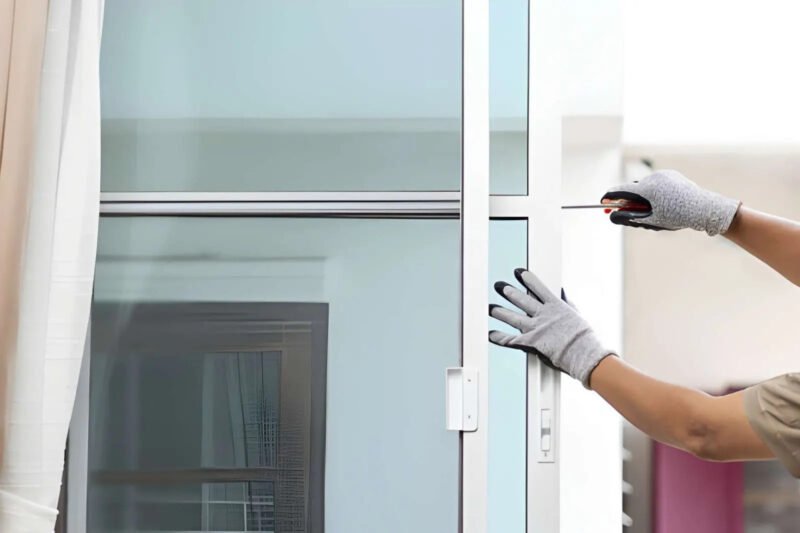
Remove the old spline. Pick out an end of the spline with a small flathead screwdriver or an awl. Once an end is free, pull the spline out of the groove by hand. The spline will come out in one continuous piece around the entire perimeter. If the spline breaks, dig out the remaining section with the screwdriver. Remove the old mesh. Clean the groove with a vacuum or compressed air. Remove any old spline fragments or debris. The groove must be clean for the new spline to seat properly.
Roll out the new screen mesh over the frame. The mesh should extend past the groove by at least an inch on all sides. Standard fiberglass screen mesh is the most common material. It is inexpensive, easy to work with, and will not dent like aluminum mesh. Pet-resistant screen mesh is thicker and more durable. It is worth the extra cost if the screen door is in a high-traffic area or if a pet has previously damaged the screen. Solar screen mesh is darker and denser, blocking more light and heat. It improves energy efficiency by reducing solar gain through the door opening.
Starting at one corner, press the new spline into the groove over the mesh using the convex wheel of the spline roller. Work around the perimeter, keeping the mesh taut but not stretched. The mesh should be flat and smooth, with no wrinkles. The spline should be fully seated in the groove. The concave wheel of the spline roller is used for a final pass to ensure the spline is fully seated.
Trim the excess mesh. Hold a sharp utility knife against the outside edge of the spline and cut the mesh away. Cut away from the spline, not toward it. A slip that cuts into the spline will weaken the seal and may cause the mesh to pull out. Cut carefully. The finished screen should have a clean edge with no loose strands of mesh.
Reinstall the screen door in the track. Adjust the rollers if the screen door has adjustable rollers. The screen door should slide smoothly and seat fully in the track when closed.
Full Screen Door Replacement
If the screen door frame is bent, the rollers are broken beyond adjustment, or the corner connectors are cracked, replacing the entire screen door assembly is the better repair. A replacement screen door for a standard sliding glass door costs $50 to $150. The door is ordered by width and height. Measure the height of the door opening from the bottom track to the top track. Measure the width of the opening. The replacement screen door must match the track dimensions, not the old screen door dimensions.
The new screen door arrives assembled, with the mesh installed, the rollers attached, and the frame ready to install. Remove the old screen door from the track. Set the new screen door into the outer track. Adjust the rollers so the door slides smoothly and aligns with the track. The installation is complete when the door slides open and closed with one hand and latches securely in the closed position.
Frequently Asked Questions
What size spline do I need for a sliding screen door?
The spline diameter must match the groove width in the screen frame. The most common size for sliding door screens is 0.140 to 0.160 inches. Take a piece of the old spline to the hardware store to match the diameter. If the old spline is missing, measure the groove width with a drill bit. The spline diameter should be slightly larger than the groove width to create a tight fit when compressed.
Should I use fiberglass or aluminum screen mesh?
Fiberglass mesh is the standard for residential screens. It is easier to work with than aluminum, does not dent, and is less expensive. Aluminum mesh is stronger and more resistant to tearing, but it dents permanently when pushed and the dents are visible. Pet-resistant mesh is a thicker fiberglass mesh that resists clawing. Solar screen mesh is denser and reduces heat and light transmission. For a sliding door that gets heavy use, pet-resistant fiberglass is the best balance of durability and appearance.
Can I replace just the screen door track?
The screen door track is part of the sliding door frame. It cannot be replaced separately in most residential sliding doors. If the track is damaged, the entire sliding door frame must be replaced, which is covered in the sliding glass door replacement guide. If the track is dirty or obstructed, cleaning it may resolve the sliding problem. A track that is worn but not damaged can be improved with a track repair kit, a thin metal cap that installs over the existing track.
The Bottom Line
A sliding glass door screen is repaired by replacing the mesh with new screen material and spline, or by replacing the entire screen door assembly if the frame is damaged. Rescreening takes an hour and costs $15 to $30. A new screen door costs $50 to $150 and installs in 30 minutes. The screen door keeps insects out and lets fresh air in. A torn screen is not a reason to keep the door closed. It is a reason to spend an hour with a spline roller and a roll of mesh.