


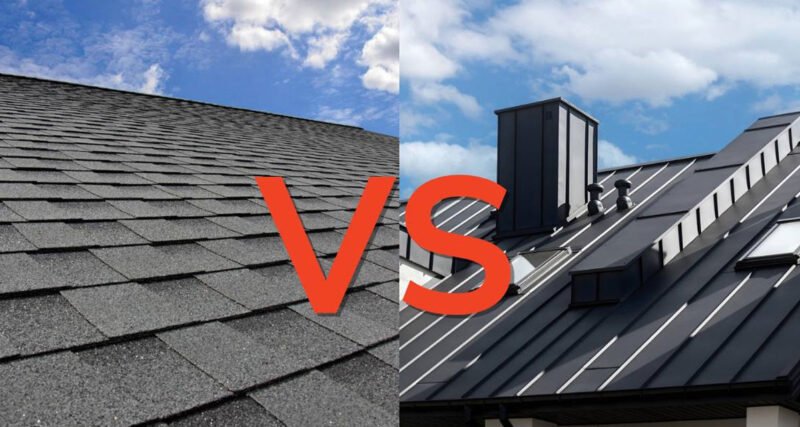
Metal roofs cost two to three times more than asphalt shingles upfront, but they last 40 to 70 years compared to 15 to 30 for asphalt. That single fact reshapes the entire cost equation once you zoom out past the initial invoice, notes KRS Holdings NOVA team of experts.
Asphalt shingles still cover more than 80% of American homes, according to the Asphalt Roofing Manufacturers Association (ARMA). They dominate for good reason: lower price tag, faster installation, and a massive contractor pool. But metal roofing has been gaining ground steadily, especially among homeowners who plan to stay put for decades.
The right choice depends on your budget, your timeline, and how long you intend to live under that roof. Here is what the numbers, the data, and real homeowners actually say.
Cost Breakdown: What You’ll Actually Pay
Asphalt shingles run $1 to $4 per square foot installed, while metal roofing ranges from $4 to $12 per square foot depending on the material and profile. For a typical 2,000-square-foot roof, that translates to $5,000 to $16,000 for asphalt versus $16,000 to $48,000 for metal.
A 2026 This Old House survey of 1,000 homeowners found that 47% chose asphalt shingles as their replacement material. Among those who went with metal, 56% spent $10,000 or more on the project. The gap is real, and it hits hardest at signing.
| Roofing Type | Cost per Sq Ft (Installed) | Avg. Total (2,000 sq ft roof) | Lifespan |
|---|---|---|---|
| 3-Tab Asphalt Shingles | $1 – $3 | $5,000 – $12,000 | 15 – 20 years |
| Architectural Shingles | $2 – $4 | $8,000 – $16,000 | 25 – 30 years |
| Sheet Metal (Corrugated) | $4 – $6.50 | $16,000 – $26,000 | 40 – 60 years |
| Standing Seam Metal | $7 – $12 | $28,000 – $48,000 | 50 – 70 years |
“Are shingles vs metal roof a wash longterm price wise?”
— r/Homebuilding, 78 upvotes, 242 comments (2024), source
That question comes up constantly among homeowners running the numbers. Over a 50-year span, you might replace an asphalt roof twice ($10,000 to $32,000 combined) while a single metal roof covers the same period for $16,000 to $48,000. Factor in lower maintenance costs for metal and the lifetime math tightens considerably.
Fifty-six percent of metal roof owners crossing the $10,000 mark is roughly double what most shingle jobs run. The sticker shock is real, but it buys decades of zero re-roofing hassle.
Metal Roof Pros and Cons
Metal roofs deliver exceptional longevity, energy efficiency, and weather resistance, but the higher upfront cost and limited contractor availability create genuine barriers for many homeowners.
Advantages
- Lifespan of 40 to 70 years. Standing seam panels routinely outlast two or even three asphalt roofs installed over the same period.
- 100% recyclable. Metal roofing is often manufactured from recycled content and can be fully recycled at end of life, producing virtually zero landfill waste.
- Energy savings. Reflective metal coatings bounce solar heat away from the structure, reducing cooling costs by 10% to 25% in hot climates according to the Metal Roofing Alliance.
- Wind and hail resistance. Many metal roof systems are rated for winds up to 140 mph. Standing seam panels resist uplift better than most shingle products.
- Low maintenance. No moss, no granule loss, no curling. Periodic inspections and occasional fastener checks are usually all that is needed.
Disadvantages
- Upfront cost. Metal roofing typically costs two to three times more per square foot than asphalt alternatives.
- Noise. Rain on bare metal panels is louder than on shingles, though proper underlayment and attic insulation reduce this significantly.
- Denting. Softer metals like aluminum and copper can dent from large hail or falling branches. Steel panels hold up better.
- Fewer specialized contractors. Not every roofer installs standing seam or metal shingles. Finding qualified installers takes more effort in some regions.
- Thermal expansion. Metal panels expand and contract with temperature swings, which requires proper fastener systems to avoid buckling.
A roof that outlasts two full mortgage terms sounds like an obvious win. But that only holds true if the initial investment fits your financial reality today, not just on a spreadsheet projection.
Asphalt Shingle Pros and Cons
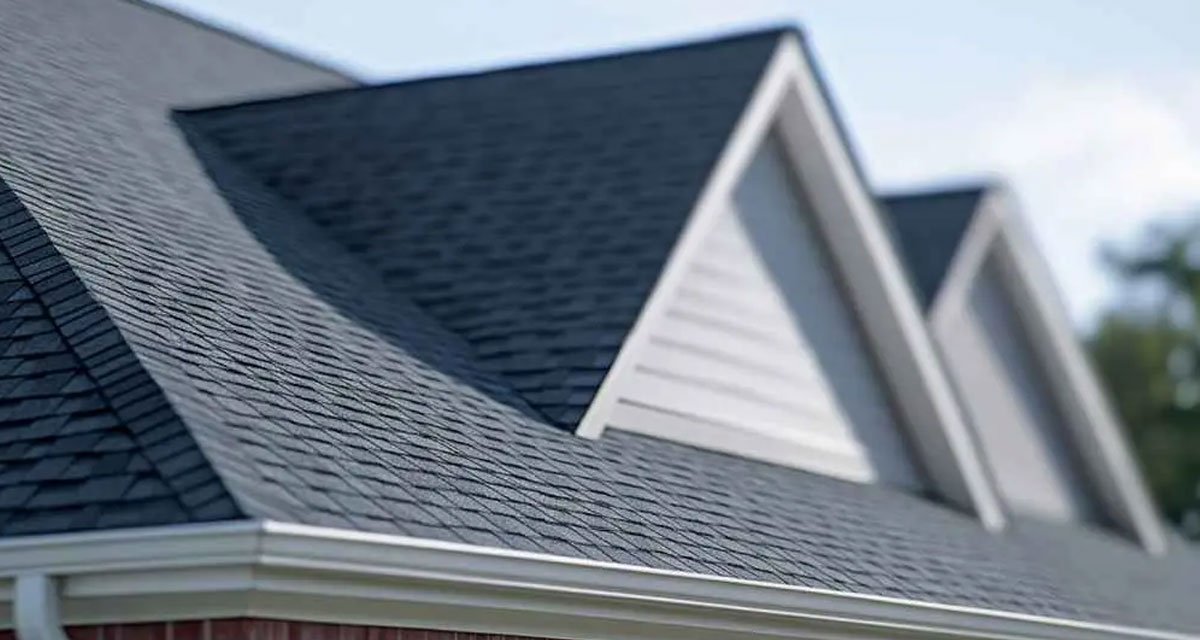
Asphalt shingles remain the most affordable and widely available roofing material in the United States, offering fast installation and easy repairs at the expense of a shorter 15- to 30-year lifespan.
Advantages
- Lowest upfront cost. Basic three-tab shingles start around $1 per square foot, making asphalt the budget-friendly default for most homeowners.
- Fast installation. A typical asphalt shingle roof can be installed in one to two days. Metal roofing projects often take three to five days or longer.
- Universal contractor availability. Nearly every roofing company in the country installs asphalt shingles, giving homeowners more competitive bids.
- Wide style selection. Architectural shingles mimic the look of slate, wood shake, and tile at a fraction of the cost.
- Simple repairs. Individual damaged shingles can be replaced without affecting surrounding sections.
Disadvantages
- Shorter lifespan. Even premium architectural shingles top out around 30 years under ideal conditions.
- Weather vulnerability. High winds can lift shingle tabs. Extreme heat accelerates granule loss and curling.
- Environmental impact. Roughly 11 million tons of asphalt shingle waste enters U.S. landfills annually, according to the Environmental Protection Agency (2023).
- Moss and algae growth. Shaded or humid roofs develop biological growth that shortens shingle life if untreated.
- Higher lifetime cost. Replacing an asphalt roof every 20 to 25 years adds up fast over a 50-year ownership span.
Most homeowners pick shingles not because they have weighed every alternative, but because asphalt is the familiar default. That familiarity keeps prices competitive and contractors plentiful, which are genuine advantages in their own right.
Head-to-Head Comparison
Metal outperforms asphalt shingles in six of eight key categories, but asphalt still holds clear advantages on upfront cost and installation speed. This table lays out the full picture.
| Category | Metal Roof | Asphalt Shingles | Winner |
|---|---|---|---|
| Lifespan | 40 – 70 years | 15 – 30 years | Metal |
| Upfront Cost | $4 – $12/sq ft | $1 – $4/sq ft | Asphalt |
| Durability (Wind/Hail) | Up to 140 mph rated | 60 – 110 mph rated | Metal |
| Energy Efficiency | Reflects heat, saves 10-25% | Absorbs heat | Metal |
| Maintenance | Minimal (inspect annually) | Moderate (moss, granule loss) | Metal |
| Eco-Friendliness | 100% recyclable | 11M tons landfill waste/year | Metal |
| Installation Speed | 3 – 5 days | 1 – 2 days | Asphalt |
| Noise (Rain) | Louder without insulation | Quieter by default | Asphalt |
“Is a metal roof really massively more expensive than an asphalt shingle roof?”
— r/Roofing, 44 upvotes, 159 comments (2023), source
The short answer: yes, upfront. But “massively” depends on how you define the timeline. A $30,000 standing seam roof amortized over 50 years works out to $600 per year. Two rounds of $12,000 architectural shingles over the same period costs $480 per year, plus the disruption of a full tear-off and reinstallation each cycle.
Which Roof Is Right for You?
Choose metal if you plan to stay in your home for 15 years or more and can handle the higher upfront investment. Choose asphalt if your budget is tight, you are selling within a decade, or you need a fast turnaround.
Four questions to guide your decision:
- How long will you live in this house? If the answer is 20+ years, metal’s lifetime value starts to dominate. Under 10 years, asphalt’s lower cost makes more financial sense.
- What is your roof budget? If $15,000 is the ceiling, standing seam is off the table for most homes. Corrugated metal panels or architectural shingles become the realistic options.
- What is your climate? Hot climates benefit from metal’s reflective properties. Heavy snow regions favor metal’s slick surface that sheds snow loads. High-hail zones should consider impact-rated steel panels.
- Are you planning to sell? Metal roofs can increase resale value by 1% to 6%, according to a 2024 Remodeling Magazine Cost vs. Value analysis. But the return varies sharply by local market.
“The Great Debate: Shingles or Metal Roof”
— r/homeowners, 37 upvotes, 85 comments (2025), source
That thread drew dozens of homeowners sharing real-world satisfaction data. The recurring pattern: those who went metal rarely regretted it after year five, while shingle owners frequently reported budgeting for their next replacement before the current roof hit the 20-year mark.
Frequently Asked Questions
Is a metal roof worth the extra cost?
A metal roof is worth the extra cost if you plan to stay in your home for 15 years or more, since the longer lifespan eliminates the need for a second or third re-roofing cycle. Homeowners who sell within 10 years typically recover only a portion of the premium through higher resale value.
How long does a metal roof last compared to shingles?
Metal roofs last 40 to 70 years with proper installation, while asphalt shingles last 15 to 30 years depending on the product grade and climate conditions. Standing seam metal panels sit at the top of the longevity range, and basic three-tab shingles at the bottom.
Are metal roofs noisy in the rain?
Metal roofs can be noticeably louder during heavy rain compared to asphalt shingles, but modern installations with solid sheathing, underlayment, and attic insulation reduce noise to levels comparable with other roofing materials. The “tin roof in a thunderstorm” stereotype applies mainly to agricultural buildings with no insulation layer.
Can you install a metal roof over existing shingles?
Yes, in many cases metal roofing can be installed directly over one layer of existing asphalt shingles, which saves on tear-off labor and disposal costs. Local building codes vary, so check with your municipality and confirm the roof deck is structurally sound before proceeding.
Does a metal roof increase home value?
Metal roofs can increase home resale value by 1% to 6% according to industry cost-vs-value reports, though the exact premium depends on your local housing market and buyer preferences. In regions prone to severe weather, buyers tend to value metal’s durability more highly.
The Bottom Line
Asphalt shingles win on day-one affordability, installation speed, and contractor access. Metal roofs win on longevity, durability, energy savings, and environmental impact. Neither material is universally better.
If you are staying long-term and can invest upfront, metal pays for itself. If budget constraints are real or a sale is on the horizon, quality architectural shingles deliver solid performance without the financial stretch. Get at least three local quotes for both options before committing, because regional labor and material costs can shift the math significantly.