



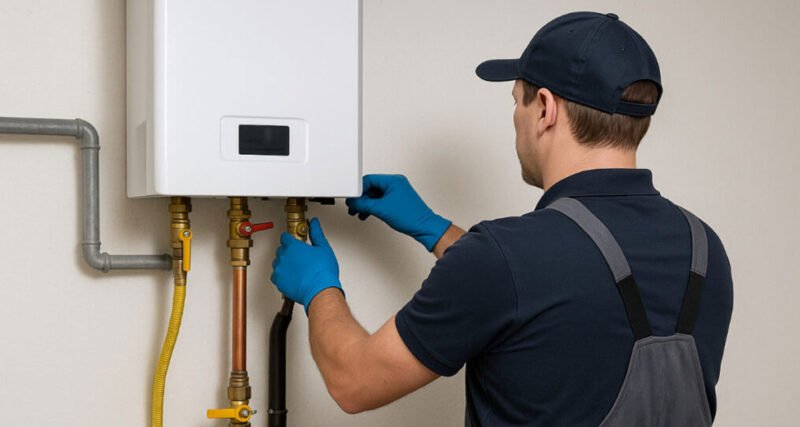
Tankless water heaters are worth it when the home has enough fuel or electrical capacity, moderate peak hot-water demand, and room in the budget for a professional installation. They are a poor bargain when the project requires major gas-line, venting, plumbing, condensate, or electrical upgrades — a calculation that matters just as much to anyone weighing real estate investing in Salt Lake City, where upgrade costs can shape a property’ long-term returns.
The appeal is easy to understand: no bulky tank, lower standby energy loss, and no classic last-shower-gets-cold problem. The catch is that tankless does not mean unlimited flow, instant hot water at every tap, zero maintenance, or a cheap swap for an old tank.
Quick Verdict: Are Tankless Water Heaters Worth It?
The tankless water heater pros and cons depend less on the appliance and more on the house around it. A tankless unit can be excellent in a clean installation, but frustrating in a home with hard water, weak gas service, long pipe runs, or heavy simultaneous hot-water use.
My practical rule is simple: tankless is strongest when it is planned into a remodel, new build, or carefully scoped replacement. As a rushed emergency replacement after a tank fails, it can become an expensive idea with a tidy-looking box on the wall.
Main Pros of Tankless Water Heaters
The main advantages are lower standby energy loss, continuous hot water within the unit’s flow rating, longer expected service life, and a compact footprint. These benefits are strongest when the system is correctly sized and the installation does not fight the house.
Lower Standby Energy Loss
A storage tank keeps 40, 50, or 80 gallons hot whether anyone is using water or not. A tankless unit avoids much of that standby loss because it heats water on demand.
DOE estimates that demand water heaters can be 24% to 34% more energy efficient than conventional storage tank water heaters in homes using 41 gallons or less of hot water daily. In homes using around 86 gallons per day, the advantage is smaller, about 8% to 14%.
Continuous Hot Water, With Limits
A correctly sized tankless unit can keep heating as long as water, fuel, and power are available. That is a genuine comfort upgrade if your old tank runs cold after two showers.
The phrase endless hot water needs an asterisk, though. The heater may run continuously, but it can only heat a certain number of gallons per minute.
Longer Service Life
DOE notes that many tankless water heaters can last more than 20 years, while many storage water heaters last about 10 to 15 years. That longer life helps the long-term math, but only if installation and maintenance are handled well.
Main Cons of Tankless Water Heaters
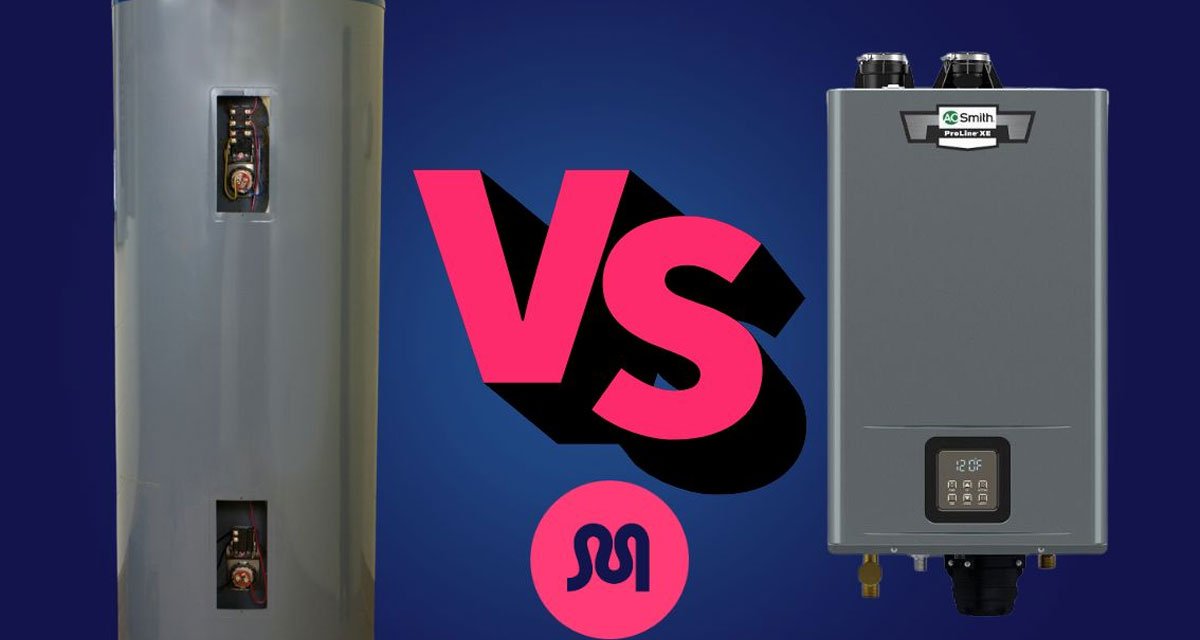
The biggest tankless drawbacks are high upfront cost, flow-rate limits, retrofit complexity, hard-water maintenance, and dependence on electricity for controls. These are not minor details; they often decide whether tankless is a smart upgrade.
Higher Upfront Cost
Tankless equipment usually costs more than a basic storage tank, and installation can widen the gap. Angi’s 2026 cost guide puts many tankless installations around $1,400 to $3,900, while Modernize lists many units around $500 to $2,000 plus roughly $1,000 to $3,000 for installation.
The important part is not the exact national average. It is that the unit price is not the project price.
Retrofit Complexity
The hidden cost is often the gas line size, vent route, condensate drain, electrical connection, permit, and whether the old water-heater closet was designed for a high-output appliance. A cheap unit can become expensive once the house has to be changed around it.
ENERGY STAR explains that certified gas condensing tankless heaters use a secondary heat exchanger and need venting plus a condensate drain. That efficiency is useful, but it also means the installation has to be planned, not guessed.
Flow Rate and Sizing Reality
Tankless hot water can keep running, but only within the unit’s gallons-per-minute rating. DOE says tankless water heaters commonly deliver about 2 to 5 gallons per minute, with gas-fired models generally producing higher flow than electric models.
| Hot-Water Demand | Tankless Reality |
|---|---|
| One shower | Usually manageable for many correctly sized whole-house gas units. |
| Two showers at once | Can push smaller units, especially where incoming water is cold. |
| Shower plus dishwasher | May cause temperature fluctuation if total flow exceeds output. |
| Large soaking tub | Can fill continuously, but not always quickly. |
| Laundry plus multiple fixtures | May require a larger unit, multiple units, or changed usage timing. |
This is where many tankless water heater pros and cons lists oversimplify the comfort question. A tankless unit can run forever and still feel undersized if the household’s peak demand is too high.
Maintenance and Hard Water
A tankless water heater can be durable, but it should be treated like equipment, not furniture. Hard water, scale buildup, clogged inlet screens, and skipped flushing can reduce performance and shorten useful life.
Homeowner discussions around tankless systems repeatedly come back to the same point: soft water makes ownership feel easy, while hard water makes maintenance matter. That means descaling, service valves, filter checks, and sometimes a water softener or scale inhibitor.
The small annoyance is real. Flushing a tankless heater is not complicated, but it is still another home-maintenance task, and skipped tasks have a way of becoming repair bills.
Gas vs Electric Tankless
Gas tankless systems are usually better suited for whole-house demand because they can produce stronger flow. Electric tankless systems can work for small homes, point-of-use fixtures, or low-demand applications, but panel capacity can become the limiting factor.
Gas models bring combustion safety, venting, condensate, and fuel-line sizing into the project. Electric models avoid venting, but a whole-house electric unit may require electrical capacity the existing panel does not have.
Final Verdict
Tankless water heater pros and cons are not about hype; they are about fit. If the installation is clean and the unit is sized for real household demand, tankless can be a strong upgrade.
If the quote depends on wishful thinking about gas lines, electrical capacity, hard water, or simultaneous showers, a traditional tank or heat-pump water heater may be the smarter call.