


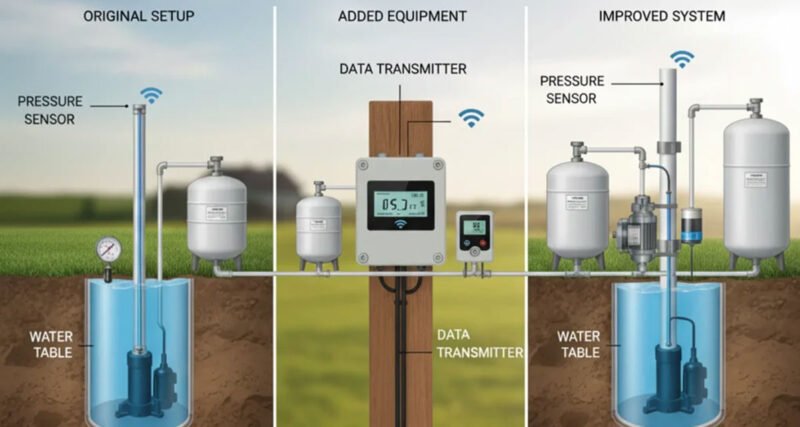
You increase water pressure from a well pump by diagnosing the system first: measure pressure at the tank, clear restrictions, check the pressure tank precharge, adjust the pressure switch only within the pump’s safe range, then consider a booster or pump upgrade, notes Peak Property Management solutions.
The expensive mistake is assuming weak shower pressure always means the pump is too small. If you are learning how to increase water pressure from a well pump, the first job is separating pump pressure from plumbing restriction and well supply.
Many well systems lose pressure because of a clogged filter, a waterlogged pressure tank, a tired pressure switch, scale in piping, or a well that cannot refill fast enough during peak use.
Start With the Pressure Gauge, Not the Pump
A pressure gauge tells you whether you have a true pressure problem, a flow restriction, or a well-yield problem. Before buying parts, watch the gauge near the pressure tank while one faucet runs and again while several fixtures run.
Most residential well systems are commonly set around 30/50 psi or 40/60 psi. The first number is the cut-in pressure, where the pump starts; the second is the cut-out pressure, where the pump stops.
If the gauge reaches cut-out normally but water is weak at one fixture, the pump may be fine. Look for a clogged faucet aerator, shower cartridge, softener, sediment filter, or partially closed valve.
If pressure starts strong and fades during a shower, the system may be outrunning the well, pressure tank, or pump capacity. That is a different problem. It feels the same at the faucet, but the fix is not the same.
Per WellOwner.org, a pressure tank stores a reserve of water, but it cannot make the pump deliver more flow than the pump and well can supply. That one sentence saves a lot of bad purchases.
Fix Restrictions Before Adjusting the Well Pump
Low water pressure from a well pump often comes from friction or blockage after the water has already reached the house. The fastest safe win is removing restrictions before touching electrical controls.
Start with the boring things. They are usually cheaper than the dramatic things.
- Check whether the problem is whole-house, hot-water-only, cold-water-only, or one fixture.
- Replace or bypass the sediment filter temporarily if your system has a bypass valve.
- Clean faucet aerators and shower heads, especially if you see grit or orange staining.
- Confirm the main shutoff and any post-filter valves are fully open.
- Look at softeners, iron filters, neutralizers, and cartridge filters for pressure drop across the unit.
- Watch whether the pressure gauge bounces, stalls, or drops sharply when water demand increases.
Old galvanized pipe can make a perfectly normal well pump feel weak. Inside, the pipe may be rough, narrowed by mineral scale, and stubbornly ugly when you finally cut into it.
Alabama Cooperative Extension notes that mineral scale and bio-slime can reduce well yield and restrict screens and pipes. If the water has iron, hardness, or recurring sediment, pressure work should include filtration and well-condition checks, not just switch adjustment.
Adjust the Pressure Switch Only After the Tank Is Set Correctly
You can raise well water pressure by adjusting the pressure switch, but only if the pump can safely reach the higher cut-out pressure and the tank precharge matches the new cut-in setting. A mismatched tank makes cycling worse.
Turn off power to the pump before opening the pressure switch cover. Drain water pressure from the system before checking the tank’s air charge with a tire gauge.
For a bladder-style pressure tank, the air precharge is commonly set about 2 psi below the cut-in pressure. A 40/60 system usually wants about 38 psi of tank air when the water side is drained.
“Sounds like a bladder tank issue. Is the tank significantly heavier than it should be? Is the tank pressure set to 2 lbs below cut on pressure?”
– r/Plumbing, December 2025
That rough forum comment gets the practical order right. Check the tank before blaming the pump.
If your system is set at 30/50 psi and the pump reaches 50 psi easily, moving to 40/60 may improve shower pressure. If the pump struggles to hit 50 psi now, raising the switch will only make it run longer, heat up, or short-cycle.
Do not keep tightening the switch nut because the shower still feels weak. Once the switch is set correctly, more pressure requires more pump capability, less restriction, or a different system design.
When a Booster, Constant-Pressure Valve, or Larger Pump Actually Helps
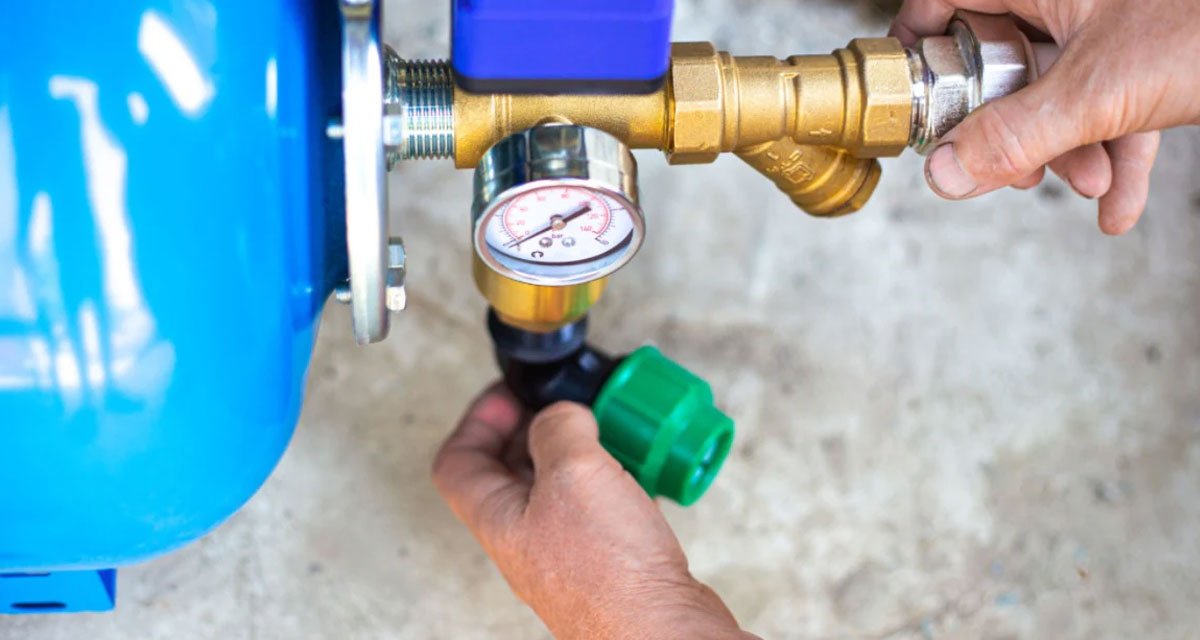
A booster pump, constant-pressure valve, variable-speed pump, or larger well pump can improve pressure, but each solves a different problem. The right choice depends on whether the weak point is pressure, flow, storage, or well yield.
| Fix | Best when | What it will not fix |
|---|---|---|
| Pressure switch adjustment | The pump reaches cut-out easily and the house just needs a higher operating range. | A low-yield well, clogged filter, bad tank, or undersized pump. |
| New or larger pressure tank | The pump cycles too often or pressure swings feel abrupt during small uses. | Low flow during long showers or multiple fixtures beyond pump capacity. |
| Constant-pressure valve | You want steadier pressure from a conventional pump and tank setup. | Flow demand that exceeds pump or well output. |
| Booster pump | Water supply is adequate, but pressure delivered to the house is too low. | A well that cannot refill fast enough unless storage is added first. |
| Variable-speed pump | You want smoother pressure across changing fixture demand. | Poor well yield, blocked plumbing, or bad water treatment equipment. |
| Larger well pump | Pump curve, well yield, wire size, pipe size, and tank design all support the upgrade. | Pressure loss caused by restrictions after the tank. |
A bigger pump does not automatically increase pressure. Pump horsepower can change gallons per minute, pressure, or both, depending on the pump curve and the total lift from the water level to the house.
Ask for the pump curve before replacing the pump. If the curve shows poor output at your required pressure, a different pump may help. If the well yield is the limit, a bigger pump can just pull the water level down faster.
That’s the part people hate.
What Low Yield Changes About the Fix
When the well cannot replenish water as fast as the house uses it, pressure fixes must shift from “raise psi” to “manage supply.” Low-yield wells often need storage, demand scheduling, well rehabilitation, or a pump rate matched to the well.
Penn State Extension explains that even a well yielding only 1 gallon per minute can produce about 1,440 gallons in a day, but peak household demand happens in short bursts. Morning showers, laundry, and dishwasher use can outrun that slow refill rate.
That is why a pressure tank alone is not a magic reservoir. Penn State also notes that only about 20 percent of a pressure tank’s capacity is usable drawdown, so a 42-gallon tank may provide only about 8 gallons before the pump starts.
For a low-yield well, the better design may be a storage tank filled slowly by the well pump, then a separate pressure pump or booster serving the house. It is less glamorous than a bigger submersible pump, but it respects the water source.
Well rehabilitation can also matter. Alabama Cooperative Extension says yield depends on aquifer composition, construction, maintenance, climate, and pumping demand. Scale inside screens and pipes can reduce delivery enough to mimic a pump problem.
Quick Diagnostic Table
The symptom pattern usually points to the next test, and it can keep you from adjusting a healthy pump. Use this table before changing switch settings or pricing a replacement.
| What you notice | Likely cause | First check |
|---|---|---|
| Only one shower or faucet is weak | Aerator, shower head, cartridge, or local valve restriction | Clean the fixture and compare hot vs cold flow. |
| Whole house is weak after filter change | Wrong filter micron rating or clogged cartridge | Use the bypass briefly and watch pressure change. |
| Pressure gauge rises and falls rapidly | Bad tank precharge or failing bladder tank | Drain tank and check air pressure against cut-in setting. |
| Pressure starts strong, then fades during long use | Low well yield, undersized pump, or storage shortage | Run one tub and watch whether pressure recovers after rest. |
| Pump runs but cannot reach cut-out | Pump wear, leak, low water level, or switch set too high | Call a well professional before raising settings again. |
| Hot water is weaker than cold | Water heater valve, heat-trap nipple, scale, or hot-side pipe restriction | Compare flow before and after the water heater if accessible. |
In practice, the gauge is the quiet witness. If it behaves normally at the tank but the faucet is weak, look downstream. If it behaves badly at the tank, stay at the tank, switch, pump, and well.
The Safe Order to Increase Well Water Pressure
The safest path is diagnostic, not heroic: prove the pump is healthy, remove restrictions, set the tank correctly, then raise pressure in small steps if the system has room. Pressure work should never ignore pump run time or well recovery.
- Record current cut-in and cut-out pressure from the gauge.
- Confirm whether weak flow is one fixture, hot side, cold side, or whole house.
- Replace clogged sediment filters and clean small fixture restrictions.
- Turn off pump power, drain the tank, and check bladder-tank precharge.
- Set precharge about 2 psi below cut-in if the tank is healthy.
- Raise the pressure switch range only if the pump reaches cut-out easily.
- Stop if the pump runs continuously, short-cycles, pulls air, or cannot reach the new cut-out.
- Price upgrades only after you know whether the limit is pump pressure, pump flow, plumbing, storage, or well yield.
Honestly, I would rather see a homeowner pay for one diagnostic visit than burn up a pump by chasing 60 psi on a system that could barely hold 50. The pressure feels like the problem because it is what you notice in the shower. The real problem may be three feet from the tank, or 180 feet underground.
FAQ
Can I turn up my well pump pressure myself?
You can adjust many pressure switches yourself, but only after turning off power, draining the pressure tank, checking precharge, and confirming the pump can reach the higher cut-out pressure.
Will a bigger well pump increase water pressure?
A bigger well pump may increase pressure only if the pump curve, well yield, pipe size, tank, and electrical setup support the upgrade. It will not fix clogged filters or weak well yield.
What pressure should a well pump be set at?
Many homes use 30/50 psi or 40/60 psi settings. Higher settings can work on some systems, but the pump must reach cut-out without long run times or overheating.
Why does my well water pressure drop when two fixtures run?
Pressure drops with multiple fixtures when household demand exceeds pump flow, pipe capacity, filter capacity, pressure tank drawdown, or well recovery rate. The gauge pattern helps separate these causes.
Does a pressure tank increase water pressure?
A pressure tank stabilizes pressure and reduces pump cycling, but it does not create more water than the pump and well can supply. It is a buffer, not a cure for low yield.
Final Takeaway
The best way to increase water pressure from a well pump is to work from the gauge outward: restrictions first, tank precharge second, pressure switch third, equipment upgrades last. When the well itself is the limit, storage and correct pump sizing beat brute force.
That is also the safest answer to how to increase water pressure from a well pump without shortening pump life: measure first, raise pressure only when the system proves it can carry the higher setting.
Good pressure feels simple at the faucet. Getting it safely usually means respecting the whole system.