




Just as Real Estate Investing Philadelphia requires careful analysis, diagnosing why one room is hotter than the rest requires systematic investigation. The thermostat says 72. That one room says otherwise. A single hot room is one of the most common homeowner complaints and one of the most fixable.
“If you were to walk outside of the room the hallway feels almost 15 degrees cooler. It is like this all the time. Sometimes I feel like the room is an oven.”
— r/HomeImprovement, 39 upvotes, 32 comments (2017), source
A single hot room is one of the most common homeowner complaints — and one of the most fixable. The cause is rarely a single thing. It is usually two or three factors stacking up: a west-facing window plus a long duct run plus a door that stays closed all day. Untangle the stack and the fix often costs less than you expect.
This guide walks through the causes in diagnostic order: the free checks you can do right now, then the weekend-DIY fixes, then the ones worth calling a pro for.
The 5-Minute Diagnostic: Find the Real Culprit
Before you spend money, spend five minutes. A hot room is solvable, and the fix is often simpler than you expect. The steps below are ordered — each check rules out a cause before you move to the next. Skip around and you will miss the obvious fix hiding in step one.
- Check the vent. Is it fully open? Is furniture blocking it? A bed pushed against a floor register can cut airflow by half or more.
- Check the filter. A clogged filter restricts airflow to the entire house, but the room farthest from the air handler feels it first.
- Check the door. If the door stays closed most of the day with no return vent in the room, you have a pressure problem. Air that cannot escape cannot be replaced.
- Check the window orientation. South- and west-facing windows catch direct afternoon sun. Put your hand on the glass at 3pm. If it is warm to the touch, solar heat gain is a major factor.
- Check the pattern. Is the room hot all the time, only in summer afternoons, or only when the AC runs? Different patterns point to different causes.
If steps 1 through 3 fix it, you are done — cost: zero dollars. If not, the next sections explain the deeper causes and exactly what to do about each one.
Sunlight and Windows: The Heat Source Most People Underestimate
Stand in a south-facing room at 3pm on a summer day. You can feel the heat radiating through the glass before you even touch it. Windows are thermal holes — they let in visible light and trap infrared energy, creating a miniature greenhouse in that one room.
The physics has a name: solar heat gain. Every window has a Solar Heat Gain Coefficient (SHGC), a number between 0 and 1 that tells you how much solar radiation passes through. A single-pane clear window has an SHGC around 0.80. A modern low-E double-pane window drops that to 0.30 or lower. If your hot room has older windows, the glass itself is a heater.
A Fix That Does Not Require Replacing Windows
Window film is the most targeted solution for solar-driven hot rooms. Applied directly to the interior glass, it blocks a percentage of infrared and UV radiation without making the room dark. Different film types trade off heat rejection against visible light transmission.
| Film Type | Heat Rejection | Visible Light | Best For | Cost (installed) |
|---|---|---|---|---|
| Dyed | 30–50% | Moderately dimmed | Budget fix, non-critical rooms | $3–6 / sq ft |
| Ceramic | 50–70% | Near-clear | Rooms where you want natural light | $8–15 / sq ft |
| Reflective / metallic | 70–85% | Mirror-like exterior | Maximum heat rejection, privacy | $6–12 / sq ft |
Ceramic films are the sweet spot for most hot rooms. They block more than half the solar heat while keeping the view clear — you would not know the film is there by looking through the glass. A 30-square-foot window costs roughly $240 to $450 installed. Compare that to replacing the window entirely, which runs $500 to $1,200 per window.
Other window-level fixes that cost less: cellular shades (honeycomb structure traps air as insulation), exterior awnings, or simply heavy curtains kept closed during peak sun hours. Even a $40 blackout curtain on a west-facing window can drop the room temperature by 5 to 8 degrees.
Your HVAC System Might Be Working Against Itself
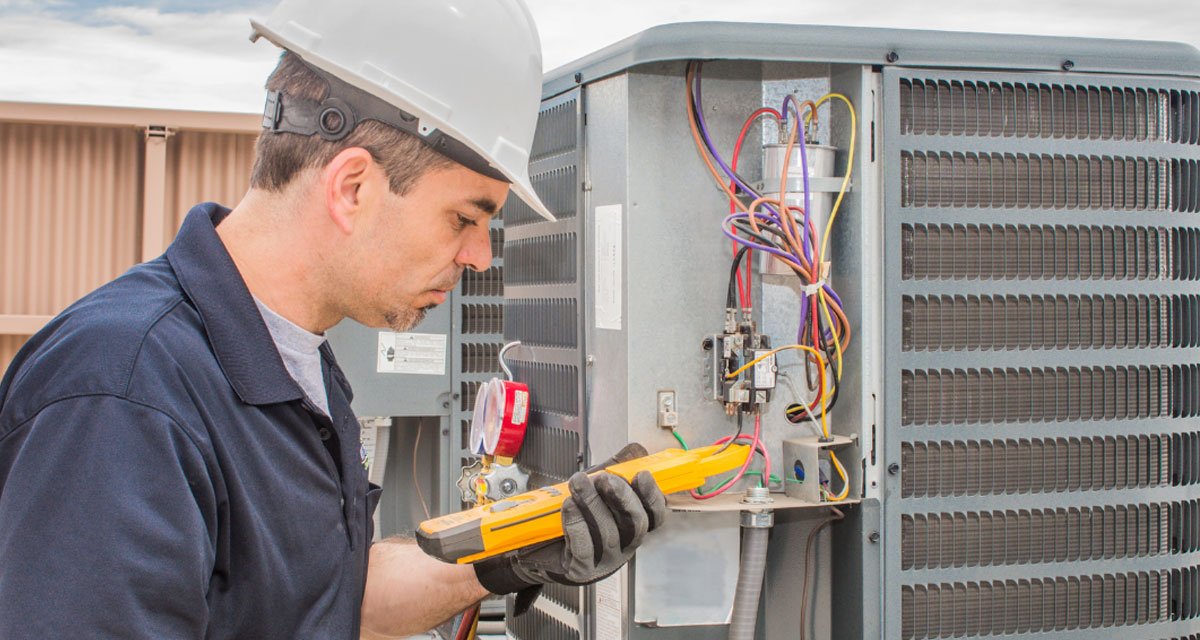
Central air conditioning is designed for balance. When one room consistently breaks that balance, the system itself is often part of the problem — not because it is broken, but because it was never tuned for that specific room.
Where Your Thermostat Lives Matters
A thermostat reads the temperature of the air immediately around it. If it sits in a hallway that stays cool while a bedroom bakes, the system shuts off before that bedroom ever reaches a comfortable temperature. The AC thinks the whole house is fine. The bedroom disagrees.
Moving a thermostat requires running new low-voltage wire through walls — not always practical. The modern workaround is a smart thermostat with remote room sensors. Ecobee thermostats ship with sensors you place in the problem room. The system averages readings across sensors, or you can tell it to prioritize a specific room during certain hours. Costs about $150 to $250 for the thermostat plus sensor kit.
When the AC Itself Is the Wrong Size
An oversized AC cools the house so fast it never runs long enough to pull air through distant duct runs. The rooms near the air handler feel great. The far bedroom barely gets airflow before the system cycles off. An undersized unit simply cannot keep up on hot days, and the room with the highest heat load fails first.
Proper sizing requires a Manual J load calculation — a formula that accounts for square footage, window area, insulation levels, ceiling height, and even the number of people in the home. Most original installs skip this step and use a rough square-footage rule. If your system short-cycles (runs less than 10 minutes at a time), sizing is a strong suspect.
The Filter Check You Keep Skipping
A dirty air filter restricts airflow to the entire system. The room farthest from the air handler — the one at the end of the longest duct run — loses pressure first. Replace the filter every 60 to 90 days. Use MERV 8 to 11 for a balance of filtration quality and airflow. MERV 13 and above filters are dense enough to choke airflow in systems not designed for them.
Ductwork lives in attics and crawlspaces where nobody looks. Over 10 to 15 years — the typical duct lifespan — joints loosen, tape peels, and conditioned air leaks into unconditioned space before it ever reaches the vent.
Leaky Ducts Steal Your Cold Air
According to the U.S. Department of Energy, the average home loses 20 to 30 percent of conditioned air through duct leaks. For a hot room at the end of a long duct run, that number can be higher — air that was never going to arrive in the first place leaks out along the way.
A DIY duct inspection is straightforward: go into the attic or crawlspace with a flashlight. Look for disconnected joints, visible gaps, or sections where the insulation wrap has torn. Feel for cold air escaping when the AC is running — your hand is a surprisingly good leak detector. Small gaps can be sealed with mastic (a thick paste applied with a brush) or UL-listed foil tape. Do not use cloth duct tape — it dries out and fails within a year. Mastic costs about $15 a gallon and lasts decades.
The Dampers Nobody Told You About
Most duct systems have manual dampers — small metal levers on the main ducts near the air handler. They adjust how much air flows to each branch. In summer, you partially close dampers leading to cooler rooms and open the damper fully for the hot room. In winter, reverse the pattern. A damper adjustment takes 30 seconds and costs nothing, yet almost no homeowner knows these levers exist.
“I have one room in my house that is significantly hotter than the others… I have investigated everything I can think of.”
— r/Home, 17 upvotes, 53 comments (2023), source
The damper adjustment is frequently the fix that ends this kind of investigation. The homeowner who posted the above had checked vents, filters, windows, and insulation before discovering the dampers were never set correctly when the system was installed.
The Return Air Problem
Supply vents push conditioned air into a room. Return vents pull air back to the system. A room with a supply vent but no return vent builds positive pressure when the door is closed. The supply air cannot enter against that pressure, so the room stagnates while the rest of the house cools.
The fix: install a jumper duct (a short duct connecting the room to the hallway through the ceiling) or undercut the door by 1 to 1.5 inches. Either solution creates a path for air to escape back to the return. A door undercut takes 15 minutes with a circular saw and costs nothing.
Room-Specific Factors: Location, Insulation, and What Is Inside
Some rooms are hot for reasons that have nothing to do with the HVAC system. The room’s position in the house, what is above and below it, and what is actually inside it can all create heat problems that airflow alone cannot solve.
The Upstairs Is Always Hotter — Here Is Why
Heat rises. It is the simplest physics in the book, and it means every multi-story home has a built-in temperature gradient. On a 90-degree day, a second-floor bedroom can run 8 to 12 degrees warmer than the ground floor even with a perfectly balanced HVAC system.
The stack effect makes it worse: warm air rises through the house and escapes through attic leaks, pulling hot outdoor air in through lower-floor cracks. The upstairs becomes a heat trap. A zoned HVAC system — with separate thermostats and motorized dampers for each floor — is the definitive fix, but it is expensive. A more practical approach: close lower-floor dampers slightly in summer to push more cool air upstairs, and run the fan in “on” mode (not “auto”) during peak heat hours to keep air circulating between cycles.
Insulation Gaps You Cannot See
A room above an uninsulated garage or with an attic hatch directly above it can gain heat from surfaces that are not part of the room itself. The ceiling is warm because the attic is 130 degrees. The floor is warm because the garage below is baking. These are conduction problems, not airflow problems, and they need insulation, not damper adjustments.
What Is Inside the Room Matters
That spare bedroom with the gaming PC, the router, the cable box, and a minifridge is not just a bedroom — it is a small data center. A gaming PC under load dumps 300 to 500 watts of heat into a room continuously. Add a monitor, a router, and a few always-on chargers and the room generates as much heat as a space heater running on low. No amount of AC balancing can overcome an internal heat load that the system was never designed to handle. The fix is not HVAC — it is relocating the electronics or improving ventilation specifically for that room.
When to DIY and When to Call a Pro
Most hot-room fixes fall into the DIY category. But a few cross into territory where the wrong move costs more than hiring someone who does this every day.
| Fix | DIY Difficulty | Estimated Cost | DIY or Pro? |
|---|---|---|---|
| Open/clear vents | Trivial | $0 | DIY |
| Replace air filter | Trivial | $10–20 | DIY |
| Adjust manual dampers | Easy | $0 | DIY |
| Undercut door / add jumper duct | Moderate | $0–100 | DIY |
| Install window film | Moderate | $240–450 per window | Pro recommended for large windows |
| Seal accessible duct leaks | Moderate | $15–50 (mastic/tape) | DIY for visible sections |
| Add attic insulation | Labor-intensive | $500–1,500 | DIY possible, pro for large areas |
| Install smart thermostat + sensors | Moderate | $150–250 | DIY (if C-wire present) |
| Professional duct sealing (Aeroseal) | Pro only | $1,000–3,000 | Pro |
| Install zoned HVAC system | Pro only | $3,000–8,000 | Pro |
| Replace windows (low-E) | Pro only | $500–1,200 per window | Pro |
| Replace undersized AC unit | Pro only | $4,000–8,000 | Pro |
Start at the top of this table and work down. Most hot rooms are fixed by row three. If you reach the bottom three rows, get multiple quotes — the price spread on HVAC work is wide, and the first quote is rarely the best one.
Frequently Asked Questions
Why is one room so much hotter in summer but fine in winter?
Solar heat gain through windows is the most likely cause. In summer, direct sunlight heats the room faster than the AC can remove it. In winter, the same sunlight is welcome free heat. Check window orientation — if the room has south- or west-facing glass, window film or solar shades will have the biggest impact.
Why is my upstairs bedroom hotter even though the AC runs constantly?
Heat rises, creating a natural temperature stack in multi-story homes. The second floor can be 8 to 12 degrees warmer than the ground floor. Solutions include partially closing downstairs dampers in summer, running the fan continuously during peak heat, or installing a zoned system if the budget allows.
Why does the room get hot only when the door is closed?
The room likely has a supply vent but no return air path. When the door closes, supply air pressurizes the room and prevents more conditioned air from entering. Undercut the door by an inch or install a jumper duct to create an air return path.
How much does it cost to fix one hot room?
Most fixes cost under $100. Adjusting dampers and clearing vents costs nothing. Replacing a filter costs $15. Sealing accessible duct leaks costs about $30 in materials. Installing window film for one room runs $240 to $450. The expensive end — zoning systems, new windows, or AC replacement — starts around $3,000. Try the free fixes first.
Is window film worth it for a hot room?
For rooms where sunlight is the primary heat source, yes. Ceramic window film blocks 50 to 70 percent of solar heat while staying nearly clear. At $240 to $450 per average window, it pays for itself in comfort immediately and in energy savings over 2 to 3 cooling seasons.
Will a smart thermostat fix an uneven temperature problem?
Only if it uses remote room sensors and you place one in the hot room. A standard smart thermostat without sensors only reads temperature at its own location — the same limitation as any thermostat. Ecobee and some Honeywell models include room sensors that let the system average temperatures or prioritize a specific room.
How do I know if I need an HVAC professional?
Sound familiar? If the free and low-cost checks fail (vents, filter, dampers, door undercut, window treatments), and the room is still significantly hotter than the rest of the house, call a pro for an energy audit or HVAC inspection. A technician can measure static pressure, test duct leakage with a blower door, and run a Manual J calculation to check system sizing. An energy audit typically costs $200 to $500 and identifies every thermal weakness in the home — not just the hot room.
The room that refuses to cool is rarely a mystery once you work through the diagnostic order. Most of the time the fix is something the original installer skipped or something that accumulated slowly over years — a damper never adjusted, a duct joint that separated, a filter that went too long. None of it is your fault for not knowing why one room is hotter than the rest. It is just not the kind of thing anyone tells you when you buy the house.