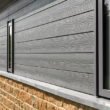



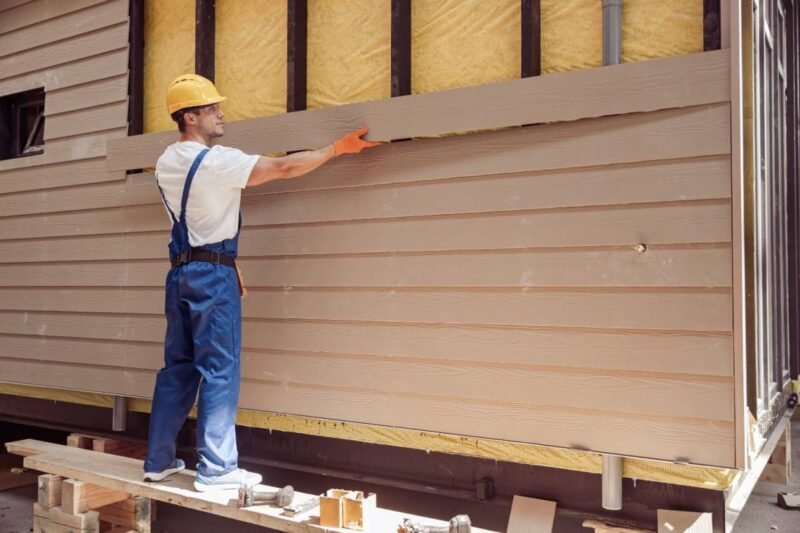
Installing Hardie board siding is vinyl siding’s heavier, more durable cousin, explains Real Estate Investing Gilbert. Hardie board, the brand name for James Hardie fiber cement siding, is a mixture of cement, sand, and cellulose fibers. It does not melt, does not rot, does not burn, and does not expand and contract nearly as much as vinyl. It also weighs significantly more. A 12-foot plank of Hardie board weighs roughly 20 to 30 pounds depending on the width. A 12-foot piece of vinyl siding weighs roughly two pounds. The weight is the first thing you notice. The dust is the second.
Cutting fiber cement produces silica dust. Silica dust is a respiratory hazard that requires a dust mask rated for particulates, ideally an N95 or better, and cutting outdoors or with a dust collection system. A circular saw with a polycrystalline diamond blade, often called a Hardie blade, is the standard cutting tool. The blade has fewer teeth than a wood-cutting blade and the teeth are embedded with diamond grit. It cuts through fiber cement cleanly but produces a cloud of fine dust. Cut with the wind at your back. Cut on the ground, not on sawhorses, so the dust settles instead of blowing across the yard. Some contractors use electric shears designed for fiber cement that cut without dust. The shears cost $200 to $400 and are worth renting if you are siding an entire house.
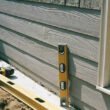
The installation method for Hardie board is blind nailing. The nails are driven through the top edge of the plank where they will be covered by the bottom edge of the plank above. The nails must be corrosion-resistant, hot-dipped galvanized or stainless steel. Electroplated nails will rust within a few years and the rust will bleed through the paint. Drive the nail until the head is flush with the surface. Do not countersink. Do not leave the nail proud. Flush means flush. A nail that is driven too deep dimples the siding and weakens the holding power. A nail left proud prevents the plank above from seating properly. Hardie board requires a minimum of one and a quarter inches of nail penetration into the studs. Sixpenny or eightpenny siding nails are the standard.
Butt joints between planks must be gapped one-eighth of an inch and flashed. Unlike vinyl, which overlaps, Hardie board planks meet end to end at a stud. The gap allows for minor expansion. A piece of aluminum or painted metal flashing behind each butt joint prevents water from penetrating the joint. The flashing should be four to six inches wide, centered on the joint, and slipped behind the siding before the next plank is installed. Caulk the joint with a high-quality paintable caulk after installation, or use the James Hardie joint flashing system that eliminates the need for caulk.
Leave a one-eighth-inch gap between the siding and all trim, windows, doors, and corner boards. The gap allows for expansion and is filled with caulk after installation. The bottom edge of the first course must be at least six inches above the finished grade. The gap prevents water from splashing up from the ground and wicking into the siding. Hardie board must be painted after installation. Factory-primed planks still need finish paint. Paint the cut ends of every plank before installation. A cut end that is left unpainted will absorb moisture and swell. The swelling is permanent.
Frequently Asked Questions
What is blind nailing and why does Hardie board use it?
Blind nailing means the nails are driven through the top edge of the plank where they will be covered by the bottom edge of the next plank above. The nails are hidden. Face nailing, driving nails through the face of the plank where they remain visible, is used only for the top course where there is no plank above to cover them. Blind nailing produces a cleaner appearance and protects the nail heads from weather exposure.
Is Hardie board better than vinyl siding?
Hardie board is more durable, more fire-resistant, and looks more like real wood than vinyl. It is also heavier, harder to cut, more expensive, and must be painted. Vinyl is lighter, cheaper, easier to install, and never needs painting. Hardie board lasts 50 years or more if maintained. Vinyl lasts 20 to 30 years but can be damaged by impact, heat from a grill, or extreme weather. Hardie board is the premium choice. Vinyl is the practical choice. Both are correct.
Do I need special safety equipment to cut Hardie board?
Yes. Cutting fiber cement produces silica dust. Wear an N95 or P100 respirator, not a paper dust mask. Cut outdoors. Cut on the ground so the dust settles. Use a circular saw with a diamond blade designed for fiber cement. Electric shears are a dust-free alternative worth the rental cost for a whole-house project. Silica dust exposure over repeated projects can cause silicosis, a serious lung disease. One project is low risk. Wear the mask anyway.
The Bottom Line
Hardie board siding is blind-nailed to the studs, gapped at every joint, flashed behind every butt joint, and painted after installation. It is heavier than vinyl, harder to cut, and produces silica dust that requires respiratory protection. It also lasts twice as long, looks more like real wood, and will not melt when the neighbor’s grill gets too close. The installation is more demanding than vinyl. The result is more permanent.